

 Product
 Brand
Brand Articles
 Tools
Tools

Saumitra Jagdale
Saumitra Jagdale is a Backend Developer, Freelance Technical Author, Global AI Ambassador (SwissCognitive), Open-source Contributor in Python projects, Leader of Tensorflow Community India, and Passionate AI/ML Enthusiast
Sort by
 High-Frequency Silicon Carbide MOSFETs using Resonant Gate Driver Circuits
13 March 2024
Hello everyone, welcome to the new post today.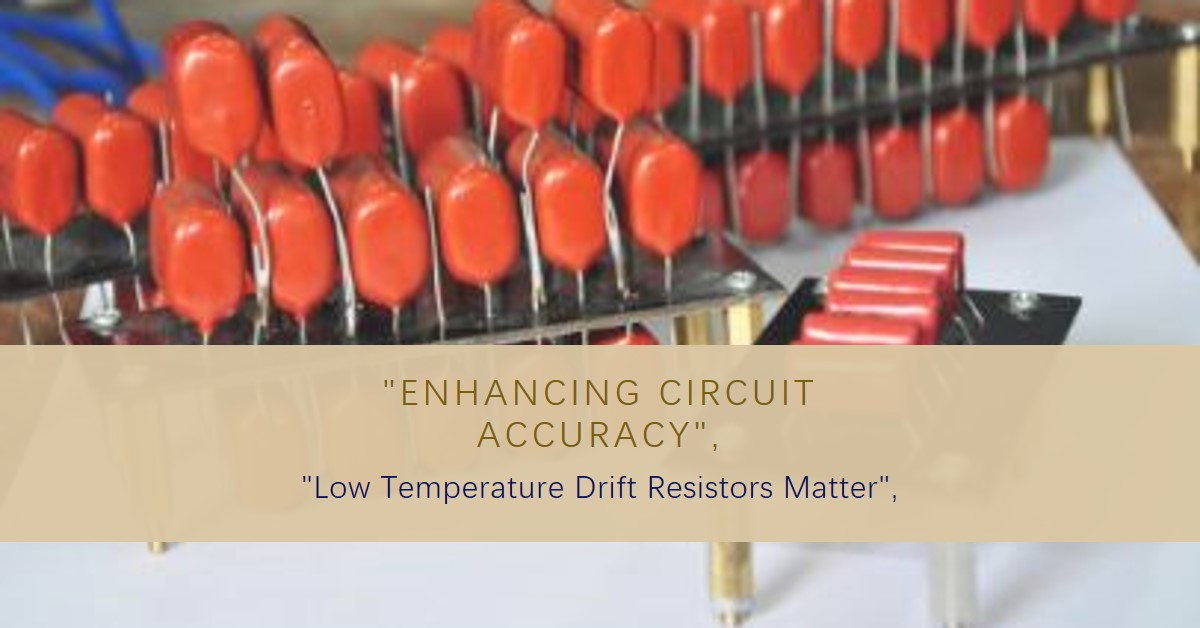 Low Temperature Drift Resistors Increase the Accuracy of Analog Circuits
11 February 2025
Analog circuits are used in many applications ranging from aerospace to medical devices. Therefore, the accuracy of these devices needs to be very high. These circuits translate real-life signals into usable electronic circuits. However, substantial challenges arise due to environmental factors, particularly due to temperature changes, as the resistivity of components changes with changes in temperature. Constructing Hybrid Photovoltaics from Amorphous Silicon and Hybrid Semiconductor Nanocrystals
24 October 2022
Hello everyone, I am Saumitra Jagdale. Welcome to the new post today. This post shows various devices were studied made of wide-gap CdSe NCs or narrow-gap PbS NC in the experiment. Unveiling the Potential of GaN Semiconductor-Enabled Three-Phase Propulsion Inverters for Enhanced EV Performance
09 August 2023
Hello everyone, welcome to the new post today. Analyzing Temperature Parameters of Si, SiC and GaN Power Devices
09 September 2023
Hello everyone, welcome to the new post today. This post introduce performance of different power devices in terms of temperature coefficient. High-Frequency WBG Power Devices Using Cascode GaN/SiC
08 August 2023
Hello everyone, welcome to the new post today. Application Specific Trade-offs for WBG SIC, GaN and High End SI Power Switch Technologies
22 November 2022
Hello everyone, I am Saumitra Jagdale. Welcome to the new post today.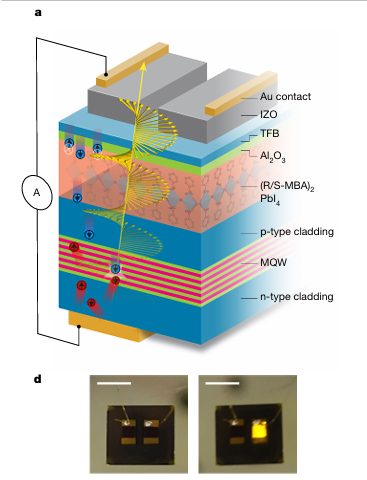 Enhancing the Efficiency of Semiconductors by Using the Spin of Electrons
11 February 2025
In today’s electronics industry, there is a huge demand for faster and more efficient systems to meet the modern IoT systems. The advancement of the semiconductor industry has heavily relied on the manipulation of electrical charges, but controlling the spin degree of freedom has proved to be exceptional. Spintronics, a field focused on studying the spin properties of electrons, has gained a lot of attention due to its potential to enable faster and more efficient devices. The integration of chiral halide perovskite (c-HPs) with traditional III–V semiconductors offer a very transformative effect for spin-based electronics. Semiconductors have been an integral part of the electronics industry due to their ability to manipulate electrical charge but spintronics aims to use the spin of electrons to enable a lot of functionalities. Detecting Wafer Patterns using Semi-Supervised Learning
21 October 2022
Wafer defect patterns have been proved to identify errors during several tests using advanced statistical analysis. Initially, older methods were used wherein the data obtained turned out to be inaccurate leading to more problems in conducting experiments. Therefore, various new detection methods have come up to get more precise and accurate results in diverse fields. Application of Wide Bandgap Devices in EV Converters
12 April 2023
Hello everyone, welcome to the new post today. Exploring an Advanced Approach to Thermal Design for Dual-Sided Cooling of Power Semiconductor Modules in Electric and Hybrid Vehicles
07 September 2023
Hello everyone, welcome to the new post today.