


Share
Home /Integrated Circuits (ICs) /Data Acquisition - Digital to Analog Converters (DAC) /MAX5365EUT /
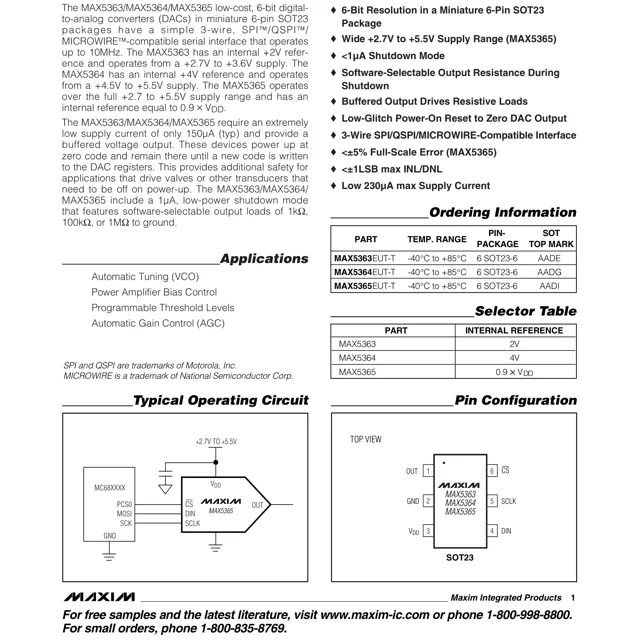


Analog Devices MAX5365EUT
DAC DAC Voltage
Manufacturer No:
MAX5365EUT
Tiny WHSLManufacturer:
Utmel No:
153-MAX5365EUT
Package:
SOT-23-6
ECAD Model:
Description:
DAC Voltage Surface Mount Current Steering R 0.75 B B
Quantity:
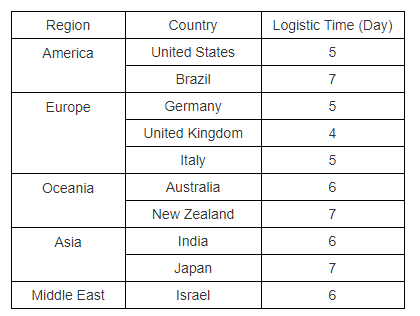
Delivery:


Payment:





In Stock : Please Inquire
Please send RFQ , we will respond immediately.
United States
China
Canada
Japan
Russia
Germany
United Kingdom
Singapore
Italy
Hong Kong(China)
Taiwan(China)
France
Korea
Mexico
Netherlands
Malaysia
Austria
Spain
Switzerland
Poland
Thailand
Vietnam
India
United Arab Emirates
Afghanistan
Åland Islands
Albania
Algeria
American Samoa
Andorra
Angola
Anguilla
Antigua & Barbuda
Argentina
Armenia
Aruba
Australia
Azerbaijan
Bahamas
Bahrain
Bangladesh
Barbados
Belarus
Belgium
Belize
Benin
Bermuda
Bhutan
Bolivia
Bonaire, Sint Eustatius and Saba
Bosnia & Herzegovina
Botswana
Brazil
British Indian Ocean Territory
British Virgin Islands
Brunei
Bulgaria
Burkina Faso
Burundi
Cabo Verde
Cambodia
Cameroon
Cayman Islands
Central African Republic
Chad
Chile
Christmas Island
Cocos (Keeling) Islands
Colombia
Comoros
Congo
Congo (DRC)
Cook Islands
Costa Rica
Côte d’Ivoire
Croatia
Cuba
Curaçao
Cyprus
Czechia
Denmark
Djibouti
Dominica
Dominican Republic
Ecuador
Egypt
El Salvador
Equatorial Guinea
Eritrea
Estonia
Eswatini
Ethiopia
Falkland Islands
Faroe Islands
Fiji
Finland
French Guiana
French Polynesia
Gabon
Gambia
Georgia
Ghana
Gibraltar
Greece
Greenland
Grenada
Guadeloupe
Guam
Guatemala
Guernsey
Guinea
Guinea-Bissau
Guyana
Haiti
Honduras
Hungary
Iceland
Indonesia
Iran
Iraq
Ireland
Isle of Man
Israel
Jamaica
Jersey
Jordan
Kazakhstan
Kenya
Kiribati
Kosovo
Kuwait
Kyrgyzstan
Laos
Latvia
Lebanon
Lesotho
Liberia
Libya
Liechtenstein
Lithuania
Luxembourg
Macao(China)
Madagascar
Malawi
Maldives
Mali
Malta
Marshall Islands
Martinique
Mauritania
Mauritius
Mayotte
Micronesia
Moldova
Monaco
Mongolia
Montenegro
Montserrat
Morocco
Mozambique
Myanmar
Namibia
Nauru
Nepal
New Caledonia
New Zealand
Nicaragua
Niger
Nigeria
Niue
Norfolk Island
North Korea
North Macedonia
Northern Mariana Islands
Norway
Oman
Pakistan
Palau
Palestinian Authority
Panama
Papua New Guinea
Paraguay
Peru
Philippines
Pitcairn Islands
Portugal
Puerto Rico
Qatar
Réunion
Romania
Rwanda
Samoa
San Marino
São Tomé & Príncipe
Saudi Arabia
Senegal
Serbia
Seychelles
Sierra Leone
Sint Maarten
Slovakia
Slovenia
Solomon Islands
Somalia
South Africa
South Sudan
Sri Lanka
St Helena, Ascension, Tristan da Cunha
St. Barthélemy
St. Kitts & Nevis
St. Lucia
St. Martin
St. Pierre & Miquelon
St. Vincent & Grenadines
Sudan
Suriname
Svalbard & Jan Mayen
Sweden
Syria
Tajikistan
Tanzania
Timor-Leste
Togo
Tokelau
Tonga
Trinidad & Tobago
Tunisia
Turkey
Turkmenistan
Turks & Caicos Islands
Tuvalu
U.S. Outlying Islands
U.S. Virgin Islands
Uganda
Ukraine
Uruguay
Uzbekistan
Vanuatu
Vatican City
Venezuela
Wallis & Futuna
Yemen
Zambia
Zimbabwe
User Guide
Purchase
You may place an order without registering to Utmel.
We strongly suggest you sign in before purchasing as you can track your order in real time.
For your convenience, we accept multiple payment methods in USD, including PayPal, Credit Card, and wire transfer.
RFQ (Request for Quotations)It is recommended to request for quotations to get the latest prices and inventories about the part.
Our sales will reply to your request by email within 24 hours.
1. You'll receive an order information email in your inbox. (Please remember to check the spam folder if you didn't hear from us).
2. Since inventories and prices may fluctuate to some extent, the sales manager is going to reconfirm the order and let you know if there are any updates.
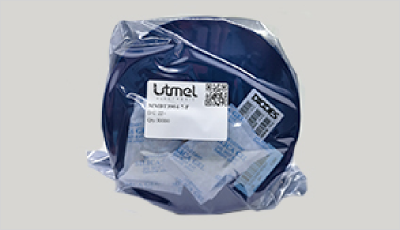
MAX5365EUT information
Analog Devices MAX5365EUT technical specifications, attributes, parameters and parts with similar specifications to Analog Devices MAX5365EUT .
- TypeParameter
- Lifecycle Status
Lifecycle Status refers to the current stage of an electronic component in its product life cycle, indicating whether it is active, obsolete, or transitioning between these states. An active status means the component is in production and available for purchase. An obsolete status indicates that the component is no longer being manufactured or supported, and manufacturers typically provide a limited time frame for support. Understanding the lifecycle status is crucial for design engineers to ensure continuity and reliability in their projects.
Production (Last Updated: 2 years ago) - Mounting Type
The "Mounting Type" in electronic components refers to the method used to attach or connect a component to a circuit board or other substrate, such as through-hole, surface-mount, or panel mount.
Surface Mount - Package / Case
refers to the protective housing that encases an electronic component, providing mechanical support, electrical connections, and thermal management.
SOT-23-6 - Number of Pins6
- Supplier Device Package
The parameter "Supplier Device Package" in electronic components refers to the physical packaging or housing of the component as provided by the supplier. It specifies the form factor, dimensions, and layout of the component, which are crucial for compatibility and integration into electronic circuits and systems. The supplier device package information typically includes details such as the package type (e.g., DIP, SOP, QFN), number of pins, pitch, and overall size, allowing engineers and designers to select the appropriate component for their specific application requirements. Understanding the supplier device package is essential for proper component selection, placement, and soldering during the manufacturing process to ensure optimal performance and reliability of the electronic system.
SOT-6 - Conductor Material
A conductor is a material which contains movable electric charges. In metallic conductors, such as copper or aluminum, the movable charged particles are electrons, though in other cases they can be ions or other positively charged species.
Copper, Tinned - Jacket (Insulation) Material
The parameter "Jacket (Insulation) Material" in electronic components refers to the material used to cover and protect the internal components of a cable or wire. This material provides insulation to prevent electrical interference, short circuits, and damage from environmental factors such as moisture, heat, and chemicals. Common jacket materials include PVC (polyvinyl chloride), Teflon, rubber, and polyethylene. The choice of jacket material depends on the specific application requirements, such as temperature range, flexibility, and resistance to abrasion. Selecting the appropriate jacket material is crucial for ensuring the reliability and longevity of the electronic component in its intended operating conditions.
Ethylene Tetrafluoroethylene (ETFE), Irradiated - Lead Free Status / RoHS Status--
- Cable TypesHook-Up
- RoHSCompliant
- PackageStrip
- MfrAnalog Devices Inc./Maxim Integrated
- Product StatusObsolete
- Operating Temperature
The operating temperature is the range of ambient temperature within which a power supply, or any other electrical equipment, operate in. This ranges from a minimum operating temperature, to a peak or maximum operating temperature, outside which, the power supply may fail.
150°C - Series
In electronic components, the "Series" refers to a group of products that share similar characteristics, designs, or functionalities, often produced by the same manufacturer. These components within a series typically have common specifications but may vary in terms of voltage, power, or packaging to meet different application needs. The series name helps identify and differentiate between various product lines within a manufacturer's catalog.
MIL-W-22759, FlexLine - Part Status
Parts can have many statuses as they progress through the configuration, analysis, review, and approval stages.
Active - Moisture Sensitivity Level (MSL)
Moisture Sensitivity Level (MSL) is a standardized rating that indicates the susceptibility of electronic components, particularly semiconductors, to moisture-induced damage during storage and the soldering process, defining the allowable exposure time to ambient conditions before they require special handling or baking to prevent failures
-- - Max Operating Temperature
The Maximum Operating Temperature is the maximum body temperature at which the thermistor is designed to operate for extended periods of time with acceptable stability of its electrical characteristics.
85 °C - Min Operating Temperature
The "Min Operating Temperature" parameter in electronic components refers to the lowest temperature at which the component is designed to operate effectively and reliably. This parameter is crucial for ensuring the proper functioning and longevity of the component, as operating below this temperature may lead to performance issues or even damage. Manufacturers specify the minimum operating temperature to provide guidance to users on the environmental conditions in which the component can safely operate. It is important to adhere to this parameter to prevent malfunctions and ensure the overall reliability of the electronic system.
-40 °C - Output Type
The "Output Type" parameter in electronic components refers to the type of signal or data that is produced by the component as an output. This parameter specifies the nature of the output signal, such as analog or digital, and can also include details about the voltage levels, current levels, frequency, and other characteristics of the output signal. Understanding the output type of a component is crucial for ensuring compatibility with other components in a circuit or system, as well as for determining how the output signal can be utilized or processed further. In summary, the output type parameter provides essential information about the nature of the signal that is generated by the electronic component as its output.
Voltage - Wire Gauge
a measurement of?wire?diameter.?This determines the amount of electric current the wire can safely carry, as well as its electrical resistance and weight.
26 AWG - Number of Channels1
- Voltage
Voltage is a measure of the electric potential difference between two points in an electrical circuit. It is typically represented by the symbol "V" and is measured in volts. Voltage is a crucial parameter in electronic components as it determines the flow of electric current through a circuit. It is responsible for driving the movement of electrons from one point to another, providing the energy needed for electronic devices to function properly. In summary, voltage is a fundamental concept in electronics that plays a key role in the operation and performance of electronic components.
600V - Number of Bits6
- Jacket Color
The parameter "Jacket Color" in electronic components refers to the color of the protective outer layer that encases wires, cables, or other electronic components. This color can indicate specific attributes such as the type of insulation material, intended use, or compliance with certain standards. Different colors might be used to distinguish between various types of signals, voltage levels, or applications, providing a visual means of identifying components in a system. Additionally, the jacket color can also influence heat dissipation and aesthetic appeal in electronic assemblies.
White, Black Stripe - Conductor Strand
Stranded conductors are composed of uninsulated “strands” of wire twisted together. The advantages of conductor stranding over a single strand of equal cross-section are increased flexibility and flex-fatigue life.
63/44 - Jacket (Insulation) Diameter
The "Jacket (Insulation) Diameter" parameter in electronic components refers to the outer diameter of the insulation or protective jacket surrounding a wire or cable. This measurement is important for determining the overall size and compatibility of the component within a system or circuit. A larger jacket diameter may provide better protection against environmental factors and mechanical stress, while a smaller diameter may be more flexible and space-saving. It is crucial to consider the jacket diameter when selecting and installing electronic components to ensure proper fit and functionality.
0.033 (0.84mm) - Architecture
In electronic components, the parameter "Architecture" refers to the overall design and structure of the component. It encompasses the arrangement of internal components, the layout of circuitry, and the physical form of the component. The architecture of an electronic component plays a crucial role in determining its functionality, performance, and compatibility with other components in a system. Different architectures can result in variations in power consumption, speed, size, and other key characteristics of the component. Designers often consider the architecture of electronic components carefully to ensure optimal performance and integration within a larger system.
Current Steering - Reference Type
a code object that is not stored directly where it is created, but that acts as a kind of pointer to a value stored elsewhere.
Internal - Data Interface
A Data Interface in EDQ is a template of a set of attributes representing a given entity, used to create processes that read from, or write to, interfaces rather than directly from or to sources or targets of data.
Microwire, QSPI, SPI - Differential Output
a differential output voltage in electronics is the difference between the values of two AC voltages, 180° out of phase, present at the output terminals of an amplifier when you apply a differential input voltage to the input terminals of an amplifier.
No - Resolution
Resolution in electronic components refers to the smallest increment of measurement or change that can be detected or represented by the component. It is a crucial specification in devices such as sensors, displays, and converters, as it determines the level of detail or accuracy that can be achieved. For example, in a digital camera, resolution refers to the number of pixels that make up an image, with higher resolution indicating a greater level of detail. In analog-to-digital converters, resolution is the number of discrete values that can be represented in the digital output, determining the precision of the conversion process. Overall, resolution plays a significant role in determining the performance and capabilities of electronic components in various applications.
0.75 B - Voltage - Supply, Analog
Voltage - Supply, Analog is a parameter in electronic components that specifies the range of voltage levels required to power the analog circuitry within the component. This parameter indicates the minimum and maximum voltage levels that the component can accept for proper operation of its analog functions. It is crucial to ensure that the voltage supplied to the component falls within this specified range to prevent damage and ensure optimal performance. Understanding and adhering to the "Voltage - Supply, Analog" parameter is essential for the proper functioning of analog circuits in electronic components.
2.7V ~ 5.5V - Voltage - Supply, Digital
Voltage - Supply, Digital is a parameter that specifies the voltage level required to power the digital circuitry within an electronic component, such as an integrated circuit or a microcontroller. This parameter is crucial for ensuring proper operation of the digital components, as supplying the correct voltage level is essential for reliable performance. The specified voltage range typically includes both minimum and maximum values within which the component can operate safely and efficiently. It is important to adhere to the recommended voltage supply range to prevent damage to the component and to maintain the integrity of the digital signals being processed.
2.7V ~ 5.5V - Settling Time
In control theory the settling time of a dynamical system such as an amplifier or other output device is the time elapsed from the application of an ideal instantaneous step input to the time at which the amplifier output has entered and remained within a specified error band.
20µs (Typ) - Integral Nonlinearity (INL)
Integral Nonlinearity (INL) is a measure of the deviation of a transfer function from a straight line when considering the entire output range of a device, such as a digital-to-analog converter or an analog-to-digital converter. It is quantified as the maximum deviation of the actual output from the ideal output across the entire input range, expressed as a percentage of the full-scale output. INL indicates how closely the output follows a linear model, influencing the accuracy of the signal representation in electronic components. A lower INL value signifies better linearity and higher precision in signal processing applications.
1 LSB - INL/DNL (LSB)
INL (Integral Non-Linearity) and DNL (Differential Non-Linearity) are parameters used to quantify the accuracy and performance of analog-to-digital converters (ADCs) and digital-to-analog converters (DACs). INL refers to the maximum deviation of the actual transfer function of a converter from a perfect straight line, representing the overall accuracy of the converter. DNL measures the difference between the actual step size of the output and the ideal step size, indicating the uniformity of the quantization levels. Both parameters are expressed in least significant bits (LSB), providing a standardized measure of the errors relative to the converter's resolution.
±1 (Max), ±1 (Max) - Number of D/A Converters1
- Number of DAC Channels
A DAC is a device that converts a digital, typically binary, code to an analog signal, such as a current, voltage, or electric charge. One DAC converter can have several channels. Each channel can sample an analog output from numerical values that are converted to output voltages.
1 - Features
In the context of electronic components, the term "Features" typically refers to the specific characteristics or functionalities that a particular component offers. These features can vary depending on the type of component and its intended use. For example, a microcontroller may have features such as built-in memory, analog-to-digital converters, and communication interfaces like UART or SPI.When evaluating electronic components, understanding their features is crucial in determining whether they meet the requirements of a particular project or application. Engineers and designers often look at features such as operating voltage, speed, power consumption, and communication protocols to ensure compatibility and optimal performance.In summary, the "Features" parameter in electronic components describes the unique attributes and capabilities that differentiate one component from another, helping users make informed decisions when selecting components for their electronic designs.
-- - Length--
- Jacket (Insulation) Thickness
The parameter "Jacket (Insulation) Thickness" in electronic components refers to the thickness of the protective outer covering or insulation surrounding a component. This insulation layer is designed to provide electrical insulation, mechanical protection, and environmental resistance to the component. The thickness of the jacket insulation is an important consideration in electronic design as it can impact the overall size, performance, and durability of the component. A thicker insulation layer can provide better protection but may also increase the overall size of the component, while a thinner insulation layer may offer more compactness but with potentially reduced protection. Manufacturers typically specify the jacket insulation thickness to ensure proper performance and reliability of the electronic component in various operating conditions.
0.004 (0.10mm) - Radiation Hardening
Radiation hardening is the process of making electronic components and circuits resistant to damage or malfunction caused by high levels of ionizing radiation, especially for environments in outer space (especially beyond the low Earth orbit), around nuclear reactors and particle accelerators, or during nuclear accidents or nuclear warfare.
No - Ratings
The parameter "Ratings" in electronic components refers to the specified limits that define the maximum operational capabilities of a component. These ratings include voltage, current, power, temperature, and frequency, determining the conditions under which the component can function safely and effectively. Exceeding these ratings can lead to failure, damage, or unsafe operation, making it crucial for designers to adhere to them during component selection and usage.
--
0 Similar Products Remaining
MAX5365EUT Relevant information
![AD5362BSTZ]()
AD5362BSTZ
Analog Devices Inc.![AD7524LPZ]()
AD7524LPZ
Analog Devices Inc.![AD5420AREZ-REEL7]()
AD5420AREZ-REEL7
Analog Devices Inc.![AD5328BRUZ-REEL7]()
AD5328BRUZ-REEL7
Analog Devices Inc.![ADV7125JSTZ330]()
ADV7125JSTZ330
Analog Devices Inc.![AD5324ARMZ-REEL7]()
AD5324ARMZ-REEL7
Analog Devices Inc.![AD420ANZ-32]()
AD420ANZ-32
Analog Devices Inc.![AD5304ARMZ]()
AD5304ARMZ
Analog Devices Inc.![AD5683RBRMZ-3-RL7]()
AD5683RBRMZ-3-RL7
Analog Devices Inc.![AD5601BKSZ-REEL7]()
AD5601BKSZ-REEL7
Analog Devices Inc.


