Product
 Brand
Brand Articles
 Tools
Tools
Addressing Vulnerabilities in the U.S. Semiconductor Market
A recent report from the Council of Supply Chain Management Professionals (CSCMP) highlights the vulnerabilities of the U.S. semiconductor market and proposes several steps to address them. The report, titled 'State of the Global Semiconductor Supply Chain Report,' emphasizes the need to eliminate single points of failure, align regulatory policies, enhance domestic access to skilled workers, improve logistics, and adopt financial incentives. Jackie Sturm, the corporate vice president of global supply chain operations for Intel, emphasized the importance of these measures in the report's summary. Sturm stated that reliable and resilient supply chains are crucial for the design and operation of semiconductors without significantly increasing costs. The report also suggests that the trade fabric built over the past 60 years may need radical changes to meet future demands. The authors of the report foresee an extended period of transformation in how supply chains for semiconductors are designed and executed. They believe that this transformation could last a decade or more, requiring supply chain professionals at all levels to engage in critical conversations about the future of the industry. CSCMP president and CEO Mark Baxa emphasized the significance of semiconductors in all things digital. He stated that anything digital, regardless of the industry, relies on semiconductors. Baxa highlighted the importance of digitally connected consumers and the overall safety and security of society, which are dependent on a robust semiconductor market.
The report's recommendations come at a time when the U.S. semiconductor market faces challenges from various angles. The global supply chain disruptions caused by the COVID-19 pandemic have exposed vulnerabilities in the industry, including mineral access, ore refinery, and skilled labor shortages. Additionally, regulatory policies and logistics need to be optimized to ensure a resilient and efficient supply chain.
Addressing these vulnerabilities will require collaboration between industry stakeholders, government bodies, and educational institutions. The report suggests that eliminating single points of failure in the supply chain can be achieved through diversification of mineral sources and refining capabilities. Regulatory policies should be aligned to support the growth of the semiconductor market, while efforts must be made to increase domestic access to skilled workers through educational programs and training initiatives.
Improving logistics is another crucial aspect highlighted in the report. Enhancing transportation and distribution networks, optimizing inventory planning, and implementing advanced technologies like artificial intelligence and blockchain can help streamline the supply chain and reduce vulnerabilities.
To incentivize the growth of the U.S. semiconductor market, the report recommends adopting financial incentives such as tax breaks and grants for research and development. These incentives can encourage investment in the industry and support innovation, ultimately strengthening the overall supply chain.
The CSCMP report serves as a wake-up call for the U.S. semiconductor industry, urging stakeholders to address vulnerabilities and adapt to the changing landscape. By implementing the recommended measures, the industry can build a more resilient and efficient supply chain that meets the demands of the digital era.
As the report states, 'Supply chains matter.' The success of industries across sectors depends on a robust semiconductor market. It is crucial for businesses, consumers, and society as a whole to recognize the importance of semiconductors and work towards creating a secure and sustainable supply chain.
 UTMEL
UTMEL
We are the professional distributor of electronic components, providing a large variety of products to save you a lot of time, effort, and cost with our efficient self-customized service. careful order preparation fast delivery service
 Power Semiconductor Procurement After the Nexperia Shake-Up—NXP for Stability, ON for Technology, or Nexperia for Value?UTMEL04 November 20254928
The recent supply chain turmoil surrounding Netherlands-based Nexperia has sent shockwaves through the global semiconductor industry, forcing procurement professionals to re-evaluate their sourcing strategies.
Read More AI Computing Power Gap: How Token Consumption is Reshaping Server Component SourcingUTMEL23 June 2026986
As global token consumption drives the transition to high-density 100kW+ AI data centers, power delivery networks require advanced Wide-Bandgap semiconductors (SiC/GaN) and high-capacitance MLCCs. This shift has triggered a component procurement crisis with lead times exceeding 24 weeks. To bypass shortages, hardware buyers must abandon just-in-time manufacturing and leverage independent global distributor networks to secure critical power and passive components.
Read More The BSPDN Revolution: Overcoming IR Drop in Sub-2nm GAAFET Nodes with Backside Power DeliveryUTMEL25 June 20261006
As semiconductor manufacturing enters the sub-2nm era, Backside Power Delivery Networks (BSPDN) are replacing traditional front-side routing to overcome critical IR drop bottlenecks. By separating power and signal delivery, chipmakers like Intel and TSMC drastically improve performance and density in GAAFET designs. However, this radical shift introduces manufacturing complexities, thermal challenges, and demands advanced packaging and power management solutions.
Read More Power Management ICs Trends 2026: AI Demand, Supply Risks, and Sourcing StrategiesUTMEL06 July 20261498
As AI server racks surpass 100kW by 2026, data centers are shifting toward wide-bandgap semiconductors like SiC and GaN. However, this demand has triggered a critical shortage of mature-node Power Management ICs (PMICs). To prevent production halts, sourcing teams must abandon 'just-in-time' models, implement proactive 'just-in-case' strategies, and rapidly qualify pin-to-pin alternative components to secure their supply chains.
Read More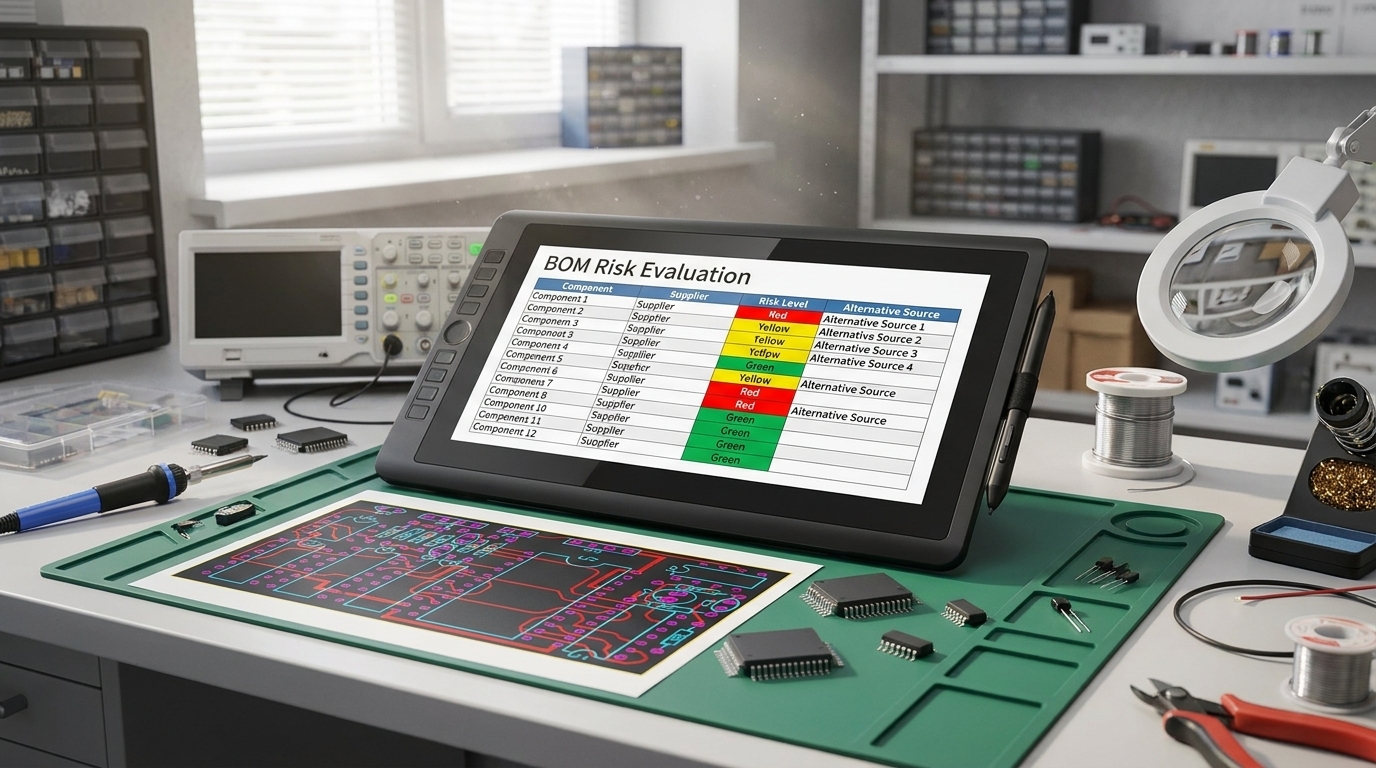 onsemi Synaptics Acquisition Impact: BOM Risk Checklist and Second-Source Strategy for Edge AI DesignsUTMEL27 July 2026384
The onsemi acquisition of Synaptics provides hardware program managers a 12-to-18-month window before potential product cancellations occur in mid-2027. This guide outlines how to audit BOM exposure across overlap and non-core product lines, calculate Last-Time-Buy volumes including hidden storage costs, establish proactive second-sourcing triggers, and implement supply chain monitoring to prevent line-down events.
Read More
Subscribe to Utmel !
![H-9113-B]() H-9113-B
H-9113-BBud Industries
![BLM03AG121SZ1D]() BLM03AG121SZ1D
BLM03AG121SZ1DMurata Electronics
![01220093Z]() 01220093Z
01220093ZLittelfuse Inc.
![BLM21AG102SH1D]() BLM21AG102SH1D
BLM21AG102SH1DMurata Electronics
![BLM03AG102SZ1D]() BLM03AG102SZ1D
BLM03AG102SZ1DMurata Electronics
![CYBT-353027-02]() CYBT-353027-02
CYBT-353027-02Cypress Semiconductor Corp
![BLM03BB100SN1D]() BLM03BB100SN1D
BLM03BB100SN1DMurata Electronics
![BLM03AG100SZ1D]() BLM03AG100SZ1D
BLM03AG100SZ1DMurata Electronics
![7T.81.0.000.2403]() 7T.81.0.000.2403
7T.81.0.000.2403Finder Relays, Inc.
![03450101H]() 03450101H
03450101HLittelfuse Inc.