Product
 Brand
Brand Articles
 Tools
Tools
GlobalFoundries Unveils $4 Billion Expansion in Singapore to Meet Rising Chip Demand
GlobalFoundries, a U.S.-based contract chipmaker, has announced the launch of its $4 billion expansion fabrication plant in Singapore, in response to the increasing demand for essential semiconductor chips. The new 23,000-square meter facility is expected to bolster the company's global manufacturing footprint, enabling it to better serve its customers across its manufacturing sites in three continents. The expansion is set to produce an additional 450,000 wafers (300mm) annually, increasing GlobalFoundries Singapore's total capacity to approximately 1.5 million wafers (300mm) each year. "I'm confident that over the next decade, this industry will double again," said Thomas Caulfield, president and CEO of GlobalFoundries. He noted that sectors such as automotive and cloud for artificial intelligence continue to demonstrate strong demand for chips, while consumer-related sectors remain weak. GlobalFoundries, the world's third-largest foundry by revenue, contracts with semiconductor firms to manufacture chips. Its semiconductors, designed by companies like Qualcomm, MediaTek, and NXP Semiconductors, are used in an array of products from smartphones and laptops to automobiles and smart speakers. The expansion is also expected to create about 1,000 "high-value" jobs in Singapore, mostly comprising equipment technicians, process technicians, and engineers. This comes in addition to the company's current workforce of approximately 4,500 employees at the Singapore site. The new facility was established in partnership with Singapore's Economic Development Board, reflecting GlobalFoundries' long-standing relationship with the Singapore government. The government's industrial policies have been instrumental in attracting high-tech manufacturing and innovation to the region, according to Caulfield. The CEO also highlighted the role of AI tools in the new facility, which will be used to improve productivity, such as wafer pattern recognition to auto-classify and spot defects in wafers. Despite the current excess inventories of memory chips due to stockpiling during the pandemic, Caulfield remains optimistic. He believes that global inflation needs to be controlled before interest rates can come down and consumer spending can recover, particularly in China.
 UTMEL
UTMEL
We are the professional distributor of electronic components, providing a large variety of products to save you a lot of time, effort, and cost with our efficient self-customized service. careful order preparation fast delivery service
 Power Semiconductor Procurement After the Nexperia Shake-Up—NXP for Stability, ON for Technology, or Nexperia for Value?UTMEL04 November 20254811
The recent supply chain turmoil surrounding Netherlands-based Nexperia has sent shockwaves through the global semiconductor industry, forcing procurement professionals to re-evaluate their sourcing strategies.
Read More AI Computing Power Gap: How Token Consumption is Reshaping Server Component SourcingUTMEL23 June 2026889
As global token consumption drives the transition to high-density 100kW+ AI data centers, power delivery networks require advanced Wide-Bandgap semiconductors (SiC/GaN) and high-capacitance MLCCs. This shift has triggered a component procurement crisis with lead times exceeding 24 weeks. To bypass shortages, hardware buyers must abandon just-in-time manufacturing and leverage independent global distributor networks to secure critical power and passive components.
Read More The BSPDN Revolution: Overcoming IR Drop in Sub-2nm GAAFET Nodes with Backside Power DeliveryUTMEL25 June 2026798
As semiconductor manufacturing enters the sub-2nm era, Backside Power Delivery Networks (BSPDN) are replacing traditional front-side routing to overcome critical IR drop bottlenecks. By separating power and signal delivery, chipmakers like Intel and TSMC drastically improve performance and density in GAAFET designs. However, this radical shift introduces manufacturing complexities, thermal challenges, and demands advanced packaging and power management solutions.
Read More Power Management ICs Trends 2026: AI Demand, Supply Risks, and Sourcing StrategiesUTMEL06 July 20261267
As AI server racks surpass 100kW by 2026, data centers are shifting toward wide-bandgap semiconductors like SiC and GaN. However, this demand has triggered a critical shortage of mature-node Power Management ICs (PMICs). To prevent production halts, sourcing teams must abandon 'just-in-time' models, implement proactive 'just-in-case' strategies, and rapidly qualify pin-to-pin alternative components to secure their supply chains.
Read More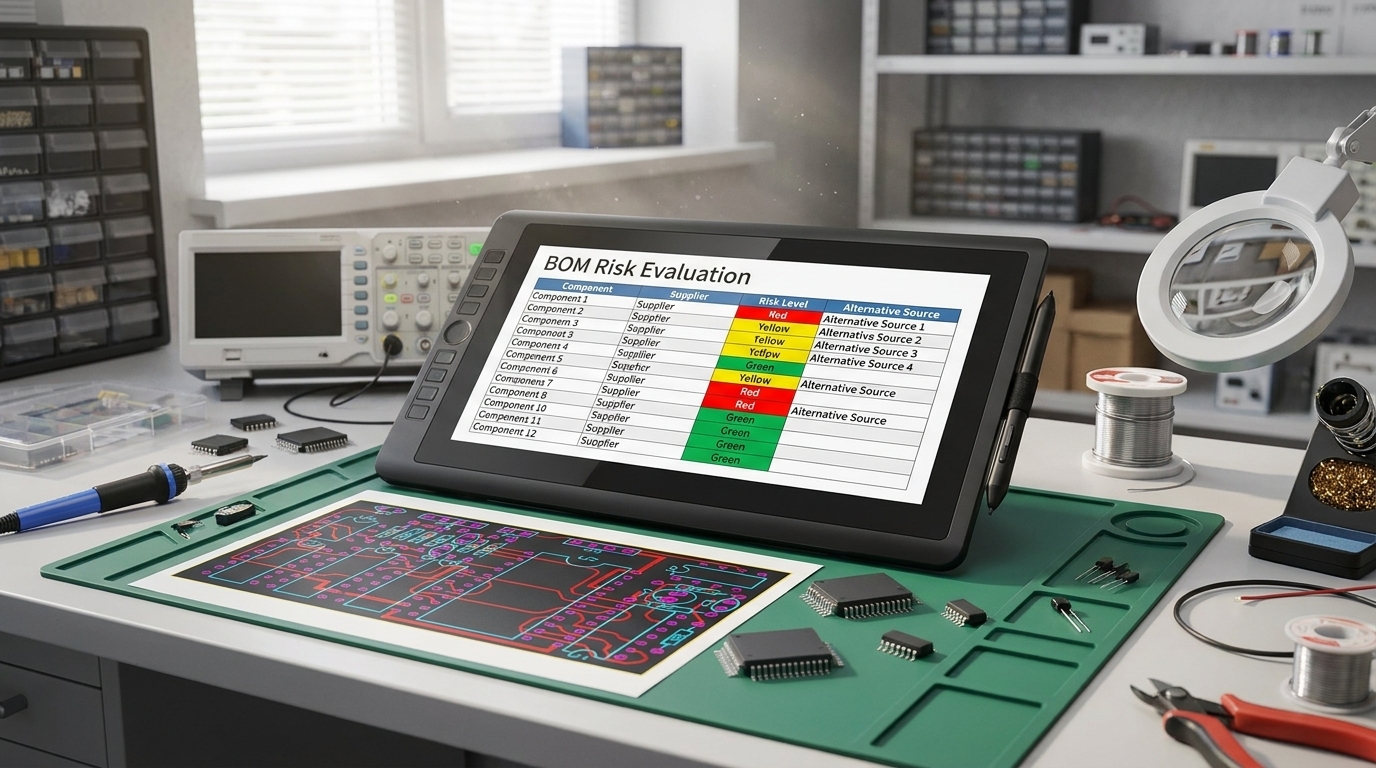 onsemi Synaptics Acquisition Impact: BOM Risk Checklist and Second-Source Strategy for Edge AI DesignsUTMEL27 July 2026288
The onsemi acquisition of Synaptics provides hardware program managers a 12-to-18-month window before potential product cancellations occur in mid-2027. This guide outlines how to audit BOM exposure across overlap and non-core product lines, calculate Last-Time-Buy volumes including hidden storage costs, establish proactive second-sourcing triggers, and implement supply chain monitoring to prevent line-down events.
Read More
Subscribe to Utmel !
![BLM15BD102SN1D]() BLM15BD102SN1D
BLM15BD102SN1DMurata Electronics
![H050X034H1T]() H050X034H1T
H050X034H1TPanduit Corp
![EMPLUS-CD]() EMPLUS-CD
EMPLUS-CDPanduit Corp
![03420014H]() 03420014H
03420014HLittelfuse Inc.
![10207101009]() 10207101009
10207101009Littelfuse Inc.
![BLM03AX601SZ1D]() BLM03AX601SZ1D
BLM03AX601SZ1DMurata Electronics
![74AHC74D,118]() 74AHC74D,118
74AHC74D,118Nexperia USA Inc.
![02540101Z]() 02540101Z
02540101ZLittelfuse Inc.
![CJ25-82010]() CJ25-82010
CJ25-82010Nidec Copal Electronics
![409775-1]() 409775-1
409775-1TE Application Tooling