Product
 Brand
Brand Articles
 Tools
Tools
Yahoo Discontinues Services in Mainland China
In a recent announcement, Yahoo has revealed that as of November 1st, 2021, its suite of services will no longer be accessible from mainland China. This decision comes as a surprise to many users in the region who have relied on Yahoo for various online services. While Yahoo products and services will continue to operate without any disruption in all other global locations, the company has made the difficult decision to withdraw from the Chinese market. This move is likely a result of increasing government regulations and restrictions on foreign internet companies operating within the country. Yahoo has expressed its gratitude to its Chinese users for their support and readership over the years. The company has been a popular choice among Chinese internet users for its search engine, email service, and news portal. The decision to discontinue services in mainland China will undoubtedly have an impact on Yahoo's user base and market share in the region. It remains to be seen how Chinese internet users will adapt to the absence of Yahoo's services and whether they will switch to alternative platforms. Yahoo's exit from the Chinese market follows a trend of foreign internet companies facing challenges in operating within the country. Over the years, companies like Google and Facebook have also faced restrictions and have been forced to either limit their services or exit the market altogether. The Chinese government's strict control over online content and its preference for domestic internet companies has made it difficult for foreign players to compete on an equal footing. This has led to a highly regulated and fragmented internet landscape in China, with domestic players dominating the market. While Yahoo's decision to discontinue services in mainland China is a setback for the company, it is also an opportunity for local competitors to gain a larger market share. Chinese internet giants like Baidu, Alibaba, and Tencent are likely to benefit from Yahoo's exit as users look for alternative platforms to fulfill their online needs. As Yahoo bids farewell to its Chinese users, it remains to be seen how this decision will impact the company's global strategy and whether it will focus on strengthening its presence in other markets. With the Chinese internet market being one of the largest in the world, it is undoubtedly a loss for Yahoo, but it may also open up new avenues for growth and expansion in other regions.
 UTMEL
UTMEL
We are the professional distributor of electronic components, providing a large variety of products to save you a lot of time, effort, and cost with our efficient self-customized service. careful order preparation fast delivery service
 Power Semiconductor Procurement After the Nexperia Shake-Up—NXP for Stability, ON for Technology, or Nexperia for Value?UTMEL04 November 20254807
The recent supply chain turmoil surrounding Netherlands-based Nexperia has sent shockwaves through the global semiconductor industry, forcing procurement professionals to re-evaluate their sourcing strategies.
Read More AI Computing Power Gap: How Token Consumption is Reshaping Server Component SourcingUTMEL23 June 2026889
As global token consumption drives the transition to high-density 100kW+ AI data centers, power delivery networks require advanced Wide-Bandgap semiconductors (SiC/GaN) and high-capacitance MLCCs. This shift has triggered a component procurement crisis with lead times exceeding 24 weeks. To bypass shortages, hardware buyers must abandon just-in-time manufacturing and leverage independent global distributor networks to secure critical power and passive components.
Read More The BSPDN Revolution: Overcoming IR Drop in Sub-2nm GAAFET Nodes with Backside Power DeliveryUTMEL25 June 2026793
As semiconductor manufacturing enters the sub-2nm era, Backside Power Delivery Networks (BSPDN) are replacing traditional front-side routing to overcome critical IR drop bottlenecks. By separating power and signal delivery, chipmakers like Intel and TSMC drastically improve performance and density in GAAFET designs. However, this radical shift introduces manufacturing complexities, thermal challenges, and demands advanced packaging and power management solutions.
Read More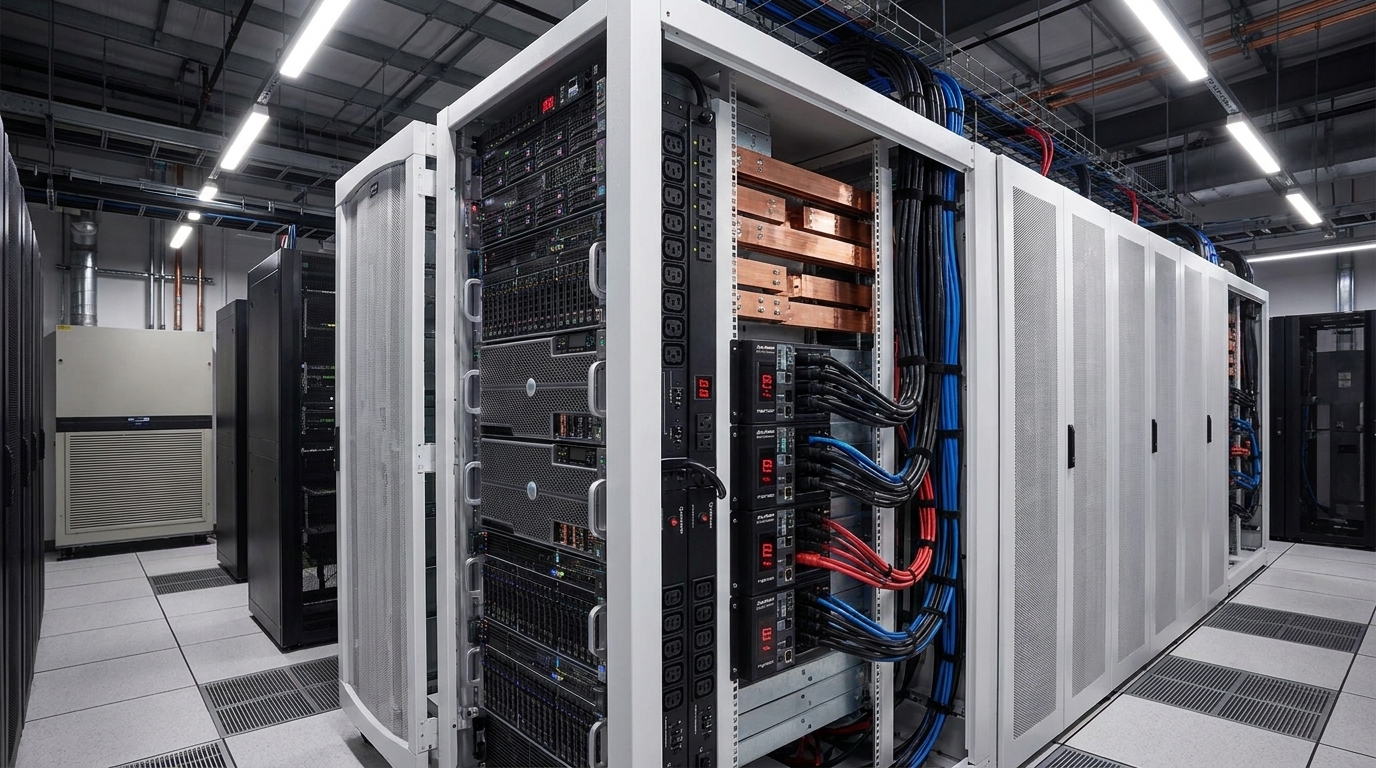 Power Management ICs Trends 2026: AI Demand, Supply Risks, and Sourcing StrategiesUTMEL06 July 20261265
As AI server racks surpass 100kW by 2026, data centers are shifting toward wide-bandgap semiconductors like SiC and GaN. However, this demand has triggered a critical shortage of mature-node Power Management ICs (PMICs). To prevent production halts, sourcing teams must abandon 'just-in-time' models, implement proactive 'just-in-case' strategies, and rapidly qualify pin-to-pin alternative components to secure their supply chains.
Read More onsemi Synaptics Acquisition Impact: BOM Risk Checklist and Second-Source Strategy for Edge AI DesignsUTMEL27 July 2026287
The onsemi acquisition of Synaptics provides hardware program managers a 12-to-18-month window before potential product cancellations occur in mid-2027. This guide outlines how to audit BOM exposure across overlap and non-core product lines, calculate Last-Time-Buy volumes including hidden storage costs, establish proactive second-sourcing triggers, and implement supply chain monitoring to prevent line-down events.
Read More
Subscribe to Utmel !
![MS27466E23C32P]() MS27466E23C32P
MS27466E23C32PCorsair Electrical Connectors
![ACS06AD36-1S-025]() ACS06AD36-1S-025
ACS06AD36-1S-025Amphenol
![109-1073H]() 109-1073H
109-1073HSanyo Denki America Inc.
![110060123]() 110060123
110060123Seeed Technology Co., Ltd
![BLM03BB220SN1D]() BLM03BB220SN1D
BLM03BB220SN1DMurata Electronics
![MMZ0603S100CT000]() MMZ0603S100CT000
MMZ0603S100CT000TDK Corporation
![CL05B104KB54PNC]() CL05B104KB54PNC
CL05B104KB54PNCSamsung Electro-Mechanics
![314253-1]() 314253-1
314253-1TE Application Tooling
![BLM15AX601SN1D]() BLM15AX601SN1D
BLM15AX601SN1DMurata Electronics
![BLM18HD102SN1D]() BLM18HD102SN1D
BLM18HD102SN1DMurata Electronics