

 Product
 Brand
Brand Articles
 Tools
Tools

UTMEL
We are the professional distributor of electronic components, providing a large variety of products to save you a lot of time, effort, and cost with our efficient self-customized service. careful order preparation fast delivery service
Sort by
 NOR Flash: Working, Structure and Applications
18 November 2021
NOR flash was first developed by Intel in 1988, and after so many years of development, it is widely used in various computers and embedded products. NOR and NAND is the two main types of non-volatile memory in the market today.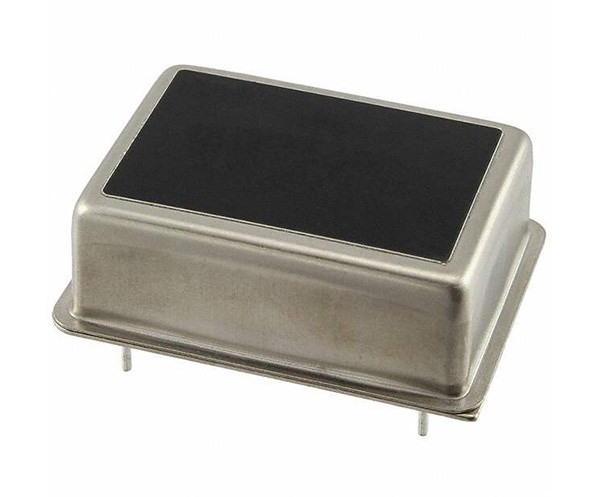 Crystal Oscillators Explained: How They Work and How to Specify One
14 July 2026
This guide walks through the mechanism first, then the practical specification method. Along the way it keeps every parameter qualitative and points you to the manufacturer documentation where the exact figures live, because the precise tolerances and stability windows belong to a specific part number rather than to crystals in general.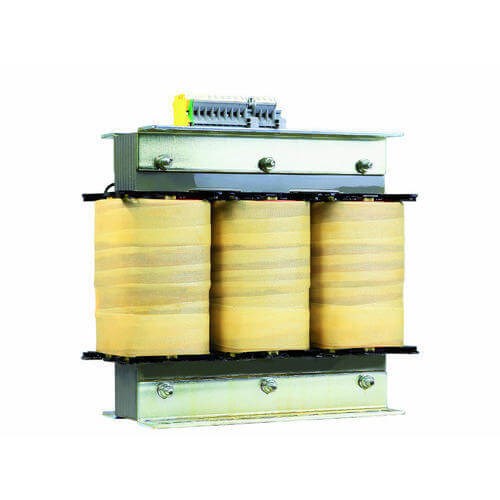 An Overview of Isolation Transformers
17 September 2020
An isolation transformer is a transformer in which the input and output windings are electrically isolated. The isolation transformer is to isolate the current of the primary winding and the secondary winding respectively. What is a USB Data Cable?
27 August 2021
The USB data cable is used for the connection and communication of the computer and external devices. It can also be used for the charging of the phone and the external connection. It is popular for transmitting data and charging. AC/DC, DC/DC Converter Fundamental Guide
04 June 2026
Hello everyone, I am Rose. Welcome to the new post today. This article mainly introduce the definition of AC and DC, AC/DC Converter as well as DC/DC converter. What is a High-pass Filter?
10 March 2021
A high-pass filter is a combination device of capacitors, inductances, and resistors that allow signal components above a certain frequency to pass, while greatly suppressing signal components below that frequency. The high-pass filter only attenuates the frequency components below a given frequency, and allows the frequency components above the cutoff frequency to pass, and there is no phase shift filtering process. Mainly used to eliminate low-frequency noise, also called low-cut filter.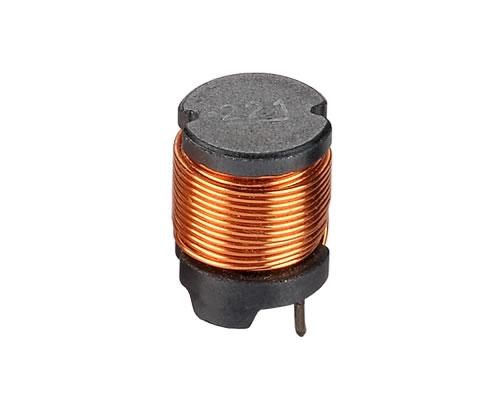 Introduction to Inductive Reactance
16 April 2021
Alternating current can also pass through the coil, but the inductance of the coil has an obstructive effect on the alternating current. This obstruction is called inductive reactance. General PCB Layout Design Guidelines for RF and Digital-to-Analog Circuits
20 January 2022
This article provides guidance and advice on radio frequency (RF) printed circuit board (PCB) design and layout, including some discussion of mixed-signal applications such as digital, analog, and RF components on the same PCB. The content is organized by topic to provide "best practice" guidelines that should be applied in conjunction with all other design and manufacturing guidelines that may apply to specific components, PCB manufacturers, and materials. Introduction to the Types of SDRAM
13 July 2021
SDRAM (synchronous dynamic random-access memory) is a dynamic random-access memory (DRAM) with a synchronous interface.SDRAM is widely used in computer and electronic devices. Power Management Integrated Circuit (PMIC) Guide
10 February 2022
Power Management Integrated Circuits (PMIC) is a chip that is responsible for the conversion, distribution, detection and other power management of electrical energy in electronic equipment systems. What are the Testing Method and Types of Transistors?
21 October 2025
A transistor is a semiconductor device that is commonly used in amplifiers or electronically controlled switches. It’s the basic building block that regulates the operation of computers, cell phones, and all other modern electronic circuits. Due to the fast response time and high accuracy, transistors can be used for a variety of digital and analog functions, including amplification, switching, voltage regulation, signal modulation, and oscillators. Image Sensor: How do CCD and CMOS Sensors work?
24 October 2025
An image sensor is a semiconductor device that can convert optical images into digital signals. It is widely used in digital cameras and other electronic optical devices. The image sensor uses the photoelectric conversion function of the photoelectric device to convert the light image on the photosensitive surface into an electrical signal in a proportional relationship with the light image. There are two kinds of image sensors which are CMOS and CCD. CCD and CMOS have their advantages in different application scenarios.