Product
 Brand
Brand Articles
 Tools
Tools
Top 10 OSAT (Outsourced Semiconductor Assembly and Test) Companies
Quick answer: The latest complete global OSAT revenue ranking that could be verified from public TrendForce material during this August 2026 update covers 2024 revenue. ASE ranks first, followed by Amkor, JCET, Tongfu Microelectronics, Powertech Technology, HT-Tech, WiseRoad (UTAC Group), Hana Micron, KYEC, and ChipMOS. The top ten generated a combined US$41.56 billion, up 3% year over year. This is not a forecast or a synthetic 2026 ranking.
Updated August 26, 2026: This article separates the publication date from the ranking year. A newer complete, like-for-like public OSAT revenue table was not used because one could not be verified from the ranking publisher at the time of review. Company capabilities and footprints were checked against current official company pages, while the ranking and revenue figures come from TrendForce.
Latest top 10 OSAT companies by revenue
The table below reproduces the latest complete ranking located in TrendForce's public OSAT research material. Revenue is shown in US dollars for comparability. The list ranks outsourced semiconductor assembly and test providers, not wafer foundries, fabless chip designers, or integrated device manufacturers.
| Rank | Company | Base | 2024 revenue | YoY | Primary position |
|---|---|---|---|---|---|
| 1 | ASE | Taiwan | US$18.54B | -0.7% | Broad assembly, advanced packaging, SiP, and test |
| 2 | Amkor | United States | US$6.32B | -2.8% | Flip chip, wafer-level, memory, wirebond, and test |
| 3 | JCET | China | US$5.00B | +19.3% | Turnkey back-end manufacturing and heterogeneous integration |
| 4 | Tongfu Microelectronics | China | US$3.32B | +5.6% | Compute, communications, consumer, automotive, and test |
| 5 | Powertech Technology | Taiwan | US$2.28B | +1.0% | Memory, logic, probing, packaging, burn-in, and final test |
| 6 | HT-Tech | China | US$2.01B | +26.0% | Leadframe, substrate, wafer-level, SiP, MEMS, and test |
| 7 | WiseRoad (UTAC Group) | Singapore / Asia | US$1.56B | +5.0% | Automotive, analog, power, MEMS, SiP, assembly, and test |
| 8 | Hana Micron | South Korea | US$0.92B | +23.7% | Memory-oriented packaging, wafer/package/module test |
| 9 | KYEC | Taiwan | US$0.91B | -14.5% | Wafer test, final test, burn-in, SLT, and test engineering |
| 10 | ChipMOS | Taiwan | US$0.71B | +3.1% | Memory, display driver IC, bumping, packaging, and test |
Ranking takeaway: ASE alone represented nearly 45% of the top-ten total. JCET and HT-Tech recorded the strongest growth among the China-based companies in the table, while Hana Micron entered at number eight. KYEC's reported decline was affected by the sale of subsidiary KLTech, so it should not be read as a pure measure of organic test demand.
How to read the ranking
This list is a revenue ranking, not a universal score for technology, quality, available capacity, or suitability for a particular device. TrendForce converted company revenue to US dollars using annual average exchange rates. Currency movement can therefore change the reported growth rate even when local-currency sales move differently.
The article is updated in 2026, but the ranking is based on 2024 actual revenue and was released in May 2025. Calling it a "2026 revenue ranking" would be misleading. A current article can use the latest verified historical ranking while separately updating company capabilities, facilities, and selection guidance from current official sources.
Company boundaries also matter. The ranking labels number seven as WiseRoad, while the operating company most engineers encounter is UTAC Group. Different research firms may consolidate subsidiaries, joint ventures, or service categories differently. When comparing rankings, check the included entities, revenue period, currency conversion, and whether revenue is strictly OSAT service revenue.
What is an OSAT company?
OSAT stands for Outsourced Semiconductor Assembly and Test. After a wafer is fabricated, an OSAT can provide wafer probing, wafer preparation, package design, assembly, molding or encapsulation, singulation, final electrical test, burn-in, system-level test, inspection, packing, and logistics. The exact scope depends on the provider, package, device type, qualification, and customer program.
OSATs serve fabless semiconductor companies, integrated device manufacturers (IDMs), foundries, and system companies. Outsourcing gives chip suppliers access to specialized packaging and test equipment without building every back-end process internally. It also creates a supplier-selection problem: the largest provider by revenue is not automatically the best fit for a small analog IC, an automotive power device, a display driver, or a high-bandwidth AI accelerator.
| Business type | Primary role | Typical output | Examples |
|---|---|---|---|
| Fabless | Designs chips and usually outsources manufacturing | Chip designs, IP, and products | GPU, MCU, connectivity, or analog vendors without owned wafer fabs |
| Foundry | Fabricates wafers for external customers | Processed wafers or dies | TSMC, Samsung Foundry, UMC, GlobalFoundries |
| OSAT | Provides outsourced assembly, packaging, and/or test | Packaged, tested, and shipment-ready devices | ASE, Amkor, JCET, and the other providers ranked here |
| IDM | Designs and manufactures its own semiconductors, with possible outsourcing | Finished semiconductor products | A vertically integrated chip manufacturer |
Semiconductor assembly and test process flow
A typical back-end flow starts with incoming wafers and product documentation. Wafer probe or wafer sort electrically screens dies before assembly when the product flow requires it. The wafer may then be back-ground to the target thickness, mounted on tape, and diced into individual dies.
During assembly, known-good dies are attached to a leadframe, laminate substrate, interposer, or another die. Interconnection may use wire bonding, flip chip bumps, copper pillars, redistribution layers, through-silicon vias, or other package-specific structures. The package can then receive underfill, molding, lid attachment, singulation, marking, and inspection. There is no single sequence that applies to every leadframe, BGA, wafer-level, fan-out, SiP, 2.5D, or 3D product.
After assembly, final test checks the packaged device against electrical specifications. Depending on the product and qualification plan, the flow can also include burn-in, reliability stress, system-level test, visual or X-ray inspection, failure analysis, and outgoing quality control. Test time, temperature range, coverage, handler configuration, parallelism, data format, and yield-disposition rules should be agreed before volume ramp.
OSAT capability and footprint comparison
This matrix is a screening aid based on current official company descriptions. It is not a quotation, capacity commitment, or qualification approval. Confirm the exact package outline, wafer size, test platform, temperature range, certification, production site, engineering support, minimum lot policy, and lead time directly with the supplier.
| Company | Assembly emphasis | Test emphasis | Public footprint signal |
|---|---|---|---|
| ASE | Fan-out, SiP, 2.5D/3D, high-density integration | Wafer probe, final test, module test, SLT | Large global manufacturing and engineering network |
| Amkor | Flip chip, wafer-level, memory, wirebond, power | Related final and system-level test services | Manufacturing across major Asian semiconductor regions, with expanded US plans |
| JCET | Leadframe, laminate, flip chip, wafer-level, SiP, XDFOI | Mixed-signal, RF, analog, and high-performance digital | Eight-site manufacturing network |
| Tongfu | Flip chip, fan-out, wafer-level, SiP, BGA/QFN families | Wafer probe, strip, final, and system-level test | Seven production bases in China and Malaysia |
| PTI | Memory, logic, WLP, flip chip, SiP, module assembly | Chip probing, final test, burn-in | Manufacturing in Taiwan and Japan |
| HT-Tech | Leadframe, substrate, flip chip, SiP, bumping, WLP, MEMS | Program development, CP, FT, and SLT | Sites and offices across China plus selected international locations |
| UTAC | Leadframe, laminate, MEMS, SiP, wafer-level, power | Wafer sort, final test, development, and engineering | Ten facilities across Singapore, Thailand, Indonesia, and China |
| Hana Micron | Memory-oriented package and module solutions | Wafer, package, and module test; program and board support | Korea-based group with international operations |
| KYEC | Packaging is available as part of turnkey programs | Wafer test, final test, burn-in, SLT, test engineering | Taiwan test sites, Singapore expansion, global sales support |
| ChipMOS | Bumping and packaging for memory and display-related devices | Memory, mixed-signal, ASIC, and display driver test | Taiwan-centered manufacturing and customer support |
Top 10 OSAT company profiles
1. ASE

ASE led the table with US$18.54 billion, nearly 45% of the combined top-ten revenue. Its current official portfolio spans conventional and advanced packaging plus a broad range of test services. The VIPack platform groups fan-out, 2.5D/3D, system-in-package, and co-packaged-optics approaches for high-density integration. Its test offering includes front-end engineering test, wafer probe, final test, module test, burn-in-related services, and system-level test.
Best fit signal: programs that need broad scale, advanced integration, and combined assembly/test engineering. Verify before selection: the exact site, package flow, available substrate or interposer path, thermal design ownership, test platform, capacity window, and commercial terms.
2. Amkor Technology

Amkor ranked second at US$6.32 billion. Its public filings divide services into advanced products - including flip chip, memory, wafer-level processing, and related test - and mainstream products such as wirebond and power-device packaging with related test. The company serves communications, computing, automotive, industrial, and consumer markets through a multi-site manufacturing network.
Best fit signal: customers seeking a large global OSAT with both advanced and mainstream package families. Verify before selection: package qualification history, the production site proposed for the device, second-site options, test ownership, reliability requirements, and whether the program fits the site's ramp and volume profile.
3. JCET Group

JCET ranked third with US$5.00 billion and 19.3% year-over-year growth. Its official turnkey scope runs from design and test-program development through wafer bump, wafer probe, assembly, final test, and shipment. Public technology pages list wirebond, flip chip, wafer-level, SiP, MEMS and sensor, power-device, and XDFOI heterogeneous-integration capabilities.
Best fit signal: products needing end-to-end back-end services or a mix of mainstream and advanced package technologies. Verify before selection: which of JCET's sites owns the target process, cross-site portability, product-specific design rules, test coverage, qualification evidence, and current production availability.
4. Tongfu Microelectronics
Tongfu ranked fourth at US$3.32 billion. The company describes a one-stop flow covering design simulation, wafer-level test, packaging, final test, and system-level test. Its published portfolio serves computing, communications, storage, mobile, automotive, AI, IoT, industrial, and consumer applications, with seven production bases in China and Malaysia.
Best fit signal: compute or communications programs that benefit from integrated packaging and test services in China and Southeast Asia. Verify before selection: the exact package-node claim against the target design, site-specific process capability, customer-supplied material requirements, test equipment, quality certifications, and export-control obligations.
5. Powertech Technology (PTI)

PTI ranked fifth with US$2.28 billion. Its official scope includes chip bumping, probing, IC assembly, final test, burn-in, and system-level assembly. PTI is especially associated with memory packaging and testing, while its published portfolio also covers logic devices, wafer-level packaging, flip chip, SiP, and module assembly. Its manufacturing base includes Taiwan and Japan.
Best fit signal: memory-heavy products and programs that need probing, packaging, and test under one supplier. Verify before selection: supported memory or logic family, test-program responsibilities, burn-in conditions, data handling, FOPLP maturity for the exact product, and the approved production location.
6. HT-Tech (Huatian Technology)

HT-Tech ranked sixth at US$2.01 billion, up 26%. Its official product pages cover leadframe and substrate packages, flip chip, SiP, bumping, wafer-level packages, MEMS, and sensors. The company also describes a test flow from program development through chip probing, final test, and system-level test, with operations across multiple Chinese sites and selected international locations.
Best fit signal: customers evaluating a broad China-based packaging portfolio from conventional packages through wafer-level and SiP. Verify before selection: the responsible factory, package drawing, automotive or other qualification scope, test platform, lot traceability, materials, and the current readiness of the exact technology.
7. WiseRoad (UTAC Group)

TrendForce lists WiseRoad in seventh place at US$1.56 billion. UTAC Group's current official site describes ten manufacturing facilities across Singapore, Thailand, Indonesia, and China, with assembly and test solutions for automotive, communications, computing, consumer, power, MEMS, sensor, SiP, wafer-level, leadframe, and laminate products.
Best fit signal: customers looking for an Asia-based multi-site OSAT with strong automotive, analog, mixed-signal, power, and test capabilities. Verify before selection: which legal entity and site will contract and manufacture the product, test-temperature requirements, AEC or other qualification evidence, business-continuity planning, and program volume.
8. Hana Micron
Hana Micron entered the verified top ten at number eight with US$0.92 billion and 23.7% growth. TrendForce linked the gain to strong memory-customer performance. Hana Micron's official material describes wafer, package, and module test; test-program development and conversion; probe-card and load-board design support; and monitoring and analysis systems. Its brochure also presents packaging and module capabilities.
Best fit signal: memory-oriented package and test programs that benefit from a specialist with test-program and board-design support. Verify before selection: the exact package family, supported test platforms, module scope, production location, customer concentration risk, capacity, qualification, and commercial terms. No Hana Micron image was hot-linked into the CMS fragment because the official logo is delivered through a website sprite rather than a stable standalone image URL.
9. KYEC
KYEC ranked ninth with US$0.91 billion. TrendForce attributed the reported 14.5% decline mainly to the sale of KLTech, while noting ongoing AI-server and HPC test demand. KYEC's current official scope includes wafer test, final test, burn-in, system-level test, test-program development, platform conversion, load-board and probe-card support, and test-data management.
Best fit signal: test-intensive logic, mixed-signal, RF, memory, sensor, automotive, and high-performance devices. Verify before selection: tester and handler availability, power and thermal limits, temperature range, parallelism, program ownership, correlation plan, SLT coverage, burn-in profile, and the production site.
10. ChipMOS
ChipMOS ranked tenth with US$0.71 billion and 3.1% growth. TrendForce highlighted steadier automotive and OLED demand in the display-driver business. ChipMOS's official pages describe back-end testing and packaging for memory, display driver ICs, mixed-signal devices, ASICs, bumping, and related package-design and reliability services.
Best fit signal: memory and display-related products or programs needing integrated bumping, package design, assembly, and test support. Verify before selection: device-specific test coverage, package options, automotive qualification, reliability plan, site capacity, engineering ownership, and production schedule.
What changed in the top ten?
The most important list correction is at the bottom of the ranking. Hana Micron is number eight in TrendForce's 2024 table, pushing KYEC to ninth and ChipMOS to tenth. Chipbond, which appeared in the older version of this Utmel article, is not in the latest complete top ten used here.

This does not mean Chipbond ceased operating or lacks relevant capabilities. It only means the company is outside this specific publisher's top ten for the stated year and revenue scope. Ranking movement near the cutoff can reflect revenue, exchange rates, acquisitions, divestitures, and the research firm's consolidation method.
How to select an OSAT partner
Define the product and package requirements. Provide die size, wafer diameter and thickness, pad or bump map, package outline, I/O count, power, thermal limits, warpage targets, substrate assumptions, materials restrictions, and mechanical envelope.
Separate assembly from test ownership. State who develops the test program, probe card, load board, socket, handler interface, burn-in board, system-level hardware, and correlation plan. A supplier may be strong in assembly but rely on another site or partner for a specific test.
Match the application qualification. Automotive, medical, industrial, consumer, communications, and data-center devices have different quality systems, temperature ranges, reliability stresses, traceability, change-control, and documentation expectations.
Check process maturity at the proposed site. A corporate technology page does not prove that every factory can run every package. Request site-specific design rules, qualification evidence, yield history for comparable products, equipment lists, and a clear new-product-introduction plan.
Plan capacity and second-source strategy. Confirm prototype and engineering-lot policy, ramp schedule, monthly volume, cycle time, constrained tools or materials, alternate production sites, disaster recovery, and the validation cost of moving a product.
Review data and IP controls. Agree on test-data format, retention, remote access, yield alarms, encryption, design-file access, subcontractor disclosure, export controls, and ownership of custom hardware and programs.
Compare total cost, not only unit price. Include non-recurring engineering, masks or tooling, substrates, test time, yield loss, burn-in, reliability qualification, logistics, duties, engineering support, and the cost of schedule or quality risk.
For a low-volume prototype, do not assume that a company appearing in this ranking accepts the required lot size or turnaround. Ask for a written manufacturing route and quotation. The GSC data shows demand for vendor lists and footprints, but search demand is not evidence of supplier service commitments.
OSAT industry trends to watch
Advanced packaging is becoming system integration
AI and HPC devices increase demand for high-density interconnect, chiplet integration, HBM proximity, thermal management, power delivery, and package-level co-design. Providers are expanding fan-out, 2.5D/3D, SiP, advanced substrate, and system-level capabilities, but similar marketing labels can hide different design rules and production maturity.
Test complexity is rising with package complexity
More dies and interfaces create more opportunities for latent defects, signal-integrity problems, thermal constraints, and expensive yield loss. Wafer sort, known-good-die strategy, final test, burn-in, system-level test, analytics, and failure analysis must be designed as one economics-and-quality plan rather than added independently at the end.
Regional footprint is now a design decision
Customers increasingly evaluate where a package can be built and tested, whether a qualified second site exists, how materials move across borders, and how export controls or geopolitical events affect continuity. A broad global footprint can improve options, but only when the same process, equipment, quality plan, and customer approvals can be transferred.
Revenue rank and technical fit will continue to diverge
The largest OSAT may offer the broadest scale, while a smaller specialist may be better for a display driver, memory test, sensor, power device, RF module, or a particular regional supply chain. Use the ranking for market context, then qualify the supplier against the actual product.
Frequently asked questions
What does OSAT stand for?
OSAT stands for Outsourced Semiconductor Assembly and Test. OSAT companies provide outsourced back-end services after wafer fabrication, including some combination of packaging, assembly, wafer probe, final test, burn-in, system-level test, inspection, and logistics.
Which company is the largest OSAT?
ASE is number one in the latest complete public TrendForce revenue ranking verified for this update. It recorded US$18.54 billion in 2024 OSAT revenue and represented nearly 45% of the combined top-ten total.
Is TSMC an OSAT company?
TSMC is primarily classified as a semiconductor foundry. It also provides or participates in advanced packaging services, but that does not make a foundry revenue ranking interchangeable with an independent OSAT ranking. Classifications depend on the revenue scope being analyzed.
What is the difference between an OSAT and a foundry?
A foundry primarily fabricates semiconductor wafers. An OSAT primarily performs outsourced assembly, packaging, and test after wafer fabrication. In practice, service boundaries can overlap, especially in advanced packaging, so customers should examine the actual manufacturing route rather than rely only on the company label.
What services do OSAT companies provide?
Common services include package design, wafer bumping, wafer probe, backgrind, dicing, die attach, wire bond or flip chip interconnect, molding, singulation, marking, final test, burn-in, system-level test, failure analysis, packing, and logistics. Not every OSAT or site provides every service.
Why is the latest ranking based on 2024 revenue?
Complete annual rankings are published after companies close the year and researchers normalize the data. During this August 2026 update, the latest complete public TrendForce OSAT table that could be verified was the 2024 revenue ranking released in May 2025. The article therefore labels the year directly instead of presenting it as a 2026 revenue table.
Why do OSAT rankings differ between sources?
Rankings can use different currencies, exchange rates, fiscal periods, company groupings, subsidiaries, joint ventures, and definitions of packaging or test revenue. Compare methodology before comparing the positions.
How should a startup or small-volume customer choose an OSAT?
Start with suppliers that confirm support for the package, wafer, test platform, engineering-lot size, qualification, schedule, and region you need. Request a written scope covering design files, tooling, NRE, test ownership, expected volumes, data handling, and transition to production. A top-ten ranking alone does not confirm prototype access or minimum lot size.
Conclusion
The 2024 TrendForce table remains the latest complete public OSAT revenue ranking verified for this August 2026 refresh. ASE leads, Hana Micron enters at number eight, KYEC moves to ninth, and ChipMOS completes the top ten. Use that list to understand market scale, then make a sourcing decision from product-specific evidence: package design rules, site capability, test coverage, qualification, capacity, data controls, supply continuity, and total cost.
References
 UTMEL
UTMEL
We are the professional distributor of electronic components, providing a large variety of products to save you a lot of time, effort, and cost with our efficient self-customized service. careful order preparation fast delivery service
1. What is outsourced semiconductor assembly and test?
OSAT (Outsourced semiconductor assembly and test) are the companies that offer third-party IC-packaging and test services. These companies provide packaging to silicon devices that are made by foundries and test devices prior to shipping to the market.
2. Is TSMC an Osat?
According to Digitimes, TSMC has taken steps to outsource a part of its CoWoS (Chip-on-Wafer-on-Substrate) 2.5D packaging process to OSAT companies such as ASE Group and Amkor Technology, especially low-volume, customized chips.
 Modeling Wide Band-Gap Semiconductors for Enhanced PerformanceRakesh Kumar, Ph.D.31 January 20243747
The article delves into the challenges faced by silicon-based power electronic devices and highlights the potential of wide band-gap semiconductors. It also emphasizes the importance of modeling power semiconductor devices and provides insights into various models. For electrical energy conversion to be dependable and effective, power electronics and semiconductor device technologies are essential.
Read More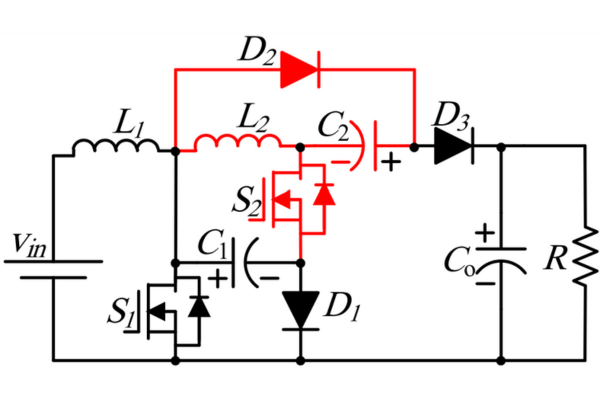 Optimizing Energy Management with Non-Isolated DC-DC ConvertersRakesh Kumar, Ph.D.04 February 20243392
The article classifies DC-DC converters and discusses the benefits and limitations of them. It proposes a modified DC-DC converter topology that combines the Cuk and Positive Output Super Lift Luo topologies to achieve a higher voltage gain with fewer components.
Read More ‘6G Networks’ - Pioneering the Next Era of Connectivity And InnovationRakesh Kumar, Ph.D.18 March 20243704
The article provides a comprehensive overview of the evolving landscape of mobile networks, the requirements that will shape the future of mobile communication, and the innovative technologies driving the transition to 6G.
Read More Review of IoT-Based Smart Home Security Systems- Part 1Rakesh Kumar, Ph.D.28 March 20244163
The article discusses the evolution of IoT-based smart home security systems, integrating advanced technologies like Raspberry Pi, PIR sensors, and voice recognition for enhanced user experience and efficiency.
Read More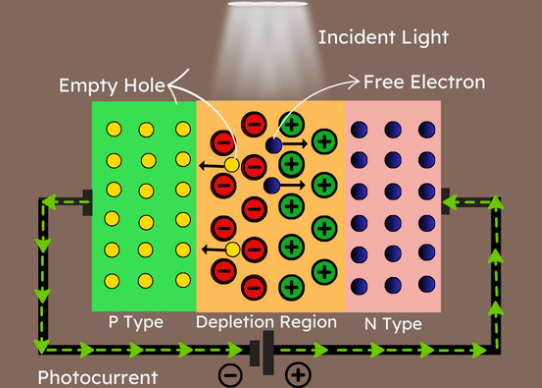 Understanding Photodiodes: Working Principles and Applications - Part 2Rakesh Kumar, Ph.D.24 May 20245361
The article provides a comprehensive overview of photodiodes, focusing on their operational principles, key factors affecting their efficiency, advantages, and disadvantages, and highlights their diverse applications.
Read More
Subscribe to Utmel !
![35827]() 35827
35827Menda
![35823]() 35823
35823Menda
![A-1486]() A-1486
A-1486TE Connectivity
![D-108-11CS948]() D-108-11CS948
D-108-11CS948TE Connectivity
![620091-000]() 620091-000
620091-000TE Connectivity
![C07673N001]() C07673N001
C07673N001TE Connectivity
![880443-000]() 880443-000
880443-000TE Connectivity
![80110]() 80110
80110Brady Corporation
![80210]() 80210
80210Brady Corporation
![70325]() 70325
70325Brady Corporation