Product
 Brand
Brand Articles
 Tools
Tools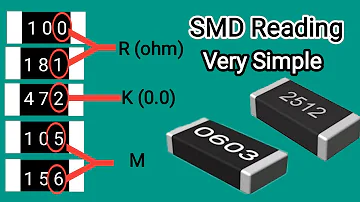
SMD Resistor Code Calculator Overview
The SMD Resistor Code Calculator helps decode the resistance value printed on a surface-mount resistor. It supports the common 3-digit code, 4-digit code, and EIA-96 code used on many chip resistors.
Enter the marking found on the component, choose the correct code format, and the calculator will convert the marking into resistance in ohms, kilohms, or megohms. This is useful when checking a loose SMD resistor, verifying a PCB assembly, or reading a value that is too small for a through-hole color band code.
What Is an SMD Resistor?
An SMD resistor, or surface-mount resistor, is a small resistor designed to be soldered directly onto pads on a printed circuit board. Instead of long leads, it has metalized end terminals. Because the package is small, the resistance value is usually printed as a compact numeric or alphanumeric code.
Not every SMD resistor has a visible marking. Very small packages, special precision parts, high-volume custom parts, and some zero-ohm jumpers may be unmarked or may use a manufacturer-specific code. If the marking is missing or unclear, check the bill of materials, schematic, manufacturer datasheet, or measure the part with a suitable meter after accounting for in-circuit paths.
SMD Resistor Code Types
| Code Type | Typical Use | How It Works | Example |
|---|---|---|---|
| 3-digit code | Common for E24 values and general-purpose chip resistors. | First two digits are significant figures. Third digit is the power-of-ten multiplier. | 472 = 47 × 10² = 4.7 kΩ |
| 4-digit code | Common for tighter-tolerance values where three significant digits are useful. | First three digits are significant figures. Fourth digit is the power-of-ten multiplier. | 1002 = 100 × 10² = 10 kΩ |
| R decimal code | Low-value resistors where the decimal point must be shown. | The letter R marks the decimal point. | 3R3 = 3.3 Ω |
| EIA-96 code | Often used on 1% precision chip resistors, especially small packages. | First two digits select a value from the E96 table. The letter gives the multiplier. | 56B = 374 × 10 = 3.74 kΩ |
How to Read a 3-Digit SMD Resistor Code
In a 3-digit code, the first two digits are the significant figures, and the third digit tells how many zeros to add. Equivalently, multiply the first two digits by 10 raised to the value of the third digit.
Resistance = first two digits × 10 third digit
| Marking | Calculation | Resistance |
|---|---|---|
| 220 | 22 × 10⁰ | 22 Ω |
| 471 | 47 × 10¹ | 470 Ω |
| 102 | 10 × 10² | 1 kΩ |
| 105 | 10 × 10⁵ | 1 MΩ |
| 3R3 | R is the decimal point | 3.3 Ω |
| R47 | R is the decimal point | 0.47 Ω |
A common mistake is reading 100 as 100 Ω. In the 3-digit system, 100 = 10 × 10⁰ = 10 Ω. A 100 Ω resistor would normally be marked 101.
How to Read a 4-Digit SMD Resistor Code
In a 4-digit code, the first three digits are the significant figures, and the fourth digit is the multiplier. This gives one more significant digit than the 3-digit code.
Resistance = first three digits × 10 fourth digit
| Marking | Calculation | Resistance |
|---|---|---|
| 4700 | 470 × 10⁰ | 470 Ω |
| 2001 | 200 × 10¹ | 2 kΩ |
| 1002 | 100 × 10² | 10 kΩ |
| 7992 | 799 × 10² | 79.9 kΩ |
| 15R0 | R is the decimal point | 15.0 Ω |
| 0R10 | R is the decimal point | 0.10 Ω |
How to Read an EIA-96 SMD Resistor Code
The EIA-96 marking system uses three characters. The first two characters are numbers from 01 to 96. These numbers do not directly show the resistance value; they point to a value in the E96 lookup table. The third character is a letter multiplier.
Resistance = E96 table value × letter multiplier
| Letter | Multiplier | Example Meaning |
|---|---|---|
| Y | 0.01 | 100Y = 1.00 Ω is represented by code 01Y, because 01 = 100. |
| X | 0.1 | 66X = 47.5 Ω, because 66 = 475. |
| A | 1 | 01A = 100 Ω. |
| B | 10 | 56B = 3.74 kΩ, because 56 = 374. |
| C | 100 | 38C = 24.3 kΩ, because 38 = 243. |
| D | 1000 | 39D = 249 kΩ, because 39 = 249. |
| E | 10000 | 01E = 1 MΩ. |
| F | 100000 | 01F = 10 MΩ. |
Some manufacturers use additional or alternative letter conventions for special ranges, so always check the resistor datasheet when the marking does not match the common table.
EIA-96 Value Lookup Table
| Code | Value | Code | Value | Code | Value | Code | Value |
|---|---|---|---|---|---|---|---|
| 01 | 100 | 25 | 178 | 49 | 316 | 73 | 562 |
| 02 | 102 | 26 | 182 | 50 | 324 | 74 | 576 |
| 03 | 105 | 27 | 187 | 51 | 332 | 75 | 590 |
| 04 | 107 | 28 | 191 | 52 | 340 | 76 | 604 |
| 05 | 110 | 29 | 196 | 53 | 348 | 77 | 619 |
| 06 | 113 | 30 | 200 | 54 | 357 | 78 | 634 |
| 07 | 115 | 31 | 205 | 55 | 365 | 79 | 649 |
| 08 | 118 | 32 | 210 | 56 | 374 | 80 | 665 |
| 09 | 121 | 33 | 215 | 57 | 383 | 81 | 681 |
| 10 | 124 | 34 | 221 | 58 | 392 | 82 | 698 |
| 11 | 127 | 35 | 226 | 59 | 402 | 83 | 715 |
| 12 | 130 | 36 | 232 | 60 | 412 | 84 | 732 |
| 13 | 133 | 37 | 237 | 61 | 422 | 85 | 750 |
| 14 | 137 | 38 | 243 | 62 | 432 | 86 | 768 |
| 15 | 140 | 39 | 249 | 63 | 442 | 87 | 787 |
| 16 | 143 | 40 | 255 | 64 | 453 | 88 | 806 |
| 17 | 147 | 41 | 261 | 65 | 464 | 89 | 825 |
| 18 | 150 | 42 | 267 | 66 | 475 | 90 | 845 |
| 19 | 154 | 43 | 274 | 67 | 487 | 91 | 866 |
| 20 | 158 | 44 | 280 | 68 | 499 | 92 | 887 |
| 21 | 162 | 45 | 287 | 69 | 511 | 93 | 909 |
| 22 | 165 | 46 | 294 | 70 | 523 | 94 | 931 |
| 23 | 169 | 47 | 301 | 71 | 536 | 95 | 953 |
| 24 | 174 | 48 | 309 | 72 | 549 | 96 | 976 |
EIA-96 Examples
| Marking | Lookup | Multiplier | Resistance |
|---|---|---|---|
| 56B | 56 = 374 | B = 10 | 3740 Ω = 3.74 kΩ |
| 28X | 28 = 191 | X = 0.1 | 19.1 Ω |
| 39D | 39 = 249 | D = 1000 | 249 kΩ |
| 85Y | 85 = 750 | Y = 0.01 | 7.5 Ω |
How to Use the SMD Resistor Code Calculator
First, read the marking exactly as it appears on the resistor. Then choose whether it is a 3-digit code, 4-digit code, or EIA-96 code. If the code includes the letter R, treat R as the decimal point. If the code has two digits followed by a letter such as A, B, C, D, E, F, X, or Y, it is likely an EIA-96 marking.
After the calculator returns a value, compare it with the circuit context. For example, a pull-up resistor, sense resistor, feedback resistor, and zero-ohm jumper may have very different expected ranges. If the calculated value does not make sense, check whether the part is still connected in-circuit, whether the marking is rotated, or whether the manufacturer uses a special code.
Common Mistakes When Reading SMD Resistor Codes
| Mistake | Correct Interpretation |
|---|---|
| Reading 100 as 100 Ω | 100 means 10 Ω in the 3-digit system. 101 means 100 Ω. |
| Treating EIA-96 digits as significant figures | In EIA-96, the first two digits are a lookup code, not the value itself. |
| Ignoring the R character | R marks the decimal point, so 4R7 means 4.7 Ω. |
| Assuming all SMD resistors are marked | Small parts may be unmarked. Use the BOM, datasheet, or measurement when needed. |
| Measuring in-circuit without checking parallel paths | Other components can change the measured resistance. Lift one terminal if an accurate value is required. |
Zero-Ohm SMD Resistors
A marking such as 0, 00, or 000 often indicates a zero-ohm jumper rather than a precision resistor value. Zero-ohm resistors are used as PCB jumpers, configuration links, or assembly options. Their real resistance is not exactly zero, so check the datasheet if current rating or voltage drop matters.
Video Reference
SMD Resistor Coding Explained with Examples.
FAQ
Is EIA-96 always used for 1% resistors?
No. EIA-96 is common on some 1% chip resistors, especially small packages, but many 1% resistors use 4-digit markings or no marking at all. Follow the manufacturer datasheet for the exact part series.
Why do some codes contain R?
The letter R is used as a decimal point. For example, 2R2 means 2.2 Ω, R22 means 0.22 Ω, and 10R0 means 10.0 Ω.
Can I decode every SMD resistor from the top marking?
Not always. Some markings are manufacturer-specific, some parts are unmarked, and some values may be ambiguous when the package is damaged or rotated. Use the schematic, BOM, datasheet, or measurement to confirm critical parts.
Does the code include tolerance and power rating?
Usually no. The top marking mainly identifies resistance. Tolerance, power rating, voltage rating, temperature coefficient, and package size must be checked from the part number or datasheet.
Related Online Calculation Tools
Resistor Color Code Calculator - finds the resistance and tolerance of through-hole resistors with color bands.
Parallel and Series Resistor Calculator - calculates equivalent resistance for resistor networks.
LED Series Resistor Calculator - calculates the resistor needed for an LED series circuit.
Ohm's Law Calculator - calculates voltage, current, resistance, and power.