Product
 Brand
Brand Articles
 Tools
Tools
Surge Protection Devices (SPD): The Complete 2025 Guide
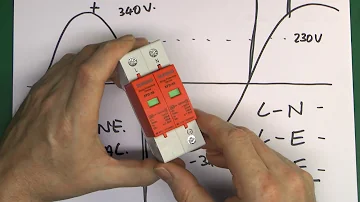
Surge Protection Devices
Catalog
| Ⅰ Introduction |
| Ⅱ Features |
| Ⅲ Main parameters |
| Ⅳ Basic circuits |
| Ⅴ Primary components |
Ⅰ Introduction
A Surge Protection Device (SPD) is the critical first line of defense in modern electrical safety infrastructure. In 2025, with the proliferation of sensitive IoT devices, smart home systems, and Electric Vehicle (EV) chargers, the role of an SPD has shifted from optional to indispensable. Its primary function is to limit instantaneous overvoltage (surges) penetrating power and signal lines, diverting damaging currents away from protected equipment. SPDs are standard for AC 50/60Hz systems with rated voltages of 220V/380V, as well as emerging DC applications like solar PV arrays.
Surges originate from two main sources: external atmospheric discharges (direct or indirect lightning strikes) and internal switching events. While lightning is the most visually dramatic, internal surges caused by the cycling of inductive loads (HVAC systems, elevators, industrial motors) account for the majority of cumulative electronic degradation.

Modern Surge Protection Device (SPD)
Lightning discharges generate massive currents ranging from 10,000 to over 100,000 amperes, with durations typically less than 100 microseconds. A single event can consist of multiple strikes, stressing protection systems repeatedly.
However, the "silent killer" of electronics is Transient Overvoltage (TVS). As chipsets in 2025 become smaller (nanometer scale), their tolerance for voltage fluctuation decreases. A minor surge that might have been harmless to a 1990s appliance can now destroy the logic board of a smart refrigerator or corrupt data on a server. An SPD clamps these spikes within nanoseconds, ensuring the voltage remains within the "safe operating area" of the connected equipment.
Ⅱ Features of Modern SPDs
Today's surge protectors have evolved beyond simple varistors. High-quality industrial and residential SPDs typically feature:
High Discharge Capacity: Capable of handling massive inrush currents with extremely low residual voltage (Voltage Protection Level, $U_p$).
Advanced Arc Extinguishing: Latest designs utilize thermal disconnect technologies to prevent fire hazards if the component fails.
Smart Monitoring: Many 2025 models include remote signaling contacts or IoT integration to alert facility managers when a cartridge needs replacement.
Visual Indicators: Clear green/red status windows indicate operational health instantly.
Modular Design: Allows for hot-swapping of protection modules without disconnecting the power supply.
Ⅲ Main Technical Parameters
Selecting the right SPD requires understanding specific IEC/UL parameters:
1. Nominal Voltage ($U_n$): The standard voltage of the system (e.g., 230V).
2. Maximum Continuous Operating Voltage ($U_c$): The maximum RMS voltage capable of being applied continuously without triggering the device. This is crucial for system stability during grid fluctuations.
3. Nominal Discharge Current ($I_{n}$): The peak value of current (8/20μs waveform) the SPD can withstand repeatedly (typically 15-20 times) without failure.
4. Maximum Discharge Current ($I_{max}$): The absolute maximum current (8/20μs waveform) the device can handle once before potential failure.
5. Voltage Protection Level ($U_p$): The residual voltage allowed through the device during a surge. Lower is better for sensitive electronics (e.g., $U_p$ < 1.5kV is standard for 230V IT equipment).
6. Response Time ($t_A$): How quickly the device reacts. MOVs typically react in nanoseconds (<25ns), while GDTs may take microseconds.
7. Data Transmission Rate ($V_s$): Relevant for signal SPDs (network/telecom), measured in bps. High-speed 5G or fiber networks require SPDs with very low capacitance to avoid signal degradation.
8. Insertion Loss ($A_e$): Signal attenuation caused by the SPD, vital for RF and data lines.
9. Return Loss ($A_r$): A measure of impedance matching to prevent signal reflection.
10. Impulse Current ($I_{imp}$): Specifically for Type 1 SPDs, this measures the ability to withstand partial lightning currents (10/350μs waveform), which carry much higher energy than standard surges.
Ⅳ Basic Circuits and Topologies
SPD circuit topology is dictated by the grounding system of the facility. Incorrect matching can lead to safety hazards or non-compliance with electrical codes.
1. Single-Phase Circuit
Common in residential settings, providing protection between Phase (L) and Neutral (N), or L/N to Ground (PE).

Single-phase protection circuit
2. TN-C System
In this legacy system, the Neutral and Protective Earth are combined (PEN). Protection is generally applied between the Phases and the PEN conductor.

TN-C System Configuration
3. TN-S System
The standard for modern buildings with sensitive electronics. The Neutral and Ground are separated. This often uses a "3+1" or "4+0" protection mode to ensure Common Mode and Differential Mode surges are handled effectively without contaminating the ground reference.

TN-S System Configuration
Ⅴ Primary Components of an SPD
Modern SPDs are often hybrid devices, combining different components to balance reaction speed with energy-handling capacity.
1. Spark Gap
Primarily used in Type 1 SPDs. It consists of two electrodes separated by air or gas. When a high-voltage surge (like direct lightning) occurs, the gap breaks down, creating an arc that shunts massive current to the ground. While robust, basic spark gaps have poor "follow current" extinguishing capabilities, though modern "encapsulated" gaps have largely solved this issue.
2. Gas Discharge Tube (GDT)
A ceramic or glass tube filled with inert gas (Argon/Neon). GDTs act as an open switch until the voltage exceeds a threshold, at which point the gas ionizes and becomes a conductor. They handle high currents but have a slower response time than varistors, making them ideal for N-PE protection or telecom lines.

Working principle of surge protector components
3. Metal Oxide Varistor (MOV)
The workhorse of 90% of modern SPDs. An MOV is a non-linear semiconductor (usually Zinc Oxide). Under normal voltage, it acts as an insulator (high resistance). When voltage spikes, its resistance drops to nearly zero in nanoseconds, clamping the voltage. Varistors degrade over time with repeated surges, which is why 2025 standards emphasize MOVs with thermal disconnects to fail safely.
4. Transient Voltage Suppression (TVS) Diode
A silicon-based device that offers the fastest response time (picoseconds). Due to lower energy capacity, TVS diodes are used for secondary protection (Type 3) or inside circuit boards to protect sensitive microprocessors. They clamp voltage precisely, making them ideal for data lines.
5. Choke Coil
Often part of a filter circuit, the choke coil uses a ferrite core to suppress common mode interference (noise). While not a surge diverter itself, it impedes high-frequency noise and steep surge wavefronts, working in tandem with MOVs to provide clean power.
 UTMEL
UTMEL
We are the professional distributor of electronic components, providing a large variety of products to save you a lot of time, effort, and cost with our efficient self-customized service. careful order preparation fast delivery service
1.What does a surge protection device do?
The terms surge protection device (SPD) and transient voltage surge suppressor (TVSS) are used to describe electrical devices typically installed in power distribution panels, process control systems, communications systems, and other heavy-duty industrial systems.
2.What does an SPD protect against?
Surge Protective Devices (SPD) are used to protect the electrical installation, which consists of the consumer unit, wiring, and accessories, from electrical power surges known as transient overvoltages. Equipment with sensitive electronic circuitry can be vulnerable to damage by transient overvoltages.
3.What is SPD in the electrical panel?
The Surge Protection Device (SPD) is a component of the electrical installation protection system. This device is connected in parallel on the power supply circuit of the loads that it has to protect. It can also be used at all levels of the power supply network.
4.Where do I put SPD devices?
In an electrical system, surge protection devices (SPDs) are usually installed in tap-off configuration (in parallel) between the live conductors and the earth. The operating principle of SPD can be similar to that of a circuit breaker.
5.Do I need a surge protector for the TV?
Desktop computers, laptops, televisions, gaming systems, and charging phones should all be plugged into a surge protector, so they aren't damaged in a storm. While it is beneficial for all electronics to have the protection of a surge protector, only items that have sensitive microprocessors need surge protectors.
 What Size Wire for a 60 Amp Breaker? The Complete NEC GuideUTMEL22 May 20266289
Selecting the right wire size for a 60-amp breaker requires evaluating conductor materials, insulation, and distance. While 6 AWG copper THHN or 4 AWG aluminum in conduit is standard, NM-B Romex limits 6 AWG to 55 amps, requiring 4 AWG copper. Additionally, installers must account for continuous load limits, ground wire sizing, and voltage drop over long runs.
Read More What is Surge?UTMEL09 February 20227173
Hello everyone, I am Rose. Today I will introduce surge to you. Surge is an overvoltage that occurs suddenly and surpasses the typical operating voltage. A surge is a brief wave of current, voltage, or power in a circuit, in general.
Read More Surge Protection Devices (SPD): The Complete 2025 GuideUTMEL25 December 202528889
A surge protection device (SPD), also called a surge protector, is an electronic device that provides safety protection for various electronic equipment, instruments, and communication lines. When a spike current or voltage is suddenly generated in the electrical circuit or communication circuit due to external interference, the surge protection device can conduct and shunt in a very short time, so as to prevent the surge from damaging other equipment in the circuit.
Read More What is a Ground Fault Circuit Interrupter?UTMEL27 March 20255821
A ground fault circuit interrupter(GFCI) is an electrical device installed to protect against severe electric shocks. It can also reduce electrocutions, minimize electrical burns and shock injuries, and detect ground faults, and interrupts the flow of electric current.
Read More What is Vacuum Circuit Breaker?UTMEL12 October 202110371
Hello, I am Rose. Welcome to the new post today. The name "vacuum circuit breaker" comes from the fact that both the arc extinguishing medium and the insulating medium of the contact gap after arc extinguishing are high vacuum; it has the advantages of compact size, light weight, frequent operation, and no arc extinguishing maintenance. This article introduces basis knowledge about vacuum circuit breaker.
Read More
Subscribe to Utmel !
![IPG20N06S2L65ATMA1]() IPG20N06S2L65ATMA1
IPG20N06S2L65ATMA1Infineon
![AUIRF1404ZSTRLCT]() AUIRF1404ZSTRLCT
AUIRF1404ZSTRLCTInternational Rectifier
![2SB624]() 2SB624
2SB624JSCJ
![JAN1N965B-1/TR]() JAN1N965B-1/TR
JAN1N965B-1/TRMicrochip Technology
![1N3595-1/TR]() 1N3595-1/TR
1N3595-1/TRMicrochip Technology
![S21100F]() S21100F
S21100FMicrochip Technology
![JANTX1N6843CCU3/TR]() JANTX1N6843CCU3/TR
JANTX1N6843CCU3/TRMicrochip Technology
![JANS1N5806/TR]() JANS1N5806/TR
JANS1N5806/TRMicrochip Technology
![JANTX2N2907AUBP]() JANTX2N2907AUBP
JANTX2N2907AUBPMicrochip Technology
![JANTX1N4618UR-1/TR]() JANTX1N4618UR-1/TR
JANTX1N4618UR-1/TRMicrochip Technology