

 Product
 Brand
Brand Articles
 Tools
Tools
What is DDR5 SDRAM? The Ultimate Guide to Specs, Architecture, and Market Trends

DDR5 vs DDR4 - What You NEED to Know!
Topics covered in this post: |
What is DDR5 SDRAM?
DDR5 SDRAM is the current mainstream specification (JESD79-5) for global computer memory technology. JEDEC describes DDR5 as a "revolutionary" memory architecture that has successfully transitioned the industry from the older DDR4 standard to the high-performance demands of the AI and cloud computing era.
As of 2025, the transition predicted by organizations like Omdia and Yole Development has fully materialized. DDR5 has surpassed DDR4 in market share for new shipments across server, PC, and mobile sectors. While DDR4 remains in legacy systems, DDR5 is now the standard for almost all new enterprise and consumer hardware, powering everything from AI data centers to ultrabooks.
The driving force behind DDR5
The widening gap between processor performance and memory bandwidth remains the fundamental driving force behind the dominance of DDR5. In 2025, processor core counts have exploded; we now see server CPUs from AMD (EPYC Turin) and Intel (Xeon 6) featuring up to 192 and 288 cores respectively per socket. In such ultra-multi-core systems, the bandwidth per core provided by older DDR4 technology is woefully inadequate.
From the application perspective, the mass adoption of DDR5 has been accelerated by: ① The ubiquity of AI-native PCs and hyperscale servers. ② The critical need for massive bandwidth to train and run Large Language Models (LLMs). ③ Full platform support from major manufacturers including AMD, Intel, SK Hynix, Samsung, and Micron.
Data center
As predicted, DDR5 first took root in the data center. By 2025, it has become the backbone of modern cloud infrastructure. The shift was driven by the need to feed data to power-hungry AI accelerators and high-core-count CPUs.
Current server platforms utilize DDR5 memory to achieve transfer rates of 6400 MT/s and beyond (via MRDIMM technology), offering a massive efficiency leap over previous generations. The majority of global DRAM consumption in 2025 is now attributed to these high-performance server environments, where density and error correction are paramount.
PC and tablet
In the consumer space, the transition is largely complete. Modern processors, such as Intel's Core Ultra series and AMD's Ryzen 9000 series, rely exclusively on DDR5 to deliver peak performance. The shipments of "AI PCs"—computers featuring dedicated NPU hardware—have skyrocketed, necessitating the high speed and bandwidth that only DDR5 can provide.
While DDR5 initially carried a price premium, costs have normalized significantly by 2025. It is now the standard choice for gaming rigs, workstations, and even mid-range laptops. The introduction of non-binary memory modules (e.g., 24GB and 48GB sticks) has also given consumers more flexible capacity options than ever before.
Edge computing
Edge computing applications continue to demand lower latency to support real-time processing. To achieve this, edge systems have standardized on interfaces like PCIe 5.0 (and the emerging 6.0), CXL, and LPDDR5X/DDR5. These technologies reduce the latency bottleneck, allowing for instant data processing at the source.
With AI algorithms now running locally on edge devices (Edge AI), memory bandwidth is no longer a luxury but a requirement. Designers of industrial IoT gateways, autonomous vehicles, and smart surveillance systems have universally adopted DDR5 to handle the complex inference workloads required in the field.
What is the value of DDR5?
To understand the leap in performance, here is a comparison between the legacy DDR4 standard and the modern DDR5 specification.
Feature / option | DDR4 | DDR5 |
Data rate | 1600-3200 MT/s | 4800-8800+ MT/s |
VDD/VDDQ/VPP | 1.2/1.2/2.5 | 1.1/1.1/1.8 |
Internal VREF | VREFDQ | VREFDQ,VREFCA,VREFCS |
Device density | 2Gb-16Gb | 8Gb-64Gb+ |
Preloading | 8n | 16n |
Data channel receiver balance | CTLE | DFE |
Duty cycle adjustment | / | DQS and DQ |
Internal DQS delay monitoring | / | DQS interval oscillator |
Sliced error correction code | / | 128B + 8B unit error correction, error survey and cleanup |
Cyclic redundancy verification | write | read/write |
BG/banks | 4 BG x 4 banks(x4/x8) | 8G x 2 banks(8Gb x4/x8) |
Command / address interface | ODT,CKE,ACT,RAS,CAS,WE,A<X:0> | CA<13:0> |
Internal end | DQ,DQS,DM/DBI | DQ,DQS,DM,CA bus |
Length | BL8(and BL4) | BL16, BL32(and BC8OTF,BL32 OTF) |
Comparison of features between DDR4 and DDR5. Source: JEDEC and Industry Standards
DDR memory can send and receive data signals twice in one clock cycle, a technique that has evolved rapidly since the SDRAM of the 90s. While DDR4 focused heavily on mobile power reduction, the transition to DDR5 is driven by a different necessity: massive multi-core processor efficiency. The available memory bandwidth of DDR4 simply could not keep up with CPUs that now exceed 128 cores per socket.
The core value of DDR5 SDRAM is reflected in these four critical upgrades:
1. Higher speed, lower voltage
DDR5 delivers a massive speed jump over DDR4. While DDR4 topped out officially at 3200 MT/s, JEDEC standard DDR5 now scales from 4800 MT/s up to 8800 MT/s and beyond. Enthusiast XMP/EXPO kits frequently exceed these speeds. Crucially, this performance comes with improved energy efficiency; the operating voltage has been reduced from 1.2V in DDR4 to 1.1V in DDR5, reducing the power strain on data centers.
2. Higher memory density
DDR5 has unlocked massive capacity upgrades. While DDR4 was generally limited to 16Gb die density, DDR5 standards support up to 64Gb die density. This has allowed for the creation of non-binary modules (e.g., 24GB and 48GB sticks) and server DIMMs that can reach capacities of 512GB to 1TB via advanced stacking technologies.
3. On-die Power Management (PMIC)
DDR5 DIMMs have moved power management from the motherboard directly onto the module itself via an onboard Power Management Integrated Circuit (PMIC). This ensures cleaner power delivery, lower noise, and more granular control over voltage regulation, which is essential for maintaining stability at high frequencies.
4. Improved Channel Architecture
DDR5 splits the 64-bit data channel into two independent 32-bit sub-channels. This architectural change increases efficiency by allowing the memory controller to handle more access requests simultaneously, significantly lowering effective latency in real-world workloads like gaming and data mining.
DDR5 core players' plan
The global DRAM market is dominated by three major manufacturers: Samsung, SK Hynix, and Micron. Together, they control over 90% of the industry revenue. As of 2025, their focus has shifted entirely to optimizing DDR5 yields and pushing the boundaries of 10nm-class process nodes.
SK Hynix
SK Hynix continues to be a pioneer in the market. Having launched the world's first DDR5 DRAM, they have now advanced to their "1c" node (6th generation 10nm technology) in late 2024/2025. This technology allows for extreme power efficiency and higher density. SK Hynix is also leveraging this technology to dominate the HBM3E market, which shares foundational IP with their high-performance DDR5 server modules.
Their current consumer and enterprise lineups readily support speeds exceeding 6400 Mbps and capacities that enable 256GB server modules using TSV (Through-Silicon Via) stacking.
Micron
Micron's 1ß (1-beta) process node is now fully mature, powering their high-volume DDR5 production. The Technology Enablement Program (TEP), initiated years ago, has successfully built a robust ecosystem of compatible hardware. Micron has been aggressive in pushing native JEDEC speeds higher, reducing the reliance on overclocking profiles for stability in professional workstations.
As data centers evolve, Micron is focusing on the convergence of memory and storage via standards like CXL (Compute Express Link), which allows CPUs to access vast pools of DDR5 memory beyond the physical DIMM slots.
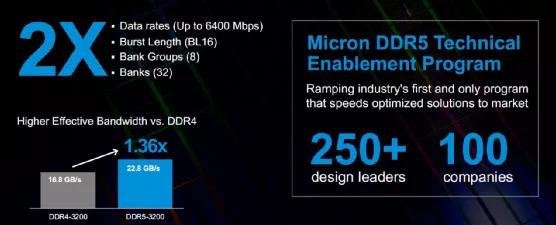
Micron DDR5
Samsung
Samsung remains the volume leader, producing the industry's highest capacity single-die chips. In 2024 and 2025, Samsung ramped up production of their 32Gb monolithic DDR5 die using 12nm-class process technology. This innovation allows for the creation of 128GB modules without using expensive TSV stacking, significantly reducing costs for data center upgrades.
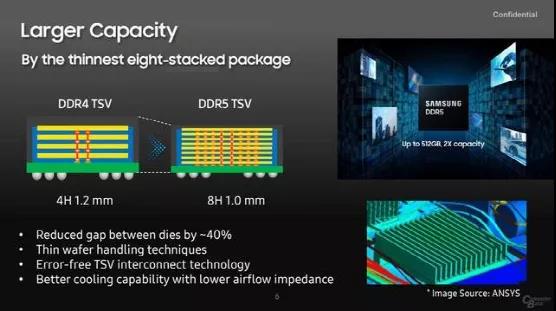
Samsung DDR5
While Samsung initially predicted mainstream adoption by 2023-2024, the market has now fully crossed that threshold. DDR5 is no longer "next-gen"—it is the baseline for performance computing, with research now slowly turning toward the future specification of DDR6.
 UTMEL
UTMEL
We are the professional distributor of electronic components, providing a large variety of products to save you a lot of time, effort, and cost with our efficient self-customized service. careful order preparation fast delivery service
1.Will DDR5 work on the DDR4 motherboard?
DDR5 Compatibility

This means DDR4 motherboards and DDR5 memory won't be cross-compatible.
2.Will DDR5 be expensive?
Since DDR5 will be a shiny new product to play with, it will naturally be more expensive at launch – just as Cyberpunk 2077 cost $60/£50 at launch, yet costs around $30/£20 now.
3.Is DDR5 worth the wait?
DDR5 may have the same design as DDR4, but it has some major differences surrounding the required voltage and possible speeds. The lack of any release date for DDR5 makes it not worth it to wait for most gamers, as they want the best performance as soon as possible.
 High-Capacity HDDs in the AI Era: Sourcing Massive Storage for Cold DataUTMEL04 July 2026532
As generative AI and LLMs drive an explosion of unstructured data, high-capacity enterprise HDDs remain the most cost-effective solution for cold storage. Despite rising prices and supply chain bottlenecks, mechanical drives offer a massive cost-per-gigabyte advantage over SSDs. Technologies like HAMR and SMR enable capacities beyond 24TB, though deploying these drives requires robust RAID 6 strategies and secured IC supply chains to mitigate rebuilding and procurement risks.
Read More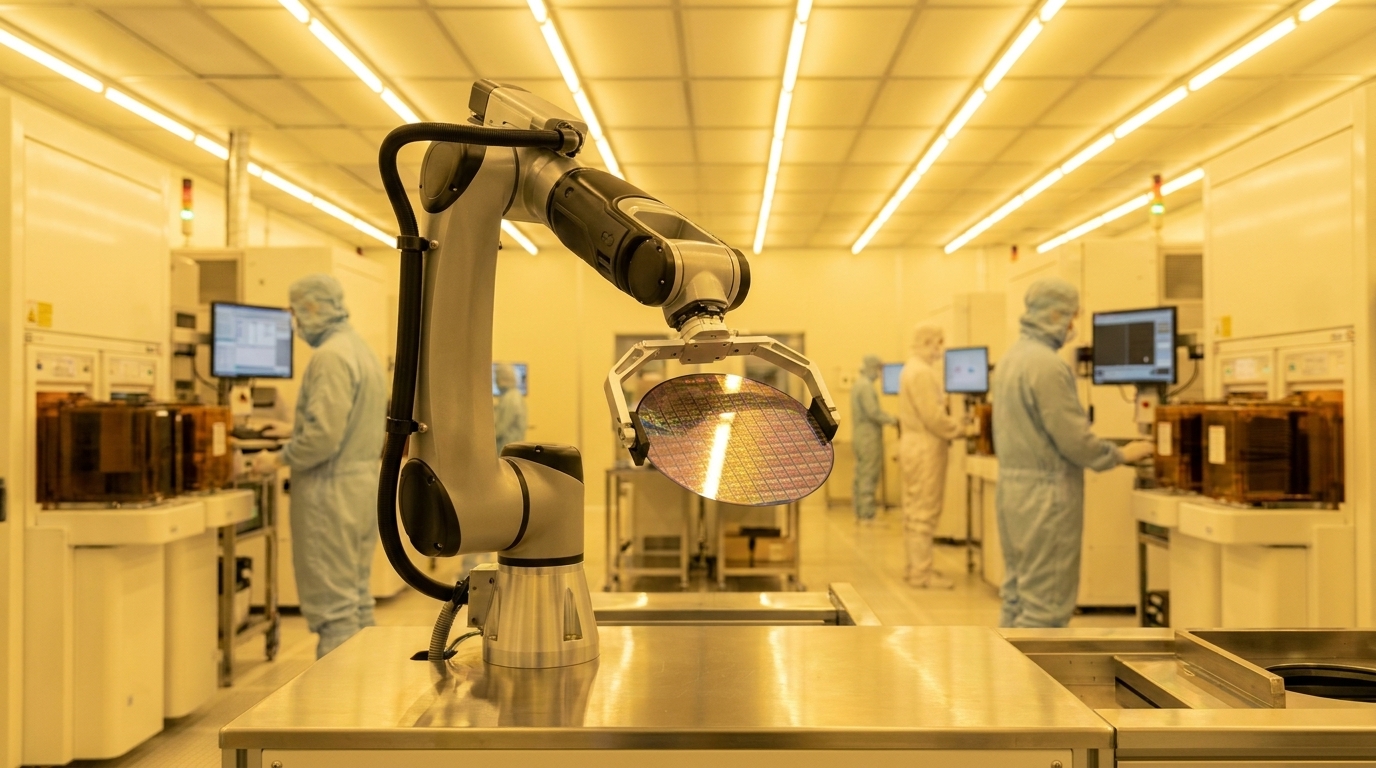 LPDDR5 Memory 2026: Lead Times, HBM Impact, and Procurement StrategiesUTMEL17 July 20263354
Global semiconductor fabrication facility managing advanced memory production. In Q2 2026, contract prices for 12GB LPDDR5X modules surged 89% quarter-over-quarter, jumping from $77.10 to $145.90, while lead times for advanced memory components stretched to 40–58 weeks. A vehicle platform designed in 2023 with specific memory requirements must ship in 2026, regardless of spot market conditions.
Read More 2026 DRAM and the 3-to-1 HBM Rule: Market Supply Analysis and B2B Procurement GuideUTMEL23 July 20262724
This technical report explains how the physical "3-to-1 wafer penalty" of High Bandwidth Memory (HBM) production has cannibalized standard DRAM capacity, causing severe shortages of DDR4 and DDR5 in 2026. As major hardware OEMs pass these soaring component costs directly to enterprise buyers, procurement teams must abandon Just-in-Time models in favor of rolling safety stocks and strategic long-term distributor agreements to protect budgets.
Read More Automotive vs. Industrial Memory: How to Verify Grade Codes Before Sourcing In this guideUTMEL06 August 2026307
Memory ordering codes can look almost identical while representing different temperature limits, packages, revisions, qualification evidence, or lifecycle commitments. For automotive and long-life industrial designs, the safe purchasing unit is the complete manufacturer ordering code, not a base part number plus a familiar-looking suffix.
Read More How to Use an External Hard Drive?UTMEL24 June 20219344
The external hard drive is a compact and portable hard drive storage which can be plugged in or unplugged at any time. It mainly uses USB or IEEE1394 interfaces. It can transmit data with the system at a higher speed. The IEEE 1394 interface transfer rate is 50-100 MB/s.
Read More
Subscribe to Utmel !


