Product
 Brand
Brand Articles
 Tools
Tools
An Overview of Digital Signal Processor
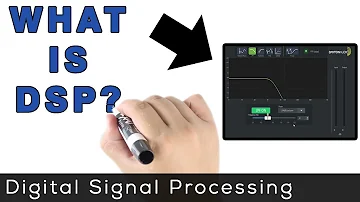
What is DSP? Why do you need it?
Catalog
Ⅰ Introduction
A digital signal processor (DSP) is a specialized microprocessor designed specifically for digital signal processing operations. Built using large-scale integrated circuit chips, DSPs are optimized to perform mathematical operations on digitized signals at high speeds. Digital signal processing is the theory and technology of representing and processing signals in digital form. Digital signal processing and analog signal processing are both subsets of signal processing, each serving distinct purposes in modern electronics.
The primary purpose of digital signal processing is to measure, filter, and manipulate continuous analog signals from the real world. Before performing digital signal processing, analog signals must be converted to the digital domain using an analog-to-digital converter (ADC). After processing, the output often needs to be converted back to the analog domain using a digital-to-analog converter (DAC). DSPs were developed to meet the demanding requirements of high-speed, real-time signal processing tasks. With continuous advancements in integrated circuit technology and digital signal processing algorithms, DSP implementation methods have evolved significantly, with processing capabilities continuously improving and expanding into new application domains.
Ⅱ Features and advantages of DSP
1. Internal structure
Modern DSPs contain the following essential components:
Program memory: Stores the instructions and algorithms that the DSP executes to process data;
Data memory: Stores the information to be processed, including input samples and intermediate results;
Computation engine: Performs mathematical operations, including multiply-accumulate (MAC) operations, accessing both program and data memory;
Input/Output interfaces: Provides various connectivity options for interfacing with external devices and peripherals;
DMA controllers: Enable direct memory access for efficient data transfer without CPU intervention;
Timers and interrupt controllers: Manage real-time operations and event handling.

DSP internal structure
2. Hardware features
(1) DSPs utilize a Modified Harvard architecture, featuring separate data and program buses. This architecture allows simultaneous instruction fetching and data reading, significantly improving processing throughput. Modern high-performance DSPs can achieve over 100 billion floating-point operations per second (100 GFLOPS), with specialized AI-accelerated DSPs reaching even higher performance levels.
(2) Pipeline operations: Instruction execution is divided into multiple stages (fetch, decode, execute, write-back), with each stage handled by dedicated functional units. This pipelined approach enables parallel execution of multiple instructions, dramatically increasing processing speed. Modern DSPs feature deep pipelines with 7-14 stages.
(3) Dedicated hardware multipliers and MAC units: DSPs include specialized multiply-accumulate (MAC) units that complete multiplication and accumulation in a single cycle. This optimization is crucial for algorithms involving convolution, digital filtering, FFT, correlation, and matrix operations. Contemporary DSPs may include multiple MAC units operating in parallel.
(4) Specialized addressing modes: Features like circular addressing and bit-reversed addressing significantly accelerate operations such as FFT and convolution. Modern 1024-point FFT operations can be completed in under 10 microseconds on current DSP hardware.
(5) Independent DMA buses and controllers: One or more dedicated DMA buses operate in parallel with CPU program and data buses, enabling data transfer rates exceeding 10 GB/s without impacting CPU performance.
(6) Multiprocessor interfaces: Support for multicore architectures and inter-processor communication enables multiple DSPs to work in parallel or serial configurations, significantly boosting processing capabilities for complex applications.
(7) JTAG standard test interface: IEEE 1149.1 standard interface facilitates in-circuit emulation, debugging, and boundary-scan testing in both single and multi-DSP systems.
(8) Advanced power management: Modern DSPs incorporate sophisticated power management features including dynamic voltage and frequency scaling (DVFS), multiple power domains, and sleep modes to optimize power consumption for battery-powered applications.
3. Software features
(1) Immediate addressing: Operands can be specified directly within instructions, enabling fast access to constant values. Example: MOV A, #0x16
(2) Direct addressing: Modern DSPs use sophisticated memory paging schemes. For example, Texas Instruments' C2000 and C6000 series utilize data page pointers combined with offset addresses to create efficient 16-bit or 32-bit addressing schemes, accelerating data access.
(3) Indirect addressing: Multiple auxiliary registers enable flexible addressing with automatic post-increment/decrement, circular buffering, and bit-reversed addressing capabilities essential for efficient DSP algorithm implementation.
(4) Specialized DSP instructions: Modern DSPs include instructions optimized for common signal processing operations, such as single-cycle MAC operations, parallel data moves, and SIMD (Single Instruction Multiple Data) operations for processing multiple data elements simultaneously.
(5) High-level language support: Contemporary DSP development environments provide optimizing C/C++ compilers, eliminating the need for assembly language programming in many applications while maintaining high performance through intrinsic functions and compiler optimizations.
4. Advantages of the DSP

Digital signal processor (DSP)
(1) Simple and convenient interfaces: Digital signals have well-defined electrical characteristics, making hardware interfaces straightforward to implement. System interconnection is simplified through adherence to standard protocols and interfaces.
(2) High precision and excellent stability: Digital signal processing is primarily affected by quantization error and finite word length effects. Unlike analog systems, digital processing doesn't introduce additional noise during operation, resulting in superior signal-to-noise ratios. Digital systems are also less sensitive to component variations, temperature changes, and aging, making them more reliable and easier to test, debug, and manufacture at scale.
(3) Programmability and algorithm flexibility: DSP systems provide a high-speed computational platform where functionality is determined by software. This enables implementation of complex algorithms combining modern signal processing theory with advanced computational mathematics. System upgrades and feature additions can often be accomplished through software updates without hardware changes.
(4) High integration capability: Modern DSP chips integrate DSP cores with extensive peripheral circuits on a single chip, including ADCs, DACs, communication interfaces, and memory. This system-on-chip (SoC) approach facilitates the design of compact, portable, and highly integrated digital products.
(5) Repeatability and reproducibility: Digital systems produce identical results given identical inputs, regardless of environmental conditions or component variations, ensuring consistent performance across all manufactured units.
(6) Cost-effectiveness: While initial development costs may be higher, digital systems benefit from economies of scale in semiconductor manufacturing, and software-based functionality reduces per-unit costs compared to analog implementations.
Ⅲ The history of DSP

Digital signal processor (DSP)
The foundation of modern information technology is digitization, with digital signal processing serving as one of its core technologies. DSP devices are essential for implementing these processing tasks. DSP technology has evolved into a critical enabling technology across numerous industries.
Before dedicated DSP chips emerged, digital signal processing could only be performed by general-purpose microprocessors (MPUs). However, the limited processing speed of MPUs couldn't meet the demanding requirements of high-speed real-time applications. In the 1970s, researchers developed the theoretical foundations and algorithms for DSP, though practical implementations remained confined to textbooks or systems built from discrete components, primarily for military and aerospace applications.
The breakthrough came in 1982 when the world's first commercial DSP chip was introduced. This first-generation device, manufactured using NMOS technology with micron-scale features, offered processing speeds dozens of times faster than contemporary MPUs, despite higher power consumption and larger die sizes. These chips found immediate application in speech synthesis and codec implementations, marking the transition from large discrete systems to miniaturized integrated solutions.
The second generation of DSP chips emerged with CMOS technology, offering doubled memory capacity and processing speed with reduced power consumption. These devices became the foundation for voice and image processing applications throughout the 1980s.
In the late 1980s, third-generation DSP chips appeared with further improved processing speeds and expanded applications in communications and computing. The 1990s witnessed the most rapid DSP development, with fourth and fifth-generation devices introducing higher system integration, combining DSP cores with extensive peripheral components on single chips.
Today's DSP technology has advanced far beyond fifth-generation devices. Modern DSPs (as of 2025) feature:
Process nodes of 7nm, 5nm, and even 3nm technology
Multi-core architectures with heterogeneous processing elements
Integration of AI acceleration hardware
Processing capabilities exceeding 1 TOPS (trillion operations per second)
Advanced power management enabling operation in battery-powered IoT devices
Extensive connectivity options including 5G, Wi-Fi 6/7, and high-speed serial interfaces
Ⅳ Modern DSP applications
DSP technology has become ubiquitous in modern electronics, with applications spanning numerous industries:
Communications: 5G base stations, smartphones, software-defined radios, satellite communications, and optical networking equipment rely heavily on DSP for modulation, demodulation, error correction, and signal conditioning.
Audio and video processing: High-definition audio codecs, noise cancellation in headphones, voice assistants, video compression (H.265/HEVC, AV1), and real-time video enhancement all leverage DSP capabilities.
Automotive: Advanced driver assistance systems (ADAS), radar signal processing, active noise cancellation, hands-free communication systems, and electric vehicle motor control utilize DSP technology.
Medical devices: Ultrasound imaging, MRI signal processing, hearing aids, patient monitoring systems, and diagnostic equipment depend on DSP for real-time signal analysis.
Industrial automation: Motor control, power conversion, sensor fusion, machine vision, and predictive maintenance systems employ DSP for precise control and analysis.
Consumer electronics: Smart speakers, wireless earbuds, smart home devices, gaming consoles, and augmented/virtual reality headsets all incorporate DSP technology.
Aerospace and defense: Radar systems, sonar processing, electronic warfare, satellite communications, and guidance systems continue to push DSP performance boundaries.
Ⅴ Problems and challenges facing DSP
Despite significant maturity, DSP technology continues to face important challenges:
(1) Programming complexity: While modern development tools have improved significantly, efficiently utilizing parallel execution units and managing data flow to avoid conflicts remains challenging. Although high-level language support has advanced considerably, achieving optimal performance for complex algorithms still requires deep understanding of the target hardware architecture. The gap between algorithm development and hardware-optimized implementation continues to be a bottleneck in development efficiency.
(2) Parallel processing challenges: Modern DSPs employ multiple parallelism strategies—instruction-level (VLIW, superscalar), data-level (SIMD, vector processing), and task-level (multi-core, multi-threading). However, effectively utilizing these parallel resources requires careful consideration of data dependencies, memory bandwidth, and synchronization overhead. The challenge intensifies as the number of parallel processing elements increases.
(3) Memory bandwidth limitations: As processing capabilities have grown exponentially, memory bandwidth has become a critical bottleneck. Modern DSPs with multiple MAC units operating at GHz frequencies require data transfer rates exceeding 100 GB/s. While on-chip cache memory helps, managing cache coherency in multi-core systems and minimizing cache misses remains challenging. The "memory wall" problem continues to limit overall system throughput.
(4) Power consumption: As DSP performance increases, power consumption and thermal management become critical concerns, particularly for mobile and IoT applications. Balancing performance with power efficiency requires sophisticated power management strategies and careful algorithm optimization.
(5) Security concerns: Modern DSPs, especially those in connected devices, face increasing security threats. Implementing robust security features including secure boot, encryption acceleration, and protection against side-channel attacks adds complexity to DSP design.
(6) Market fragmentation: The DSP market includes multiple architectures and vendors, each with proprietary tools and development environments. This fragmentation increases development costs and limits code portability, though standardization efforts continue.
(7) Competition from alternative architectures: General-purpose processors with SIMD extensions, GPUs, and specialized AI accelerators increasingly compete with traditional DSPs for signal processing workloads, forcing DSP vendors to differentiate through power efficiency, real-time performance, and application-specific optimization.
Ⅵ The development trend and the prospect of DSP
DSP technology continues to evolve to meet increasing demands, with several key trends shaping its future:
(1) Heterogeneous computing and system-level integration
Modern DSPs increasingly integrate multiple processing elements on a single chip, including DSP cores, general-purpose processors, AI accelerators, and specialized hardware blocks. This heterogeneous approach optimizes performance and power efficiency by matching processing elements to specific workload requirements. System-on-chip (SoC) designs now integrate complete systems including processors, memory, peripherals, and connectivity on a single die, manufactured using advanced process nodes (7nm, 5nm, and beyond).
(2) AI and machine learning integration
The convergence of DSP and AI is a defining trend. Modern DSPs incorporate neural network accelerators, tensor processing units, and specialized instructions for machine learning operations. This enables edge AI applications where signal processing and inference occur locally, reducing latency and bandwidth requirements while enhancing privacy.
(3) Advanced software development tools
Development environments have evolved significantly, with sophisticated optimizing compilers, model-based design tools, and automatic code generation from high-level descriptions. Machine learning is being applied to compiler optimization, and domain-specific languages simplify DSP programming while maintaining performance.
(4) Continued performance scaling
While traditional frequency scaling faces physical limits, performance continues to improve through architectural innovations, increased parallelism, and specialized processing units. Modern DSPs achieve performance levels exceeding 1 TOPS (trillion operations per second) while maintaining power efficiency suitable for battery-operated devices. Advanced packaging technologies like chiplets and 3D integration enable continued performance scaling beyond traditional Moore's Law limitations.
(5) Enhanced connectivity and edge computing
DSPs increasingly incorporate advanced connectivity features including 5G, Wi-Fi 6E/7, ultra-wideband (UWB), and high-speed wired interfaces. This enables edge computing architectures where signal processing occurs close to data sources, reducing latency and bandwidth requirements for cloud connectivity.
(6) Security and trust
Security features are becoming integral to DSP design, including hardware-based security modules, secure enclaves, cryptographic accelerators, and protection against physical attacks. As DSPs process increasingly sensitive data, security and privacy protection are essential requirements.
(7) Sustainability and energy efficiency
Environmental concerns drive development of ultra-low-power DSPs for IoT and battery-powered applications. Advanced power management techniques, energy harvesting support, and efficient processing architectures enable DSPs to operate on minimal power budgets while maintaining high performance when needed.
(8) Specialized DSP variants
Rather than one-size-fits-all solutions, the market increasingly features specialized DSPs optimized for specific applications: audio DSPs with specialized codecs and effects processing, vision DSPs with image processing pipelines, communications DSPs with integrated modems, and automotive DSPs with safety certifications and specialized peripherals.
Ⅶ Frequently Asked Questions (FAQs)
Q1: What is the difference between a DSP and a general-purpose microprocessor?
A: DSPs are specifically optimized for signal processing tasks with specialized hardware including dedicated MAC units, parallel data paths, and specialized addressing modes. They excel at repetitive mathematical operations on streams of data. General-purpose processors are designed for diverse workloads and emphasize flexibility over specialized performance. DSPs typically achieve 10-100x better power efficiency for signal processing tasks compared to general-purpose processors.
Q2: Should I choose a fixed-point or floating-point DSP?
A: The choice depends on your application requirements. Fixed-point DSPs offer lower cost, reduced power consumption, and smaller die size, making them ideal for cost-sensitive and battery-powered applications. Floating-point DSPs provide larger dynamic range and simpler algorithm development, better suited for applications requiring high precision or wide dynamic range. Modern DSPs often include both fixed-point and floating-point capabilities, offering flexibility for different algorithm requirements.
Q3: How do I choose the right DSP for my application?
A: Consider these key factors:
Processing requirements: Calculate required MIPS/MFLOPS for your algorithms
Power budget: Critical for battery-powered applications
Memory requirements: On-chip RAM/ROM and external memory interfaces
Peripheral requirements: ADCs, DACs, communication interfaces
Development tools: Compiler quality, debugging tools, libraries
Cost: Both component cost and development cost
Vendor support: Documentation, technical support, long-term availability
Q4: Can DSPs be programmed in C/C++ or do they require assembly language?
A: Modern DSPs feature sophisticated optimizing C/C++ compilers that generate highly efficient code, often approaching hand-coded assembly performance. Most DSP development today uses C/C++ with compiler intrinsics for performance-critical sections. Assembly language is rarely necessary except for the most demanding applications. Many vendors also provide higher-level tools including MATLAB/Simulink code generation, graphical programming environments, and domain-specific languages.
Q5: What is the typical power consumption of modern DSPs?
A: Power consumption varies dramatically based on application and architecture. Ultra-low-power DSPs for IoT applications may consume microwatts in sleep mode and milliwatts during active processing. Mid-range DSPs typically consume 100mW to 2W. High-performance DSPs for base stations or data centers may consume 10-50W. Modern DSPs incorporate sophisticated power management enabling dynamic scaling of power consumption based on workload requirements.
Q6: How does DSP compare to GPU for signal processing tasks?
A: DSPs and GPUs serve different purposes. DSPs excel at low-latency, real-time processing with deterministic timing and power-efficient operation. GPUs offer massive parallel processing capability for throughput-oriented tasks but with higher latency and power consumption. For real-time embedded applications with strict latency requirements, DSPs are typically preferred. For batch processing or applications tolerating higher latency, GPUs may offer better performance. Many modern systems combine both, using DSPs for real-time processing and GPUs for computationally intensive non-real-time tasks.
Q7: What role do DSPs play in 5G and future wireless communications?
A: DSPs are central to 5G infrastructure and devices, handling baseband processing including modulation/demodulation, channel coding/decoding, MIMO processing, and beamforming. Modern 5G base stations use high-performance DSPs or specialized baseband processors combining DSP cores with hardware accelerators. As wireless communications evolve toward 6G, DSPs will continue playing crucial roles in implementing advanced signal processing algorithms for higher frequencies, massive MIMO, and intelligent radio resource management.
Q8: Are DSPs still relevant with the rise of AI accelerators and specialized processors?
A: Absolutely. While AI accelerators excel at neural network inference, DSPs remain essential for traditional signal processing tasks including filtering, transforms, modulation, and real-time control. Many applications require both signal processing and AI, leading to convergence where DSPs incorporate AI acceleration capabilities. The flexibility, power efficiency, and real-time performance of DSPs ensure their continued relevance, particularly in embedded systems where deterministic timing and low power consumption are critical.
Ⅷ Conclusion
Digital Signal Processors have evolved from specialized niche devices to ubiquitous components essential to modern electronics. From their origins in the early 1980s to today's sophisticated multi-core, AI-enabled devices, DSPs have continuously adapted to meet increasing performance demands while improving power efficiency and integration.
The expanding application of DSP technology across communications, automotive, medical, industrial, and consumer electronics demonstrates its fundamental importance to digital systems. While the 3C markets (Communications, Computers, Consumer electronics) continue to drive significant DSP adoption, emerging applications in autonomous vehicles, IoT, edge AI, and advanced medical devices present substantial growth opportunities.
Looking forward, DSP technology will continue evolving through heterogeneous integration, AI convergence, advanced process technologies, and specialized optimization for target applications. The challenges of programming complexity, memory bandwidth, and power consumption drive ongoing innovation in architecture, tools, and implementation methodologies.
As we progress through 2025 and beyond, DSPs will remain indispensable components of the digital infrastructure supporting our increasingly connected and intelligent world. Their unique combination of real-time performance, power efficiency, and programmability ensures DSPs will continue playing vital roles in signal processing applications for decades to come.
Article Update Information
Last Updated: October 2025
Major Updates in This Revision:
Updated performance metrics to reflect current 2025 DSP capabilities (100+ GFLOPS, 1+ TOPS)
Corrected outdated information about process technology (now 7nm, 5nm, 3nm nodes)
Added new section on modern DSP applications across various industries
Expanded discussion of AI integration and heterogeneous computing trends
Updated challenges section to reflect current industry concerns including security and memory bandwidth
Added comprehensive FAQ section addressing common questions about DSP technology
Updated development trends to include edge computing, sustainability, and specialized variants
Corrected technical specifications and performance figures throughout
Enhanced discussion of modern development tools and high-level language support
Added information about 5G, 6G, and advanced wireless communications applications
This article was originally published in 2020 and has been substantially updated to reflect technological advances and current industry trends as of October 2025.
 UTMEL
UTMEL
We are the professional distributor of electronic components, providing a large variety of products to save you a lot of time, effort, and cost with our efficient self-customized service. careful order preparation fast delivery service
What is a digital signal processor used for?
Digital Signal Processors (DSP) take real-world signals like voice, audio, video, temperature, pressure, or position that have been digitized and then mathematically manipulate them. A DSP is designed for performing mathematical functions like "add", "subtract", "multiply" and "divide" very quickly.
What do you mean by digital signal processor?
Digital signal processing (DSP) is the process of analyzing and modifying a signal to optimize or improve its efficiency or performance. It involves applying various mathematical and computational algorithms to analog and digital signals to produce a signal that's of higher quality than the original signal.
Where are DSP processors used?
DSPs are fabricated on MOS integrated circuit chips. They are widely used in audio signal processing, telecommunications, digital image processing, radar, sonar and speech recognition systems, and in common consumer electronic devices such as mobile phones, disk drives and high-definition television (HDTV) products.
Do I need a digital signal processor?
Having a digital signal processor in your car audio system is a necessity if you expect your music to sound accurate. We've told you many times that speakers are essential to getting great sound. While 100% true, so is the need to calibrate the output of those speakers to work.
How does a digital signal work?
Digital signaling uses pluses to transmit information. These pluses are represented as square waves. A pulse either carries a positive voltage or no voltage at all. Since there are no infinite variations, digital signals are less prone to distortion and noise.
 What is Graphics Processing Unit (GPU)?UTMEL18 October 20218402
Hello everyone, I am Rose. Welcome back to the new post today. The graphics processing unit (GPU), also known as the visual processor, display core, or display chip, is a type of microprocessor that specializes in image processing on personal computers, workstations, gaming consoles, and mobile devices (such as tablets and smartphones). After reading this article, you will have a clear understanding of GPU.
Read More Introduction to MicroprocessorsUTMEL18 August 202019141
The microprocessor is the central unit of a computer system performing arithmetic and logic operations which typically involve adding, subtracting, moving numbers from one field to another, and comparing two numbers. It's often simply referred to as a processor, a central processing unit, or a logic chip.
Read More An Overview of Digital Signal ProcessorUTMEL31 October 202511398
A digital signal processor (DSP) is a processor composed of large-scale integrated circuit chips to complete digital signal processing tasks. Digital signal processing is the theory and technology of representing and digitally processing signals. Digital signal processing and analog signal processing are a subset of signal processing.
Read More
Subscribe to Utmel !
![MD681GXCIAF3S]() MD681GXCIAF3S
MD681GXCIAF3SSilicon Motion
![LC3F212-5A5A]() LC3F212-5A5A
LC3F212-5A5ASMC Corporation
![14CUD820F]() 14CUD820F
14CUD820FSiemens
![14CUB82BH]() 14CUB82BH
14CUB82BHSiemens
![14CUA82BA]() 14CUA82BA
14CUA82BASiemens
![14CUA820F]() 14CUA820F
14CUA820FSiemens
![14CUC320S]() 14CUC320S
14CUC320SSiemens
![14CUA820H]() 14CUA820H
14CUA820HSiemens
![14DUA82BE]() 14DUA82BE
14DUA82BESiemens
![US2:18EUE82XA]() US2:18EUE82XA
US2:18EUE82XASiemens