

 Product
 Brand
Brand Articles
 Tools
Tools
Analysis of Resistors in Series and Parallel

Resistors in Electric Circuits (1 of 16) Series vs. Parallel
Summary: Resistors in series share the same current and add their resistance values together, while resistors in parallel share the same voltage and decrease the total equivalent resistance. This 2026 guide covers the fundamental formulas, step-by-step calculation methods for complex networks, fault detection techniques, and the impact of Equivalent Series Resistance (ESR) in modern circuit design.
Catalog
I. Resistors in Series and Parallel Circuits
1. What Are Resistors in Series Circuits?
When resistors are connected end-to-end with no branches, they form a series circuit where the exact same electrical current flows sequentially through every component. The diagram below shows a series circuit with two resistors.

Resistors in Series Circuits
Key properties of series circuits:
(1) The current is the same through every component.
For n series resistors:

(2) The source voltage equals the sum of the voltage drops across each series resistor.

(3) The total (equivalent) resistance is the sum of all series resistances.
Replacing R1 and R2 by their equivalent R leaves current and node voltages unchanged.

(4) Voltage division and power in series:
Because the current is identical everywhere, each resistor’s voltage is proportional to its resistance, and the power dissipated by each is also proportional to its resistance.


Tip: Series resistors are commonly used as voltage dividers (e.g., to extend a voltmeter’s range). Always verify power ratings and add a safety margin.
2. What Are Resistors in Parallel Circuits?
Two or more resistors connected between the same two nodes form a parallel circuit, ensuring that each component receives the exact same voltage across its terminals.

Resistors in Parallel Circuits
Key properties of parallel circuits:
(1) Each branch has the same voltage.

(2) The total current equals the sum of branch currents.

(3) The inverse of the equivalent resistance equals the sum of inverses of branch resistances.

(4) Current division and power in parallel:
Because branch voltages are equal, branch current is inversely proportional to branch resistance. Branch power is also inversely proportional to resistance for a fixed branch voltage.

For two parallel resistors, the current division (shunt) formula is:

Note: Household lighting and appliance circuits are in parallel so that one device turning off or failing does not interrupt others.
II. How to Calculate Series and Parallel Resistance
Complex resistor networks mix series and parallel groupings. Reduce them step-by-step using the same rules: combine series groups into sums and parallel groups using reciprocal sums. Remember: series elements share current; parallel elements share voltage.
1. How to Calculate Total Current in a Mixed Circuit
To find the total current drawn from a 12 V supply, you must first simplify the mixed circuit into a single equivalent resistance.

First, R2 and R3 are in series: R2 + R3 = 8 Ω + 4 Ω = 12 Ω. Replace them by 12 Ω (call this RA).

Now RA (12 Ω) is in parallel with R4 (12 Ω), giving R_comb = 6 Ω, then in series with R1 (6 Ω) for a total R_total = 12 Ω.

By Ohm’s law: I = V/R = 12 V / 12 Ω = 1 A.

Voltage drop on R1 is VR1=I·R1=1·6=6 V, leaving 6 V across the parallel pair. So branch currents are I1=6/12=0.5 A and I2=6/12=0.5 A; the supply current is 1 A (0.5 A + 0.5 A), consistent.
2. How to Calculate Equivalent Resistance in a Ladder Network
To find the equivalent resistance REQ for a ladder network, start from the side furthest from the source and work backward.

From the rightmost side, combine step by step (images preserved for each step):

 (Formula 4-1)
Thus, RA + R7 = 4 + 8 = 12 Ω.

12 Ω in parallel with R6 gives RB=4 Ω, then RB + R5 = 4 + 4 = 8 Ω.
 (Formula 4-2)

8 Ω in parallel with R4 yields RC=? (per diagram’s numeric values), then RC + R3 = 8 Ω (as shown in the original worked steps).
 (Formula 4-3)

This 8 Ω is in parallel with R2, producing RD=4 Ω, then RD + R1 = 4 + 6 = 10 Ω, so REQ = 10 Ω.


For networks that cannot be reduced by series/parallel (e.g., bridges, T-pads), use Kirchhoff’s laws, nodal/mesh analysis, or Δ–Y (delta–wye) transforms (see the Practical Add-Ons section).
III. Fault Characteristics and Treatment
1. Features of Short Circuit and Open Circuit in Series Circuits
(1) Short Circuit Features
If one series element becomes shorted (≈0 Ω), the total resistance drops and the series current increases (limited by the remaining series resistance and the source). This may overheat other components and the source.

Short Circuit in a Series Circuit
Only the remaining resistors limit current; total current increases.
Voltage drops redistribute—less across the shorted element, more across the others (since current is larger).
Overcurrent can damage both components and the power supply.
(2) Open Circuit Features
An open circuit (infinite resistance) anywhere in a series path stops current everywhere. No current means ideal resistors have zero voltage drop; practically, the full source voltage appears across the open break (or across any device that became open).

Open Circuit in a Series Circuit
2. Fault Analysis of Series Resistors
Illustrative summary for a two-resistor series string (R1–R2):
``````
| Component | Fault Type | What You Observe | Reasoning |
| R1 | Open Circuit | Series current is 0 A; no voltage drop across intact resistors; full source voltage appears across the open. | No current → V=I·R=0 across intact resistors. |
| Short Circuit | Total resistance decreases; series current increases; R2 may overheat. | Short reduces series resistance → higher current through R2. | |
| Resistance Increased | Total resistance increases → current decreases. VR1=I·R1 may increase or decrease, but relative division shifts toward R1; VR2 decreases. | Lower current, larger share of the (smaller) voltage drop goes to the larger resistor. | |
| Resistance Decreased | Total resistance decreases → current increases. VR1=I·R1 often decreases relative to before; VR2 increases. | Higher current but much smaller R1 tends to reduce its share of the total drop. | |
| Intermittent Contact | Circuit behavior is unstable—sometimes normal, sometimes open/erratic. | Contact resistance varies with vibration/temperature → intermittent series current. | |
| R2 | Any of the above | Symptoms mirror the R1 cases with components swapped. | Apply the same logic swapping R1↔R2. |
3. Fault Detection of Resistors in Series
Use a multimeter (power off for resistance checks; appropriate DC/AC ranges for live voltage checks). Measuring voltage drops across series elements quickly reveals opens (0 A) and abnormal divisions due to drifted values.

Structure of a Multimeter
(1) Open-Circuit Detection
In series, if any element is open, current is zero. With power on, you’ll typically see the full source voltage across the open location and ~0 V across intact resistors.
(2) Short-Circuit Detection
A short lowers total resistance and increases current. Compare measured total/branch currents and voltage drops against expected values. For safety, first measure resistance with power off if possible (to spot near-zero resistance where there should be some finite value).
4. Failure Testing of Parallel Resistors
(1) Open-Circuit Detection (Power Off)
Measure the total resistance of the parallel group. Normally, RTOTAL is less than the smallest branch resistor. If the measured value is higher than either branch value, one branch may be open. Branch currents (with power on) can confirm.

Detection of Open Circuit in Parallel Circuits
(2) Short-Circuit Detection (Power Off)
If measured total resistance is ~0 Ω, there is a shorted branch. With power on, that branch will carry disproportionally large current. Isolate branches to localize the fault.
IV. What is Equivalent Series Resistance (ESR)?
Equivalent Series Resistance (ESR) is the small, frequency-dependent internal resistance that appears in series with real capacitors and inductors, caused by materials like electrode foils and electrolytes. Adding capacitors in series increases total ESR; adding them in parallel lowers ESR.
Because of ESR, a capacitor’s voltage can exhibit an instantaneous step equal to I × ESR at current transients, degrading filtering. Low-ESR capacitors improve ripple and transient response in power supplies, while some regulators actually require a minimum ESR range for loop stability.
Typical ESR magnitudes vary by technology, size, and frequency (standard 2026 benchmarks):
MLCC (ceramic): extremely low ESR (typically 1 to 50 milliohms at 100 kHz).
Tantalum (MnO2): commonly 0.1 Ω to 2 Ω; modern polymer tantalum capacitors frequently achieve 5 to 40 milliohms.
Aluminum electrolytic: standard types range from 0.1 Ω to over 2 Ω; advanced low-ESR aluminum variants now reliably hit 10 to 50 milliohms at 100 kHz.
ESR also interacts with ESL (equivalent series inductance). Older wound capacitors had higher ESL; modern constructions reduce ESL, but at high frequencies ESL can dominate and produce resonances.

ESL and ESR Cancellation for Capacitors
Ripple relation: for a ripple current I, ESR produces ripple voltage VESR = ESR × I. Reducing ESR or current ripple reduces output ripple.

Typical ESR vs. Frequency (Tantalum)
Design notes (updated): check regulator datasheets for required ESR ranges; consider paralleling multiple capacitors (e.g., bulk electrolytic + MLCC) to lower net ESR/ESL; observe ripple current ratings and thermal derating.
V. Practical Add-Ons (2026 Update)
Δ–Y (Delta–Wye) Transform: For bridge-like networks, convert between delta and wye to enable series/parallel reduction.
Power Rating & Derating: Always ensure P=I²R=V²/R stays below the resistor’s rated power, with margin. Apply temperature derating per datasheet.
Temperature Coefficient (TCR): Precision resistors (e.g., metal-film, thin-film) have low TCR (e.g., ±5–50 ppm/°C) and are preferred for accurate dividers.
Tolerance & E-Series: Standard values follow E6/E12/E24… series. Match tolerance to application (e.g., 0.1% for precision sensing).
Noise: Carbon composition resistors are noisier than metal-film/thin-film. For low-noise designs, prefer metal-film and keep resistor values moderate.
Paralleling Resistors: In high-power designs, use equal values in parallel to share current; place them thermally symmetrically.
Measurement Safety: Measure resistance with power removed and capacitors discharged. For live measurements, start with the highest meter range.
Frequently Asked Questions
What is the main difference between series and parallel circuits?
In a series circuit, the same current flows through all components, but the voltage is divided among them. In a parallel circuit, the voltage across each component is identical, but the total current is divided among the multiple parallel branches based on their individual resistance values.
Why does total resistance decrease in a parallel circuit?
Adding resistors in parallel decreases the total equivalent resistance because it creates additional pathways for the electrical current to flow. Just like opening more checkout lanes in a store reduces the overall bottleneck, multiple parallel branches allow more total current to pass for a given voltage.
How do you find a short circuit in a series-parallel network?
To find a short circuit, use a digital multimeter to measure the resistance across individual branches with the power turned off. A reading of nearly zero ohms indicates a short. With power on, a shorted branch will draw excessive current and show a near-zero voltage drop.
Recommended Articles
Understanding of Carbon Film Resistors
Beginners Guide to Precision Resistors
What are the Differences Between Pull-Up and Pull-Down Resistors?
 UTMEL
UTMEL
We are the professional distributor of electronic components, providing a large variety of products to save you a lot of time, effort, and cost with our efficient self-customized service. careful order preparation fast delivery service
1.How do you find the resistance of a resistor in a series circuit?
If two resistors or impedances in series are unequal and of different values, then the total or equivalent resistance, RT is equal to the mathematical sum of the two resistances. That is equal to R1 + R2.
2.How do you find the current through a resistor in parallel and series?
The current through the circuit is the same for each resistor in a series circuit and is equal to the applied voltage divided by the equivalent resistance: I=VRS=9V90Ω=0.1A. Note that the sum of the potential drops across each resistor is equal to the voltage supplied by the battery.
3.How do you find the total resistance in a series parallel circuit?
The sum of the currents through each path is equal to the total current that flows from the source. You can find total resistance in a Parallel circuit with the following formula: 1/Rt = 1/R1 + 1/R2 + 1/R3 +... If one of the parallel paths is broken, the current will continue to flow in all the other paths.
4.What determines if the resistors are in series or parallel?
There are two quantities that determine if resistors are connected in series or parallel - Current and Voltage. ... If the voltage across the resistors connevted is the same then they are said to be connected in parallel.
5.How do you calculate resistors in series?
To calculate the total overall resistance of a number of resistors connected in this way you add up the individual resistances. This is done using the following formula: Rtotal = R1 + R2 +R3 and so on. Example: To calculate the total resistance for these three resistors in series.
 Current Shunt Resistor Pulse Rating Selection: Sizing for Inrush Energy, TCR Drift, and Kelvin ConnectionsUTMEL12 September 2026208
This guide explains how to size low-ohmic current shunt resistors by separating steady-state thermal design from transient pulse survivability. It covers adiabatic inrush energy calculations, manufacturer pulse curves, terminal-temperature derating, composite TCR errors from copper terminations, 4-terminal Kelvin layouts, thermal EMF suppression, ESL-induced spikes, and a dual-checklist verification workflow.
Read More What are the Differences Between Pull up and Pull down Resistors?UTMEL22 October 202539704
Pull up is to clamp an uncertain signal to a high level with a resistor, and the resistor also acts as a current limiter. In the same way, pull down means to clamp the uncertain signal to a low level through a resistor. To pull up is to input current to the device, and the pull-down is to output the current.
Read More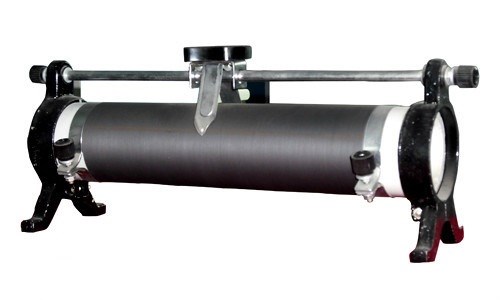 Rheostat Basics: Types, Principle and FunctionsUTMEL25 December 202519287
A rheostat is a device that can adjust the size of the resistance and can be connected to the circuit to adjust the size of the current. A general rheostat is composed of a wire with a larger resistance and a device that can change the contact point to adjust the effective length of the resistance wire. Rheostat can limit the current and protect the circuit, and change the voltage distribution in the circuit.
Read More Basic Introduction to Metal Film ResistorUTMEL28 August 202014269
Metal film resistors are a kind of film resistors. Metal film resistors are resistors in which special metals or alloys are used as resistor materials, and the resistor film layer is basically formed on ceramic or glass by vacuum evaporation or sputtering.
Read More Varistor: Definition, Function, Working and TestingUTMEL03 April 202585078
A varistor is a device with a non-linear volt-ampere characteristic. When the voltage applied to the varistor is lower than its threshold value, the current flowing through it is extremely small, which is equivalent to a resistor with infinite resistance, vice versa. The most common varistor is a metal oxide varistor (MOV).
Read More
Subscribe to Utmel !
![ATA5428C-PLQW-1]() ATA5428C-PLQW-1
ATA5428C-PLQW-1Microchip Technology
![TRF371135IRGZT]() TRF371135IRGZT
TRF371135IRGZTTexas Instruments
![HMC601LP4E]() HMC601LP4E
HMC601LP4EAnalog Devices Inc.
![CC2564BYFVT]() CC2564BYFVT
CC2564BYFVTTexas Instruments
![MRF24WN0MA-I/RM100]() MRF24WN0MA-I/RM100
MRF24WN0MA-I/RM100Microchip Technology
![SI4460-C2A-GMR]() SI4460-C2A-GMR
SI4460-C2A-GMRSilicon Labs
![CC1110F16RSPR]() CC1110F16RSPR
CC1110F16RSPRTexas Instruments
![ATA5756C-6DQY-66]() ATA5756C-6DQY-66
ATA5756C-6DQY-66Microchip Technology
![CC2533F64RHAT]() CC2533F64RHAT
CC2533F64RHATTexas Instruments
![LTC5505-1ES5#TRMPBF]() LTC5505-1ES5#TRMPBF
LTC5505-1ES5#TRMPBFLinear Technology/Analog Devices


