Product
 Brand
Brand Articles
 Tools
Tools
Stepper Motor: Types, Working and Applications

What is a Stepper Motor and How it Works?
Catalog
Ⅰ Stepper motor definition
A stepper motor is a brushless, synchronous DC motor that divides a full rotation into a series of equal steps. Unlike standard electric motors that rotate continuously when voltage is applied, a stepper motor is a digital input-output device that converts digital pulses into precise mechanical shaft rotation.

stepper motor
As we move through 2025, stepper motors have become the backbone of Smart Manufacturing and precision automation. The motor is designed so that the current passing through it activates a series of phased coils that can be turned on and off in rapid succession. This allows the motor to turn a fraction of a rotation at a time—called a "step."
By dividing a single full rotation into a series of much smaller, essentially equal part-rotations, stepper motors can move to specific degrees or angles with high repeatability. As a result, they are used to transfer minutely precise movements to mechanical parts requiring extreme accuracy, such as in medical surgical robots and high-speed 3D printers.
Stepper motors are digitally controlled and are a cornerstone of open-loop motion-control systems. However, a major trend in 2025 is the integration of Closed-Loop Control (often called hybrid servo technology), which allows these motors to provide feedback on their position, combining the precision of steppers with the reliability of servos. They are most commonly used in holding and positioning applications, where their ability to assert clearly defined rotational positions, speeds, and torques is unmatched.
Ⅱ Stepper motor working principle
To understand the stepper motor, it helps to contrast it with a brushed DC motor. A brushed DC motor works by applying a voltage to terminals, which allows a wire coil to spin at high speed within a fixed magnet housing (the stator).

stepper motor internal structure
In a standard DC motor, the spinning wire coil (the rotor) becomes an electromagnet and spins rapidly based on magnetic attraction and repulsion. Brushes and a commutator adjust the current direction mechanically. As long as voltage is supplied, the rotor spins continuously. The drawback is the lack of precision; controlling the exact stopping point of a DC motor without expensive external sensors is difficult.
The configuration for a stepper motor is fundamentally different. Stepper motors are constructed with a fixed wire housing (the stator) arranged around a series of "toothed" electromagnets. Instead of a smooth spin, a pulsing electrical current—managed by a stepper motor driver—is translated into precise one-step movements.
Each pulse from the driver pushes the rotor by one exact increment. Modern drivers in 2025 use advanced algorithms (like vector control) to smooth out these steps, reducing noise and vibration significantly compared to older models. The motor can complete full or partial turns or hold a "stall" position with high torque, known as Holding Torque.
The real advantage of a stepper motor is its ability to locate itself to a known and repeatable location without external feedback sensors (in open-loop systems), making them cost-effective and reliable for applications like robotics, printing, and optical alignment.
Ⅲ Stepper motor types
There are several types of stepper motors available. Understanding the distinctions is vital for selecting the right component for modern applications in 2025.
1. Bipolar stepper motor
A bipolar stepper motor utilizes a single winding per phase, meaning the current must be reversed to change direction. This requires a driver with an H-bridge circuit. Because the entire winding is utilized, bipolar motors offer superior torque compared to unipolar motors of the same size.
While historically considered harder to drive, modern driver chips (such as the TMC series widely used today) handle the H-bridge switching automatically. These drivers also introduce features like "SilentStep" technology, which makes bipolar motors virtually silent—a key requirement for medical and home automation devices in 2025.
2. Hybrid stepper motor
Hybrid stepper motors combine the best features of variable reluctance and permanent magnet motors. They feature toothed poles on the stator and a permanent magnet rotor, allowing for extremely high precision. Standard hybrid motors offer step angles of 1.8° (200 steps per revolution) or even 0.9° (400 steps).
Through Microstepping—a technique where the driver sends sine/cosine waveforms to the coils—a hybrid motor's steps can be divided into up to 256 micro-steps. This results in incredibly smooth motion and high resolution, essential for high-end CNC machining and 3D bioprinting.
3. Closed-Loop Stepper Motors (The 2025 Standard)
A rapidly growing category in 2025 is the Closed-Loop Stepper. These motors integrate an encoder on the back of the shaft. Unlike traditional open-loop steppers that might lose position if overloaded, closed-loop steppers communicate with the driver to correct any missed steps immediately. This technology provides the reliability of a servo motor at a price point closer to a standard stepper.
Ⅳ Stepper motor applications
Stepper motors are ubiquitous in the 2025 tech landscape, driving innovation in:
Computing & Storage: Cooling systems and HDD actuators.
Advanced Robotics: Collaborative robots (Cobots) and surgical arms.
Optical Systems: PTZ Cameras, LiDAR scanners, and telescope mounts.
Additive Manufacturing: High-speed 3D printers and laser cutters.
Electric Vehicles (EVs): Battery thermal management valves and headlight leveling.
1. Stepper motors for 3D printers
In 2025, 3D printing has moved beyond slow prototyping. Modern printers utilize high-torque stepper motors combined with algorithms like "Input Shaping" to print at speeds exceeding 500mm/s without quality loss. Steppers control the X, Y, and Z axes, as well as the extruder, ensuring consistent filament flow. The industry has largely shifted to "Silent" drivers, making desktop manufacturing quiet enough for office environments.
2. Stepper motors for CNC
For powering CNC equipment, the debate between stepper motors and servo motors has evolved. While servos are used for massive industrial machines, Closed-Loop Steppers have become the dominant choice for small-to-medium CNC mills and routers in 2025. They offer the necessary torque and precision without the complexity and high cost of full servo systems.
Unlike older open-loop systems that could ruin a workpiece if a step was missed, modern closed-loop steppers ensure part accuracy by constantly verifying position. They are brushless and maintenance-free, offering a long lifespan in dusty workshop environments.
3. Stepper motors for Raspberry Pi & IoT
Stepper motors remain a favorite for makers using Raspberry Pi 5 or Arduino platforms. In the era of IoT (Internet of Things), these motors are used in smart home devices like automated blinds, pet feeders, and smart locks.
Learning to control steppers via Python is a rite of passage for robotics enthusiasts. Modern "HATs" (Hardware Attached on Top) for the Raspberry Pi now allow for controlling multiple steppers with high precision, making it easier than ever to build custom home robots or automated camera sliders.
4. Stepper motors for cameras
In the security and broadcast industries, stepper motors drive Pan-Tilt-Zoom (PTZ) cameras. Their ability to hold a position without mechanical brakes (Full Torque Standstill) ensures cameras remain steady even in wind or vibration. Furthermore, new LiDAR systems for autonomous vehicles and drones rely on small, high-speed stepper motors to spin sensors for 360-degree environment mapping.
Ⅴ Summary
As the global market for stepper motors is projected to exceed $6 billion by 2025, their importance in technology cannot be overstated. From the precise fluid control in Electric Vehicle batteries to the high-speed movements of modern 3D printers, stepper motors offer an unmatched combination of reliability, precision, and cost-effectiveness.
Whether utilizing a standard open-loop bipolar motor for a hobby project or a high-end closed-loop system for industrial automation, understanding the torque rates, step angles, and driver capabilities is essential for success in the modern engineering landscape.
```[[1](https://www.google.com/url?sa=E&q=https%3A%2F%2Fvertexaisearch.cloud.google.com%2Fgrounding-api-redirect%2FAUZIYQFfToglatJtDlywxH1x4zEunrcEoy_W1sk3YiU8HEzAXurM-GffOylAuFJYoAiwhItU61mZoB9mURj1y_L47JORLY_2DRcD9il8fFjAFMRvNLSG2x2XWLtTXCG2FtOjHZ5pnUA0KvKbgksL-ijgQ4FGXSLAkVXrg0h_TRpjuLYL3y57u7hk7iqujtNAdPJbHl-pIEkwYTl_4HRL4PU%3D)]
 UTMEL
UTMEL
We are the professional distributor of electronic components, providing a large variety of products to save you a lot of time, effort, and cost with our efficient self-customized service. careful order preparation fast delivery service
1.What is a stepper motor used for?
The stepper motor is used for precise positioning with a motor, such as hard disk drives, robotics, antennas, telescopes, and some toys. Stepper motors cannot run at high speeds but have a high holding torque.
2.What is the difference between a servo motor and a stepper motor?
Differences in Servo Motors and Stepper Motors for Motion Control Applications. The main difference between these motors comes from the overall pole count. Stepper motors have a high pole count, usually between 50 and 100. Servo motors have a low pole count – between 4 and 12.
3.Are stepper motors AC or DC?
However, stepper motors themselves function as ac motors (they are generally considered to be asynchronous machines) because even a dc input is converted to a square wave to drive the individual motor windings. In the case of stepper motors, more applied voltage causes a faster current rise in the motor windings.
4.Can stepper motors run continuously?
Stepper motors fall somewhere in between a regular DC motor and a servo motor. They have the advantage that they can be positioned accurately, moved forward or backward one 'step' at a time, but they can also rotate continuously.
5.Do stepper motors go bad?
Stepper motors tend to get weak when they drove in a stalled state for any length of time due to the rotor getting demagnetized. Double-check the power supply, preferably with an oscilloscope, before you write off the motors. A low power supply will make the steppers be underpowered as well.
 What is a Servo Drive?UTMEL16 June 20215649
Servo drive, also known as "servo controller" and "servo amplifier", is a kind of controller used to control servo motors. Its function is similar to that of frequency converters acting on ordinary AC motors, and it is part of the servo system. The servo drive is mainly used in high-precision positioning systems. Generally, the servo motor is controlled by three methods of position, speed, and torque to achieve high-precision transmission system positioning.
Read More What is a Switched Reluctance Motor?UTMEL09 July 20248477
Switched reluctance motor is a type of speed-regulating motor developed after DC motor and brushless DC motor. Product power levels range from several watts to hundreds of kilowatts, and are widely used in household appliances, aviation, aerospace, electronics, machinery, and electric vehicles.
Read More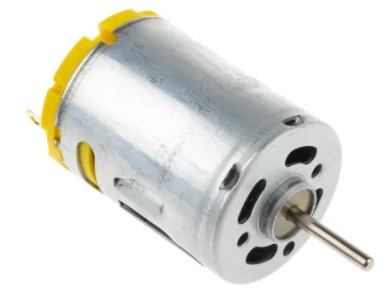 Types, Working, and Selection of DC MotorUTMEL27 March 202518078
A direct current motor (DC motor) is an electric motor that operates on direct current. The operation of an electric motor is based on basic electromagnetism. When a current-carrying conductor is put in an external magnetic field, it will feel a force that is equal to the current in the conductor and the frequency of the external magnetic field.
Read More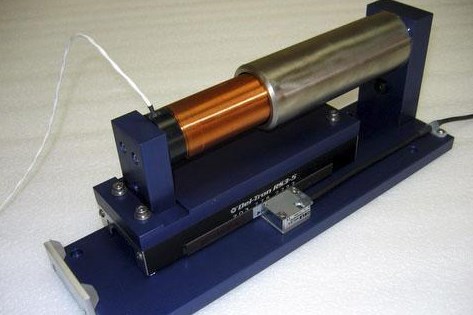 Linear Induction Motor: Working Principle, Characteristics, and ApplicationsUTMEL02 March 202115322
LIM stands for Linear Induction Motor, and it is an improved version of the rotary induction motor that produces linear translational motion instead of rotating motion. Other than rotating torque, this device generates linear movement and force. By cutting a radically shaped cut in the revolving induction and thus leveling the section, the design and functionality of the linear induction motor can be demonstrated in the diagram below.
Read More Stepper Motor: Types, Working and ApplicationsUTMEL26 December 202510592
A brushless, synchronous electric motor that converts digital pulses to mechanical shaft rotation is known as a stepper motor. When operated by a sequentially switched DC power supply, the normal shaft motion is made up of discrete angular motions of approximately uniform magnitude.
Read More
Subscribe to Utmel !
![MCX4421A-ACAN]() MCX4421A-ACAN
MCX4421A-ACANNvidia
![MSN2010-CB2F]() MSN2010-CB2F
MSN2010-CB2FNvidia
![MSN2100-CB2RO]() MSN2100-CB2RO
MSN2100-CB2RONvidia
![MCX512F-ACAT]() MCX512F-ACAT
MCX512F-ACATNvidia
![MSN2010-CB2FO]() MSN2010-CB2FO
MSN2010-CB2FONvidia
![MSN2410-CB2FO]() MSN2410-CB2FO
MSN2410-CB2FONvidia
![MSN2100-CB2R]() MSN2100-CB2R
MSN2100-CB2RNvidia
![MSN2010-CB2FC]() MSN2010-CB2FC
MSN2010-CB2FCNvidia
![MSN2700-CS2F]() MSN2700-CS2F
MSN2700-CS2FNvidia
![MSN2410-CB2R]() MSN2410-CB2R
MSN2410-CB2RNvidia