Product
 Brand
Brand Articles
 Tools
Tools
Types, Working, and Selection of DC Motor

DC Motor, How it works?
Catalog
Ⅰ What is DC Motor?
About any mechanical innovation, we see it made possible by an electric motor. Electric machines are a type of energy converter. Electrical energy is converted into mechanical energy by motors. Hundreds of machines that we use on a regular basis are powered by electric motors. Direct Current (DC) motors and Alternating Current (AC) motors are the two types of electric motors that are widely used. The DC motor and its operation will be discussed in this report. Often, a gear DC motor's service.
A direct current motor (DC motor) is an electric motor that operates on direct current. The operation of an electric motor is based on basic electromagnetism. When a current-carrying conductor is put in an external magnetic field, it will feel a force that is equal to the current in the conductor and the frequency of the external magnetic field. It's a computer that turns electrical energy into mechanical energy. That is based on the fact that when a current-carrying conductor is put in a magnetic field, it is subjected to a force that causes it to rotate in comparison to its initial location. Ground windings have magnetic flux and the armature functions as the conductor in a DC motor.

DC motor
A brushless DC motor accepts current/voltage as an input and produces torque as an output. The operation of a DC motor can be easily understood using the simple diagram seen below. A DC motor is made up of two major components. The rotor is the moving component, and the stator is the stationary component. In relation to the stator, the rotor rotates.
The rotor is made up of windings that are electrically connected to the commutator. As power is applied, the brushes, commutator connections, and rotor windings are configured in such a manner that the polarities of the energized winding and the stator magnets are misaligned, allowing the rotor to spin until it is almost straightened with the stator's field magnets.
The brushes switch to the next commutator contacts and energize the next winding as the rotor aligns. The spinning causes a reversal of current through the rotor winding, allowing the rotor's magnetic field to flip, causing it to continue spinning.
Ⅱ DC Motor Parts
Brushless, permanent magnet, series, compound wound, shunt, otherwise stabilized shunt, and other common DC motor designs are available. The parts of a dc motor are generally the same in these common designs, but the entire process is the same. The below are the key components of a dc engine.
Stator
The field windings are one of the components in a DC motor that involves a stationary component like a stator. The primary aim of this is to procure materials.
Rotor
The rotor is the dynamic portion of the motor that produces the unit's mechanical revolutions.
Brushes
Brushes with a commutator act primarily as a connection to link the stationary electrical circuit to the rotor.
Commutator
It's a broken ring that's made up of copper segments. It's also one of the most significant components of a dc engine.
Field Windings
Field coils, commonly known as copper wires, are used to build these windings. These windings encircle the slots that run through the pole shoes.
Armature Windings
In a DC motor, there are two types of winding construction: lap and wave.
Yoke
A magnetic frame, such as a yoke, is often made of cast iron or steel. It behaves similarly to a guard.
Poles
The pole heart and pole shoes are the two main components of the poles in the engine. These critical components are joined together by hydraulic force and attached to the yoke.
Teeth/Slot
For scratch protection, mechanical assistance, and external electrical insulation, non-conducting slot liners are often jammed among the slot walls as well as coils. Teeth refer to the magnetic fluid that occupies the holes in the slots.
Motor Housing
The brushes, bearings, and iron core are all supported by the motor's housing.
Ⅲ DC motor working principle
A DC motor is a type of electrical machine that transforms electrical energy into mechanical energy. The DC motor's operating theory is that a current-carrying conductor feels a mechanical force when it is placed inside the magnetic field. The extent and orientation of this force can be calculated using Flemming's left-hand law.
When the first finger is stretched, the second finger, as well as the thumb on the left side, would be vertical against each other, and the main finger represents the magnetic field, the next finger represents the current, and the third finger-like thumb represents the force encountered by the conductor.
F = BIL Newtons
Where,
B is the magnetic flux density,
I is current
L is the conductor's length in the magnetic field.
As an armature winding is attached to a DC supply, a current flow is formed within the winding. The magnetic field will be created by field winding or permanent magnets. As a consequence of the above-mentioned theory, armature conductors would be exposed to a force due to the magnetic field.
When the course of the conductor's momentum is upturned within the magnetic field, the Commutator is built like parts to produce uni-directional torque. Otherwise, the path of force will have overturned each time. The DC motor's operating theory is thus as follows.
Ⅳ DC motor types
Brushed and brushless DC motors are the two types of DC motors.

brushless DC motor
Based on whether or not brushes and commutators are used, DC motors are split into two groups.
Brushed DC motors are powered by a direct link to a DC power source. Brushless DC motors, on the other hand, need a drive circuit and operate by providing the right currently by static windings dependent on the magnetic poles of the rotor's sensed direction.
Features of brushed and brushless DC motors
Brushed DC motors

Brushed DC motor
Based on whether permanent or electro-magnets are used, brushed DC motors can be split into two groups.
Permanent magnet brushed DC motor
This is the most popular type of electric motor in use around the world, and it includes motors used in models and vehicle auxiliary motors. Based on the armature configuration, they are further categorized into slotted, slotless, and coreless motors (rotor).
Electromagnet brushed DC motor
Electromagnets are used to produce magnetic flux in these motors. Based of how the electrical relation between the field winding and armature winding is designed, they are further classified into distributed-winding, series-wound, and separately-excited motors. For motors with a low to high output, this configuration is used.
Brushless DC motors
Brushless DC motors do not need brushes or a commutator because their windings remain unchanged. Based on how the permanent magnets are connected to the rotor, they are grouped into the following groups.
Ⅴ How to Select the Right Motor?
The selection of a 12v dc motor can be made very quickly by METmotors and the company's experts can first review the right application and then consider a range of features and parameters to ensure you get the best product available.
One of the features of this engine is its working voltage.
Where a motor is operated by batteries, low operating voltages are usually preferred because fewer cells are needed to produce the desired voltage. However, running a dc motor at high voltages is typically more effective. Despite the fact that it will work on 1.5 volts and up to 100 volts, it is not suggested. The 6v, 12v, and 24v motors are the most widely used. Speed, working current, strength, and torque are some of the other essential features of this motor.
The 12V DC motors are suitable for a number of applications that require high starting torque and a DC supply. As opposed to other motor voltages, these motors work at lower speeds.
The characteristics of this motor differ largely depending on the manufacturer and function.
*The motor speed ranges from 350 to 5000 revolutions per minute.
*This motor's rated torque ranges from 1.1 to 12.0 in-lbs.
*This motor's output power ranges from 01 hp to.21 hp.
*60mm, 80mm, and 108 mm are the frame sizes.
*Brushes that can be substituted
*Brushes have an average life of 2000 hours or more.
Ⅵ AC vs DC motor
While both A.C. and D.C. motors transform electrical energy into mechanical energy, they are driven, built, and operated in various ways. 1 The power supply is the most fundamental distinction. A.C. motors use alternating current (A.C.), while D.C. motors use direct current (D.C.), such as generators, D.C. power supplies, or an AC-to-DC power converter. Brushes and a commutator are used in D.C wound field motors, which contribute to the upkeep, restrict the speed, and reduce the life span of brushed D.C. motors. Brushless ac induction motors are highly robust and have a long service life. The last big distinction is speed modulation. A D.C. motor's speed is controlled by changing the current in the armature winding, while an A.C. motor's speed is controlled by changing the voltage, which is usually achieved with an adjustable frequency drive control.
Ⅶ What are DC motor controllers?
A DC motor controller, to put it simply, is any system that can regulate the position, rpm, or torque of a DC-powered motor. There are controls for brushed DC motors, brushless DC motors, and universal motors, and all of them allow operators to program desired motor actions, though through different mechanisms.
To summarize, DC motors have an inversely linear speed/torque curve, which means that as the motor RPMs increase, the torque proportionally decreases. This makes control simple because lowering the speed increases the torque and vice versa. DC motors can also be easily reversed, unlike some AC motors, by simply switching their leads so that the DC current runs in the opposite direction. DC motor controllers take advantage of these features in novel ways.
Reference
Chapman, S. J. (2021). Electric machinery fundamentals (5th ed.). McGraw-Hill Education. https://www.mheducation.com/highered/product/electric-machinery-fundamentals-chapman/M9781260226997.html
Hughes, A., & Drury, B. (2019). Electric motors and drives: Fundamentals, types and applications (5th ed.). Newnes. https://www.elsevier.com/books/electric-motors-and-drives/hughes/978-0-08-102615-1
Krishnan, R. (2017). Permanent magnet synchronous and brushless DC motor drives. CRC Press. https://www.routledge.com/Permanent-Magnet-Synchronous-and-Brushless-DC-Motor-Drives/Krishnan/p/book/9780824753849
Miller, T. J. E. (2017). Brushless permanent-magnet and reluctance motor drives. Oxford University Press. https://global.oup.com/academic/product/brushless-permanent-magnet-and-reluctance-motor-drives-9780198729228
Mohan, N. (2020). Electric machines and drives: A first course. Wiley. https://www.wiley.com/en-us/Electric+Machines+and+Drives%3A+A+First+Course-p-9781119370291
 UTMEL
UTMEL
We are the professional distributor of electronic components, providing a large variety of products to save you a lot of time, effort, and cost with our efficient self-customized service. careful order preparation fast delivery service
1.What is a DC motor and how it works?
A direct current (DC) motor is a type of electric machine that converts electrical energy into mechanical energy. DC motors take electrical power through direct current and convert this energy into mechanical rotation.
2.What is in a DC motor?
A DC motor consists of a stator, an armature, a rotor, and a commutator with brushes. The opposite polarity between the two magnetic fields inside the motor causes it to turn. DC motors are the simplest type of motor and are used in household appliances, such as electric razors, and in electric windows in cars.
3.What is the DC motor principle?
DC motors operate on Faraday's principle of electromagnetism which states that a current-carrying conductor experiences a force when placed in a magnetic field.
4.Where is the DC motor used?
At home, small DC motors are used in tools, toys, and various household appliances. In retail, the applications of DC motors include conveyors and turntables, while in an industrial setting, large DC motor uses also include braking and reversing applications.
5.How do you identify a DC motor?
Look for the commutator & brushes and salient field system to confirm. (iii) has 5 terminals, then it is a AC synchronous motor (3 for stator and 2 for field). Look for 2 slip rings for rotor dc supply. (iii) has 4 terminals, then it may be a DC motor, in which case look for the commutator & brushes to confirm.
 What is a Servo Drive?UTMEL16 June 20215649
Servo drive, also known as "servo controller" and "servo amplifier", is a kind of controller used to control servo motors. Its function is similar to that of frequency converters acting on ordinary AC motors, and it is part of the servo system. The servo drive is mainly used in high-precision positioning systems. Generally, the servo motor is controlled by three methods of position, speed, and torque to achieve high-precision transmission system positioning.
Read More What is a Switched Reluctance Motor?UTMEL09 July 20248477
Switched reluctance motor is a type of speed-regulating motor developed after DC motor and brushless DC motor. Product power levels range from several watts to hundreds of kilowatts, and are widely used in household appliances, aviation, aerospace, electronics, machinery, and electric vehicles.
Read More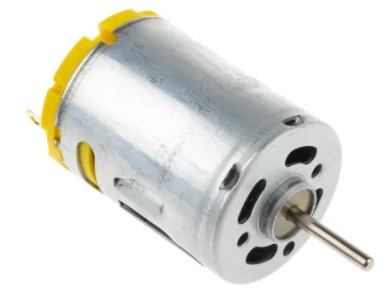 Types, Working, and Selection of DC MotorUTMEL27 March 202518079
A direct current motor (DC motor) is an electric motor that operates on direct current. The operation of an electric motor is based on basic electromagnetism. When a current-carrying conductor is put in an external magnetic field, it will feel a force that is equal to the current in the conductor and the frequency of the external magnetic field.
Read More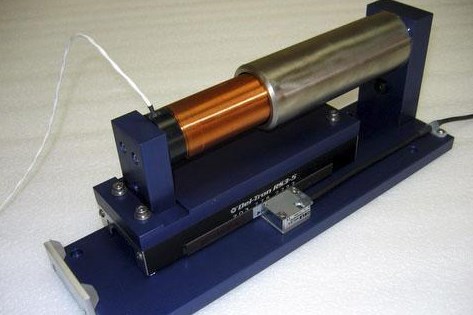 Linear Induction Motor: Working Principle, Characteristics, and ApplicationsUTMEL02 March 202115322
LIM stands for Linear Induction Motor, and it is an improved version of the rotary induction motor that produces linear translational motion instead of rotating motion. Other than rotating torque, this device generates linear movement and force. By cutting a radically shaped cut in the revolving induction and thus leveling the section, the design and functionality of the linear induction motor can be demonstrated in the diagram below.
Read More Stepper Motor: Types, Working and ApplicationsUTMEL26 December 202510592
A brushless, synchronous electric motor that converts digital pulses to mechanical shaft rotation is known as a stepper motor. When operated by a sequentially switched DC power supply, the normal shaft motion is made up of discrete angular motions of approximately uniform magnitude.
Read More
Subscribe to Utmel !
![702371334]() 702371334
702371334Omron
![76002095]() 76002095
76002095Digi
![T2F-DTL002-24VM]() T2F-DTL002-24VM
T2F-DTL002-24VMCinch Connectivity Solutions
![2215]() 2215
2215Essentra Components
![LB7L-M1T64W]() LB7L-M1T64W
LB7L-M1T64WIDEC
![LSC6C]() LSC6C
LSC6CHoneywell
![1201110001]() 1201110001
1201110001Molex
![R88L-EA-AF-0612-0782-0005]()
![2372]() 2372
2372Texas Instruments
![4023-835]() 4023-835
4023-835Applied Motion