Product
 Brand
Brand Articles
 Tools
Tools
What are Quantum Sensors?
Topics covered in this post: |
Quantum theory and quantum sensors
The creation of quantum theory is one of the most brilliant achievements of the 20th century, which reveals the structure, properties, and laws of motion of matter in the microscopic realm and brings people's perspective from the macroscopic realm to the microscopic systems. A series of phenomena that are different from classical systems, such as quantum entanglement, quantum coherence, uncertainty, etc., were discovered. At the same time, quantum theory and quantum methods have been applied to chemical reactions, genetic engineering, atomic physics, quantum information, and other fields.
In recent years, the development of quantum informatics has made the manipulation and control of quantum states of microscopic objects more and more important. Quantum control theory and methods are used to solve the control problem of quantum states, which gives rise to quantum cybernetics.
Quantum cybernetics is the study of the control of quantum states of microscopic systems, and quantum sensors can be used to solve the detection problem in quantum control.
The concept and status of quantum sensors
In classical control, the measurement process is done by various measurement instruments, in which the transformation process is generally done by the corresponding measurement sensors. The measuring instrument can be made up of several sensors connected in a suitable way to perform the transformation, selection, comparison, and display functions together. As in classical control, the key to measurement in quantum control is the comparison of the measured and standard quantities. The direct measurement of the state of the quantum system is generally not easy to achieve, but it is necessary to transform the measured quantity into a physical quantity that can be easily measured according to certain laws, and then realize the indirect measurement of the quantum state. This process can be accomplished through quantum sensors.
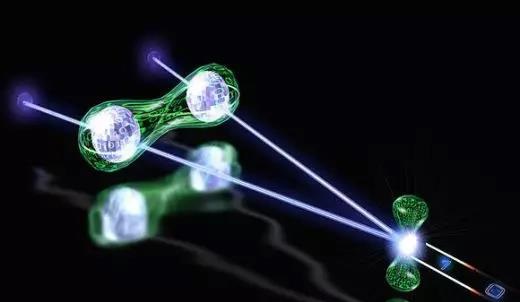
Quantum Sensing
Quantum sensors can be defined in two ways.
(1) A physical device designed to perform a transformation function based on quantum algorithms using quantum effects;
(2) Transformation elements that are so delicate that their quantum effects must be taken into account in order to satisfy the transformation of the measurement being made.
Regardless of the definition, a quantum sensor must follow the laws of quantum mechanics. It can be said that a quantum sensor is a physical device designed to perform a transformation of a system measured according to the laws of quantum mechanics, using quantum effects.
Like the booming biosensors, quantum sensors should be composed of two parts: the sensitive element that generates the signal and the auxiliary instrument that processes the signal, of which the sensitive element is the core of the sensor, which uses the quantum effect.
With the deepening of quantum control research, the requirements of the sensitive element will become higher and higher, the development of the sensor itself also has the trend of miniaturization, quantum type development, quantum effects will inevitably play an important role in the sensor, a variety of quantum sensors will be widely used in quantum control, state detection and other aspects.
Performance analysis of quantum sensors
The performance quality of sensors is mainly evaluated in terms of accuracy, stability, and sensitivity. Combined with the characteristics of quantum sensors, the performance of quantum sensors can be considered from the following aspects:
(1) Non-destructive
In quantum control, because the measurement may cause the wave function of the measured system to approximate, at the same time, the sensor may also cause the system state change, therefore, in the measurement, we should fully consider the interaction between the quantum sensor and the system. Because the state detection in quantum control is fundamentally different from the state detection in classical control, the measurement may cause the state wave function approximation process implies that the measurement of the state has destroyed the state itself, therefore, non-destructive is one of the key aspects of quantum sensors should be considered. In the actual detection, the quantum sensor can be considered as part of the system, or as a perturbation of the system, the sensor and the measured object interaction Hamiltonian considered in the evolution of the overall system state.
(2) Real-time
According to the characteristics of the measurement in quantum control, especially the rapidity of the state evolution, which makes real-time become an important index for the evaluation of the quality of quantum sensors. Real-time requires that the measurement results of quantum sensors can better match the current state of the object to be measured, and if necessary, to track the evolution of the quantum state of the object to be measured, in the design of quantum sensors, to consider how to solve the measurement lag problem;
(3) Sensitivity
Since the main function of the quantum sensor is to realize the transformation of the measured microscopic object, it is required to capture the small changes of the object, therefore, when designing the quantum sensor, it is necessary to consider its sensitivity to meet the actual requirements;
(4) Stability
In quantum control, the state of the controlled object is susceptible to environmental effects, quantum sensors in the detection of the quantum state of the object may also cause instability of the object or the sensor itself, the solution is to introduce the idea of environmental engineering, consider the use of cooling traps, cryostats and other methods to protect;
(5) Multifunctionality
Quantum system itself is a complex system, the subsystem or sensor and the system are prone to interaction, the practical application is always expected to reduce the human influence and multi-step measurement brought about by the lag, therefore, more functions, such as sampling, processing, measurement, etc., integrated in the same quantum sensor, and the appropriate intelligent control algorithms into it, the design of intelligent, multi-functional quantum The quantum sensor has many of the features that classical sensors have.
Quantum sensors have many properties that classical sensors do not have, the design of quantum sensors, in addition to the focus on the quantum field can not be measured directly into the measured quantity, but also from the non-destructive, real-time, sensitivity, stability, multi-functionality and other aspects of the quantum sensor performance to be evaluated.
The market application of quantum sensors
In the UK, for example, in the field of sensors and related equipment has more than 73,000 employees, the average annual contribution to the economy also, so the importance of integrating the whole industry chain is self-evident. More than 14 billion pounds. The value derived from a sensor data service alone is already astronomical
However, the imagination of the quantum sensor does not stop here: the development of quantum magnetic sensors will significantly reduce the cost of magnetic brain imaging, helping the promotion of the technology; and quantum sensors for measuring gravity will hopefully change the impression of the traditional underground survey work tedious and time-consuming; even in the field of navigation, often navigation satellites can not search the area, is the quantum sensor provided by the inertial navigation The use of inertial navigation provided by quantum sensors.
1 Civil engineering
Subsurface surveys are often extremely expensive and time-consuming, but are necessary when building new infrastructure, especially for large projects such as high-speed railroads and nuclear power plants before construction begins. In fact, there are many geologically unexplored underground environments that present hazards such as sewers, mines, and sinkholes.
The cost of insufficient information is often very high, with delays, cost overruns, and re-planning commonplace. The UK's approach to infrastructure maintenance is to spend £5 billion a year digging 4 million holes in roads, surprisingly so because people are not sure where underground facilities are located.
And in the general impression that any inspection should be carried out above ground, without digging holes. But the performance of existing radar, electronic detectors, and magnetometers does not achieve the desired effect, and objects that are more than a few meters underground are difficult to be detected.
The usual solution to this situation is to use gravity sensing technology because subtle changes in the gravity of any object buried underground can be recorded and plotted as a gravity map. However, the problem with conventional gravimeters is that the readings are inaccurate, time-consuming, and susceptible to ground vibrations.
However, the use of quantum sensors for gravity measurement has obvious advantages: faster, more accurate readings, deeper detection, and unaffected by ground vibrations. The widespread use of this technology will certainly play a great role in promoting the civil engineering industry.
2 Natural hazard prevention
More than 5 million homes in the UK are located in locations at risk of collapse and subsidence; the UK railroads also need to monitor the water around the tracks in real-time to prevent landslides. The quantum sensor is a good way to mark on the gravity map where there is a risk of collapse and where there is too much water.
In addition, quantum photon sensors can also quickly identify hazards such as oil spills under the ground surface. All of this is based on the fast scanning characteristics of quantum sensors, which in turn makes it possible to inspect on a regular basis.
3 Resource exploration
Access to natural resources such as oil and gas is focused on the identification of extraction sites, which is a huge market worth $3 billion in the United States. The current mainstream form of exploration is seismic detection, which is more effective, but the more expensive gravity measurement method is only used in places where people know less.
But in fact, a large part of the high cost of gravity measurement comes from adjusting the equipment, and now the emergence of quantum-enhanced MEMS sensors reduce the operation of equipment adjustment so that the whole measurement can be faster to move forward, and even the cost has been reduced to one-tenth of the previous.
4 Transportation and navigation
The more the development of transportation, the more need to understand the accurate location information and conditions of various vehicles, which also on the number of sensors carried by cars, trains, and aircraft requirements, satellite navigation equipment, radar sensors, ultrasonic sensors, optical sensors, etc. will gradually become standard.
However, with this is not enough, the development of sensor technology will also face new challenges. The positioning and navigation accuracy of self-driving cars and trains is strictly required to be within 10 cm; the next generation of driver assistance systems must be able to monitor dangerous road conditions at the local centimeter-level at all times. Using cold-atom-based quantum sensors, navigation systems will not only be able to pinpoint location information to the centimeter, but must also have the ability to work in places beyond the reach of navigation satellites, such as underwater, underground, and in building complexes.
At the same time, other types of quantum sensors are being developed (e.g., those operating in the terahertz band) that can evaluate roads with millimeter accuracy. In addition, laser-based microwave sources, originally developed for atomic clocks, can also enhance the working range and working accuracy of airport radar systems.
5 Gravity measurement
Light measurement is not suitable for all imaging work, as a new alternative and complementary means, gravity measurement can well reflect the subtle changes in a place, such as inaccessible old mine shafts, pits, and deep underground water and gas pipes. With this method, oil exploration and water level monitoring will also become exceptionally easy.
The new gravitational sensors and quantum-enhanced MEMS (microelectromechanical systems) technology developed using quantum cold atoms will have higher performance than previous devices and will have more important commercial applications.
Low-cost MEMS devices are also being conceived, which are expected to be the size of a tennis ball and a million times more sensitive than the motion sensors used in smartphones. Once this technology matures, then large-area gravity field image mapping will also become possible.
MEMS sensors are at least a few orders of magnitude ahead in quantum imaging readout. Researchers from the University of Glasgow and the University of Bridgeport have developed a Wee-g detector that can use quantum light sources to improve device accuracy, allowing even smaller objects to be detected - or to help rescue operations in avalanche and earthquake disasters.
The cold atom sensor would have the highest accuracy and a level of cost-effectiveness that is unparalleled and has yet to be surpassed by more sophisticated technologies. The RSK and e2v cold atom sensors are currently being developed at the University of Birmingham and will be used for everyday gravity measurements. For example to help the construction industry determine detailed conditions underground, reduce engineering delays due to unexpected hazards, and move away from reliance on expensive exploration excavations.
In space, cold-atom sensors could lead to new scientific breakthroughs by detecting gravitational waves and verifying Einstein's theories. And, of course, routine Earth remote sensing observations can be made with precise gravity measurements, monitoring everything from groundwater reserves to changes in glaciers and ice caps.
At the University of Glasgow, researchers are also creating a new transformative space technology, namely the use of MEMS sensors for fine control of spacecraft altitude, which will help enhance the competitiveness of British small satellite technology around the world.
6 Medical health
Dementia: According to the Alzheimer's Association estimates, the annual economic loss due to dementia worldwide is about 500 billion pounds, and this figure is increasing. And the current form of diagnosis based on patient questionnaires usually makes the choice of treatment means the possibility of serious limitations, only good early diagnosis and intervention can have better results.
Researchers are investigating a technique called magnetoencephalography (MEG) that could be used for early diagnosis. The problem, however, is that the technique currently requires a magnetically shielded chamber and liquid helium cooling to operate, which makes it prohibitively expensive to roll out. Quantum magnetometry, on the other hand, can bridge this gap very well, with higher sensitivity, little need for cooling, and with shielding, and more crucially, it is much cheaper.
Cancer: A technique called microwave tomography has been used for many years for the early detection of breast cancer, and quantum sensors help to improve the sensitivity and display resolution of this technology. Unlike conventional X-rays, microwave imaging does not expose the breast directly to ionizing radiation.
In addition, diamond-based quantum sensors also make it possible to study temperature and magnetic fields within living cells at the atomic level, which provides new tools for medical research.
Heart disease: Cardiac arrhythmias are often seen as the number one lethal killer in developed countries, and the pathology of the condition is characterized by irregular heartbeat rates that vary from fast to slow. The advent of quantum magnetometry, a technique currently under development for magnetic induction tomography, which is seen as a tool that can diagnose fibrillation and study its formation mechanism, will greatly enhance the application of this technique, which will be beneficial in imaging clinical applications, patient monitoring, and surgical planning.
 UTMEL
UTMEL
We are the professional distributor of electronic components, providing a large variety of products to save you a lot of time, effort, and cost with our efficient self-customized service. careful order preparation fast delivery service
1.How does a quantum sensor work?
Quantum sensors use atoms and photons as measurement probes by manipulating their quantum state. Increasing the sensitivity of these sensors—and traditional sensors—often means developing a bigger sensor or using more sensing particles.
2.What is quantum sensing technology?
"Quantum sensing" describes the use of a quantum system, quantum properties, or quantum phenomena to perform a measurement of a physical quantity. Historical examples of quantum sensors include magnetometers based on superconducting quantum interference devices and atomic vapors or atomic clocks.
 The Key Role of Electronic Components in IoT DevicesUTMEL01 September 20236169
The article discusses the pivotal role of electronic components in Internet of Things (IoT) devices. IoT devices work by capturing real-world data using sensors, processing it through a microcontroller, and then sending it to the cloud for further analysis.
Read More Accelerometer Sensors Guide: Working Principle, Circuit Design, Specifications, and ApplicationsUTMEL25 June 2026905
A practical accelerometer sensor guide covering working principles, MEMS and piezoelectric types, datasheet specifications, circuit design, mounting, applications, and selection.
Read More 2026 ADAS Sensors: Supply Outlook and Alternative SourcingUTMEL18 July 20261056
Automotive cleanroom assembly integrating advanced driver assistance systems. The automotive industry faces a structural semiconductor deficit in 2026, driven not by pandemic-era demand shocks but by AI data centers absorbing global foundry capacity on legacy nodes (40nm-90nm) where 95% of automotive-grade components are manufactured. Video demonstrations of these systems show a "machine view" overlay with red crosshairs tracking pedestrian movement and sudden cut-ins before traditional collision thresholds are triggered.
Read More Magnetic Sensors for Position Detection: Hall Effect vs. AMR vs. TMR Engineering GuideUTMEL21 August 2026496
This guide compares Hall effect, AMR, and TMR magnetic sensors for position detection in motor control and robotics. It explains their physical principles, key performance metrics, and selection criteria. Hall effect suits low-cost commutation, AMR offers high-speed angle sensing, and TMR provides maximum precision and low power, with practical integration advice.
Read More Temperature Sensor Types Comparison: Thermocouple, RTD, and Semiconductor IC Selection GuideUTMEL17 August 2026406
This comprehensive selection guide compares thermocouples, platinum RTDs, and semiconductor ICs across measurement range, accuracy limits, and signal conditioning complexity. It covers fundamental operating physics, mathematical transfer functions, lead-wire compensation topologies, and power budgets. Engineers will find practical design checklists, benchtop multimeter diagnostic techniques, and an architectural decision workflow to optimize system performance and bill-of-materials cost.
Read More
Subscribe to Utmel !