Product
 Brand
Brand Articles
 Tools
Tools
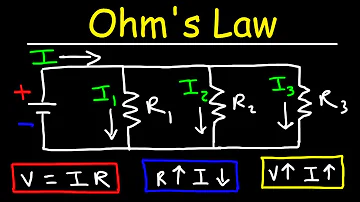
Ohm's Law Calculator Overview
The Ohm's Law Calculator quickly calculates voltage, current, resistance, and power in a simple electrical circuit. Enter any two known values and the calculator returns the remaining values using Ohm's law and electric power formulas.
Ohm's law is most useful for resistive circuits where voltage, current, and resistance have a predictable relationship. It is commonly used when choosing resistors, checking current draw, estimating power dissipation, sizing LED resistors, and troubleshooting basic DC circuits.
What Is Ohm's Law?
Ohm's law describes the relationship between voltage, current, and resistance in an ohmic conductor. If temperature and other physical conditions remain approximately constant, the current through the conductor is proportional to the voltage across it.
The basic formula is:
V = I × R
where V is voltage in volts, I is current in amperes, and R is resistance in ohms.
Ohm's Law Formulas
| Find | Formula | Use When You Know |
|---|---|---|
| Voltage | V = I × R | Current and resistance |
| Current | I = V / R | Voltage and resistance |
| Resistance | R = V / I | Voltage and current |

Power Formulas
Electrical power is the rate at which electrical energy is converted to heat, light, motion, or another form of energy. In DC resistive circuits:
P = V × I
Combining this with Ohm's law gives:
| Find | Formula | Use When You Know |
|---|---|---|
| Power | P = V × I | Voltage and current |
| Power | P = I² × R | Current and resistance |
| Power | P = V² / R | Voltage and resistance |
| Current | I = P / V | Power and voltage |
| Voltage | V = P / I | Power and current |

Electrical Units
| Quantity | Symbol | Unit | Meaning |
|---|---|---|---|
| Voltage | V | volt | Electrical potential difference between two points. |
| Current | I | ampere | Rate of electric charge flow. |
| Resistance | R | ohm | Opposition to current flow. |
| Power | P | watt | Rate of energy conversion or dissipation. |
How to Use the Ohm's Law Calculator
Choose the value you want to calculate, then enter any two known values. For example, if you know voltage and resistance, the calculator can find current and power. If you know current and resistance, it can find voltage and power.
Always enter values in compatible units. Convert milliamps to amps, kilohms to ohms, and milliwatts to watts before comparing or calculating unless the calculator provides unit selectors.

Example Calculations
Find Current
A circuit has a 12 V supply and a 6 Ω resistor.
I = V / R = 12 / 6 = 2 A
The power dissipated by the resistor is:
P = V × I = 12 × 2 = 24 W
Find Resistance
A lamp operates from 120 V and draws 0.625 A.
R = V / I = 120 / 0.625 = 192 Ω
The lamp power is:
P = V × I = 120 × 0.625 = 75 W
Ohmic and Non-Ohmic Devices
Ohm's law works directly for ohmic materials and devices whose resistance stays approximately constant over the operating range. Many metal-film resistors are close to ohmic under normal conditions.
Some devices are not ohmic. LEDs, diodes, transistors, thermistors, lamps, varistors, batteries, and many semiconductor devices do not have a constant resistance over all voltages and currents. For those parts, use the datasheet curves and the correct circuit model instead of treating them as fixed resistors.
DC and AC Use
For DC resistive circuits, use:
V = I × R
For AC circuits with impedance, the comparable relationship is:
V = I × Z
where Z is impedance in ohms. In AC circuits, impedance can include resistance, inductive reactance, and capacitive reactance. Voltage and current may also have phase difference, so RMS values and power factor may be required for accurate power calculations.
Common Mistakes to Avoid
| Mistake | Correct Approach |
|---|---|
| Using milliamps as amps without conversion. | Convert 20 mA to 0.02 A before using the formula. |
| Ignoring resistor power rating. | Calculate power and choose a resistor with suitable wattage margin. |
| Applying fixed-resistance math to LEDs directly. | Use LED forward voltage and current to calculate a series resistor. |
| Assuming resistance never changes. | Temperature, material, tolerance, and self-heating can change resistance. |
| Using DC formulas for reactive AC loads. | Use impedance, RMS values, and power factor for AC circuits. |
Practical Design Notes
In real circuits, resistor tolerance and temperature coefficient affect the actual value. A resistor marked 1 kΩ may not be exactly 1000 Ω, and its resistance can drift as it warms. For precision circuits, choose components with suitable tolerance, temperature coefficient, voltage rating, and power rating.
When calculating current draw from a power supply, include every load and check startup current, inrush current, and transient conditions. A steady-state Ohm's law calculation may not capture short peaks that matter for fuses, switches, connectors, and power supplies.
Video Reference
FAQ
What two values do I need for the calculator?
Any two values among voltage, current, resistance, and power are usually enough to calculate the others for a simple resistive DC circuit.
Why is power important in Ohm's law calculations?
Power tells you how much energy is being dissipated. If a resistor dissipates more power than it is rated for, it can overheat or fail.
Does Ohm's law apply to LEDs?
Not directly as a fixed resistance. LEDs are nonlinear devices. Use the LED forward voltage and target current to choose a current-limiting resistor.
What is the difference between resistance and impedance?
Resistance is the real opposition to current flow. Impedance includes resistance plus AC effects from inductance and capacitance.
Related Online Calculation Tools
Voltage Divider Calculator - calculates output voltage and resistor values for voltage divider circuits.
LED Series Resistor Calculator - calculates a current-limiting resistor for LED circuits.
Parallel and Series Resistor Calculator - calculates equivalent resistance for resistor networks.
dBm to Watts Calculator - converts RF power between dBm and watts.