

 Product
 Brand
Brand Articles
 Tools
Tools

UTMEL
We are the professional distributor of electronic components, providing a large variety of products to save you a lot of time, effort, and cost with our efficient self-customized service. careful order preparation fast delivery service
Sort by
 CAN FD Transceiver Selection Guide: Loop Delay, Bus Faults, and Low-Power Architecture
30 September 2026
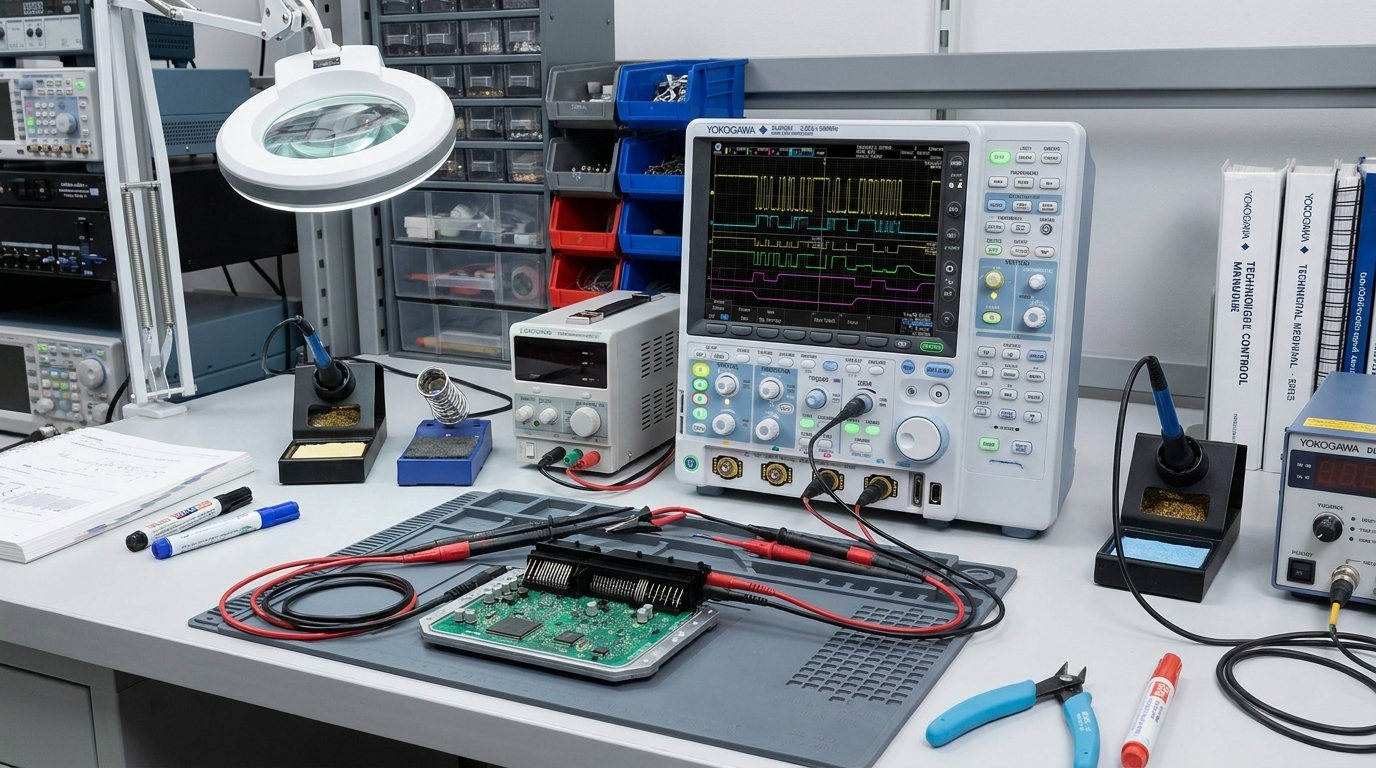
This engineering selection guide examines critical parameters for CAN FD transceivers, contrasting MCU Transmitter Delay Compensation with physical loop delay and bit symmetry. It details DC fault survivability, Wake-up Pattern filtering, unpowered bus leakage, and transmission line constraints across 2 Mbps and 5 Mbps topologies. Complete with a comparative matrix and oscilloscope bring-up checklist, it ensures robust physical layer implementation.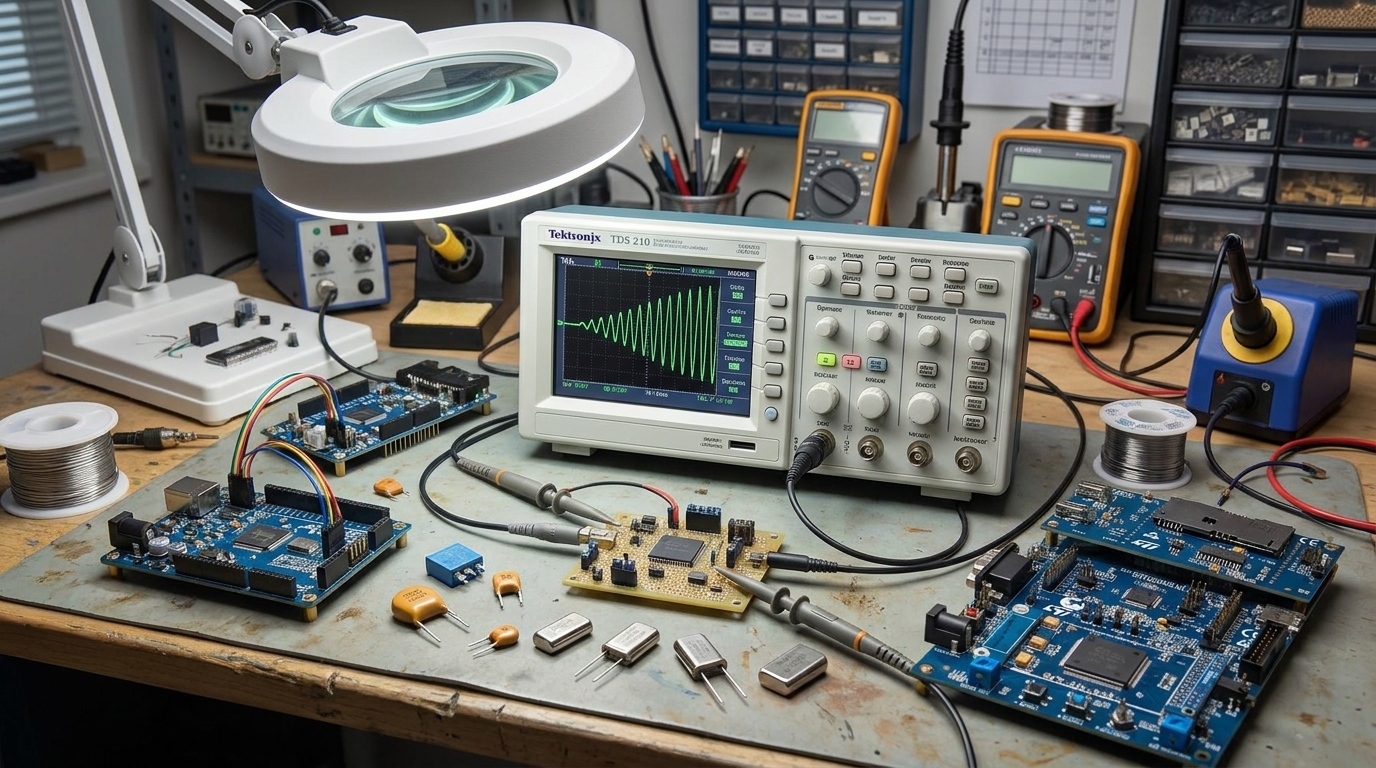 MCU Crystal Selection & Startup Verification: Load Capacitance, ESR, and Oscillation Margin Guide
29 September 2026
Prevent MCU clock failures and cold-boot issues by mastering Pierce oscillator circuit design. This comprehensive guide covers exact load capacitance calculations accounting for PCB parasitics, transconductance matching against crystal ESR, drive level protection, and benchtop negative resistance testing. Implement robust production qualification across temperature extremes to ensure rock-solid clock synchronization across hardware revisions.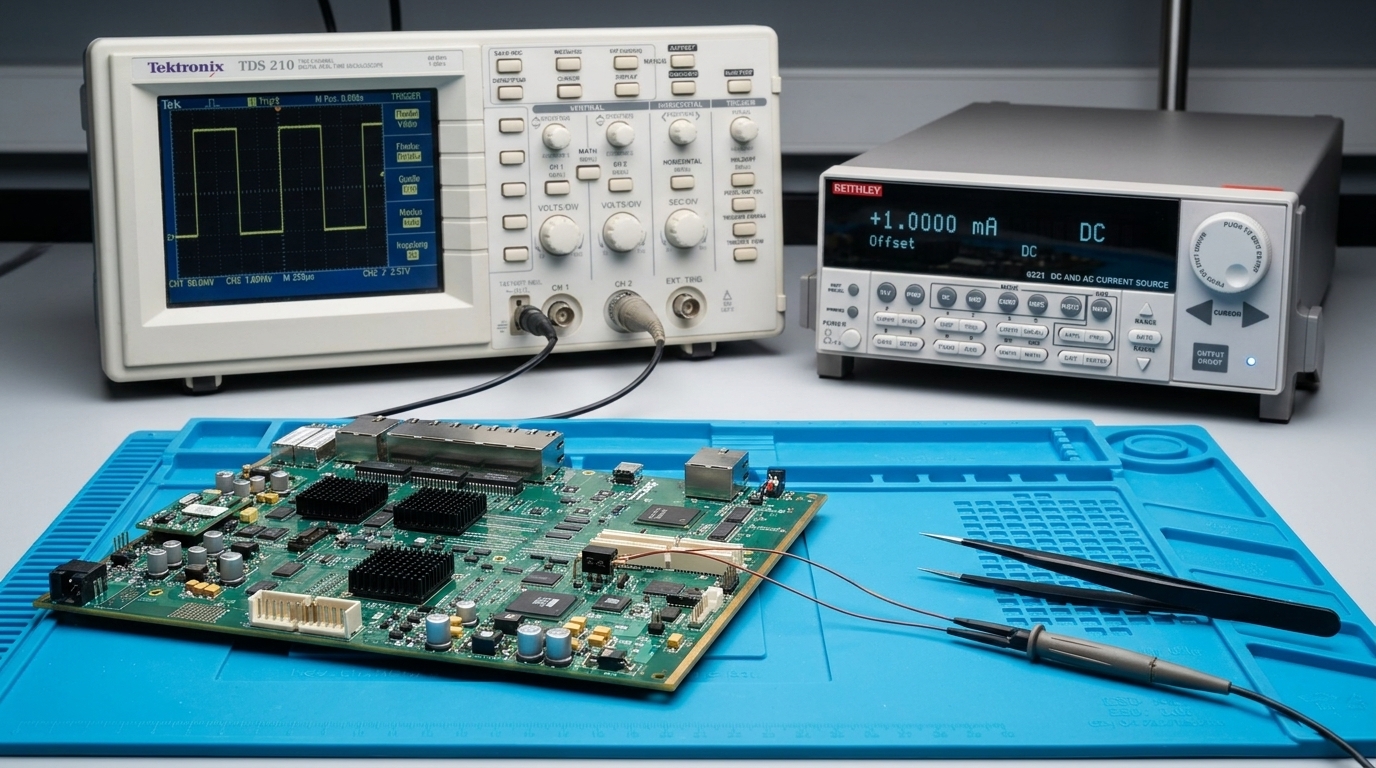 Designing Low-Power Optocoupler Circuits: Worst-Case CTR Calculation Across Temperature and Aging
24 September 2026
Operating optocouplers at sub-milliamp forward currents extends LED lifespan but causes non-linear CTR collapse. This engineering guide details a multiplicative worst-case CTR derating framework across temperature and Arrhenius aging, covers saturated pull-up resistor sizing, highlights dynamic speed trade-offs, and outlines bench validation protocols using synthetic current starvation to prevent field dropouts. The Ultimate Guide to AI Noise Reduction Translation Earbuds
24 September 2026
In today’s connected world, talking to others is very important. You’ve likely seen how global business, travel, and learning need easy chats in different languages. This need keeps growing because of new tech like 5G and edge computing. These make fast and smooth connections possible. Semiconductor PCN Review Checklist: From Notification to Engineering Sign-Off
23 September 2026
This engineering guide details a systematic protocol for managing semiconductor Product Change Notifications (PCNs). Covering J-STD-046 and ZVEI DeQuMa standards, it explores triage within 48 hours to prevent tacit acceptance, physical failure mechanisms across wafer fabs, packaging, test sites, and die steppings, plus in-house bench testing, cross-functional sign-off matrices, and simulated teardowns. MSL and Floor Life: A Receiving-to-Reflow Checklist for ICs
22 September 2026
This operational guide provides a 5-phase receiving-to-reflow checklist to prevent moisture-induced IC defects and popcorn failures during lead-free reflow. Governed by IPC/JEDEC J-STD-020 and J-STD-033 standards, it details packaging inspection, HIC interpretation, floor-life tracking, ultra-low humidity dry cabinet rules, and carrier-specific baking protocols. It includes a ready-to-use shop-floor traveler log and troubleshooting guidelines for common manufacturing excursions. MOSFET vs IGBT: Structure, Switching Behavior, and How to Choose
21 September 2026
With the rise of new energy in recent years, the market demand for MOSFETs and IGBTs is increasing steeply. Generally used as switching devices, they are widely used in electronic circuits. MOSFETs and IGBTs are relatively similar in appearance and characteristics parameters. So what is the difference between MOSFETs and IGBTs?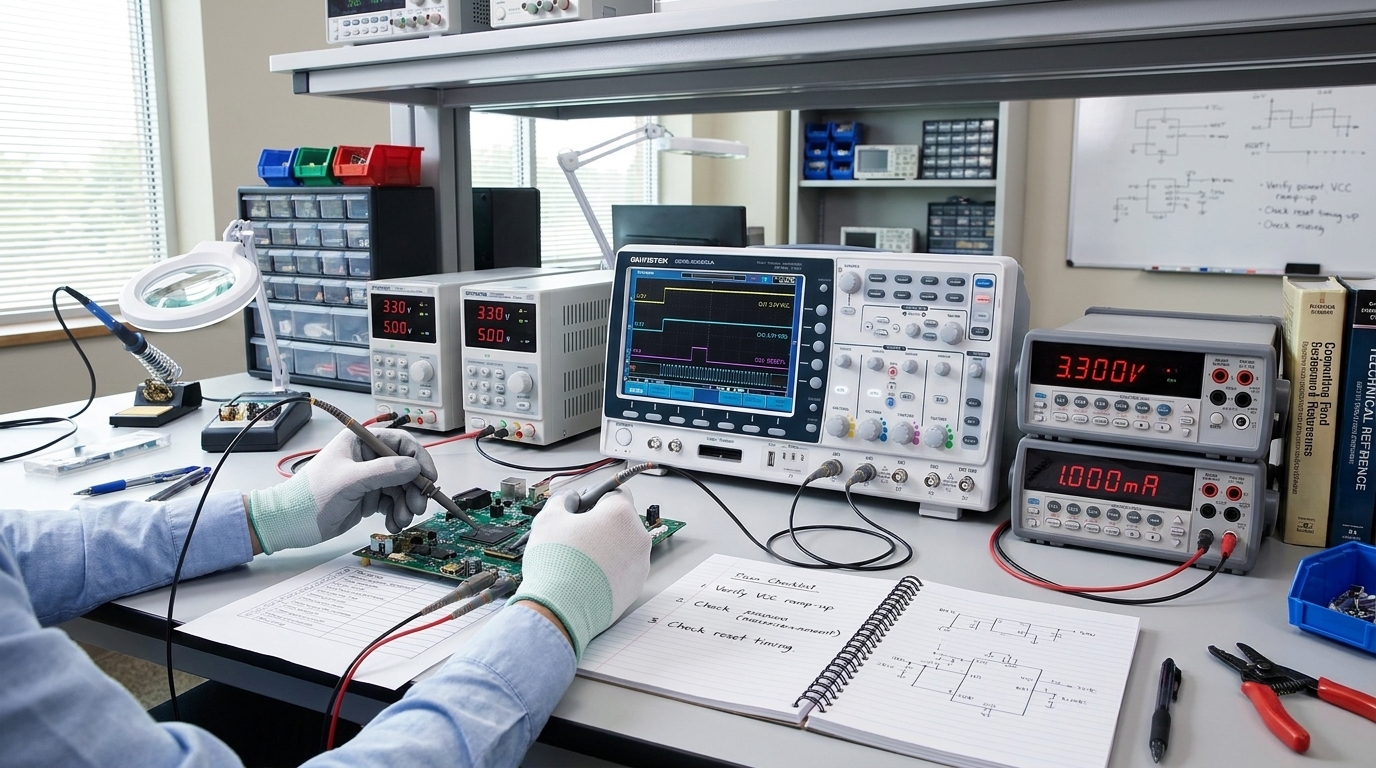 Voltage Supervisor Selection: Reset Threshold, Hysteresis, and Release Delay Design Guide
21 September 2026
This engineering guide explains how to properly select voltage supervisors to protect microcontrollers from undervoltage failures. It covers calculating worst-case threshold tolerance budgets, sizing hysteresis to prevent reset chattering, and timing release delays for oscillator and PLL stabilization. It also examines push-pull versus open-drain output stages, mitigating sub-1V floating hazards, internal BOR trade-offs, and benchtop transient testing. sar-adc-reference-driver-selection-managing-dynamic-kickback-noise-loop-stability
17 September 2026
Precision SAR ADCs present high-speed dynamic switched-capacitor loads that demand instantaneous transient currents during bit trials. This guide details how to size local decoupling capacitors accounting for MLCC DC bias derating, stabilize reference buffers using dual-loop in-loop compensation, and minimize multiplicative noise degradation. It also provides layout directives and dynamic bench verification protocols across sampling rate sweeps and burst modes. Ferrite Bead Selection Under DC Bias: Beyond the 100 MHz Datasheet Rating
16 September 2026
Ferrite bead datasheet impedance ratings assume zero DC bias, yet real power rails saturate the core, collapsing attenuation by 70-90% and shifting self-resonance upward. This guide explains thermal versus magnetic current ratings, DCR voltage-budget limits, the 300-ohm power-rail ceiling, bead-capacitor anti-resonance and Method C damping, plus 2-port shunt-thru VNA verification under load. eFuse Capacitive Load Startup: Calculate Inrush Current and Prevent Hiccup Trips
14 September 2026
An eFuse that repeatedly restarts while charging a capacitor bank needs three checks: how much current reaches the capacitor, how long the pass transistor can sustain the resulting dissipation, and which protection function actually ends the attempt. Reducing the programmed slew rate often helps, but the result also depends on the active load, supply behavior, and the device's startup state machine. Current Shunt Resistor Pulse Rating Selection: Sizing for Inrush Energy, TCR Drift, and Kelvin Connections
12 September 2026
This guide explains how to size low-ohmic current shunt resistors by separating steady-state thermal design from transient pulse survivability. It covers adiabatic inrush energy calculations, manufacturer pulse curves, terminal-temperature derating, composite TCR errors from copper terminations, 4-terminal Kelvin layouts, thermal EMF suppression, ESL-induced spikes, and a dual-checklist verification workflow.