

 Product
 Brand
Brand Articles
 Tools
Tools
What is Chip: Definition, Classification and Design Process
Chip Manufacturing - How are Microchips made? | Infineon
2026 Executive Summary: A Computer Chip (Integrated Circuit) is the fundamental building block of modern electronics, packing billions of nanometer-scale transistors onto a semiconductor wafer. In 2026, chip technology is defined by 2nm manufacturing nodes, AI-dedicated architectures (NPUs), and heterogeneous "Chiplet" designs that power everything from autonomous vehicles to generative AI models.
| Topics covered in this article: |
| Ⅰ. What is a Chip? (2026 Definition) |
| Ⅱ. Classification: ASIC, SoC, FPGA & AI Accelerators |
| Ⅲ. The Chip Design Process: Step-by-Step |
Ⅰ. What is a Computer Chip? (2026 Definition)
A computer chip, officially known as an Integrated Circuit (IC), is a compact electronic unit comprised of billions of microscopic transistors, resistors, and capacitors fabricated on a thin semiconductor wafer. In 2026, these devices are the "brains" of all digital technology, evolving from simple logic gates to complex Neural Processing Units (NPUs) capable of running Generative AI models.
While early chips contained a few thousand transistors, modern 2026 flagship processors (fabricated on 2nm and 3nm process nodes) routinely pack over 100 billion transistors into an area smaller than a fingernail. Silicon remains the dominant raw material due to two critical properties:
Semiconductivity: Silicon can act as both a conductor and an insulator depending on "doping" (the addition of impurities like phosphorus or boron), allowing for precise control of electrical current.
Economic Scalability: Silicon is the second most abundant element in the Earth's crust, making it a cost-effective base for mass production, though specialized materials like Gallium Nitride (GaN) and Silicon Carbide (SiC) are now preferred for high-power electric vehicle (EV) applications.
Chips are rarely standalone; they are purpose-built for industries ranging from aerospace to consumer electronics. To function, one or more ICs are mounted onto a Printed Circuit Board (PCB), connecting them to memory, power management modules, and input/output interfaces via microscopic copper pathways.

Ⅱ. Classification: ASIC, SoC, FPGA & AI Accelerators
Chips are classified based on their functionality, programmability, and integration level. In the AI era of 2026, the distinctions have evolved, with Heterogeneous Computing (combining different types of processors) becoming the standard.

1. Application Specific Integrated Circuit (ASIC)
An ASIC is a custom chip designed for a singular, permanent purpose—such as mining cryptocurrency, processing radar signals, or accelerating specific AI training workloads. Once manufactured, its logic cannot be changed.
Efficiency: Highest possible performance-per-watt for its specific task.
Cost: Extremely high upfront design cost (millions of dollars), but very low unit cost in mass production.
Use Case: Bitcoin miners, AI Training Clusters (e.g., Google TPU), Automotive Radar.
2. System on Chip (SoC)
The SoC is the dominant architecture for mobile devices and laptops in 2026. It integrates all critical system components—CPU, GPU, NPU (Neural Processing Unit), memory controller, and radios (5G/6G)—onto a single piece of silicon.
Integration: Combines digital, analog, mixed-signal, and radio-frequency functions.
Modern Context: 2026 SoCs focus on "Heterogeneous Integration," ensuring the AI workload goes to the NPU while the OS runs on the CPU.
Use Case: Smartphones, Apple M-Series Macs, Raspberry Pi.
3. FPGA (Field Programmable Gate Array)
An FPGA is a "blank canvas" chip that can be reprogrammed after manufacturing. It contains a matrix of configurable logic blocks (CLBs) that engineers can rewire via software updates.
Flexibility: Can be updated to support new standards (like evolving 6G protocols) without replacing hardware.
Cost: Low upfront cost (no expensive mask sets), but higher unit cost and power consumption than ASICs.
Use Case: Prototyping new designs, Aerospace, Medical Imaging, Defense systems.
Comparison: ASIC vs. FPGA vs. SoC (2026)
| Feature | ASIC | FPGA | SoC |
|---|---|---|---|
| Reprogrammable? | No (Fixed hardware) | Yes (Field programmable) | Software only (CPU/NPU) |
| Performance | Highest (Optimized) | Moderate | High (Balanced) |
| Unit Cost | Low (at high volume) | High | Medium |
| Time to Market | Slow (18-24 months) | Fast (Instant) | Slow (12-18 months) |
4. Microprocessors & Microcontrollers
Microprocessor (MPU): The central "brain" (CPU) of a computer. It executes complex operating systems (Windows, Linux) but requires external memory and peripherals.
Microcontroller (MCU): A low-power, self-contained mini-computer used in embedded systems. It includes CPU, RAM, and Flash storage in one chip. Found in washing machines, car windows, and microwave ovens.
Ⅲ. The Chip Design Process: From Concept to Silicon
Designing a modern chip is a multi-year process involving massive teams and AI-powered Electronic Design Automation (EDA) tools. The cycle has evolved to include "Digital Twins" for verification before a single transistor is printed.

Step 1: Architecture & Specification
Engineers define the chip's "PPA" goals: Performance, Power, and Area. In 2026, this stage heavily involves deciding which IP blocks (Intellectual Property) to license, such as ARM cores for the CPU or specialized NPU designs for AI tasks.
Step 2: Logic Design (RTL)
Engineers write the code that describes what the chip does using Hardware Description Languages (HDL) like Verilog or VHDL. This code, known as RTL (Register Transfer Level), defines the logic gates and data flow.
Step 3: Functional Verification
Before physical design, the RTL code is tested using massive server farms. Verification ensures the logic is bug-free.
Formal Verification: Using mathematical algorithms to prove the logic is correct without running millions of test cycles.
Emulation: Running the design on specialized hardware (giant FPGAs) to simulate real-world speeds.
Step 4: Physical Design (Place & Route)
This is where the logical code is mapped to physical transistors. EDA tools place billions of components onto the virtual silicon canvas.
2026 Update: AI-driven tools now automatically optimize component placement to reduce wire length and heat generation, a task that used to take human engineers months.

Step 5: Tape-Out & Manufacturing
"Tape-out" is the final milestone where the GDSII file (the blueprint) is sent to the foundry (e.g., TSMC, Intel, Samsung). The foundry uses photolithography to print the circuit patterns onto silicon wafers using Extreme Ultraviolet (EUV) light.

Step 6: Packaging & Post-Silicon Validation
Once the wafer is sliced into individual dies, they are packaged.
Advanced Packaging (2.5D/3D): In 2026, chips are often stacked vertically or placed side-by-side (Chiplets) on an interposer to increase bandwidth. The final chips undergo rigorous electrical and thermal stress testing before shipping.
Frequently Asked Questions (2026 Update)
1. How small are computer chips in 2026?
Leading-edge processors are now manufactured using 2nm (nanometer) process technology. For context, a single strand of human DNA is about 2.5nm wide. This allows manufacturers to pack over 100 billion transistors onto a single chip, drastically increasing performance and energy efficiency.
2. What is the difference between a CPU, GPU, and NPU?
A CPU (Central Processing Unit) is a general-purpose handler for operating systems. A GPU (Graphics Processing Unit) specializes in parallel tasks like gaming and video rendering. An NPU (Neural Processing Unit) is a newer chip designed specifically to accelerate AI and Machine Learning mathematics efficiently.
3. Why is silicon still used for chips?
Despite the rise of materials like Gallium Nitride (GaN) for power delivery, silicon remains the primary material for logic chips because it is abundant, cheap, and has a perfect native oxide that acts as a natural insulator. It strikes the best balance between cost, performance, and manufacturability.
4. What are "Chiplets"?
Instead of building one massive, expensive chip, modern manufacturers connect several smaller, specialized chips (called chiplets) together inside a single package. This improves yield rates and allows companies to mix and match technologies (e.g., a 3nm CPU connected to a 12nm I/O controller).
 UTMEL
UTMEL
We are the professional distributor of electronic components, providing a large variety of products to save you a lot of time, effort, and cost with our efficient self-customized service. careful order preparation fast delivery service
1. What are the chip manufacturing processes?
The complete process of chip production includes several links such as chip design, wafer production, packaging production, testing and packaging.
2. Which countries can make chips in the world?
First, the "Silicon Valley" of the United States
Second, Texas
Third, Gyeonggi Province, South Korea
Fourth, Taiwan Province of China
Fifth, Kyushu Island, Japan
Sixth, Dresden, Germany
Seventh, Singapore
3. What material is the chip made of?
The inside of the chip is made of semiconductor materials, most of which are silicon materials. The capacitors, resistors, diodes, and transistors inside are all made of semiconductors. A semiconductor is a substance between a conductor, such as copper, that can easily pass current, and an insulator, such as rubber, that does not conduct current.
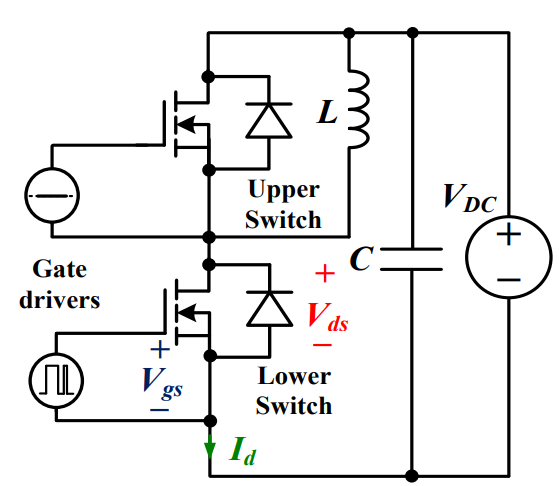 Discovering New and Advanced Methodology for Determining the Dynamic Characterization of Wide Bandgap DevicesSaumitra Jagdale15 March 20242900
For a long era, silicon has stood out as the primary material for fabricating electronic devices due to its affordability, moderate efficiency, and performance capabilities. Despite its widespread use, silicon faces several limitations that render it unsuitable for applications involving high power and elevated temperatures. As technological advancements continue and the industry demands enhanced efficiency from devices, these limitations become increasingly vivid. In the quest for electronic devices that are more potent, efficient, and compact, wide bandgap materials are emerging as a dominant player. Their superiority over silicon in crucial aspects such as efficiency, higher junction temperatures, power density, thinner drift regions, and faster switching speeds positions them as the preferred materials for the future of power electronics.
Read More Applications of FPGAs in Artificial Intelligence: A Comprehensive GuideUTMEL29 August 20255655
This comprehensive guide explores FPGAs as powerful AI accelerators that offer distinct advantages over traditional GPUs and CPUs. FPGAs provide reconfigurable hardware that can be customized for specific AI workloads, delivering superior energy efficiency, ultra-low latency, and deterministic performance—particularly valuable for edge AI applications. While GPUs excel at parallel processing for training, FPGAs shine in inference tasks through their adaptability and power optimization. The document covers practical implementation challenges, including development complexity and resource constraints, while highlighting solutions like High-Level Synthesis tools and vendor-specific AI development suites from Intel and AMD/Xilinx. Real-world applications span telecommunications, healthcare, autonomous vehicles, and financial services, demonstrating FPGAs' versatility in mission-critical systems requiring real-time processing and minimal power consumption.
Read More The 2026 Engineer’s Guide: Choosing the Right MCU for Your Next IoT & New Energy ProjectUTMEL30 April 20261970
A comprehensive comparison of 2026's leading MCUs from ST, NXP, and Microchip across power efficiency, processing performance, connectivity, and ecosystems to help engineers select the optimal chip for next-gen IoT and new energy projects.
Read More AI Server Components: Engineering Next-Gen Data Center Hardware for 100kW RacksUTMEL15 May 20261049
The transition from traditional enterprise IT to AI-driven workloads has rendered legacy data center hardware obsolete, forcing infrastructure planners to re-engineer server components for extreme thermal environments.
Read More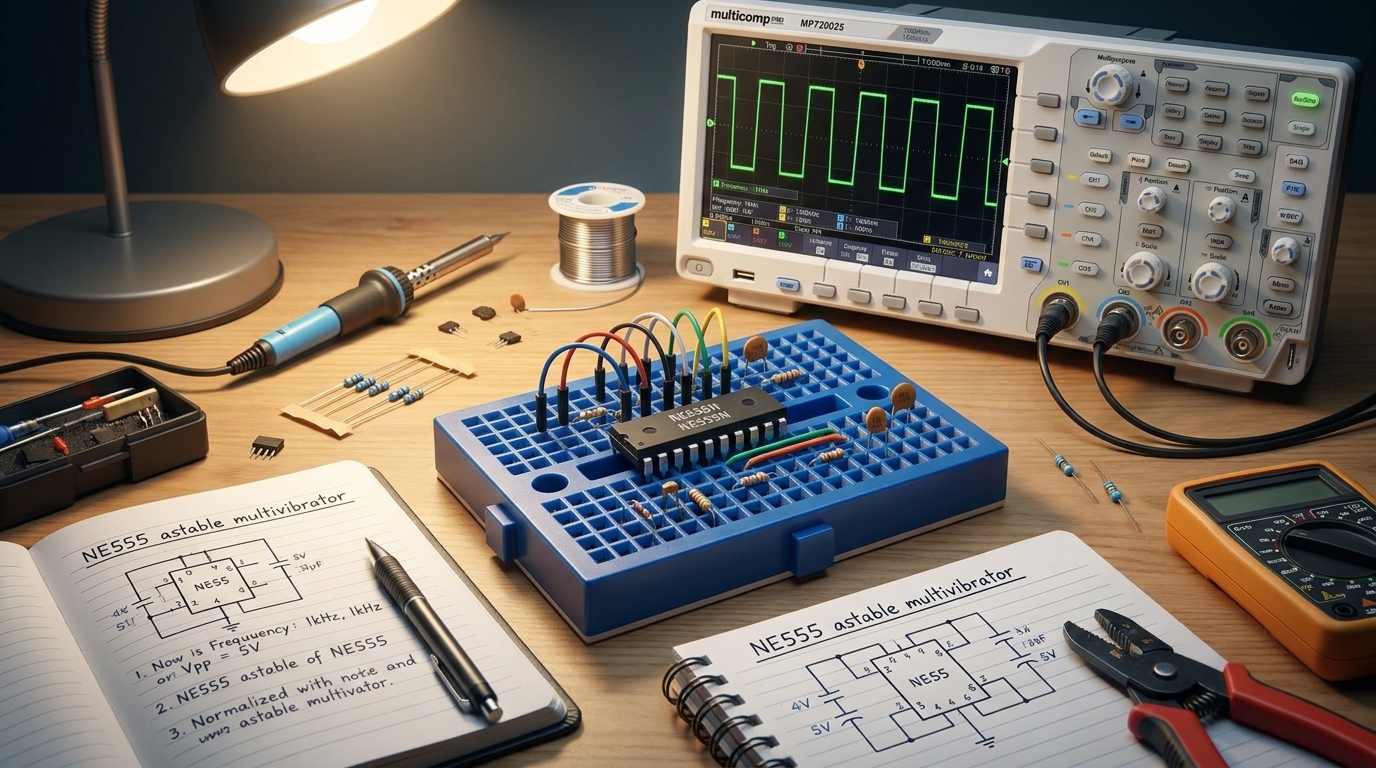 The Practical Engineer’s Guide to the NE555N Timer: Pinout, Setup, and TroubleshootingUTMEL29 May 2026865
This comprehensive guide explores the NE555N timer, detailing its 8-pin layout, internal architecture, and key datasheet specifications. It compares the bipolar IC to CMOS variants and details setup configurations for astable, monostable, and bistable modes. Additionally, the guide offers practical troubleshooting advice to prevent common breadboard failures, such as floating reset pins and electrical noise issues.
Read More
Subscribe to Utmel !
![FOD420SDV]() FOD420SDV
FOD420SDVON Semiconductor
![AT88SC3216C-SU]() AT88SC3216C-SU
AT88SC3216C-SUMicrochip Technology
![MOC3082TVM]() MOC3082TVM
MOC3082TVMON Semiconductor
![FLC10-200B]() FLC10-200B
FLC10-200BSTMicroelectronics
![MOC3032VM]() MOC3032VM
MOC3032VMON Semiconductor
![AD9867BCPZRL]() AD9867BCPZRL
AD9867BCPZRLAnalog Devices Inc.
![HCS101/P]() HCS101/P
HCS101/PMicrochip Technology
![AT88SC0808C-PU]() AT88SC0808C-PU
AT88SC0808C-PUMicrochip Technology
![SM72441MTX/NOPB]() SM72441MTX/NOPB
SM72441MTX/NOPBTexas Instruments
![CAP200DG-TL]() CAP200DG-TL
CAP200DG-TLPower Integrations


