Product
 Brand
Brand Articles
 Tools
Tools
Introduction to Wearable Sensors
Catalog
Ⅰ Introduction
A wearable sensor is the core component of wearable devices, which are computing systems that can be installed on people, animals, and objects to sense, transmit, and process information. The sensors in wearable devices serve as extensions and enhancements of human senses. With advances in biotechnology and sensor miniaturization, wearable devices are evolving into smart systems that may eventually be implanted in the human body. Among various wearable devices, sensors are the key components that can detect changes in external conditions such as temperature variations, movement patterns, and respond accordingly, functioning like our skin's sensory capabilities.
Ⅱ Types of sensors in wearable devices
1. Motion sensor
Motion sensors are motion control devices that convert changes in non-electrical quantities (such as velocity, acceleration, and pressure) into changes in electrical quantities. Motion sensors include accelerometers, gyroscopes, magnetometers, and atmospheric pressure sensors.

Various modern wearable devices including smartwatches, fitness trackers, and health monitors
The primary functions of these sensors include motion detection, navigation, entertainment, human-computer interaction, and advanced health monitoring. Electronic compass sensors measure direction and enable or assist navigation systems. Motion sensors provide tremendous value by measuring, recording, and analyzing human body activities continuously. Users can track running steps, swimming laps, distance traveled, energy consumption, sleep duration, and even sleep quality metrics. Modern devices also incorporate advanced features like fall detection, workout recognition, and stress monitoring.
2. Biological sensor
A biological sensor is an instrument sensitive to biological substances that converts their concentration into electrical signals for detection. It consists of immobilized biological sensitive materials as identification elements (including enzymes, antibodies, antigens, microorganisms, cells, tissues, nucleic acids, and other biologically active substances) combined with appropriate physical and chemical transducers (such as oxygen electrodes, photosensitive tubes, field-effect transistors, piezoelectric crystals, etc.) and signal amplification devices.
Biological sensors include blood glucose sensors, blood pressure sensors, electrocardiogram (ECG) sensors, electromyography (EMG) sensors, body temperature sensors, brain wave (EEG) sensors, pulse oximeters, and advanced biomarker detection sensors. These sensors serve functions in health and medical monitoring, fitness tracking, and wellness management.

Modern blood pressure sensor integrated in wearable device
Function and working principle of biological sensors
With wearable technology assistance, including health warnings and condition monitoring, healthcare providers can improve diagnosis accuracy, and family members can communicate more effectively with patients. Modern wearable devices also enable telemedicine and remote patient monitoring.
For example, wearable medical devices incorporating blood pressure sensors can track and analyze users' physiological data continuously. These devices extract medical diagnostic models, predict user health trends, and provide personalized cardiovascular health management programs with AI-powered insights.
Blood pressure monitors use sensors to detect minute changes in cuff pressure caused by arterial blood vessel wall vibrations. The most commonly used method is the oscillometric method. The basic principle involves using a cuff tied to the arm, inflating it via an inflator to block pulse propagation in blood vessels. When specific pressure (typically 124 to 316 kPa) is reached, deflation begins. As air pressure reaches certain levels, blood flow can pass through vessels, creating oscillating waves. During gradual deflation, oscillating waves increase in amplitude, while contact area between cuff and arm decreases. Therefore, pressure and fluctuation detected by pressure sensors decrease proportionally, allowing real-time detection of pressure and fluctuation in the cuff.
Oscillating waves propagate through tubing to pressure sensors in the device. Through amplification, filter circuits, analog-to-digital signal conversion, central processor control, and other processing stages, pulsation and pressure signals in the gas circuit are transmitted through the cuff and converted to digital signals. Further processing obtains systolic pressure, diastolic pressure, and mean arterial pressure data. Modern ambulatory blood pressure monitors connect to mobile devices via Bluetooth, Wi-Fi, and USB, uploading data to healthcare providers. These monitors provide 24-hour blood pressure monitoring with improved accuracy and user comfort.
3. Environmental sensor
Environmental sensors include soil temperature sensors, air temperature and humidity sensors, evaporation sensors, rainfall sensors, light sensors, wind speed and direction sensors, UV sensors, air quality sensors, and noise level detectors. These environmental sensors not only accurately measure relevant environmental information but can also network with host computers to meet user requirements for testing, recording, and storing measured object data. Environmental sensors are preferred instruments for scientific research, education, laboratories, and related agricultural and environmental monitoring departments.
Function and working principle of environmental sensors
In today's world, people are frequently exposed to health-threatening environments, such as air pollution, excessive indoor formaldehyde, and harmful particulate matter. PM2.5 portable detectors, air quality detection devices composed of particulate matter sensors, can be worn on the human body and displayed independently or used with smartphones for social sharing and community health awareness.
PM2.5 portable testers draw aerosol samples into test chambers through gas pump dust meters. The aerosol sample splits into two parts at the dust meter's shunt. One part passes through high-efficiency filters into clean air to protect sensor chamber components from measured gases. The other part enters the sensor chamber directly as the test sample.
Particles and molecules generate light scattering phenomena under light irradiation while absorbing part of the irradiated light energy. When parallel monochromatic light beams enter particle measurement fields, they experience scattering and absorption around particles, causing light intensity attenuation. This enables calculation of relative attenuation rates of incident light through concentration fields being measured. Relative attenuation rates linearly reflect relative dust concentrations in measurement fields. Light intensity magnitude is proportional to electrical signal strength after photoelectric conversion, allowing relative attenuation rate determination through electrical signal measurement.
4. Skin electric sensor
You may have experienced this: when undertaking important tasks, you feel nervous, anxious, and your hands and feet perspire. This process where psychological responses transform into physiological responses can be detected by galvanic skin response (GSR) sensors, also known as electrodermal activity (EDA) sensors.
Electrodermal activity sensors are important components of polygraph tests, but they cannot directly test user emotions. They can only detect whether users' psychological states have changed, and through these changes, we can draw certain conclusions. For example, polygraph electrodermal sensors can detect psychological changes in subjects when speaking, helping determine truthfulness. Modern applications include stress monitoring, meditation guidance, and emotional wellness tracking.
Research shows that people's skin electrical response levels are low when waking up in the morning and during sleep at night, while skin electrical levels during certain morning and afternoon periods are relatively high. These periods represent the most efficient times for learning or working, making EDA sensors valuable for productivity optimization and circadian rhythm tracking.
5. Heart rate sensor
As a powerful tool for personal health equipment, heart rate sensors can track heart rate to monitor exercise intensity and calculate health action data associated with sleep cycles and other physiological parameters. Modern heart rate sensors also provide heart rate variability (HRV) analysis, arrhythmia detection, and stress level assessment.
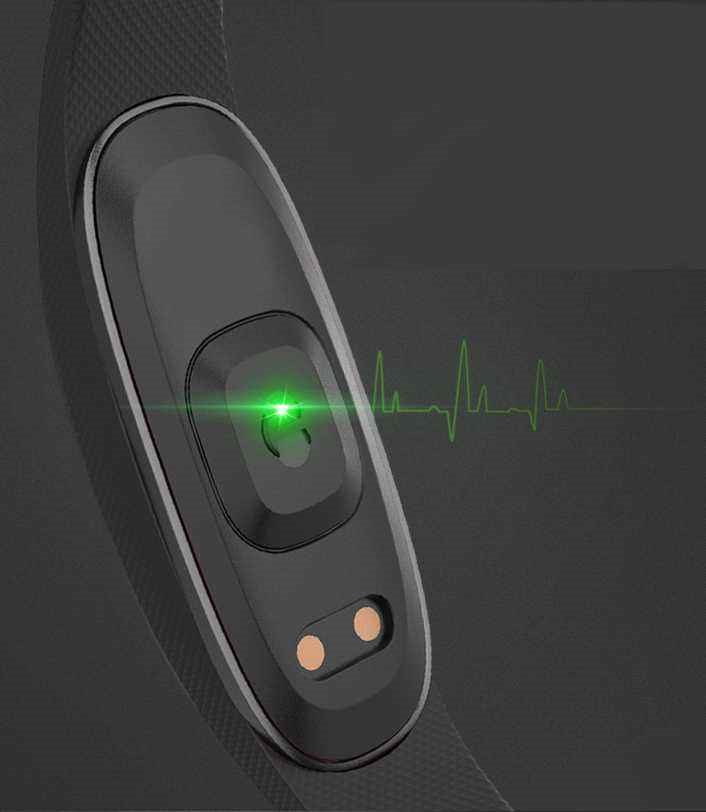
Smart bracelet with advanced heart rate sensor and health monitoring capabilities
Currently, there are two main types of heart rate sensors: photoplethysmography (PPG) sensors that measure using light reflection, and electrocardiogram (ECG) sensors that use potential measurements from different parts of the human body. Advanced devices now incorporate both technologies for enhanced accuracy.
While PPG sensors have historically had lower measurement accuracy, their advantage lies in compact size, making them suitable for all mobile terminals. Recent advances in PPG technology have significantly improved accuracy through multi-wavelength LED systems and advanced algorithms. ECG sensors, commonly used in hospital electrocardiogram measurements, measure heart rate changes through potential variations at different points in the human body. This method provides highly accurate heart rate measurements but requires monitoring multiple body parts simultaneously. Modern smartwatches now incorporate single-lead ECG capabilities for consumer use.
6. Barometer
Barometers are compact but highly useful sensors. Although they primarily measure air pressure data, we can accurately determine device altitude through this information. Monitoring air pressure changes over time also provides data on device height variations for further data processing and altitude tracking.
With barometers, outdoor athletes can intuitively know their altitude and elevation changes during activities. Future navigation systems can not only determine our location but even identify which floor we're on, representing an inevitable trend in navigation development. While wearable devices can detect daily step counts, barometers can also detect stairs climbed, making calorie consumption data more accurate and providing comprehensive activity tracking.
The emergence of wearable smart devices has introduced entirely new lifestyles. Various functions of wearable smart devices depend on integration and innovation of diverse sensor functions. Therefore, developing more accurate, miniaturized, and integrated sensors is necessary to meet evolving needs. With continuous advancement of modern "electronics-sensor" technology, wearable devices will continue progressing as always, incorporating emerging technologies like AI processing and edge computing.
Ⅲ Advantages of wearable sensors
1. The importance of motion, environment, and biological sensors
The earliest wearable devices were simple pedometers based on three-axis accelerometers. Subsequently, complex devices incorporating pressure sensors, gyroscopes, and magnetometers appeared on the market. These devices enable wearable devices to identify activity types wearers participate in, such as walking, running, cycling, swimming, climbing, and specific workout routines. Temperature and humidity sensors enable wearable devices to more accurately measure parameters such as calories burned during exercise and environmental impact on performance.
The trend of wearable devices integrating more sensors will accelerate in coming years. We will see increasing integration of motion and environmental sensors, as well as emerging biological sensors. Biological sensors are now used in standalone wearable medical monitors, and many consumer devices offer heart rate measurement capabilities. In the next few years, consumer devices will integrate broader ranges of biological sensors, such as spectral sensors measuring blood oxygen levels, blood pressure, blood glucose levels, and skin resistance sensors determining sweat levels, pH, and hydration status. Advanced sensors will also include continuous glucose monitoring, lactate detection, and biomarker analysis.
2. Advantages of integrating more sensors
The obvious advantage of integrating more sensors is increased device functionality, enabling measurement of more parameters. Additionally, collected data accuracy can be significantly improved through sensor fusion and machine learning algorithms.
For example, using information from multiple sensors to determine wearer activity types helps select more appropriate algorithms for processing accelerometer input information, making activity tracking more accurate. Furthermore, combining data from many sensors enables devices to extract more useful information for users, providing comprehensive health insights, personalized recommendations, and predictive health analytics.
3. Microphone completes the functions of the wearable device
In addition to motion, environmental, and biological sensors mentioned above, wearable devices increasingly incorporate microphone sensing elements. The purpose is not only to provide more information to wearers but to help devices perceive usage context, determining what information is useful to wearers and how to best convey this information. For example, if devices detect jet engine noise, they can infer wearers are flying, monitor sitting duration, and adjust sleep and exercise recommendations to help wearers cope more effectively with fatigue and dehydration. Advanced audio processing can also detect breathing patterns, snoring, and environmental noise levels for comprehensive health monitoring.
Ⅳ The connection between sensors and wearable devices
Rapid development of wearable devices is inseparable from sensor roles. Different sensors provide large amounts of rich data for devices and display required information indicators. Wearable devices develop alongside their integrated sensors. One key to wearable device market growth is sensors. Different wearable products face different users, have different purposes, and incorporate different built-in sensors tailored to specific use cases.
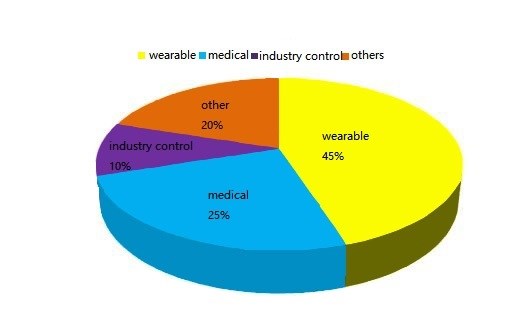
Sensor development accounts for the proportion of demand in various fields including healthcare, fitness, and IoT
Function and reliability of wearable devices are among the most important characteristics for users. With emergence of more wearable devices, users have established higher requirements. Sensor size, quality, power consumption, reliability, and stability affect user experience, wearing comfort, and wearable device power consumption. Various functions of wearable smart devices depend on integration and innovation of various sensors, supported by advanced processing capabilities and AI algorithms.
Currently, most wearable devices are very lightweight, and sizes continue decreasing. They must meet ergonomic design requirements while maintaining reliability, power consumption efficiency, and performance in various harsh environments. Therefore, developing more accurate, miniaturized, and integrated sensors is necessary to meet demand, incorporating advanced materials, MEMS technology, and energy-efficient designs.
Ⅴ The potential development direction of wearable sensors
In the future, functional requirements for sensors detecting multiple physical signals and needs for environment-aware applications requiring real-time sensor processing will continue growing. Potential development directions for sensor technology include: multi-sensor fusion with AI processing; selection of sensor materials with excellent biocompatibility; high sensitivity at low power consumption; wireless charging capabilities; and integration with edge computing for real-time analysis.
First, wearable devices will integrate more sensors. This trend will accelerate in coming years. People's demand for wearable devices continues increasing, requiring integration of more sensors. The obvious advantage of integrating more sensors is increased device functionality, enabling measurement of more parameters. Additionally, collected data accuracy can be improved through advanced algorithms and machine learning models.
Second, wearable devices need better ergonomic designs to better fit human limbs and provide comfortable long-term wear. Therefore, application of new materials remains a significant challenge, along with achieving high-resolution, high-sensitivity, fast response, and low-cost manufacturing of flexible wearable electronic sensors. Advances in materials science, including graphene, flexible polymers, and biocompatible materials, are driving innovation in this area.
Finally, key technology for wearable devices to continuously improve product battery life and reduce energy consumption involves battery energy density and environmental energy harvesting. While current technology makes changing battery performance challenging, wearable devices can indirectly increase device life by selecting backup batteries, reducing sensor power consumption, implementing efficient sleep modes, and incorporating energy harvesting from body heat, movement, and solar sources.
Former Apple CEO John Sculley once said: "Wearable technology will have a huge impact on daily life. We are at the starting point of the sensory revolution. Wearable devices allow passive sensors to monitor many different things." This vision has largely been realized, with modern wearables providing comprehensive health monitoring, fitness tracking, and lifestyle enhancement capabilities that were unimaginable just a few years ago.
Article Update Information
Last Updated: October 2025
Key Updates Made:
Enhanced mobile-responsive design with modern CSS styling
Updated sensor technology information to reflect 2025 advancements
Added information about AI integration and edge computing in wearables
Expanded coverage of advanced health monitoring capabilities
Updated heart rate sensor technology including PPG and ECG improvements
Added information about energy harvesting and wireless charging
Enhanced descriptions of modern environmental sensors and air quality monitoring
Improved technical accuracy throughout the article
Added information about biocompatible materials and flexible sensors
Updated examples to include current wearable device capabilities
Technology Evolution Since 2020: Wearable sensors have significantly advanced with AI-powered health insights, continuous monitoring capabilities, improved battery life, better accuracy through sensor fusion, and integration with telemedicine platforms. The market has expanded dramatically with the rise of health-conscious consumers and remote healthcare needs.
Recommended Articles:
Working Principle and Application of Infrared Sensors What are Smart Sensors? Understanding Biosensors: Technology and Applications Piezoelectric Sensors: Principles and Applications
 UTMEL
UTMEL
We are the professional distributor of electronic components, providing a large variety of products to save you a lot of time, effort, and cost with our efficient self-customized service. careful order preparation fast delivery service
What is a wearable sensor?
Wearable sensors, just as the name implies, are integrated into wearable objects or directly with the body in order to help monitor health and/or provide clinically relevant data for care.
What are examples of wearable technology?
*Smart jewelry, such as rings, wristbands, watches and pins.
*Body-mounted sensors that monitor and transmit biological data for healthcare purposes.
*Fitness trackers, often in the form of wristbands or straps, that monitor things like physical activity and vital signs.
How do you make a wearable sensor?
One of the challenges in getting wearable sensors to work properly is to make sure the devices stay next to the skin. In a study described in ACS Omega, researchers tweaked a widely used polymer to potentially create a new adhesive to keep these sensors in place.
How we can monitor activity in wearables devices?
Present wearable technologies include accelerometers, gyroscopes, sole sensors, and barometric pressure sensors mounted over the body. According to the purpose of the use, different body sensors have been developed with a capacity to monitor physiological and biochemical properties, posture and motion.
What can wearable devices be used for?
These devices help collect and analyze real-time personal data that informs us on everything from our health to our workouts. They've become extremely popular tools to help us stay informed and in-touch with ourselves to the point that one in every three people in the US now sport a wearable device.
 The Key Role of Electronic Components in IoT DevicesUTMEL01 September 20236186
The article discusses the pivotal role of electronic components in Internet of Things (IoT) devices. IoT devices work by capturing real-world data using sensors, processing it through a microcontroller, and then sending it to the cloud for further analysis.
Read More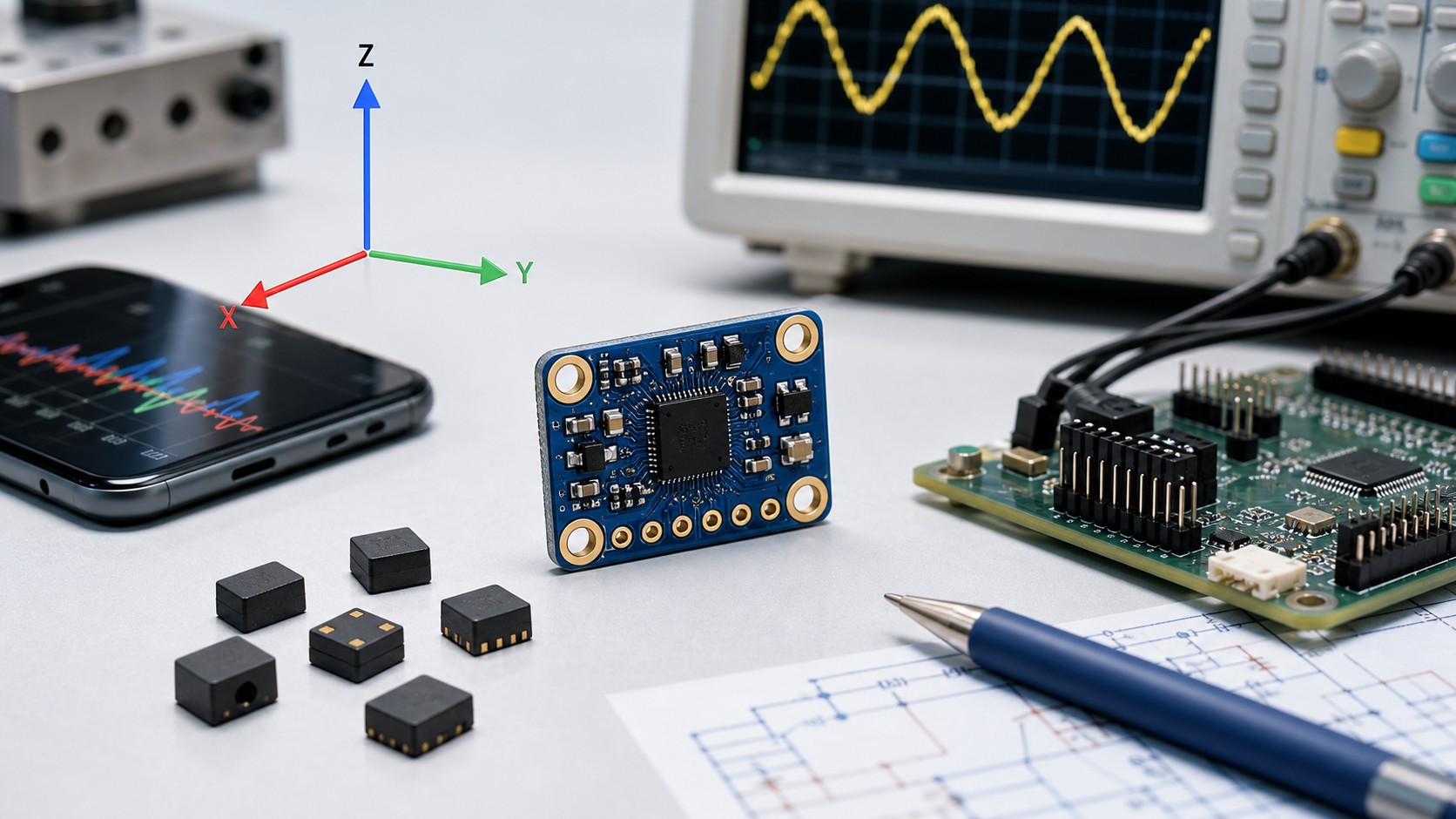 Accelerometer Sensors Guide: Working Principle, Circuit Design, Specifications, and ApplicationsUTMEL25 June 2026940
A practical accelerometer sensor guide covering working principles, MEMS and piezoelectric types, datasheet specifications, circuit design, mounting, applications, and selection.
Read More 2026 ADAS Sensors: Supply Outlook and Alternative SourcingUTMEL18 July 20261088
Automotive cleanroom assembly integrating advanced driver assistance systems. The automotive industry faces a structural semiconductor deficit in 2026, driven not by pandemic-era demand shocks but by AI data centers absorbing global foundry capacity on legacy nodes (40nm-90nm) where 95% of automotive-grade components are manufactured. Video demonstrations of these systems show a "machine view" overlay with red crosshairs tracking pedestrian movement and sudden cut-ins before traditional collision thresholds are triggered.
Read More Magnetic Sensors for Position Detection: Hall Effect vs. AMR vs. TMR Engineering GuideUTMEL21 August 2026520
This guide compares Hall effect, AMR, and TMR magnetic sensors for position detection in motor control and robotics. It explains their physical principles, key performance metrics, and selection criteria. Hall effect suits low-cost commutation, AMR offers high-speed angle sensing, and TMR provides maximum precision and low power, with practical integration advice.
Read More Temperature Sensor Types Comparison: Thermocouple, RTD, and Semiconductor IC Selection GuideUTMEL17 August 2026432
This comprehensive selection guide compares thermocouples, platinum RTDs, and semiconductor ICs across measurement range, accuracy limits, and signal conditioning complexity. It covers fundamental operating physics, mathematical transfer functions, lead-wire compensation topologies, and power budgets. Engineers will find practical design checklists, benchtop multimeter diagnostic techniques, and an architectural decision workflow to optimize system performance and bill-of-materials cost.
Read More
Subscribe to Utmel !