Product
 Brand
Brand Articles
 Tools
Tools
What are Smart Sensors?

Smart Sensor Explained | Different Types and Applications
Catalog
Ⅰ Introduction
The smart sensor or intelligent sensor is a rapidly developing high-tech innovation that has revolutionized modern automation and IoT applications. Smart sensors are generally defined as sensors that can automatically collect, process, self-diagnose, and adapt to information from the external environment.
A sophisticated smart sensor is an integrated package of sensors and instruments driven by a microprocessor with advanced communication capabilities and onboard diagnostic functions. Smart sensors can store various detected physical quantities and process data according to programmed instructions to generate new insights. Intelligent sensors can exchange information bidirectionally, determine which data should be transmitted, filter out anomalous data, and perform comprehensive analysis and statistical calculations.
Compared with traditional sensors, smart sensors offer significant advantages: enhanced accuracy through digital signal processing, improved reliability via self-diagnostic capabilities, superior cost-effectiveness through multifunctionality, and advanced features that enable comprehensive monitoring solutions.
Ⅱ The Intelligence of Smart Sensors
One of the most significant advances in automation technology has been the development and widespread adoption of smart sensors. But what exactly defines a "smart" or "intelligent" sensor in today's technological landscape?
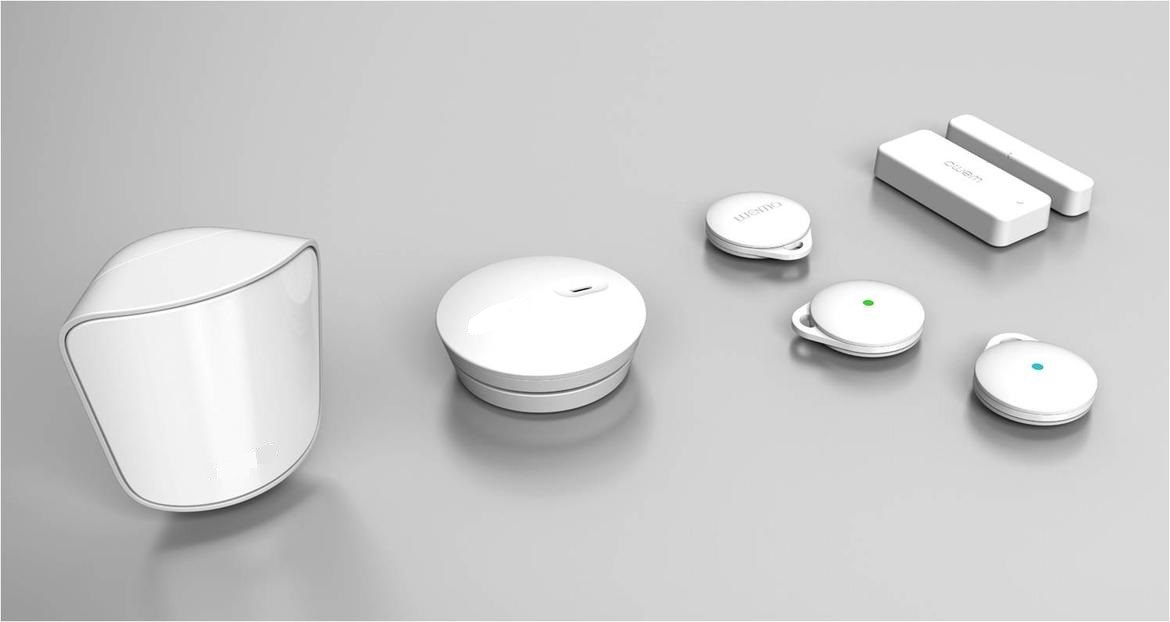
Various kinds of modern smart sensors
Throughout the evolution of smart sensor technology, researchers and engineers have continuously refined their understanding of "intelligence" in sensing systems. The development process has progressed from early centralized control systems to distributed control architectures. To meet the demands of large-scale, multi-parameter control systems, Fieldbus Control Systems (FCS) emerged as an open control paradigm, representing a major breakthrough in automation technology.
The future of smart sensors lies in data fusion, miniaturization, and artificial intelligence integration. Data fusion represents a fundamental trend in modern technology, where complex networks of multiple sensor types work collaboratively. Each sensor's unique characteristics are leveraged while their complementary nature extends operational life and improves overall accuracy. Miniaturization focuses not only on reducing physical size but also on enhancing functionality to achieve greater efficiency and reduced form factors.
Integrated smart sensors represent a crucial standard for future development and an essential method for achieving miniaturization. For example, modern environmental monitoring systems can combine smart hygrometers with thermometers and embedded processors, enabling real-time monitoring and intelligent response capabilities. Multi-function smart sensors offer enhanced power and cost-effectiveness compared to single-purpose alternatives.
Additionally, the networking of smart sensors has become a critical development trend. Intelligent networks composed of multiple sensors can autonomously diagnose and correct errors at individual nodes. Multiple datasets from networked sensors provide significantly higher precision when processed through advanced optimization algorithms. Similar to internet connectivity, communication between smart sensors through networked connections enables faster information processing and more convenient data exchange. The implementation of bus technology and wireless connectivity has made smart sensors more streamlined and powerful while eliminating the cable management issues of traditional sensor systems.
Ⅲ Functions of Smart Sensors
Smart sensors incorporate numerous advanced functions that distinguish them from conventional sensing devices:
(1) Self-calibration and self-correction capabilities
(2) Automatic compensation functionality
(3) Autonomous data collection and preprocessing
(4) Automatic inspection, range selection, and fault detection
(5) Data storage, memory, and information processing functions
(6) Bidirectional communication with standardized digital or symbolic output
(7) Decision-making and judgment processing capabilities
These functions are designed by emulating the coordinated operation of human senses and brain functions, combined with decades of research and practical experience in testing technology. Smart sensors function as relatively independent intelligent units that reduce hardware performance requirements while significantly improving sensor capabilities through advanced software algorithms.
1. Information Storage and Transmission
With the rapid advancement of smart distributed systems, intelligent units require sophisticated communication capabilities. Communication networks enable bidirectional digital communication, which is a key characteristic of smart sensors. Smart sensors achieve various functions through data transmission and command reception, including gain adjustment, compensation parameter configuration, internal inspection parameter setting, and test data output.
2. Self-compensation and Calculation Function
Engineers working in sensor development have traditionally focused on compensating for temperature drift and output nonlinearity, but hardware-based solutions have limitations. The self-compensation and calculation functions of smart sensors provide innovative approaches to address temperature drift and nonlinear compensation challenges. By using microprocessors to calculate test signals through software algorithms, multiple fitting and differential calculation methods can compensate for drift and nonlinearity while maintaining sensor repeatability and achieving more accurate measurement results.
3. Self-inspection, Self-calibration, and Self-diagnosis Functions
Traditional sensors require regular inspection and calibration to maintain accuracy, typically requiring removal from operational sites to laboratories or inspection facilities. This approach cannot provide real-time diagnosis of online measurement sensor abnormalities. Smart sensors offer significant improvements: self-diagnosis functions perform power-on self-checks and diagnostic tests to identify component failures. Additionally, they can perform online corrections based on usage time, with microprocessors using measurement characteristic data stored in EPROM for comparison and calibration.
4. Compound Sensitive Function
Common signals include sound, light, electricity, heat, force, and chemical parameters. Sensing components typically measure through direct or indirect methods. Smart sensors incorporate compound functionality, enabling simultaneous measurement of multiple physical and chemical quantities to provide comprehensive information about material behavior. For example, compound liquid sensors developed by leading universities can simultaneously measure medium temperature, flow rate, pressure, and density. Compound mechanical sensors can simultaneously measure three-dimensional vibration acceleration, velocity, and displacement at specific object points.
5. Integration of Smart Sensors
Advanced large-scale integrated circuit development has enabled the integration of sensors and corresponding circuits on single chips, creating integrated smart sensors with intelligent functions. These offer three key advantages: higher signal-to-noise ratio through integrated circuit signal amplification before long-distance transmission; improved performance via automatic calibration of zero drift, temperature drift, and zero position through self-calibration units and enhanced frequency response through appropriate feedback methods; and signal normalization through program-controlled amplifiers and analog-to-digital conversion with various digital transmission formats including serial, parallel, frequency, phase, and pulse modulation.
Ⅳ Features of Smart Sensors
Intelligent sensors are computer detection systems with microprocessors as their core, extended with peripheral components. Compared to conventional sensors, intelligent sensors offer several significant features:
1. High Accuracy
Smart sensors incorporate information processing capabilities that enable software-based correction of various deterministic system errors, including sensor input-output nonlinearity, service errors, zero-point errors, and positive-negative formation errors. They can also appropriately compensate for random errors and reduce noise interference.
2. High Reliability
Miniaturization of integrated sensor systems eliminates unreliable factors present in traditional structures while improving overall system interference resistance. Additionally, they incorporate diagnostic, calibration, and data storage functions with adaptive capabilities for intelligent structural systems.
3. High Performance-to-Price Ratio
Under equivalent accuracy requirements, multi-function intelligent sensors offer significantly improved performance-to-price ratios compared to single-function conventional sensors, particularly with the adoption of cost-effective single-chip microcontrollers.
4. Multi-functional Capabilities
Smart sensors enable multi-sensor and multi-parameter comprehensive measurement, expanding measurement ranges and applications through programmable functionality. They can adapt output data formats based on detection object or condition changes, incorporate digital communication interfaces for direct remote computer data transmission, and provide various output formats suitable for diverse application systems.
Ⅴ Development and Applications
The rapid advancement of electronic automation industries has accelerated sensor technology development, particularly integrated smart sensor technology. With semiconductor technology progress, leading companies and universities are actively developing integrated smart sensors. Many countries are making significant strides in smart sensor technology, utilizing military-grade production lines and processes to achieve high accuracy, excellent stability, and cost-effectiveness. These sensors support secondary development for specific user requirements, including networked measurement and custom communication protocols.
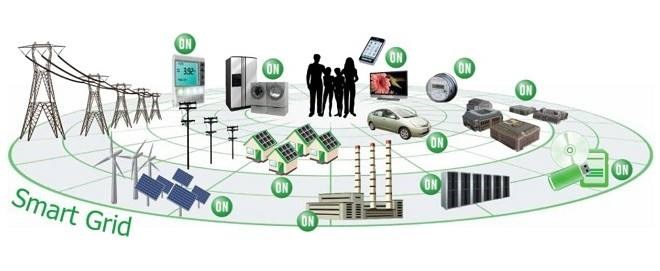
Smart sensors integrated into modern daily life applications
Smart sensors have found widespread applications across aerospace, aviation, defense, scientific research, and industrial-agricultural production. They show particular promise in robotics, enabling human-like sensory and cognitive functions for environmental perception and action execution.
In industrial production, traditional sensors cannot directly measure certain product quality indicators such as viscosity, hardness, surface finish, composition, color, and taste. Smart sensors can directly measure production process parameters (temperature, pressure, flow) that correlate with quality indicators, using neural network or expert system mathematical models to calculate and infer product quality.
In healthcare, diabetic patients require blood glucose monitoring to adjust diet and insulin administration. Traditional methods involve finger pricking, blood sampling, and test strip analysis—a painful and cumbersome process. Modern "glucose watches" provide painless, bloodless, continuous monitoring through reagent-coated pads that react electrochemically with glucose molecules, generating measurable currents that processors convert to blood glucose concentration displays.
Ⅵ Conclusion
As comprehensive front-end sensing devices, smart sensors not only promote traditional industry upgrades—including industrial transformation and intelligent home appliance evolution—but also enable innovative applications in robotics, VR/AR, drones, smart homes, intelligent healthcare, and elderly care systems.
In industrial sectors, traditional enterprises face increasing labor costs and declining market demand, driving transformation from labor-intensive to automated and intelligent operations. Throughout this transformation, smart sensors play vital roles in promoting traditional industry upgrading.
Smart sensing technology leads intelligent manufacturing and Internet of Things development. As front-end sensing tools, smart sensors hold tremendous significance for future technological advancement and industrial evolution.
Article Update Information
Last Updated: October 2025
Key Updates Made:
Updated market statistics and technology trends to reflect 2025 developments
Enhanced mobile-responsive design with modern CSS styling
Corrected grammar and improved readability throughout
Added information about AI integration in smart sensors
Updated examples to include current applications in IoT and Industry 4.0
Expanded coverage of wireless connectivity and edge computing capabilities
Added references to current healthcare monitoring technologies
Improved technical accuracy of sensor integration descriptions
Technology Evolution Since 2020: Smart sensors have significantly advanced with AI/ML integration, edge computing capabilities, 5G connectivity, and enhanced cybersecurity features. The market has expanded dramatically in IoT applications, autonomous vehicles, and smart city infrastructure.
Recommended Articles:
Working Principle and Application of Infrared Sensors
 UTMEL
UTMEL
We are the professional distributor of electronic components, providing a large variety of products to save you a lot of time, effort, and cost with our efficient self-customized service. careful order preparation fast delivery service
1.What is meant by smart sensors?
A smart sensor is a device that takes input from the physical environment and uses built-in compute resources to perform predefined functions upon detection of specific input and then process data before passing it on.
2.How do smart sensors work?
How do Smart Sensors Work? Sensors capture data from preferred environments and transform their physical properties into measurable electrical signals. The electrical signals are then processed by a microprocessor to give outputs that correspond to a set of actions.
3.What are the main functions of smart sensor?
A smart sensor is a device that takes input from the physical environment and uses built-in compute resources to perform predefined functions upon detection of specific input and then process data before passing it on.
4.What is the difference between sensor and Smart Sensor?
The smart sensor is the real sensor that is used for the computer. Then, the other difference between the sensor and the smart sensor is the use of the sensor in PC. The smart sensor in PC is the brain of the computer. The smart sensor of PC is the real function of Industrial Automation.
What are the advantages of smart sensor?
Smart Sensors are capable of a variety of functions and options. Smart Sensors can perform self-assessments and self-calibration. They can detect issues such as sensor contamination, switch failures, and open coils.
 The Key Role of Electronic Components in IoT DevicesUTMEL01 September 20236233
The article discusses the pivotal role of electronic components in Internet of Things (IoT) devices. IoT devices work by capturing real-world data using sensors, processing it through a microcontroller, and then sending it to the cloud for further analysis.
Read More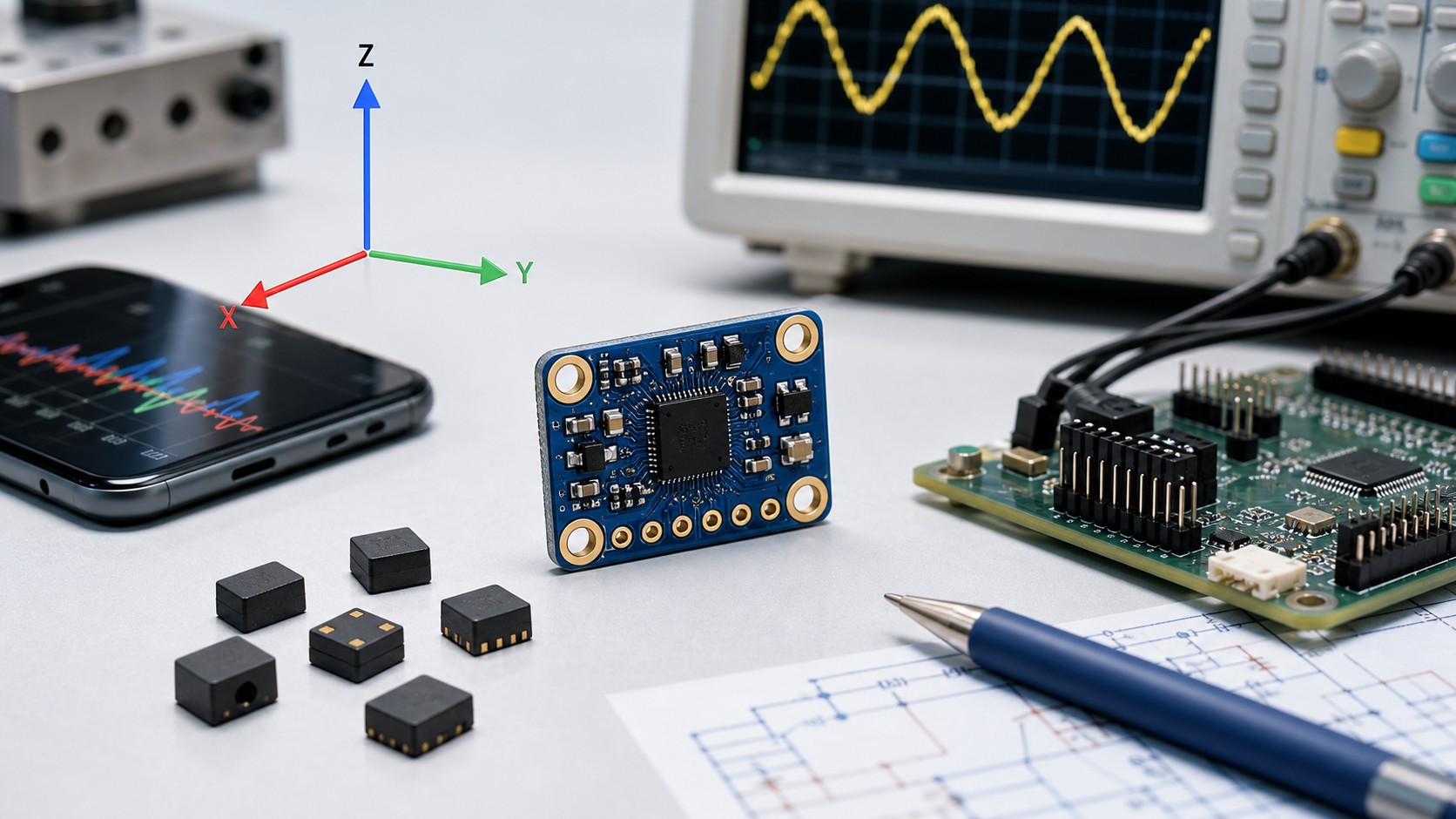 Accelerometer Sensors Guide: Working Principle, Circuit Design, Specifications, and ApplicationsUTMEL25 June 20261028
A practical accelerometer sensor guide covering working principles, MEMS and piezoelectric types, datasheet specifications, circuit design, mounting, applications, and selection.
Read More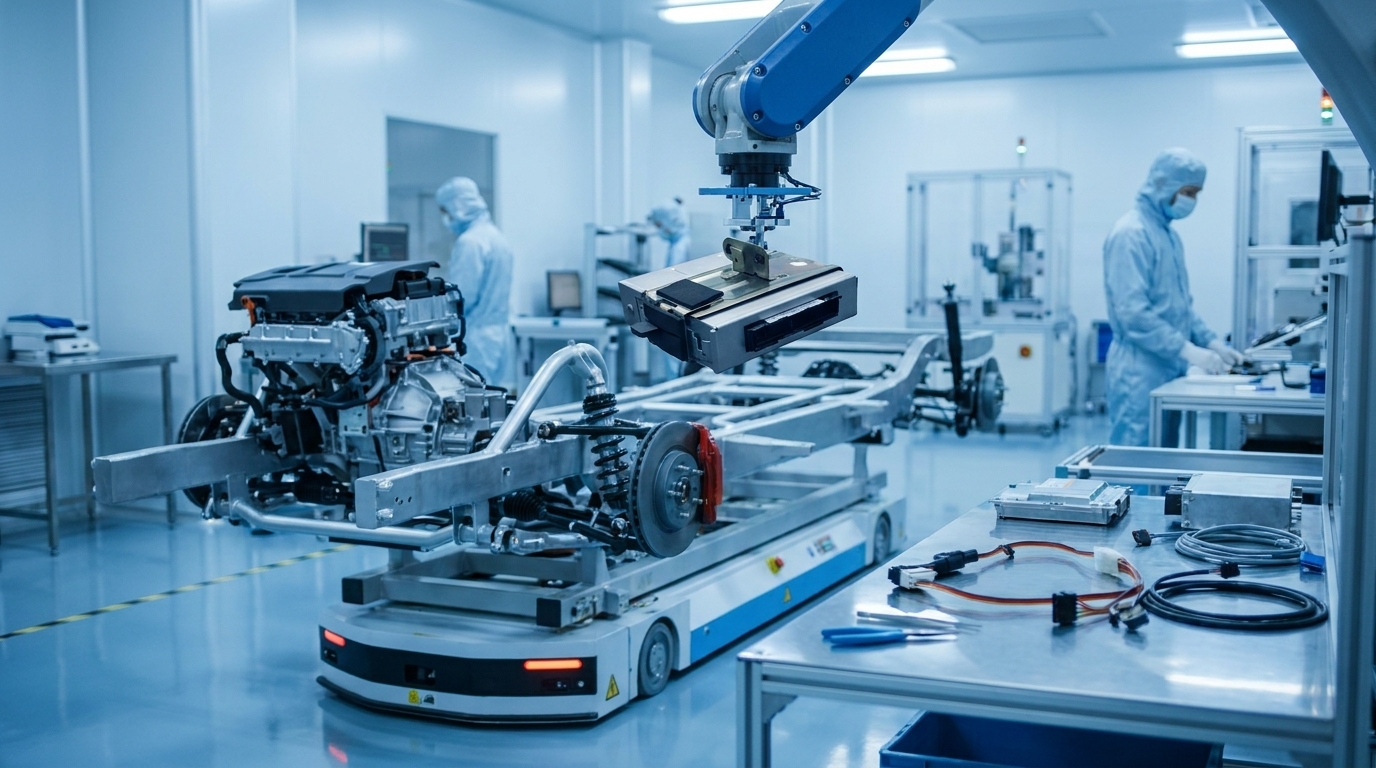 2026 ADAS Sensors: Supply Outlook and Alternative SourcingUTMEL18 July 20261165
Automotive cleanroom assembly integrating advanced driver assistance systems. The automotive industry faces a structural semiconductor deficit in 2026, driven not by pandemic-era demand shocks but by AI data centers absorbing global foundry capacity on legacy nodes (40nm-90nm) where 95% of automotive-grade components are manufactured. Video demonstrations of these systems show a "machine view" overlay with red crosshairs tracking pedestrian movement and sudden cut-ins before traditional collision thresholds are triggered.
Read More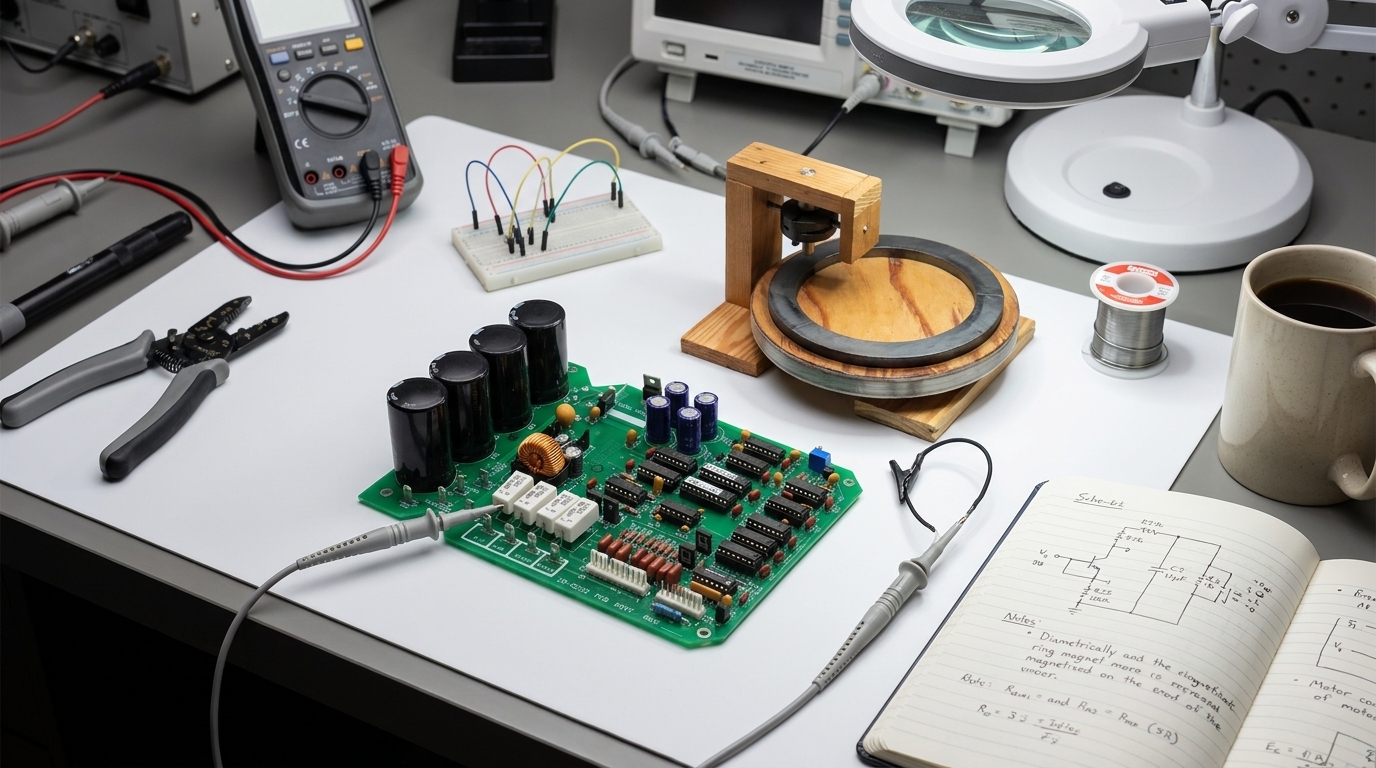 Magnetic Sensors for Position Detection: Hall Effect vs. AMR vs. TMR Engineering GuideUTMEL21 August 2026575
This guide compares Hall effect, AMR, and TMR magnetic sensors for position detection in motor control and robotics. It explains their physical principles, key performance metrics, and selection criteria. Hall effect suits low-cost commutation, AMR offers high-speed angle sensing, and TMR provides maximum precision and low power, with practical integration advice.
Read More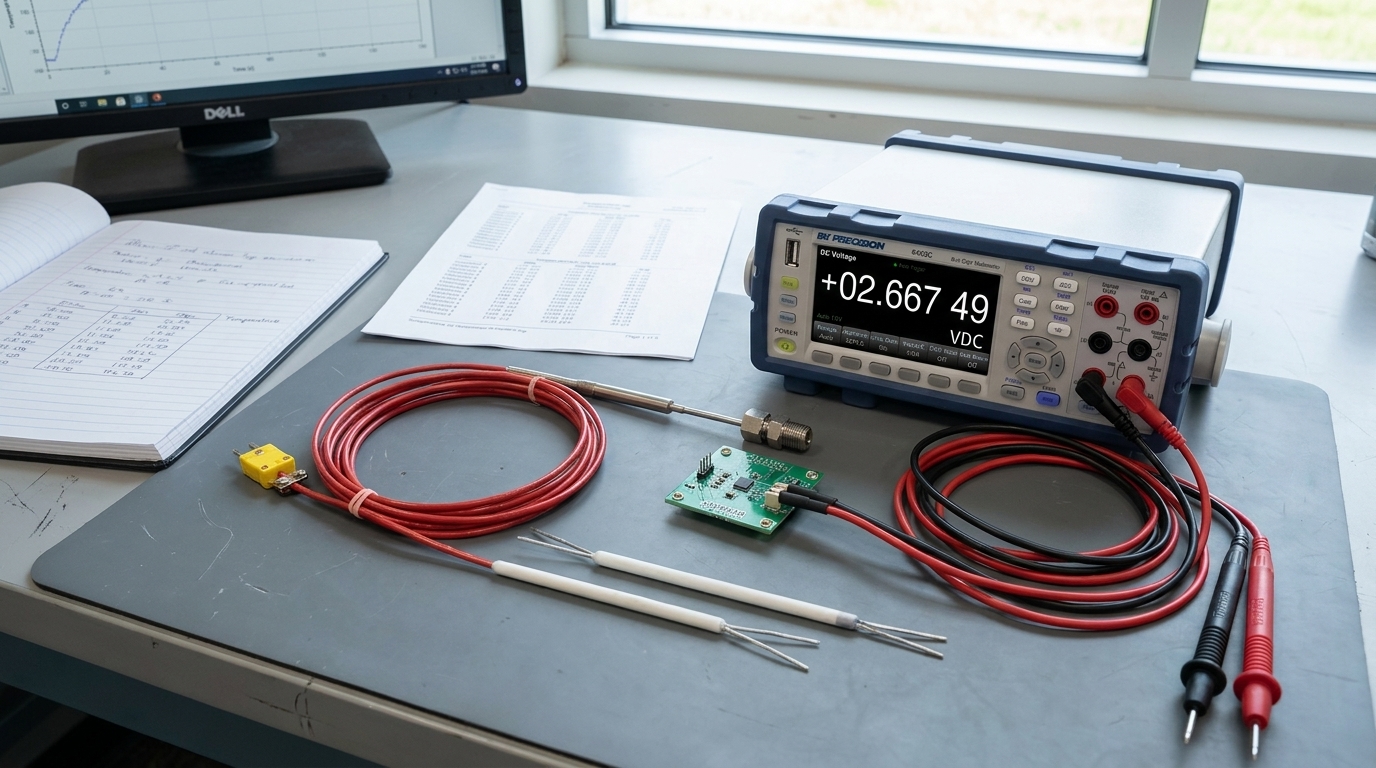 Temperature Sensor Types Comparison: Thermocouple, RTD, and Semiconductor IC Selection GuideUTMEL17 August 2026493
This comprehensive selection guide compares thermocouples, platinum RTDs, and semiconductor ICs across measurement range, accuracy limits, and signal conditioning complexity. It covers fundamental operating physics, mathematical transfer functions, lead-wire compensation topologies, and power budgets. Engineers will find practical design checklists, benchtop multimeter diagnostic techniques, and an architectural decision workflow to optimize system performance and bill-of-materials cost.
Read More
Subscribe to Utmel !