Product
 Brand
Brand Articles
 Tools
Tools
What is Inertial Measurement Unit (IMU)?
How to Implement an Inertial Measurement Unit (IMU) Using an Accelerometer, Gyro, and Magnetometer
Table of Contents |
Ⅰ Concept Explained
An inertial measurement unit (IMU) is a device that measures the three-axis attitude angle (or angular velocity) and acceleration of an object. Generally, an IMU contains three single-axis accelerometers and three single-axis gyroscopes. The accelerometers detect the acceleration signals of the object in the carrier coordinate system along three independent axes. The gyroscopes detect the angular velocity signals of the carrier relative to the navigation coordinate system, measure the angular velocity and acceleration of the object in three-dimensional space, and calculate the attitude of the object.
To improve reliability, it is also possible to equip each axis with additional sensors. Generally, IMUs are mounted at the center of gravity of the object and are widely used in devices that require motion control, such as automobiles, robots, and drones. They are also essential in applications requiring precise displacement projection with attitude, such as inertial navigation equipment for submarines, aircraft, missiles, and spacecraft.
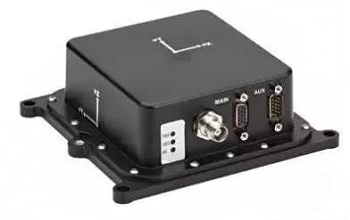
Inertial Measurement Unit (IMU)
Ⅱ Composition of IMU
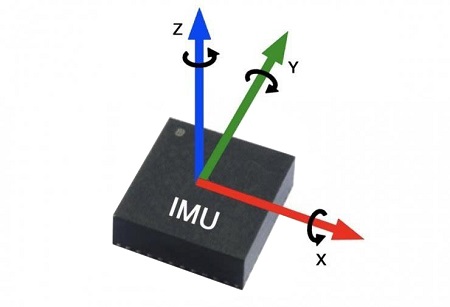
The IMU consists of three single-axis accelerometers and three single-axis gyroscopes. Imagine a Cartesian coordinate system with x, y, and z axes, with sensors capable of measuring linear motion in the direction of each axis, as well as rotational motion around each axis. This is the fundamental starting point for all IMUs, and all inertial navigation systems are built from this foundation.

Coordinate System and Measurement Dimensions of IMU
Accelerometers
Accelerometers measure acceleration using Newton's second law (a=F/m), which measures the "inertial force" of an object. An accelerometer is used in an inertial reference system to measure the linear acceleration of a system, but can only measure acceleration relative to the direction of motion of the system (since the accelerometer is fixed to the system and rotates with it, it does not know its own direction). While velocity and displacement can theoretically be derived by integrating acceleration, the accuracy is relatively low due to error accumulation, so it typically requires assistance from other sensors such as gyroscopes for correction.
Gyroscope
The gyroscope is used to measure the angular rate of a system in an inertial reference system. By integrating the angular rate with the initial orientation of the system in the inertial reference system as the initial condition, the current orientation of the system can be obtained at all times. The gyroscopes now used in smartphones and many consumer electronics are MEMS (Micro-Electro-Mechanical Systems) gyroscopes. These gyroscopes feature small size, low power consumption, ease of digitization and intelligence, and especially low cost, making them ideal for mass production in applications such as mobile phones, automotive traction control systems, and medical devices.
Magnetometer
The magnetometer, also commonly known as a geomagnetic field sensor or electronic compass, senses the Earth's magnetic field to provide an absolute heading reference. When the accelerometer is completely horizontal, it cannot distinguish the angle of rotation in the horizontal plane (i.e., rotation around the Z-axis), and only the gyroscope can detect it at this time. However, the working principle of a gyroscope is integration, and even in a static state, accumulated errors will occur due to drift. Therefore, a sensor is needed that can confirm orientation in the horizontal position, which is the magnetometer. Through mutual correction and data fusion of these three sensors, more accurate attitude parameters can theoretically be obtained. An IMU that integrates an accelerometer, gyroscope, and magnetometer is typically called a 9-axis IMU.
Barometer
The barometric sensor is used to detect the atmospheric pressure around the device. In actual applications, the barometric sensor can be used as an altimeter, estimating changes in altitude through pressure variations. In inertial guidance systems, the Z-axis (vertical direction) dynamics and accuracy can be enhanced by adding a barometer. Additionally, IMUs based on MEMS technology typically include a built-in temperature sensor for real-time temperature calibration of measurement data to improve accuracy under different operating environments.
Ⅲ Working Principle
Traditional mechanical gyroscopes utilize the principle of conservation of angular momentum, remaining axially stable when rotating, thereby being used to measure or maintain direction. Modern electronic designs have transformed this mechanical principle into miniature sensors that can be manufactured using Micro-Electro-Mechanical Systems (MEMS) technology. The development of sensor technology has given rise to "sensor fusion," which integrates multiple sensors and processing software into a single unit, providing powerful solutions for various industries such as information and communication technology (ICT), the Internet of Things (IoT), and automotive.
MEMS technology enables the assembly of multi-axis combinations of precision gyroscopes, accelerometers, magnetometers, and pressure sensors into a single microchip. These integrated devices are commonly referred to as inertial measurement units (IMUs). IMUs are electronic devices used to measure and report the specific force, angular velocity, and often the direction of motion of an object. This principle is rooted in Isaac Newton's (1643-1727) first law of motion (the law of inertia) presented in his 1687 publication Philosophiæ Naturalis Principia Mathematica (Mathematical Principles of Natural Philosophy): "A body at rest will remain at rest, and a body in motion will remain in motion unless it is acted upon by an external force." MEMS technology enables IMUs to reliably detect and handle multiple degrees of freedom (DoF) even in highly complex applications and constantly changing situations.
IMU in Mobile Devices
From an academic perspective, the working principle of IMU is: based on Newton's laws of mechanics, by measuring the acceleration of the carrier in the inertial reference system, integrating it over time, and transforming it into the navigation coordinate system, information such as velocity, yaw angle, and position in the navigation coordinate system can be obtained. It is worth noting that IMU provides relative positioning information. Its role is to measure the route moved relative to the starting point, so it does not provide information about the specific location where you are. Therefore, it is often used together with Global Navigation Satellite Systems (GNSS, such as GPS, BeiDou, etc.). In areas where GNSS signals are weak or interrupted (such as tunnels, underground parking lots), IMU can play a key role, continuously providing position information for vehicles through dead reckoning to achieve seamless positioning.
Ⅳ Foundation of Autonomous Driving
In autonomous driving systems, the IMU is an indispensable redundancy and supplement. When primary positioning sensor (such as GNSS) data is missing or unreliable, the IMU can effectively fill the gap. By measuring the vehicle's 3D linear acceleration and 3D angular velocity, the IMU can accurately calculate the vehicle's attitude (pitch and roll angles), heading, speed, and position changes. It can not only fill the gaps between GNSS signal updates but can even perform short-term dead reckoning when GNSS and other sensors (such as cameras and radar) completely fail, ensuring vehicle safety.
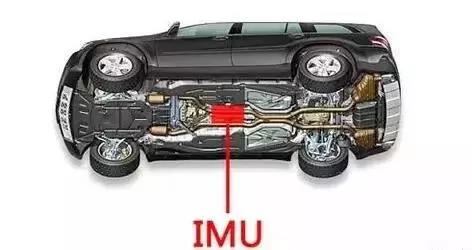
IMU in Automotive Applications
The key advantage of the IMU is that it works in all weather and geographical conditions. As a stand-alone sensor, it is not affected by weather, lens fouling, radar and LiDAR signal reflections, or urban canyon effects. Therefore, the IMU is seen as the "last line of defense" that complements and validates other sensors, ensuring that the vehicle can still drive safely or stop in a controlled manner when other sensors are damaged or fail.
All vehicles currently on the market equipped with Electronic Stability Control (ESC) are already equipped with low-cost IMUs. However, the high-precision IMUs required for Level 3 and above autonomous driving cost thousands of dollars in the past, which prevented their large-scale deployment in the automotive market. But the situation has changed dramatically. With the advancement of MEMS technology and intensified market competition, the cost of high-precision IMUs has dropped significantly, with some automotive-grade products now priced below $100 or even lower. At the same time, the cost of LiDAR has also plummeted from tens of thousands of dollars in the past to hundreds of dollars, jointly promoting the commercialization of advanced autonomous driving.
There are three main reasons why the IMU is considered the last line of defense for autonomous driving positioning systems:
First, high independence. IMU does not depend on any external signals when deriving relative position and attitude, and is a complete "black box" system. In contrast, GNSS-based positioning depends on satellite signal coverage, and high-precision map-based positioning depends on the performance of the perception system and the stability of algorithms, all of which are susceptible to weather and environmental interference.
Second, strong anti-interference capability. Because IMU does not require any external signals, it can be installed in non-exposed areas such as the vehicle chassis, effectively resisting external electronic or mechanical attacks. In contrast, vision, LiDAR, and other sensors must receive electromagnetic waves or light signals from outside the vehicle, making them vulnerable to interference or blinding by strong light or malicious signals.
Finally, high confidence level. The IMU's measurements of angular velocity and acceleration already have a certain degree of redundancy, plus auxiliary information from wheel speed sensors, steering wheel angle, and other vehicle dynamics, making the confidence level of its output much higher than other single sensors.
Ⅴ Popular IMUs Recommended (2025 Update)
With technological advancements, the IMU market has seen the emergence of many new products with stronger performance and higher integration. The following are some mainstream and noteworthy IMU models on the market as of 2025, which have been significantly optimized from their predecessors.
| Manufacturer | Recommended Model | Key Features |
|---|---|---|
| Analog Devices | ADIS16505 | Tactical-grade performance, 6-DOF, high precision, suitable for demanding navigation and stabilization systems. |
| Bosch Sensortec | BMI270 / BMI323 | Ultra-low power consumption, optimized for wearables and consumer electronics, upgraded replacement for BMI160. |
| STMicroelectronics | LSM6DSOX / ASM330LHH | Built-in machine learning core and finite state machine for intelligent sensing; ASM330LHH is automotive-grade. |
| TDK InvenSense | ICM-42670-P | High-performance 6-axis motion tracking, low noise, suitable for consumer and IoT applications requiring high-precision tracking. |
| Murata | SCC2000 Series | Automotive-grade combo sensor, high stability and vibration resistance, designed for automotive applications in harsh environments. |
Note: This article has been updated in 2025 to reflect the latest technological developments and market trends. The original version was published in 2021. Key updates include corrected historical dates (Isaac Newton: 1643-1727), updated cost information for high-precision IMUs and LiDAR systems, and refreshed product recommendations to replace obsolete models such as BMI160 and LSM9DS1TR.
 UTMEL
UTMEL
We are the professional distributor of electronic components, providing a large variety of products to save you a lot of time, effort, and cost with our efficient self-customized service. careful order preparation fast delivery service
1. What does the inertial measurement unit measure?
An Inertial Measurement Unit (IMU) is a device that can measure and report the specific gravity and angular rate of an object to which it is attached. An IMU typically consists of: Gyroscopes: providing a measured angular rate. Accelerometers: providing a measure specific force/acceleration.
2. Why is IMU used?
IMUs are used to measure acceleration, angular velocity and magnetic fields, and, when combined with sensor fusion software, they can be used to determine motion, orientation and heading. They're found in many applications across consumer electronics and the industrial sector.
 The Key Role of Electronic Components in IoT DevicesUTMEL01 September 20236233
The article discusses the pivotal role of electronic components in Internet of Things (IoT) devices. IoT devices work by capturing real-world data using sensors, processing it through a microcontroller, and then sending it to the cloud for further analysis.
Read More Accelerometer Sensors Guide: Working Principle, Circuit Design, Specifications, and ApplicationsUTMEL25 June 20261028
A practical accelerometer sensor guide covering working principles, MEMS and piezoelectric types, datasheet specifications, circuit design, mounting, applications, and selection.
Read More 2026 ADAS Sensors: Supply Outlook and Alternative SourcingUTMEL18 July 20261165
Automotive cleanroom assembly integrating advanced driver assistance systems. The automotive industry faces a structural semiconductor deficit in 2026, driven not by pandemic-era demand shocks but by AI data centers absorbing global foundry capacity on legacy nodes (40nm-90nm) where 95% of automotive-grade components are manufactured. Video demonstrations of these systems show a "machine view" overlay with red crosshairs tracking pedestrian movement and sudden cut-ins before traditional collision thresholds are triggered.
Read More Magnetic Sensors for Position Detection: Hall Effect vs. AMR vs. TMR Engineering GuideUTMEL21 August 2026575
This guide compares Hall effect, AMR, and TMR magnetic sensors for position detection in motor control and robotics. It explains their physical principles, key performance metrics, and selection criteria. Hall effect suits low-cost commutation, AMR offers high-speed angle sensing, and TMR provides maximum precision and low power, with practical integration advice.
Read More Temperature Sensor Types Comparison: Thermocouple, RTD, and Semiconductor IC Selection GuideUTMEL17 August 2026493
This comprehensive selection guide compares thermocouples, platinum RTDs, and semiconductor ICs across measurement range, accuracy limits, and signal conditioning complexity. It covers fundamental operating physics, mathematical transfer functions, lead-wire compensation topologies, and power budgets. Engineers will find practical design checklists, benchtop multimeter diagnostic techniques, and an architectural decision workflow to optimize system performance and bill-of-materials cost.
Read More
Subscribe to Utmel !