Product
 Brand
Brand Articles
 Tools
Tools
Foreign Media Burst Samsung: DRAM, Foundry and Chip Defeat on All Fronts
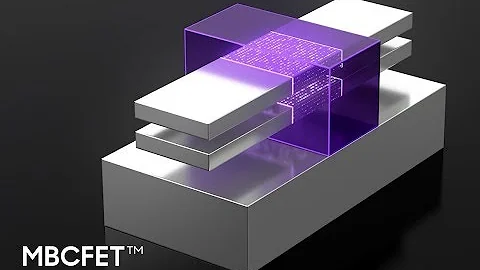
Samsung Foundry’s New Transistor Structure: MBCFET™
According to industry media EMI analysis, Samsung Electronics, and more specifically Samsung's various semiconductor divisions are on fire. In the past decade, Samsung was on top of the world. Their share of the foundry industry has grown rapidly. Samsung is the fastest multi-logic node converter in the foundry space. Samsung LSI design teams are coming up with the best mobile chip designs. Apple is completely dependent on Samsung to manufacture all key components. Samsung was ahead of other DRAM manufacturers for years in terms of production costs.
But now, all these technological advantages are disintegrating. Reports indicate that Samsung Electronics' cultural problems have shaken it to its core. Samsung is slipping in all aspects of technology development, including the one area where they historically beat all competitors - DRAM. they are also no longer producing the top 3 mobile SOCs, and even MediaTek has surpassed them. The foundry business has streamed its two largest customers to TSMC in quick succession.
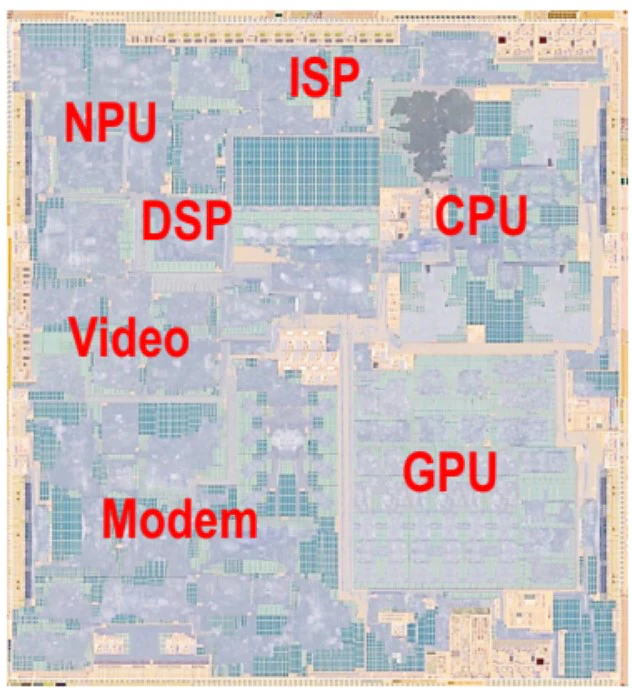
Some reports even point to claims of lies and deception at Samsung's foundries. Even Intel's fledgling new foundry business has been able to attract a customer or two from Samsung Foundry! This article will cover many of the symptoms reported by the Korean media as well as some of our own research on the subject. To be clear, some of the details in the Korean press are unconfirmed, but the overall problem is obvious.
There are clearly problems at Samsung Electronics. These problems stem directly from the cultural makeup of Samsung. Before we dive into the details, we think the overall trend is that these issues have been bubbling for years, but have reached a boiling point.
First, let's start with the mildest part of this story and then move on to the damnedest part. Samsung has a service called "Game Optimizing Service" that limits most apps beyond the usual benchmarking, even non-gaming apps like Netflix and Instagram. Admittedly, we're not outraged by this, as Android OEMs have a long history of cheating on benchmarking apps. As a result of their actions, Samsung is facing a class-action lawsuit.
Why did Samsung launch this "Game Optimizing Service"? Well, it's certainly to control heat and power consumption, which has been very impressive over the past few generations. Ultimately, it is because the node problem has emerged in Samsung. Going back a few years, Samsung's internal CPU design had failed due to poor leadership. Samsung also had a GPU team, but it was eventually disbanded. These two examples show why developing your own chips is much more difficult than it seems. The culture of the design company and fab is critical to success. These talented engineers need the right motivation, direction, and leadership.

Many of Samsung's fans were excited about the move to AMD's rDNA-based GPU IP after the failure of its in-house GPU architecture. This excitement was very short-lived. The current generation Exynos 2200 does raise issues related to foundry and process nodes. Its performance per watt is very poor. The performance and power consumption of the RDNA-based GPU are not the only issues with this SOC.
Samsung initially planned to roll out the Exynos chip more widely around the world. Some analysts and industry publications even predicted that 60 percent of total Galaxy S22 series sales would be based on the Exynos 2200 and 40 percent on the Qualcomm S8G1. In the end, that proved to be invalid, and the actual share of Exynos ended up being less than 25 percent. While we don't think the program will increase to 60%, we did hear that Samsung wanted to increase the share of Exynos processors to 40%. The lack of volume is largely due to performance and production.
Samsung's Exynos 2200 is reported to have extremely low yields. This is partly due to their use of the 4LPE node. This node innovates on Samsung's 7/5nm series by offering a 198nm UHD unit height, while the previous node had a 218nm UHD unit height. Yields for this node are rumored to be as low as 20%. These seem too low, but we're hearing that parametric yields are terrible, even though catastrophic yields are good. Another source tells us that the chips that eventually ship have higher power consumption and lower performance targets, resulting in about 80% parametric yields. In any case, there are rumors of an agreement among executives to ship the latest node even if it doesn't make economic or power/performance sense.
Here we need to parse some terms, so-called catastrophic yield loss is when transistors, vias, or metal layer parts simply don't work. parametric yield is the loss of parametric yields when these features work, but the question is whether it meets your performance, power, voltage, etc. targets. Since the Exynos 2200 has such a low parametric yield, the chip's target must be adjusted downward. In fact, there are rumors that Samsung lowered the GPU's clock frequency from a planned 1.69GHz to 1.49GHz and eventually to 1.29GHz.
These problems are not just down to the foundry and SOC teams missing their technical targets. But these different units are allegedly pointing fingers at each other. Samsung LSI (design) is blaming Samsung Foundry, while Samsung Mobile is blaming S.LSI.
Samsung LSI executives even seem to be blaming changes in Korean labor laws. Rather than doing ridiculous work at critical hours and having engineers do ridiculous work, employees should be limited to a maximum of 52 hours per week. While we've heard this hasn't been fully complied with, it has reduced the overwork of many Samsung engineers. The resistance at Samsung was so strong that there was even a push for legislation to relax these labor laws.
The culture at Samsung Semiconductor has become so toxic that the foundry even allegedly lied about its output.
South Korean media reports say that Samsung is conducting a management review and audit in response to these issues. This review will likely result in a management and team reorganization, similar to the restructuring of the wireless division last year. Later reports of lies went even deeper claiming that Samsung foundries lied to customers and Samsung's chairman about 5nm, 4nm, and 3nm yields. These various reports seem quite credible given the number of media outlets in Korea covering this story and the number of local experts involved.
What we can say for sure is that Qualcomm is angry with Samsung.
According to TechInsights, Qualcomm used a variant of Samsung's 5nm node, which is called 4LPX, rather than the more dense 4LPE node like the Exynos 2200. Multiple sources also tell us that the Parametric yield of the S888 and S8G1 processors is very poor, causing Qualcomm to need to push these SOCs to higher power levels to achieve certain performance goals.
While the reported yields for the Qualcomm S8G1 are not as low as the Exynos 2200, they are not nearly as high. As a side note, this is working well for Qualcomm (and Nvidia). We are told that both customers have negotiated to pay per finished chip rather than per wafer manufactured.
Qualcomm has decided to abandon Samsung's foundry high-end SOCs altogether due to issues with the S765G, S780G, S888 and S8G1. Qualcomm even has a dedicated team working around the clock to prepare the S8G1+ for production based on TSMC's N4 process node. For the foreseeable future, the S8G2 and future high-end Qualcomm chips will be on TSMC's shelves. Despite the slowdown in the smartphone market in recent months, TSMC has been able to maintain growth in the smartphone segment this year and is next due to sharing shifts with Qualcomm and continued content growth.
Samsung Mobile has been racing to find alternatives while the S.LSI division struggles with smartphone SOCs. Rumors in Korea even say Samsung has turned to MediaTek's Tiangui lineup to evaluate the Galaxy A series lineup. Dr. TM Roh, president of Samsung Mobile, has said that there is a new application processor available only for Galaxy phones. This is odd because most S.LSI Exynos SOCs, while available externally, are essentially exclusive to Samsung Galaxy smartphones. This suggests more infighting and drama between Samsung Mobile and S.LSI.
Samsung's foundry issues run deeper. As we reported last year, their 3nm GAP node foundry products are not even shipping to external customers until 2024. 3GAE, the first all-around (GAA) node, has been quietly delayed and may even be canceled. Yields are said to be extremely low. For anyone who thinks Samsung can catch up with TSMC because of TSMC's N3 issues and N2 production starting at the end of 2025, you would be sadly mistaken. Samsung missed the boat and lost its largest foundry customer Qualcomm and its second-largest foundry customer Nvidia.
However, Samsung LSI is not a complete mess. They are gaining share in the 5G infrastructure market with well-designed, affordable, and efficient chips. They've also won many automotive wins in infotainment systems like Hyundai and VW. S.LSI seems well suited to working closely with customers, such as with Google on the Tensor smartphone SOC. Despite the success, S.LSI seems to have been thwarted at every opportunity as Samsung Foundry seems to have cost them the contract for the next-generation Cisco Silicon One networking ASIC, which has been lost to Intel!
LSI has been working closely with Tesla for years on Autopilot/ADAS HW 3.0. This is a chip that Tesla co-designed with assistance from Samsung, and both parties contributed meaningful IP to the final chip design. this chip design has shipped millions of units to Tesla's vehicles. hw 4.0 was originally scheduled for production late last year but appears to have been pushed back to this year. Aside from Ambac, Tesla is S.LSI/Foundry's only major external customer.
LSI has made other mistakes recently, such as in the image sensor market. They have been slow to adopt hybrid bonding for their ISOCELL smartphone sensors, unlike Sony which has been shipping in volume since 2017. In addition, they failed to gain share among Chinese smartphone makers who chose to use Sony at the high end and on the Omnivision. The standalone camera sensor and camera belonged to their own division called Samsung NX but have since been phased out as well, even after decades of investment in standalone cameras by Samsung.
Samsung DRAM disaster
Samsung DRAM, the cash cow of Samsung Electronics, was not all smooth sailing. 5 years ago, Samsung was undoubtedly superior to Micron and SK Hynix in terms of density, performance, and cost structure. In those days, some estimates put them a year and a half ahead. Now, despite having much larger numbers compared to these two peers, Samsung arguably lags behind Micron and SK Hynix in some of these metrics. Samsung's overly aggressive behavior in process development out of cultural issues is the culprit.
Briefly, DRAM density and cost scaling slowed dramatically as capacitor scaling slowed. 1Xnm generation was the first sign of this dramatic slowdown, but since then, cost scaling per node has only been about 15%. Density growth has been so lukewarm that DRAM manufacturers have shifted to using letters as suffixes rather than numbers, as was the case in the pre-20nm generation. Samsung was way ahead at Gen 1Y relative to the competition in cost, power, and performance.
That all changed with the 1Z generation. Samsung decided to be very aggressive in its EUV adoption. It was a top-down decision, not an engineering one. These top-down decisions are very common in Samsung Electronics and they are the result of the cultural issues we have been pointing out. For the 1Z, Samsung announced that they were going to adopt EUV. this was done with a lot of fanfare and media. Samsung is extremely proud of this "achievement".
Samsung dominated the early shipments of EUV by absorbing about 50% of the EUV tool. Samsung's attempts to insert it into DRAM and their early attempts at 7nm logic failed. 1Z DRAM nodes were never fully accelerated. This trend continues in the next generation 1 Alpha node, further increasing EUV utilization. The node has reportedly taken longer to develop. Although Samsung claims that 1 Alpha has been in volume production for a long time, it still has not increased significantly. Meanwhile, SK Hynix and Micron have been able to catch up in terms of cost, performance, and power with their 1Z generation, which does not use SUVs.
In addition, in the 1 Alpha generation, Micron continues to push only DUV, while SK Hynix has begun to insert EUV. As a result, Micron has been accelerating 1 Alpha, while SK Hynix and Samsung have seen rather lukewarm sales growth.
SemiAnalysis estimates that Micron now has a cost advantage in DRAM due to the ability to move all of its capacity to 1 Alpha generation and achieve the best density and cost across its entire lineup.
Samsung and SK Hynix are still delivering first-generation DDR5 using non-EUV 1Y processes, while Micron is leading the competition and delivering their 1Z generation process for first-generation DDR5. In addition, Micron is fast-tracking Gen 2 DDR5 on the Gen 1 Alpha process node. it needs to be clear that EUV is not the only culprit, but it is one of the biggest technological differences.
This is the worst-case scenario for Samsung. They can't upgrade 1Z. they've been unable to upgrade 1 Alpha, and now there are reports that they've canceled the development of the next generation 1 Beta process node! Others are reporting that Samsung is pushing the 1 Gamma node through directly. This cancellation report has a lot of credibilities as it is based on a disgruntled engineer at Samsung. He even posted a blog on the topic!
The engineer has been confirmed to be part of Samsung's DRAM technology development team. He wrote a letter to the two heads of Samsung Electronics, Lee Jae-Yong and CEO Kye Hyun Kyung, describing the failures and problems. The blog has been taken down, but the Korean press has captured some rather worrisome quotes from it.
We encourage you to check it out to really get a handle on the severity of the situation. For a 4-year tenured engineer who is passionate about his job, such reckless bashing is a huge red flag. This is especially true because of the way the Korean work culture defines clear hierarchies. Last month, we also saw a handful of Samsung DRAM technology developers move to SK Hynix. This exceeds the normal attrition rate.
The culture issue has shaken Samsung to its core. While many parts of Samsung Electronics are still well-oiled execution machines, such as Samsung Display, NAND, Automotive, and Networks, the most important businesses are in trouble. These cultural issues ultimately led to Samsung losing its technology and cost advantage in DRAM, falling far behind TSMC in the race for leading process technology, losing its largest foundry customer, and losing out to Qualcomm and MediaTek in smartphone SOC design.
Related News
1、Chip Packaging Lead Time Has Grown to 50 Weeks
2、Eight Internet of Things (IoT) Trends for 2022
3、Demand for Automotive Chips Will Surge 300%
4、Volkswagen CFO: Chip Supply Shortage Will Continue Until 2024
5、BMW CEO: The Car Chip Problem Will Not Be Solved Until 2023
6、Shenzhen: This Year Will Focus on Promoting SMIC and CR Micro 12-inch Project
 UTMEL
UTMEL
We are the professional distributor of electronic components, providing a large variety of products to save you a lot of time, effort, and cost with our efficient self-customized service. careful order preparation fast delivery service
 UTMEL 2024 Annual gala: Igniting Passion, Renewing BrillianceUTMEL18 January 20245009
As the year comes to an end and the warm sun rises, Utmel Electronics celebrates its 6th anniversary.
Read More Electronic Components Distributor Utmel to Showcase at 2024 IPC APEX EXPOUTMEL10 April 20245994
Utmel, a leading electronic components distributor, is set to make its appearance at the 2024 IPC APEX EXPO.
Read More UTMEL Showcases One-Stop Electronic Component Sourcing Services at electronica Shanghai 2026UTMEL07 July 2026261
SHANGHAI, China, July 7, 2026 - UTMEL, a one-stop electronic components sourcing platform operated by Shenzhen Utmel Intelligent Electronic Co., Ltd., successfully participated in electronica Shanghai 2026, held from July 1 to 3, 2026 at the Shanghai New International Expo Centre.
Read More Electronic components distributor UTMEL to Showcase at electronica ChinaUTMEL07 June 20244584
The three-day 2024 Electronica China will be held at the Shanghai New International Expo Center from July 8th to 10th, 2024.
Read More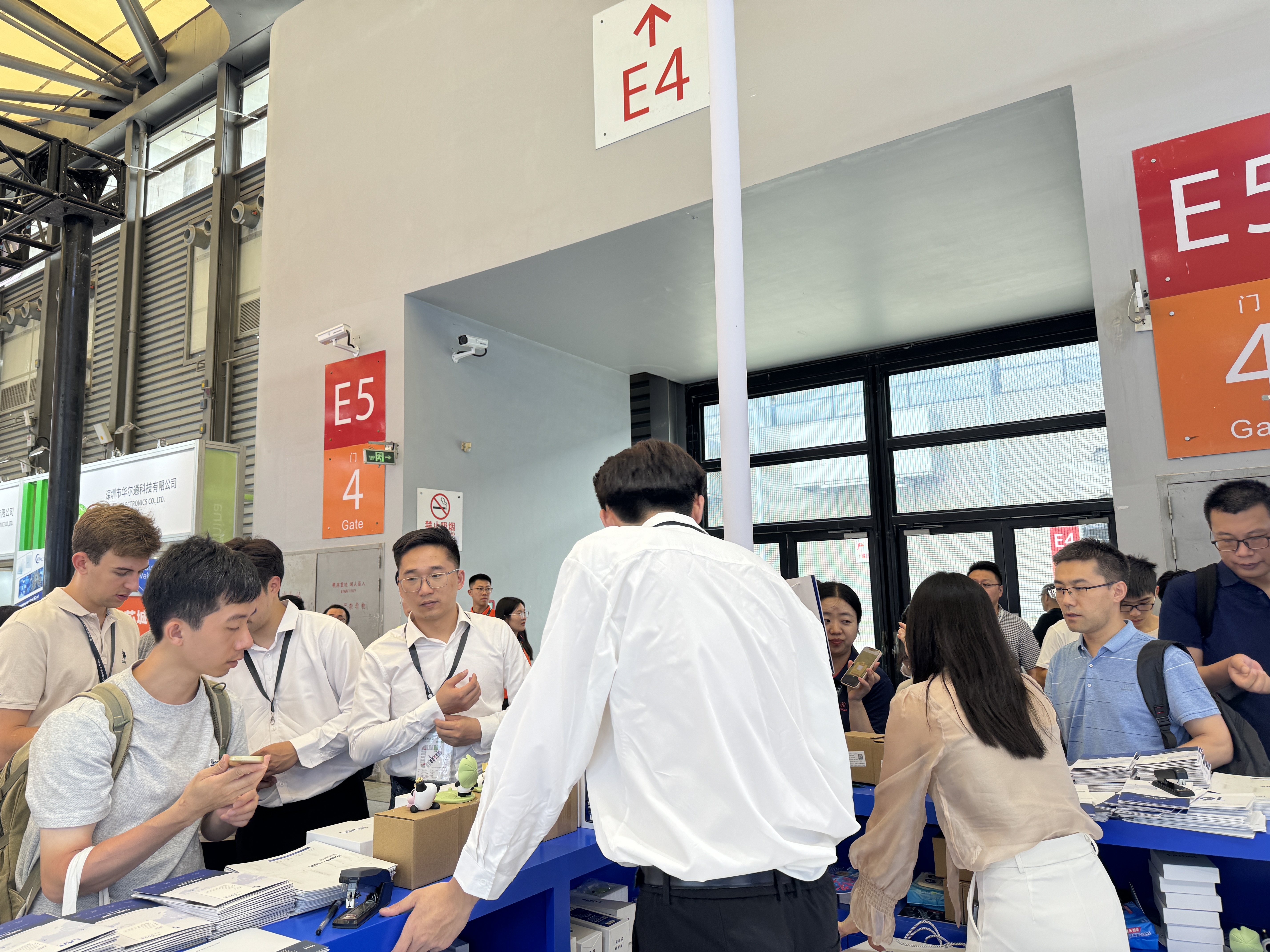 Electronic components distributor UTMEL Stands Out at electronica china 2024UTMEL09 July 20245185
From July 8th to 10th, the three-day electronica china 2024 kicked off grandly at the Shanghai New International Expo Center.
Read More
Subscribe to Utmel !
![PT15NH06-00839]() PT15NH06-00839
PT15NH06-00839Amphenol
![PT15YV18-01169]() PT15YV18-01169
PT15YV18-01169Amphenol
![PT15NV18-04631]() PT15NV18-04631
PT15NV18-04631Amphenol
![PT15LV18-10305]() PT15LV18-10305
PT15LV18-10305Amphenol
![PT6KH-02282]() PT6KH-02282
PT6KH-02282Amphenol
![PT15NH06-08515]() PT15NH06-08515
PT15NH06-08515Amphenol
![PT15WH06-04352]() PT15WH06-04352
PT15WH06-04352Amphenol
![PTC10LH01-00545]() PTC10LH01-00545
PTC10LH01-00545Amphenol
![PT15LV18-07074]() PT15LV18-07074
PT15LV18-07074Amphenol
![PTC10LV10-00645]() PTC10LV10-00645
PTC10LV10-00645Amphenol