Product
 Brand
Brand Articles
 Tools
Tools
The Underappreciated iphone - No One Believed Apple CEO Steve Jobs Would Succeed Before
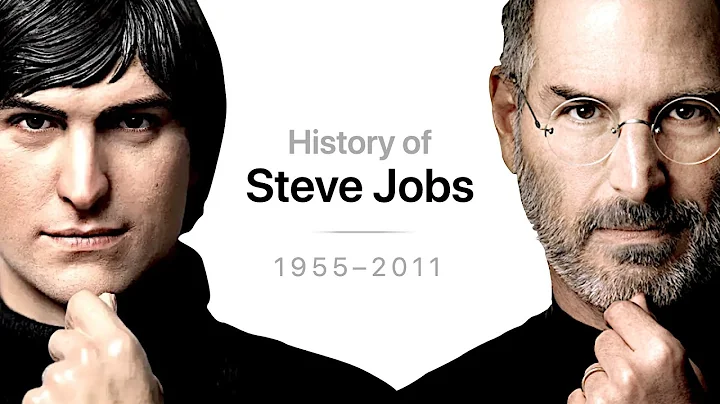
History of Steve Jobs (Full Documentary)
Fifteen years ago, when the first iPhone went on sale, the Apple Store was packed with people, and this has continued with the current iPhone launch.
Apple has always had this magic of gathering crowds outside Apple Stores around the world when a new product is released. They even stay overnight outside the Apple Store a day early to get a head start.
On the morning of 29 June 2007, many Apple executives went to the Apple Store in different cities to witness this historic moment.

Phil Schiller (Vice President of Global Marketing) went to Chicago, Jony Ive (Chief Designer) and the design team went to San Francisco, and Steve Jobs was at the Palo Alto Apple Store, just a mile and a half from his home.
Jobs was joined by former Mac team spirits like co-founder Steve Wozniak and Bill Atkinson.
The iPhone is undoubtedly the most important product in Apple's history and it was rare to see all the Apple executives or creators of the iPhone in the Apple Store with so many people.
No One Believed the iPhone Would Be A Success
It took six months between its launch in January 2007 and its release at the end of June 2007.
During this time, not only did the development team struggle to keep up with the schedule, but outside analysts and senior media were not idle either, though they were not cheering Apple on or giving it the benefit of the doubt.
Instead, they went completely on the opposite side of the fence and were collectively bearish.
Microsoft CEOs, RIM CEOs, Bloomberg, Business Week and others all said that the iPhone could not win, that it was overkill in front of Blackberry, Nokia and Motorola.
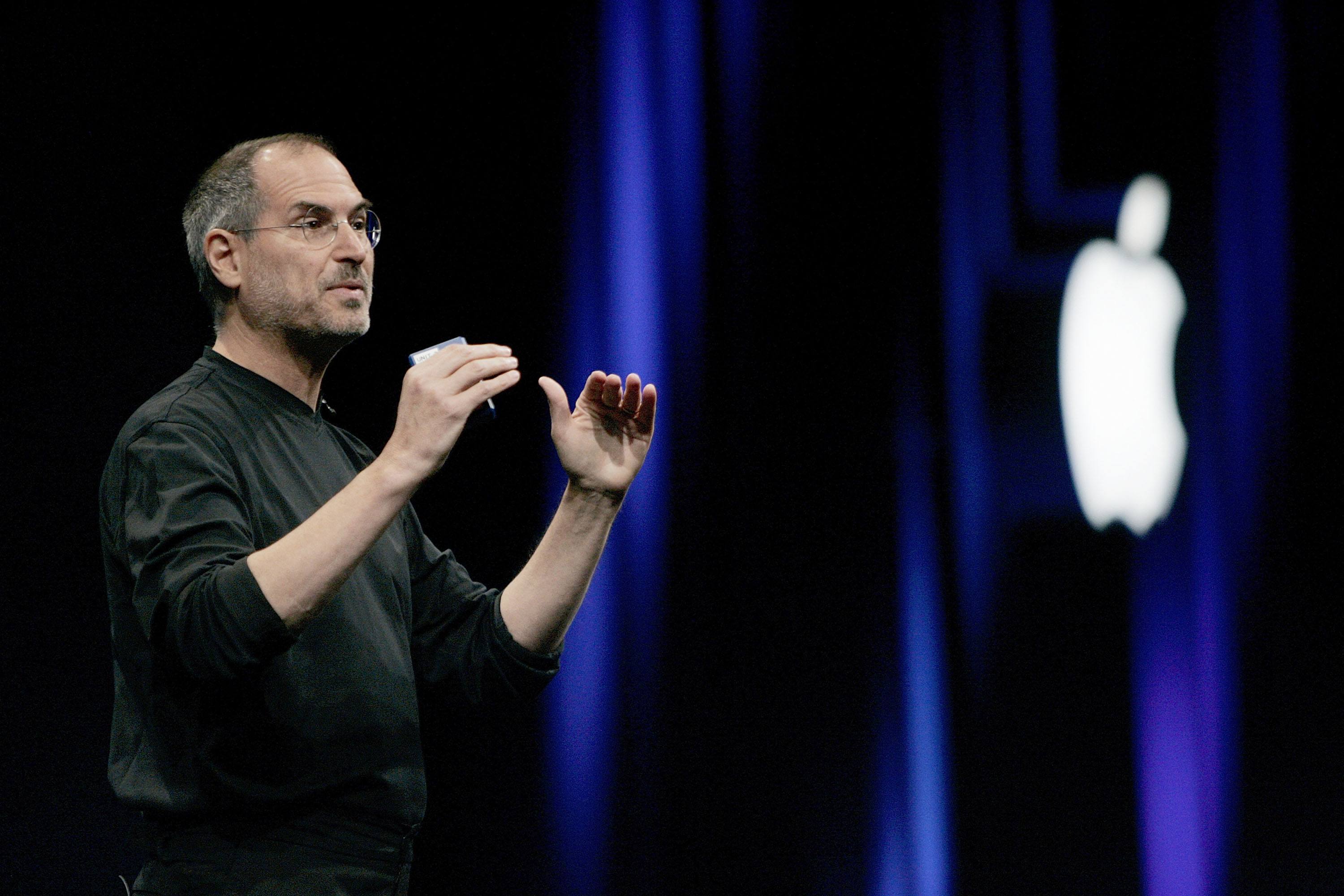
The reason for this lament is essentially the form and logic of the first iPhone.
In the fourth quarter of 2006, a total of 22 million smartphones were sold worldwide, split between Nokia, BlackBerry, Motorola and Palm.
Their phones were essentially rectangular boxes with a screen on the top half and buttons on the bottom half. And that's what people had decided they were, with one-way access to information from the screen and input on the keyboard being the usual way of interacting.
Before the iPhone, no one probably knew that you could flip through photos like a book, pinch and zoom pictures with your fingers, and tap an avatar to make a call directly.
At MacWorld in January 2007, when Jobs tapped on Ive's avatar and spoke to Ive in the audience, many compared the call to the one made by Bell a century earlier, a snapshot of the times.
Interestingly, however, when Jobs introduced the iPhone to the world, it was still an unfinished product, with considerable problems with both the hardware and the iPhone OS.
In order to get a smooth demo from Jobs, the iPhone development team put in place a strict process, such as playing only part of a song or video, sending an email before going online, etc.
And in less than six months, despite a lot of opposition from the industry, on 29 June, Apple solved many of the problems and delivered on schedule.
Unexpectedly, the biggest problem facing the iPhone was its overwhelming popularity, which caused the AT&T network to nearly collapse due to excessive data access.
Richard Sprague, the senior marketing director at Microsoft, was certain that the iPhone would not sell more than 100,000 units by 2008. In reality, however, the first iPhone sold more than one million units in just 74 days.
Steve Ballmer, CEO of Microsoft at the time, also thought the iPhone had no chance of doing well in an interview with USA Today in April 2007.
Fifteen years later, the iPhone alone accounts for 40% of the global mobile phone market, contributes nearly 60% of Apple's revenue and there are already over one billion iPhones in the world.
The iPhone Was Born, literally, for the Music Business
It took just two years to build the phone and finally bring it to market. But those two years of development were a microcosm of Apple's thirty years of technology accumulation.
In 2004, the iPod was on a roll, almost single-handedly disrupting the entire traditional recording industry.
But Greg Joswiak, Apple's vice president of marketing, wasn't overwhelmed by the victory and was monitoring other mobile phone manufacturers to see if they were ready to integrate music players into their phones and thus threaten the iPod's status.
Rather than wait, Apple didn't want to build a phone because Jobs thought there were too many rules and regulations for carriers to build and design it the way they wanted, but they didn't want to give up that part of the music business as they watched the mobile phone market grow.

So Apple found Motorola and built the iTunes Store service into the Rokr, which was a compromise on Jobs' part.
In a parallel move, Scott Forstall, Apple's Vice President of Software, also assembled a small team to develop the software for Project Purple.
Over the next few months, they would present to Jobs in a small room on the 2nd floor of Apple's headquarters, impressing Jobs before presenting to other Apple executives.
In 2005, the Motorola Rokr performed rather poorly and the Apple software team brought a very forward-thinking interaction idea to the table, allowing Jobs to push Project Purple forward.
The iPhone Is A Reflection of Almost Everything Apple Has Done
The multi-touch interaction pioneered by the iPhone had actually existed at Apple for a long time, but it came about by accident when Apple engineer Brian Huppi was trying to work out how to control a computer without a mouse.
Initially, Jobs dismissed the idea, believing that dropping Mac's interface onto a trackpad would look awkward. And the trackpad was not elegant enough for the size of a desktop.
Ive, on the other hand, put it another way, saying that if the technology appeared on the back of a camera, the buttons on the back of the digital camera could be removed so that a whole screen could be used.
The 'multi-touch' technology that was eventually retained became the basis for what would eventually become the iPhone's interactions.
The idea of a whole screen on the back of the camera was eventually incorporated into the Leica T. The one-piece CNC cut, combined with the logic of a whole screen, is the same as Ive's original idea.
Leica's designer Andreas Kaufmann also said in an interview that, as a fan of Ive's design style, he was doing his best to emulate Jony Ive.
The Apple design team led by Jony Ive was once one of the souls of Apple's products. As an industrial designer, Ive was not only interested in lines and curves.
Over the years he has also refined his and his team's understanding of industrial materials. Since 2004, he has been working to control the black streaks that appear in the manufacture of aluminium, even delving into the supply chain to learn how to mix in rations of magnesium and iron to maximise the original colour and hardness of aluminium.
After the launch of the iPhone, Ive's design team grew to include more materials experts, even acquiring Chicago-based QuesTek Innovations, which holds patents for making the appropriate steel for racing cars and rockets.
For this reason, Apple also introduced three different materials for the first Apple Watch, with stainless steel and solid gold cases in addition to aluminium and magnesium.
The iPhone is the result of Steve Jobs' control of software and Ive's attention to detail in industrial design, but behind both of them is Tim Cook, the man who brought the iPhone from his desk on the second floor of Apple's headquarters and into Apple Stores around the world.
In December 2006, on the eve of the iPhone's launch, Ive travelled across the Pacific Ocean to Foxconn in Shenzhen and, in a conference room, selected thirty of the hundred or so iPhones in pre-production to bring to the launch event.
Ive turned to Nick Forlenza, Vice President of Design for Passage, and said that any one of these could have gone to Jobs and they would have been as exquisite as a camera made by Canon.
Foxconn's production process gave Ive the confidence that Apple could build millions of equally exquisite phones and he wouldn't have to travel thousands of miles to supervise the work.
Tim Cook, the Man Behind the iPhone
Before joining Apple, Tim Cook was famous for managing the supply chain at Compaq and choosing Foxconn in Shenzhen as a foundry was part of Tim Cook's job description.
Not only that, but early iPhones had a touch screen that was not glass but plastic, and Jobs discovered by chance that it could be easily scratched. So for the production version, the decision was made to use glass.
Jobs then called Corning and the two companies hit it off, bringing not only strong glass to the iPhone, but also saving Corning.
But behind the scenes, it took less than six months to get a technology that had never been in mass production off the ground and produce enough glass. Together, Cook and Corning did the near-impossible by turning a glass factory in Kentucky into a manufacturer of iPhone screens, on time for the first sale.
Apple Has Continued to Invest in Corning to Develop New Glass for It
These jobs were not as glamorous as those of the software engineers and industrial designers in the front office and were secret jobs that were not often seen.
In the 1984 Super Bowl final, Apple aired its famous '1984' commercial, alluding to Mac's challenge to old-time IBM to re-establish the PC.
And the iPhone, released and launched in 2007, ushered in a new era of 'smartphones' and a new digital lifestyle.
Related News
1、Chip Packaging Lead Time Has Grown to 50 Weeks
2、Eight Internet of Things (IoT) Trends for 2022
3、Demand for Automotive Chips Will Surge 300%
4、Volkswagen CFO: Chip Supply Shortage Will Continue Until 2024
5、BMW CEO: The Car Chip Problem Will Not Be Solved Until 2023
6、Shenzhen: This Year Will Focus on Promoting SMIC and CR Micro 12-inch Project
 UTMEL
UTMEL
We are the professional distributor of electronic components, providing a large variety of products to save you a lot of time, effort, and cost with our efficient self-customized service. careful order preparation fast delivery service
 UTMEL 2024 Annual gala: Igniting Passion, Renewing BrillianceUTMEL18 January 20245009
As the year comes to an end and the warm sun rises, Utmel Electronics celebrates its 6th anniversary.
Read More Electronic Components Distributor Utmel to Showcase at 2024 IPC APEX EXPOUTMEL10 April 20245994
Utmel, a leading electronic components distributor, is set to make its appearance at the 2024 IPC APEX EXPO.
Read More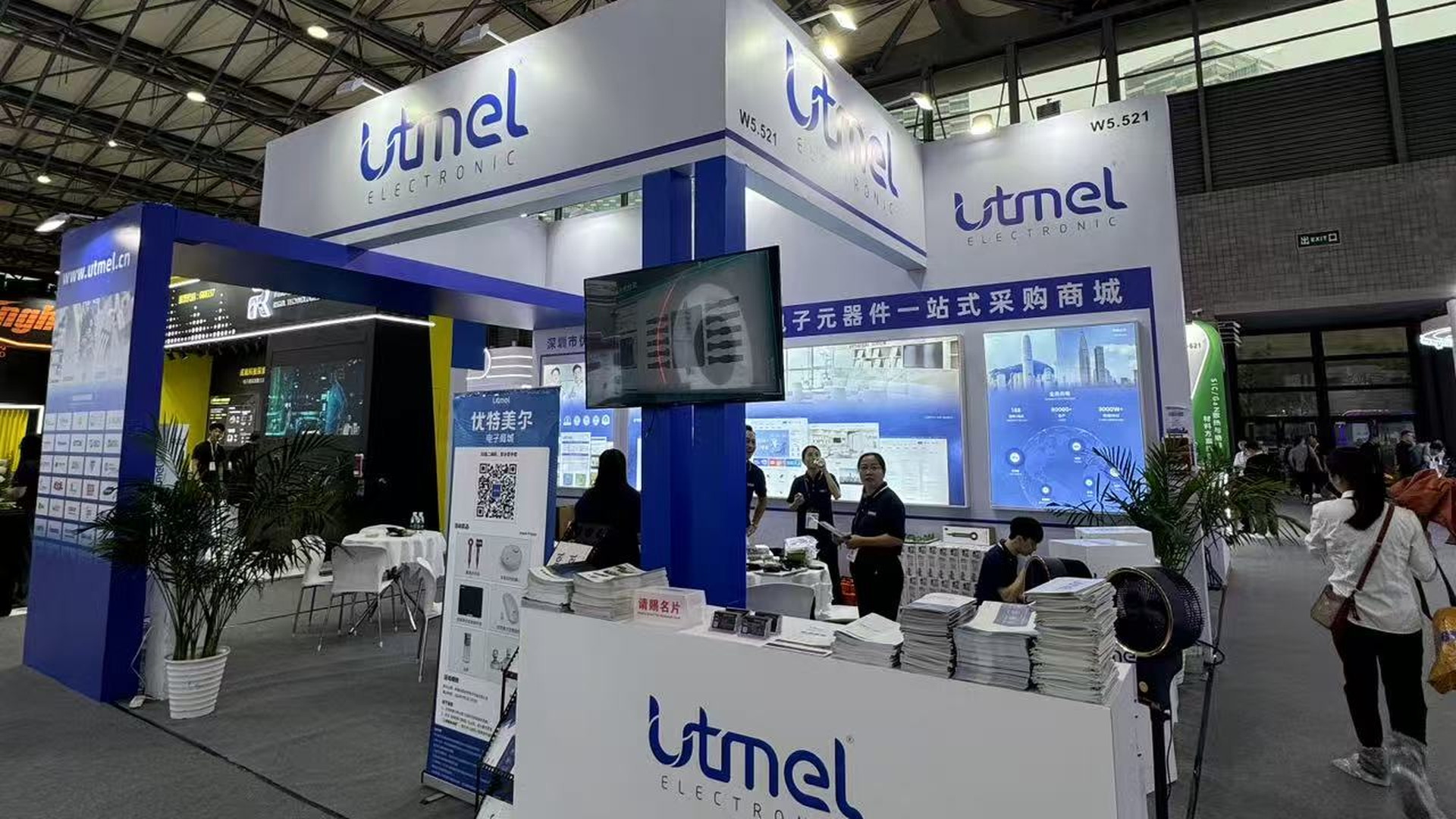 UTMEL Showcases One-Stop Electronic Component Sourcing Services at electronica Shanghai 2026UTMEL07 July 2026261
SHANGHAI, China, July 7, 2026 - UTMEL, a one-stop electronic components sourcing platform operated by Shenzhen Utmel Intelligent Electronic Co., Ltd., successfully participated in electronica Shanghai 2026, held from July 1 to 3, 2026 at the Shanghai New International Expo Centre.
Read More Electronic components distributor UTMEL to Showcase at electronica ChinaUTMEL07 June 20244584
The three-day 2024 Electronica China will be held at the Shanghai New International Expo Center from July 8th to 10th, 2024.
Read More Electronic components distributor UTMEL Stands Out at electronica china 2024UTMEL09 July 20245185
From July 8th to 10th, the three-day electronica china 2024 kicked off grandly at the Shanghai New International Expo Center.
Read More
Subscribe to Utmel !
![AMEOF8-24S277NZ-120]() AMEOF8-24S277NZ-120
AMEOF8-24S277NZ-120aimtec
![AMEOFL10-12S277HANZ]() AMEOFL10-12S277HANZ
AMEOFL10-12S277HANZaimtec
![AMES25-15S277NZ-Q]() AMES25-15S277NZ-Q
AMES25-15S277NZ-Qaimtec
![AMEOF65-24SHAMJZ]() AMEOF65-24SHAMJZ
AMEOF65-24SHAMJZaimtec
![AME15-5SVZ-STD]() AME15-5SVZ-STD
AME15-5SVZ-STDaimtec
![AMEL10-5S277HAVZ-ST]() AMEL10-5S277HAVZ-ST
AMEL10-5S277HAVZ-STaimtec
![AMES25-48S277NZ-Q]() AMES25-48S277NZ-Q
AMES25-48S277NZ-Qaimtec
![AME10-5S277PEVZ]() AME10-5S277PEVZ
AME10-5S277PEVZaimtec
![AME25-3S277PEVZ]() AME25-3S277PEVZ
AME25-3S277PEVZaimtec
![AME5-512T277NZ-120]() AME5-512T277NZ-120
AME5-512T277NZ-120aimtec