Product
 Brand
Brand Articles
 Tools
Tools
Will This Be the World's Lowest-Power MCU?
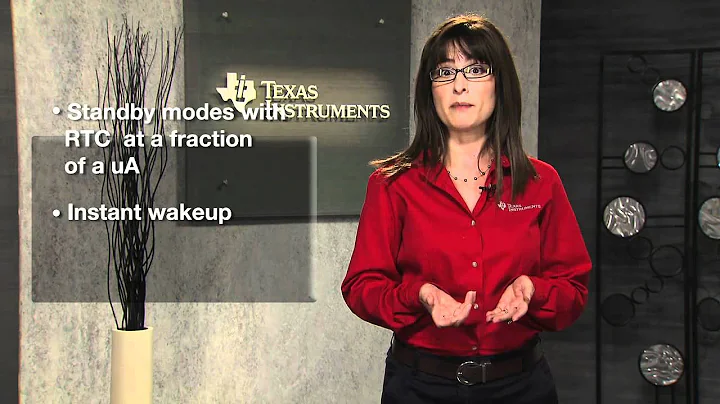
Ultra-Low Power MSP430 - The World's Lowest Power MCU
Ambiq is a startup that is getting a lot of attention. I recently talked to Dan Cermak, Ambiq's VP of Architecture and Product Planning. They make products for the Intel and microchips of this world, which may not sound like much, but for a small company in a highly competitive space, it's pretty impressive.
The foundation of Ambiq's success is the company's patented subthreshold power optimization technology or SPOT for short. This is exactly the way the creators of the universe wanted it to be. When the first microprocessor units (MPUs) appeared, their cores and general-purpose inputs/outputs (GPIOs) were running at 5V.
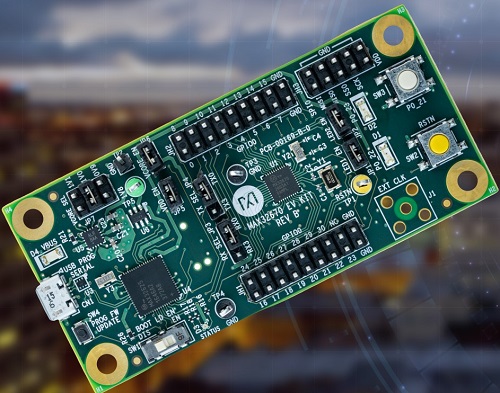
Later, this was lowered to 3.5V or 3.3V. Personally, I find MPUs and MCUs whose GPIOs switch between 0V and 3.3V a bit disconcerting. The next goal is to keep the GPIO at 3.3V (or whatever signal standard the device in question uses), but reduce the voltage of the core logic where all the digital operations and decisions are happening.
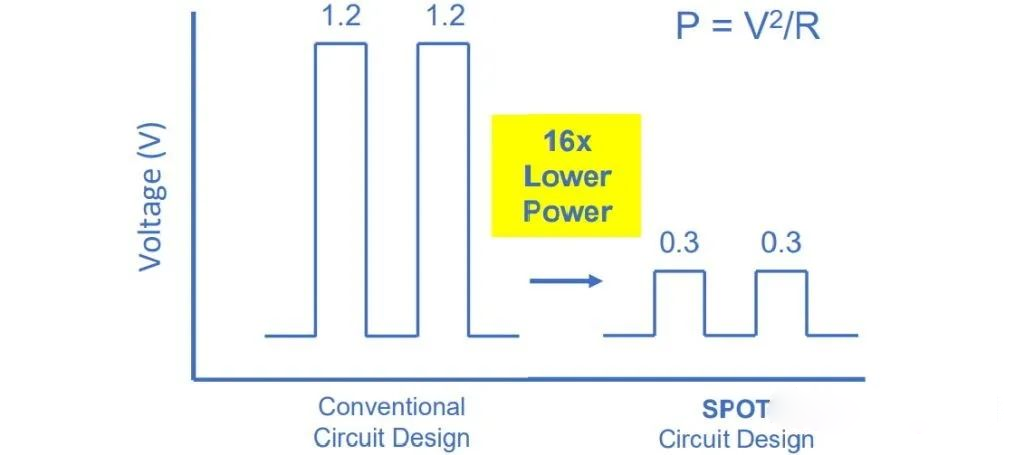
In fact, the core voltage of many devices has been dropping for years, starting at 2.9V and then getting lower and lower, down to 0.9V or 0.8V in some extreme cases, although 1.2V is the favored direction for many players. Then there is Ambiq, whose processors are based on their SPOT with a core voltage of just 0.3V.
Ambiq employees are proud to say that the company holds more than 50 patents in this area. In addition, since the dynamic (switching) power consumed in a silicon chip is the square of the voltage, this means that the dynamic power consumption of an MPU or MCU core implemented using the SPOT architecture is only one-sixteenth of that of an equivalent core running at 1.2V.
Since I am interested in technology, this is how I see SPOT. However, in reality, SPOT is also a platform for designing ultra-low-power System-on-Chip (SoC) devices.
Looking at the bottom first, conceptually they have a power-optimized SPOT architecture for analog, digital, RF/wireless, memory, etc. ("etc." means I don't know what the "production technology" item is referring to to in this illustration).
On top of the hardware, they have the first layer of software in the form of the AmbiqSuite Software Development Kit (SDK). This includes a hardware abstraction layer (HAL), device drivers, and sample applications to accelerate understanding of Ambiq MCU operation. (Third-party software including the ARM/PacketCraft Cordio BLE host stack and FreeRTOS v10.1.1 are distributed along with debugging tools and other support.)
In addition to user-defined applications, Ambiq's personnel offer a range of solutions. For example, BlueSPOT is Ambiq's ultra-low-power Bluetooth Low Energy (BLE) technology. secure spot supports robust security features such as secure boot, secure key management, secure over-the-air (OTA) patching and updating, anti-rollback, and more. turbo sport is Ambiq's ultra-low-power dynamic performance scaling technology that enables higher frequency CPU and Voice-on-SPOT (VOS) is a complete, always-on, always-listening, voice-to-cloud solution for native voice commands and/or voice assistant integration into battery-powered IoT endpoint devices.
The first members of Ambiq's fourth-generation Apollo MCU family are available in 2020. Based on the high-performance 32-bit Arm-Cortex M4F core implemented in Ambiq SPOT, Apollo4 runs at up to 192 MHz with dynamic power consumption as low as 4µA/MHz, significantly extending the battery life of mobile and wearable devices.
The Apollo4 family offers end-to-end audio subsystems, optimized graphics for wearables with rich displays, flexible peripherals (for sensors, GPS location services, etc.), powerful built-in security features and hardware encryption gas pedals, and the list goes on and on.
A few weeks ago, Ambiq introduced the newest member of the Apollo4 family - Apollo4 Plus - which offers enhanced graphics display and more powerful voice capabilities and can be used as an application processor (AP) or a battery Apollo4 Plus is now in volume production and is targeted at smartwatches and smart bracelets, consumer medical devices, motion and tracking units, and the 21st century smart home.
Because Ambiq has also released Apollo4 Blue Plus, which enhances the features and functionality of Apollo4 Plus with embedded BLE 5.1 for Bluetooth connectivity with smartphones or other devices.
On their website, Ambiq states that they are "committed to further improving the quality of life by enabling endpoint intelligence while further reducing their carbon footprint." That's an awesome goal, and they can achieve it with the newest and greatest member of the Apollo4 family.
Related News
1、Chip Packaging Lead Time Has Grown to 50 Weeks
2、Eight Internet of Things (IoT) Trends for 2022
3、Demand for Automotive Chips Will Surge 300%
4、Volkswagen CFO: Chip Supply Shortage Will Continue Until 2024
5、BMW CEO: The Car Chip Problem Will Not Be Solved Until 2023
6、Shenzhen: This Year Will Focus on Promoting SMIC and CR Micro 12-inch Project
 UTMEL
UTMEL
We are the professional distributor of electronic components, providing a large variety of products to save you a lot of time, effort, and cost with our efficient self-customized service. careful order preparation fast delivery service
 UTMEL 2024 Annual gala: Igniting Passion, Renewing BrillianceUTMEL18 January 20245009
As the year comes to an end and the warm sun rises, Utmel Electronics celebrates its 6th anniversary.
Read More Electronic Components Distributor Utmel to Showcase at 2024 IPC APEX EXPOUTMEL10 April 20245994
Utmel, a leading electronic components distributor, is set to make its appearance at the 2024 IPC APEX EXPO.
Read More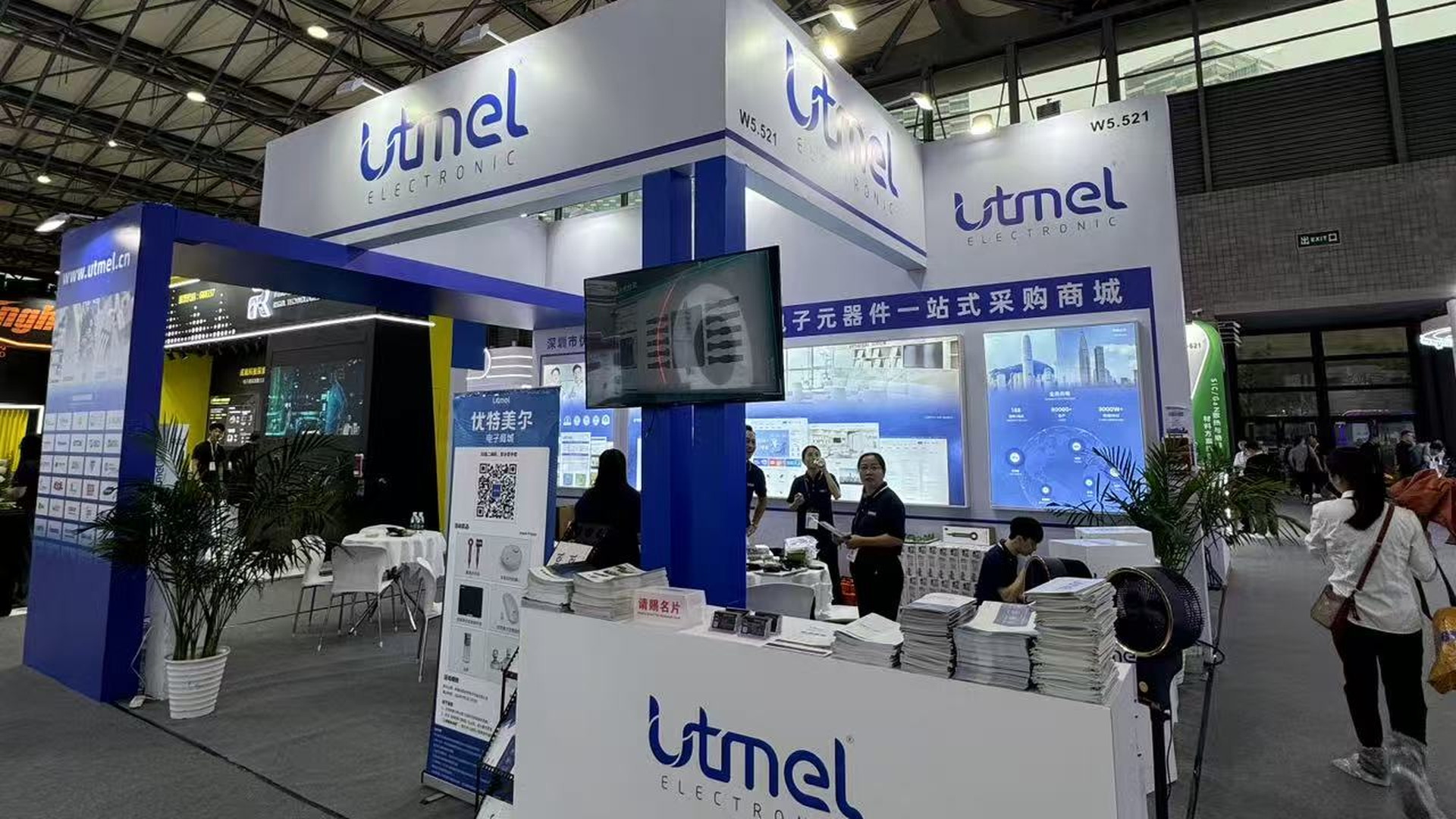 UTMEL Showcases One-Stop Electronic Component Sourcing Services at electronica Shanghai 2026UTMEL07 July 2026261
SHANGHAI, China, July 7, 2026 - UTMEL, a one-stop electronic components sourcing platform operated by Shenzhen Utmel Intelligent Electronic Co., Ltd., successfully participated in electronica Shanghai 2026, held from July 1 to 3, 2026 at the Shanghai New International Expo Centre.
Read More Electronic components distributor UTMEL to Showcase at electronica ChinaUTMEL07 June 20244584
The three-day 2024 Electronica China will be held at the Shanghai New International Expo Center from July 8th to 10th, 2024.
Read More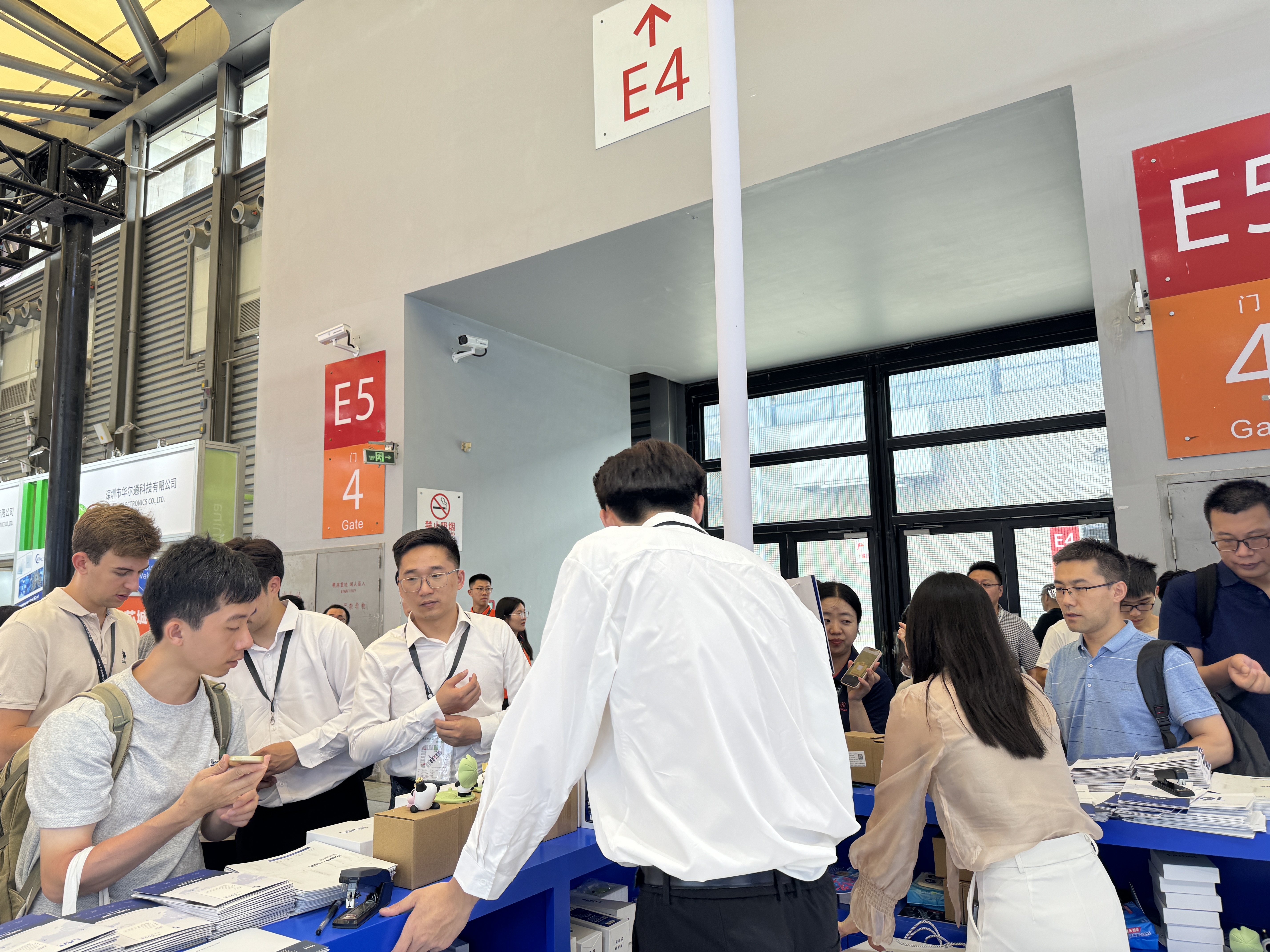 Electronic components distributor UTMEL Stands Out at electronica china 2024UTMEL09 July 20245185
From July 8th to 10th, the three-day electronica china 2024 kicked off grandly at the Shanghai New International Expo Center.
Read More
Subscribe to Utmel !
![AMEOF8-24S277NZ-120]() AMEOF8-24S277NZ-120
AMEOF8-24S277NZ-120aimtec
![AMEOFL10-12S277HANZ]() AMEOFL10-12S277HANZ
AMEOFL10-12S277HANZaimtec
![AMES25-15S277NZ-Q]() AMES25-15S277NZ-Q
AMES25-15S277NZ-Qaimtec
![AMEOF65-24SHAMJZ]() AMEOF65-24SHAMJZ
AMEOF65-24SHAMJZaimtec
![AME15-5SVZ-STD]() AME15-5SVZ-STD
AME15-5SVZ-STDaimtec
![AMEL10-5S277HAVZ-ST]() AMEL10-5S277HAVZ-ST
AMEL10-5S277HAVZ-STaimtec
![AMES25-48S277NZ-Q]() AMES25-48S277NZ-Q
AMES25-48S277NZ-Qaimtec
![AME10-5S277PEVZ]() AME10-5S277PEVZ
AME10-5S277PEVZaimtec
![AME25-3S277PEVZ]() AME25-3S277PEVZ
AME25-3S277PEVZaimtec
![AME5-512T277NZ-120]() AME5-512T277NZ-120
AME5-512T277NZ-120aimtec