

 Product
 Brand
Brand Articles
 Tools
Tools
Challenges and Control Approaches for Current Sharing in DC Microgrids
The benefits of DC microgrids include affordable prices, convenient management, high system effectiveness, and a trustworthy source of electricity. The typical droop control has low current sharing accuracy, although this is a result of the complexity of the distributed generation system. Particle swarm optimization programming, probabilistic algorithms, and voltage correction factor schemes are only a few examples of the key control approaches that have been updated and analyzed to increase current sharing accuracy.
Problems of Current Sharing in Droop Control
To avoid circulating currents and overloading the converters, one of the most important aspects of the operation of a microgrid is proper current sharing. Because voltage is a local variable across the microgrid, conventional droop control cannot provide accurate current sharing among the sources in practical applications where line impedances are not negligible.
In addition, an optimization program can be used to determine the optimum parameters of the droop mechanism. The total optimization structure is broken down into three distinct steps, which are labeled as the load data processing stage, the optimization stage, and the command stage in Figure 1.
Initially, the loading data processing stage is carried out, which entails carrying out the load flow analysis of each particle. After that, the stage of optimization is initiated, which consists of three steps: the particle swarm optimization (PSO) method, the particle swarm optimization load flow analysis (LFA), and the fitness function evaluation (FFE). As a result, the precision of the current sharing may be improved, and the voltage drop caused by the droop control can be minimized.
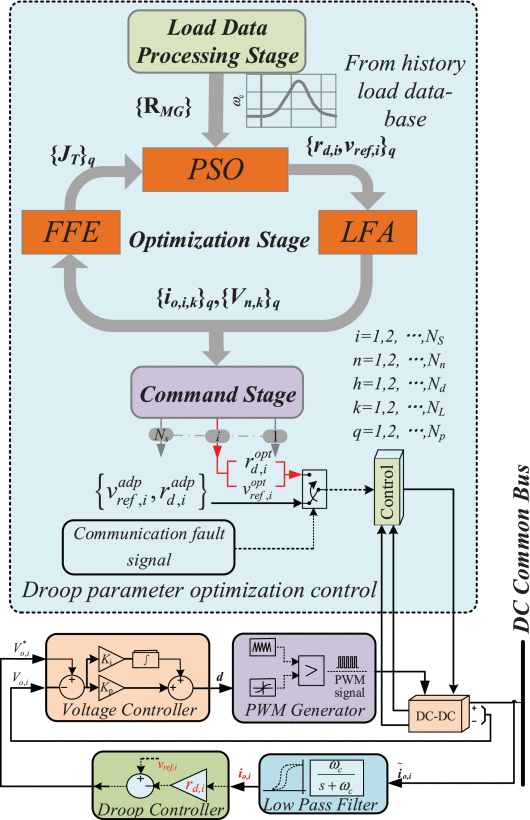
Figure 1. Overall droop selection concept with the particle swarm optimization structure Image used courtesy of IEEE Access
When the external disturbance is significant, such as when the output power of a renewable distribution generation unit varies, although the particle swarm optimization technique modifies the difficulty of selecting the optimal parameters. A probabilistic algorithm can be used to overcome this issue by figuring out the optimal droop parameters for a single distribution generation in a distributed network. Additionally, a communication-based approach for an equal voltage correction factor algorithm can be used to give the system characteristics for fault tolerance and scalability.
Due to the unpredictability and disturbance of renewable resources and loads, it may not be possible to solve the nonlinear relationship between the voltage magnitude and the output power of distribution generations. Additionally, a new DC microgrid load-sharing control strategy is implemented to solve the DC microgrid's uncertainty and disturbance issues. Additionally, the tradeoff between voltage drop and accurate current sharing can be modified using the control strategy of equal-current I-V decentralized control.
The I-V droop control method provides superior dynamic responsiveness over the V-I control method. Additionally, when the system parameters are changed, the observer-based current feedback control method improves robustness, stability, and dynamic response. However, under unbalanced and nonlinear load conditions, the current sharing of island microgrids may not be good.
It can be concluded that particle swarm optimization programming can be utilized to generate the optimal parameters of the droop mechanism to prevent the current sharing error. In addition, when the microgrid design is complex and there are external disturbances, a probabilistic algorithm can be used to choose the parameters of the operational range planning of the IMGs. Additionally, the TS fuzzy model and the sliding mode control algorithm can be used to meet the system's needs for fault tolerance and scalability. However, there is a trade-off between accurate load sharing and voltage regulation with the above droop control method.
Current Sharing Strategies Based on Nonlinear Droop Control
Due to the influence of line impedance accuracy and sensing issues on the linear droop parameter design approach, there may be a trade-off between accurate load sharing and voltage regulation. The nonlinear droop control approach is used to solve the issue, where the droop coefficient is a function of the converter's output current and its value grows as the output current rises. As a result, cables and sensors have less of an impact.
Two PI controllers operate an adaptive droop controller, as shown in Figure 2. To execute droop control for current sharing deviation elimination, one adaptive PI controller is used. Another adaptive PI controller is used to alter the microgrid's droop curve to change the DC bus voltage. The sliding-mode control circuit is used to synchronously control the input current and output voltage of each converter.
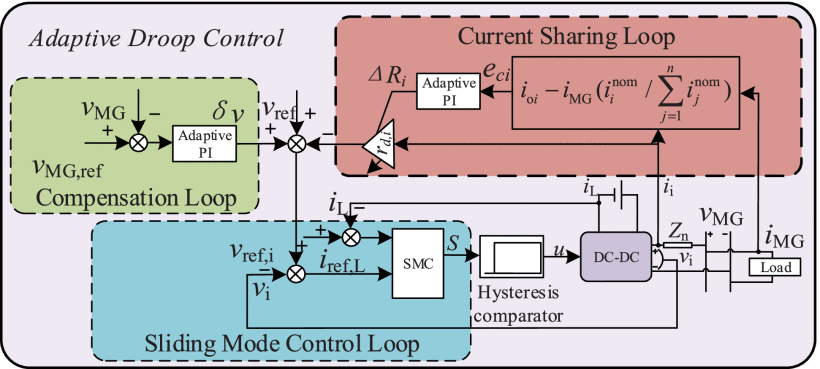
Figure 2. Adaptive droop control system for DC microgrids Image used courtesy of IEEE Access
To correct the droop coefficient and get rid of the current sharing deviation in each DC microgrid unit, the adaptive PI controller is used:
eci = ioi- iMGiinom/j=1nijnom (1)
Where ioi is the converter's output current of the i th converter, iMG is the load current, iinom is the nominal current of the i th converter, n is the number of converters, and another PI controller adjusts the control microgrid's dc bus voltage by shifting the droop curve. Sliding mode control, as opposed to traditional adaptive droop control, is used to regulate the output voltage and inductor current. As a result, quick, dynamic reactions and strong robustness are possible.
However, when microgrids operate under mismatched feeder impedance, nonlinear and unbalanced load conditions, there may be poor current sharing. Additionally, by adjusting the curve coefficient, which could be adjusted from no load to full load, the conventional droop control can be improved. More specifically, the output impedance of the sag curve with an elliptical and anti-parabola is lower for light loads and infinite for full loads. The distance between the initial point and the finish point is infinite because of the constructor of the curve-fitting algorithm.
For ease of use, the polynomial equation (3) is used in place of the conventional droop control in equation (2):
vo = v*- rd . io (2)
vo = v*-n=1Nrn. ion (3)
where v* is the no-load voltage set point, vo and io are the output voltage and current, the droop coefficient in (3) is the sum of the Nth power functions of the current i, rd is the droop coefficient, and rn is the proportional coefficient of the segment output droop coefficient.
The study shows that the droop coefficient of the fifth-order polynomial equation achieves five times the droop resistance of the linear droop and minimizes the load sharing unbalance. This effectively improves the accuracy of load current sharing by increasing the current order in the droop equation to increase the impedance at full load. However, it might be challenging to compute the power function in the droop equation.
Considering that the droop coefficient of the power function is relatively modest within the starting range, as shown in Figure 3, the piecewise quadratic polynomial descent curve (PQPDC) method can also be used to meet the current sharing requirements for low load conditions. The red line is a representation of the conventional linear droop curve, and the blue line is a representation of the nonlinear droop curve. The nonlinear droop formula can also be written as:
v0= v*-a1io2-b1io 0<ioiop (4)
v*-a2io2-b2io - c iop< io< io max
where iop is the converter's split point output current, io max is its maximum output current, and the configuration of the curve parameters a1, a2, b1,,b2 and c ensures the accuracy of current sharing among inverters. As a result, the division point iop is chosen in accordance with the low droop coefficient condition's range, where splitting the function into two parts is the most effective and current sharing accuracy can be guaranteed.
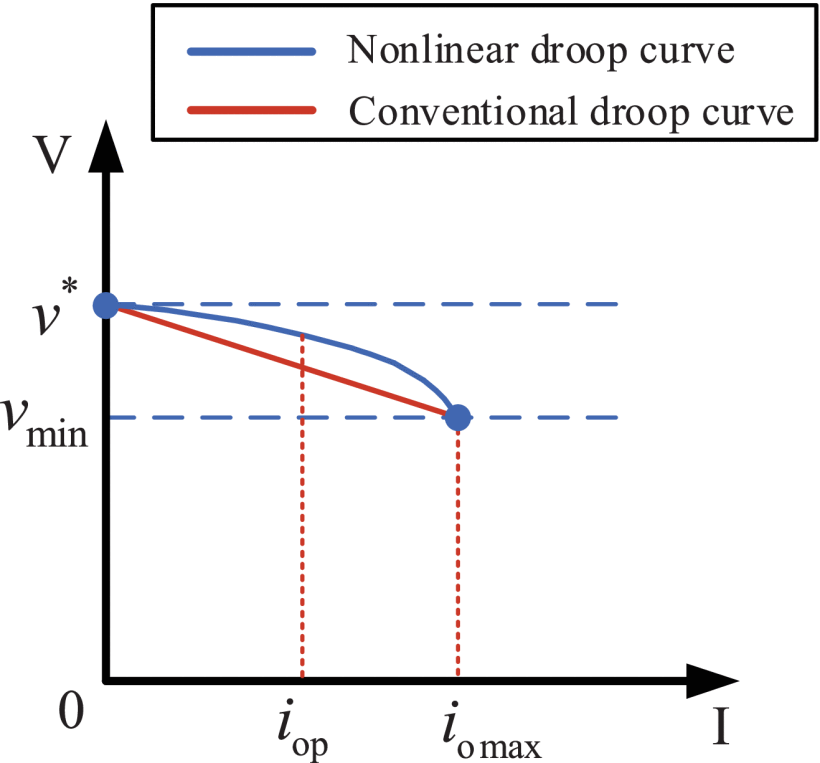
Figure 3. Conventional droop control and nonlinear droop control curve design Image used courtesy of IEEE Access
In conclusion, an adaptive nonlinear droop control method can be used to achieve the trade-off between voltage regulation and load sharing. In addition, in the event of a significant load variation, the parameters for modifying the droop polynomial and adjusting the slope of the droop curve can be used. Additionally, when the high-order polynomial calculation is challenging, the piecewise quadratic polynomial descent curve (PQPDC) method can be used to improve the real-time performance of the controller.
However, the primary control needs to be further enhanced in more complex scenarios that take into account dynamic (inductive) lines and loads. Therefore, more research into the real-time application of nonlinear control strategies is required.
Summarizing the Key Points
l Proper current sharing is crucial to avoid overloading converters and circulating currents in DC microgrids. The typical droop control has low current sharing accuracy, but key control approaches have been developed to increase accuracy.
l Particle swarm optimization programming, probabilistic algorithms, and voltage correction factor schemes are some of the key control approaches that have been updated and analyzed.
l Nonlinear droop control can be used to solve the issues of line impedance accuracy and sensing issues in the linear droop parameter design approach, where the droop coefficient is a function of the converter's output current and its value grows as the output current rises.
l More research into the real-time application of nonlinear control strategies is required to enhance primary control in complex scenarios that take into account dynamic lines and loads.
 Rakesh Kumar, Ph.D.
Rakesh Kumar holds a Ph.D. in electrical engineering with a specialization in power electronics. He is a Senior member of the IEEE Power Electronics Society, Class of 2021. He is currently associated with the KPR Institute of Engineering and Technology, India. He writes high-quality, long-form technical articles on power electronics for B2B electronics platforms. Feel free to reach out to him at rakesh.a@ieee.org!
 LLC Converter with Planar Matrix Transformer for High-Current-High-Power ApplicationsSaumitra Jagdale15 March 20245303
The rise of data centres in recent years, driven by cloud computing and big data, has caused a significant increase in electricity consumption. In the United States alone, it exceeded 70 billion kWh by 2014, making up 1.8% of total national electricity usage.
Read More Norton's Theorem: Working Principle, Circuit Design, and Modern ApplicationsUTMEL27 May 20261177
Norton's theorem simplifies complex linear electrical networks into an equivalent circuit containing a single current source in parallel with a resistor. This article explains the essential five-step workflow for calculating Norton parameters, compares it to its dual, Thévenin's theorem, and explores modern applications in power distribution networks, electric vehicle battery management, and fault diagnosis.
Read More SiC and GaN in 2026:How SiC and GaN Power Devices are Redefining AI Data Centers and 800V EVsUTMEL16 June 20263915
As AI data centers and 800V EVs hit physical thermal limits, the power electronics industry is shifting toward wide-bandgap semiconductors like SiC and GaN. This article explores how these materials are deployed in hybrid topologies to redefine power distribution, detailing high-voltage direct current architectures, engineering challenges in gate driving, and strategic sourcing solutions to build highly efficient, reliable modern power systems.
Read More Enhancing Frequency Stability in Modern Distributed Power SystemsRakesh Kumar, Ph.D.21 September 20244549
The article discusses the importance of primary frequency regulation in maintaining grid stability. It also explores battery energy storage systems, virtual synchronous generators, and advanced control strategies to enhance frequency stability in power systems.
Read More The Impact of SMPS on LED Lighting and Diverse IndustriesUTMEL05 June 20252869
Switched-Mode Power Supplies (SMPS) enhance LED lighting and industries by improving energy efficiency, reliability, and sustainability across diverse applications.
Read More
Subscribe to Utmel !
![2903681]() 2903681
2903681Phoenix Contact
![JTN1AG-PA-F-DC12V]() JTN1AG-PA-F-DC12V
JTN1AG-PA-F-DC12VPanasonic Electric Works
![2961299]() 2961299
2961299Phoenix Contact
![2961273]() 2961273
2961273Phoenix Contact
![2961228]() 2961228
2961228Phoenix Contact
![2900316]() 2900316
2900316Phoenix Contact
![G6RL-1A-ASI-DC24]() G6RL-1A-ASI-DC24
G6RL-1A-ASI-DC24Omron Electronics Inc-EMC Div
![8442960000]() 8442960000
8442960000Weidmüller
![2903695]() 2903695
2903695Phoenix Contact
![2903292]() 2903292
2903292Phoenix Contact


