

 Product
 Brand
Brand Articles
 Tools
Tools
A Hybrid SiC and GaN-Based DC-DC Converter for EVs
The PEVs operate on a rechargeable battery pack. PEVs use a battery pack rated at 320-420V. At the same time, the electric motor requires voltage based on driving conditions, and the lights and infotainment part require voltages around 12-48V to function properly. This is where we find a DC-DC converter, which steps up or down the given voltage according to the requirement of the component involved. Therefore, with DC-DC converters it is possible to design a system having devices with such varying operating voltages.

Figure 1: Types of energy conversions included above, rectifying, inverting, breaking, acceleration.
Fixing Inadequacies in DC-DC Converters
Traditionally the DC-DC converters were based on Silicon MOSFETs and IGBTs. However, Si has a low bandgap energy (1.1 eV) and low thermal conductivity, it cannot handle much power without incurring significant losses. Moreover, due to the material properties of silicon, the device has a low switching speed. Due to increased losses, heat is generated requiring additional cooling units further reducing efficiency.
A major issue faced by EVs is power density. Power density refers to the amount of energy stored in a unit of volume. Higher energy density means less volume is occupied and the system is lighter. This factor is very beneficial for PEVs where space is limited.
To overcome these challenges wide band gap (WBG) semiconductors like GaN (Gallium Nitride) and SiC (Silicon Carbide) are used due to their better electrical properties compared to silicon. The bandgap energies of GaN and SiC are 3.4 eV and 3.26 eV respectively, allowing them to operate at higher voltages as conduction through them is difficult compared to Si. The WBG semiconductors have high switching rates and better thermal conduction due to their physical properties.
Utilization of Wide Band Gap Semiconductors in DC-DC converters
As the WBG semiconductor devices operate on higher voltages and temperatures the requirement for cooling systems reduces improving compactness. Moreover with ability to switch at high frequencies means the capacitors and inductors can be smaller, further the size and weight of the system. These characteristics of SiC and GaN devices are improving the overall performance and compactness of DC-DC converters.
Both the WBG semiconductor devices SiC and GaN have quite different properties and differ in their roles in DC-DC converters. The SiC has a higher breakdown voltage compared to GaN and excellent thermal conductivity hence, can be used at higher power levels. Also, they can operate in high temperatures meaning they can handle heat better than Si and GaN, reducing the need for extra cooling systems. At the same time, the GaN shows high electron mobility and low on-resistance making it suitable for high-frequency usage. High-frequency compatibility means faster transitions between on-off states reducing power losses and boosting efficiency. However as GaN is unsuitable for high-power levels, it can perform best at low or medium-power levels requiring high-speed switching. Therefore, WBG semiconductor devices are better than Si devices in practical applications like PEVs, where high temperatures and voltages are common.
A 2-phase DC-DC converter: A hybrid SiC-GaN approach
But what about using GaN and SiC both in a converter tapping into the benefits of both? Extensive studies have been carried out on an approach to achieving high efficiency by integrating both SiC and GaN into a two-phase DC-DC converter for electric vehicles. The converter's design incorporates a two-phase system where one phase utilizes GaN devices, optimized for low-power operations up to 15 kW, while the other phase uses SiC devices, capable of handling higher power levels required for tasks such as powering the traction inverter for electric vehicle drive systems. This hybrid configuration is particularly advantageous for PEVs, which need to operate efficiently across a broad spectrum of power requirements—from as low as 1.9 kW for home charging to as high as 150 kW for large sedans during driving.
But this poses a question–How prone is this type of DC-DC converter to power losses? A critical aspect of the converter's performance is its handling of "dead time," a brief interval where both the high side (HS) and low side (LS) devices are turned off to prevent short circuits. The dead-time interval is crucial as it directly impacts power losses and overall efficiency. During dead time, the HS device continues to conduct current, but with increased resistance compared to its fully-on state, leading to higher power losses.
A study which used Spice-based simulations at a power level of 30 kW revealed that the GaN devices exhibit slightly higher dead-time power losses compared to SiC devices. The dead-time losses, while relatively small compared to the total power losses, are nonetheless significant enough to warrant optimization, especially given that reducing these losses can further enhance the converter's efficiency.
The study also investigated the effects of negative gate-source voltages (Vgs) during the OFF state of the devices. It was found that applying a negative Vgs during the OFF interval increases dead-time power losses, particularly in GaN devices (See figure 2). This is problematic because while a negative Vgs helps prevent unwanted turn-on due to the low threshold voltage of GaN devices, it also leads to increased losses. The study suggests that an optimal balance must be found to minimize these losses while maintaining reliable operation.

Figure 2: Varying dead loss according to the Vgs, here it is clear that negative voltages Vgs create higher losses
The Key Takeaway
While the hybrid SiC and GaN-based DC-DC converters offer significant advantages in efficiency, thermal management, and size reduction, they are not without challenges. One major shortcoming is the complexity of integrating both materials into a single converter system. This complexity arises from the need to precisely manage the different operating characteristics of SiC and GaN, such as their switching speeds and thermal behaviors, which can complicate the design and increase the cost of development. Additionally, the manufacturing processes for SiC and GaN devices are still more expensive compared to traditional silicon, potentially leading to higher overall system costs.
The technology also requires careful optimization of dead-time intervals to prevent power losses and minimize electromagnetic interference, which can be difficult to achieve in practice. Furthermore, while these converters offer excellent performance at high frequencies and temperatures, they may still face reliability challenges in extreme conditions over extended periods, necessitating further advancements in material science and engineering to fully realize their potential in mass-market EV applications.
 Saumitra Jagdale
Saumitra Jagdale is a Backend Developer, Freelance Technical Author, Global AI Ambassador (SwissCognitive), Open-source Contributor in Python projects, Leader of Tensorflow Community India, and Passionate AI/ML Enthusiast
 Modeling Wide Band-Gap Semiconductors for Enhanced PerformanceRakesh Kumar, Ph.D.31 January 20243877
The article delves into the challenges faced by silicon-based power electronic devices and highlights the potential of wide band-gap semiconductors. It also emphasizes the importance of modeling power semiconductor devices and provides insights into various models. For electrical energy conversion to be dependable and effective, power electronics and semiconductor device technologies are essential.
Read More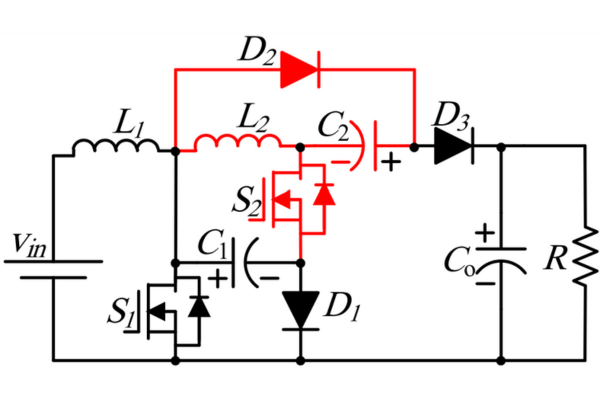 Optimizing Energy Management with Non-Isolated DC-DC ConvertersRakesh Kumar, Ph.D.04 February 20243506
The article classifies DC-DC converters and discusses the benefits and limitations of them. It proposes a modified DC-DC converter topology that combines the Cuk and Positive Output Super Lift Luo topologies to achieve a higher voltage gain with fewer components.
Read More ‘6G Networks’ - Pioneering the Next Era of Connectivity And InnovationRakesh Kumar, Ph.D.18 March 20243839
The article provides a comprehensive overview of the evolving landscape of mobile networks, the requirements that will shape the future of mobile communication, and the innovative technologies driving the transition to 6G.
Read More Review of IoT-Based Smart Home Security Systems- Part 1Rakesh Kumar, Ph.D.28 March 20244314
The article discusses the evolution of IoT-based smart home security systems, integrating advanced technologies like Raspberry Pi, PIR sensors, and voice recognition for enhanced user experience and efficiency.
Read More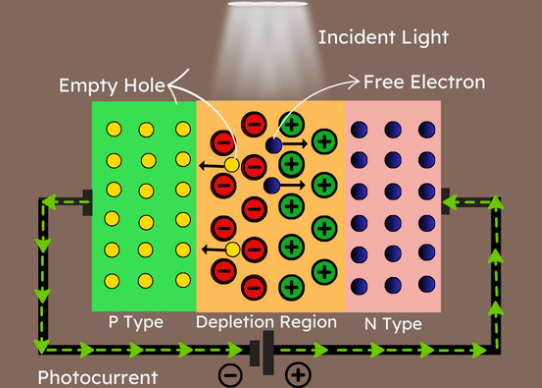 Understanding Photodiodes: Working Principles and Applications - Part 2Rakesh Kumar, Ph.D.24 May 20245578
The article provides a comprehensive overview of photodiodes, focusing on their operational principles, key factors affecting their efficiency, advantages, and disadvantages, and highlights their diverse applications.
Read More
Subscribe to Utmel !