

 Product
 Brand
Brand Articles
 Tools
Tools
VSC Light Meaning, Causes, and Step-by-Step Diagnostics
A sudden VSC light on a vehicle dashboard indicates that the electronic stability control system is currently disabled, often due to a programmed fail-safe reaction rather than a mechanical brake failure. VSC stands for Vehicle Stability Control, a proprietary term used primarily by Toyota and Lexus for Electronic Stability Control. More often than not, a VSC light does not mean the stability system is broken. Instead, the engine computer has disabled the system as a safety precaution due to an unrelated engine code. This guide explains what the VSC light means, why it frequently pairs with the Check Engine Light, the most common causes, and a step-by-step diagnostic workflow to fix and reset the system.
What Does the VSC Light Mean?
The VSC light means the Vehicle Stability Control system is inactive. This system prevents lateral skidding during turns, and when the light is on, the vehicle lacks automated brake intervention for evasive maneuvers.
VSC vs. ESC Terminology
While automotive technicians frequently see the VSC acronym on Toyota and Lexus dashboards, the underlying technology is universal. The National Highway Traffic Safety Administration (NHTSA) mandated Electronic Stability Control (ESC) on all new passenger vehicles and light trucks under 10,000 lbs beginning with the 2012 model year under Federal Motor Vehicle Safety Standard (FMVSS) No. 126. VSC is simply a manufacturer-specific branding for this federally required safety standard.
How the VSC System Works
The VSC system controls lateral stability by automatically reducing engine output and applying physical brake force to individual wheels to correct a vehicle's path during a skid. In visual stress tests of the braking mechanism, technicians observe that the system relies on rapid, asymmetric brake pulsing. If the vehicle begins to oversteer (spin out) or understeer (plow forward), the VSC actuator targets specific brake calipers to pivot the vehicle back onto the driver's intended steering path.
VSC vs. TRAC vs. ABS
Drivers often confuse the various braking acronyms. The physical traction control button typically depicts an icon of a car with two swerving lines underneath it.
TRAC (Traction Control): Prevents wheel slip during forward acceleration.
ABS (Anti-lock Braking System): Prevents wheel lockup during straight-line braking.
VSC (Vehicle Stability Control): Prevents lateral sliding during turns or evasive maneuvers.
Why VSC and Check Engine Lights Illuminate Simultaneously
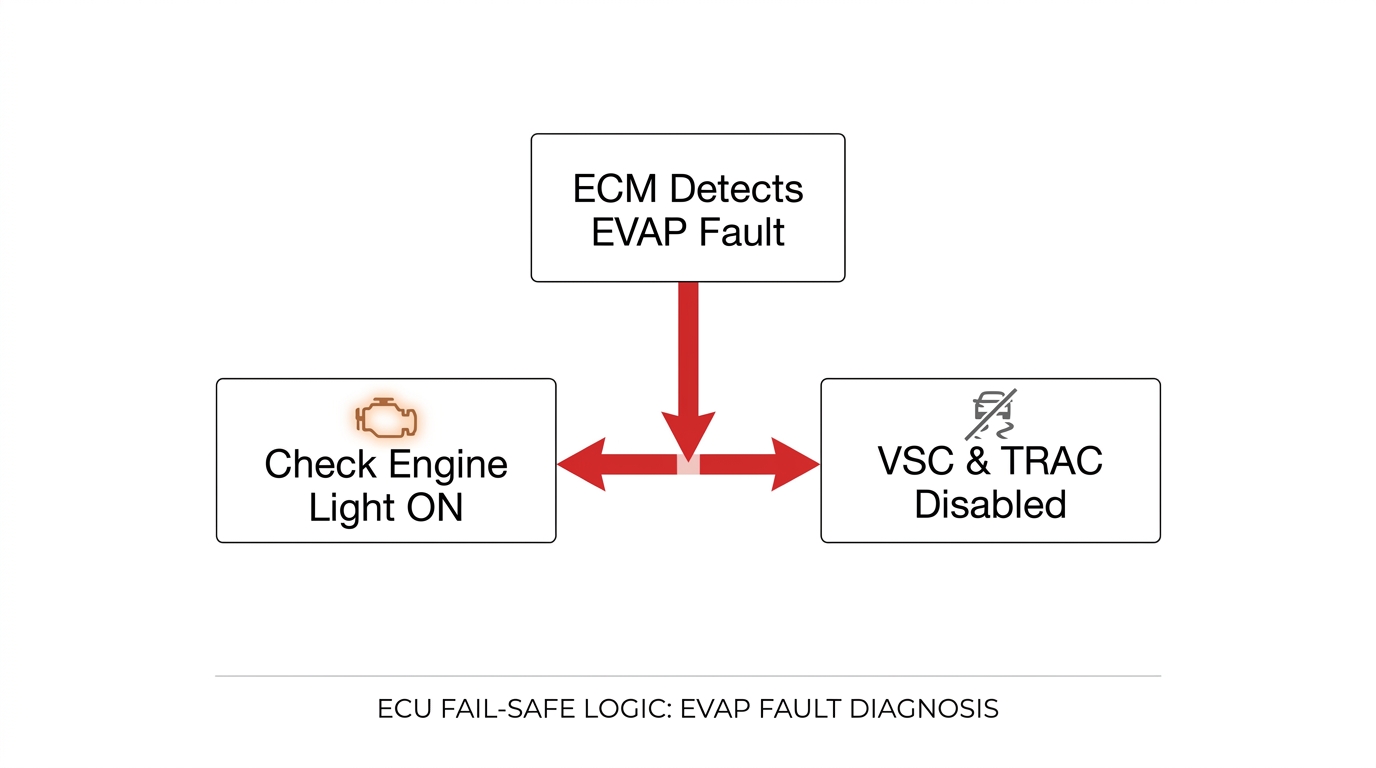
Engine Control Units automatically disable VSC and TRAC systems when they detect an engine or emissions fault. This fail-safe prevents the stability system from making incorrect braking decisions based on flawed engine data.
The ECU Fail-Safe Mode
The most critical diagnostic nuance regarding the VSC light is that the stability system is usually reacting to a problem, not causing it. The VSC system requires perfect data from the vehicle's sensor network to operate safely. If the Engine Control Module (ECM) detects a fault elsewhere—such as an EVAP system leak—it automatically disables the VSC and TRAC systems as a fail-safe, illuminating all three lights simultaneously.
For example, a loose gas cap triggers EVAP system leak codes (specifically P0455 for a large leak or P0457 for a loose cap). The computer responds by shutting down stability control. Experts point out that, "A driver may think, 'My traction control must be bad,' when the actual problem is somewhere else in the vehicle and the traction and stability systems are reacting to it rather than causing it."
Driving Safety with an Active VSC Light
Ignoring a VSC light because the vehicle feels normal is a common diagnostic trap known as the "dry road illusion." The vehicle will drive normally on dry pavement, but it will lack automated brake intervention in rain, snow, or emergency swerves. As automotive specialists note, "The TRAC OFF light and the VSC light do not automatically mean disaster, but they do mean the vehicle is no longer operating with its normal traction and stability assistance."
Because the ECU relies on a vast network of data points to make these fail-safe decisions, understanding the broader sensor architecture is critical. For a deeper look at how these inputs interact, review What Sensors does a Car Engine Have?.
Common Causes of a VSC Warning Light
The most frequent causes of a VSC light are unrelated engine emissions faults, such as a loose gas cap. Direct stability system failures typically involve faulty wheel speed sensors, throttle position sensors, or uncalibrated yaw rate sensors.
Engine and Emissions Faults
Before inspecting the brakes, technicians check the engine. A loose gas cap, a degraded oxygen (O2) sensor, or a fouled Mass Airflow (MAF) sensor will trigger a Check Engine Light. Consequently, the ECU initiates the fail-safe protocol, turning on the VSC light. Resolving the primary engine code automatically clears the VSC warning.
Throttle Position Sensor Failures
Because the VSC system must be able to cut engine power to correct a skid, it relies heavily on the Throttle Position Sensor (TPS) and the throttle control motor. If the TPS fails or sends erratic voltage signals, the VSC system cannot guarantee it can reduce engine RPMs during an emergency. It immediately disables itself. To understand how this specific sensor dictates engine power reduction, see the Working Principle and Types of Throttle Position Sensor.
Wheel Speed and Steering Angle Sensors
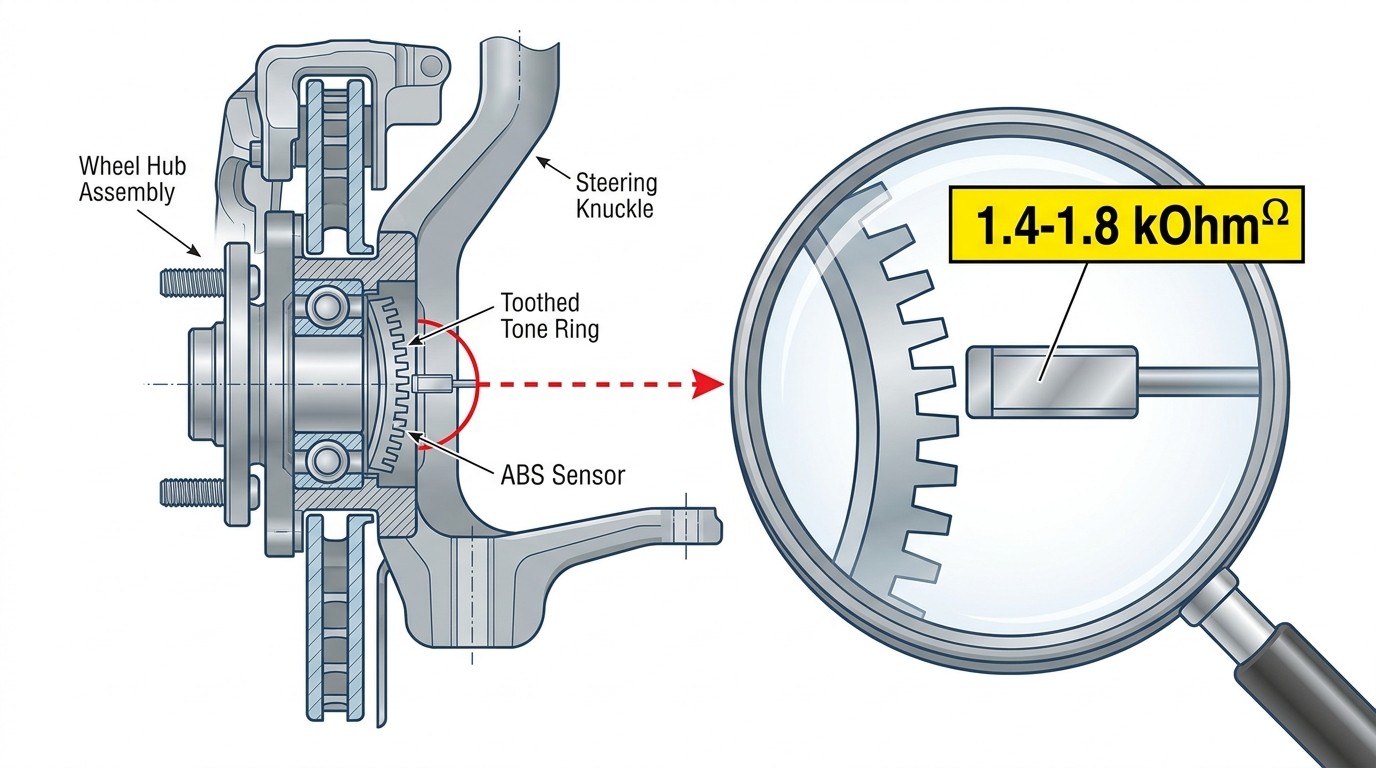
The VSC system calculates the vehicle's intended path versus its actual path using wheel speed sensors and the steering angle sensor. Wheel speed sensors are frequently damaged during routine wheel bearing replacements. Diagnostic testing with a multimeter should show a resistance of 1.4-1.8 kOhm for front speed sensors. Readings outside this range indicate a severed internal wire or heavy corrosion.
Yaw Rate Sensor Malfunctions
The yaw rate sensor measures the vehicle's rotational axis (how fast the car is spinning). If this sensor experiences a voltage interruption, it triggers a direct VSC fault. To broaden the context of how these specialized sensors fit into the vehicle's overall architecture, explore Car Sensors: Classification and Application.
Step-by-Step VSC Light Diagnostic Workflow
Effective VSC diagnostics require scanning for both Powertrain (P-codes) and Chassis (C-codes) using an ABS-capable OBD2 scanner, followed by physical inspection of the triggered systems.
📺 Why Toyota TRAC OFF and VSC Lights Come On & Meaning
Diagnostic Order of Operations
| Dashboard Symptoms | Probable System Fault | First Diagnostic Step |
|---|---|---|
| VSC + Check Engine Light On | Engine/Emissions Fail-Safe | Check gas cap; Scan for P-codes (Powertrain). |
| VSC Light Flashing While Driving | Active Skid Event | Normal operation. Pull over safely if flashing persists on dry roads. |
| VSC + ABS Light On (No CEL) | Brake/Wheel Speed System | Inspect wheel speed sensors for physical damage; Scan for C-codes. |
| VSC Light On After Battery Change | Sensor Calibration Loss | Perform manual zero-point calibration. |
Reading OBD2 Diagnostic Trouble Codes
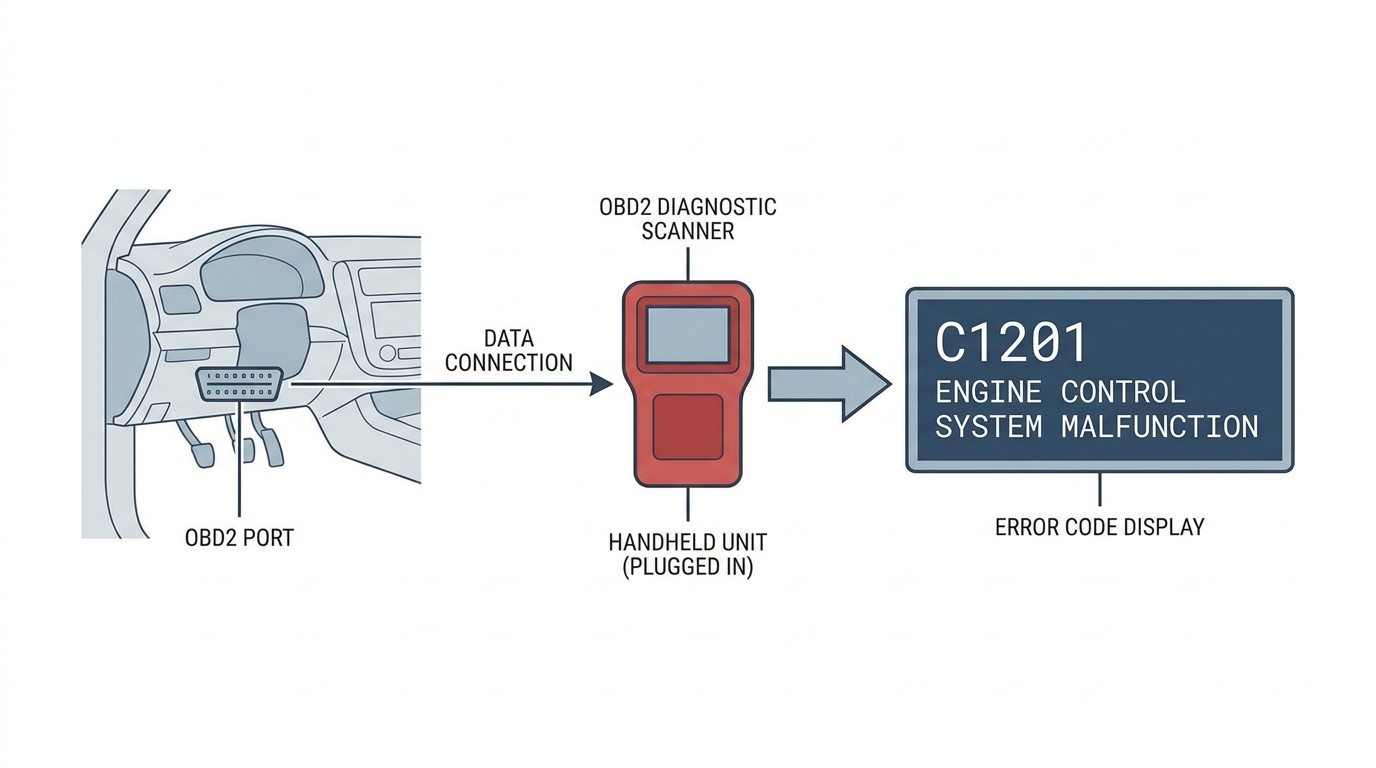
A standard, inexpensive code reader often fails to diagnose VSC issues because it only reads Powertrain codes (P-codes). Diagnosing a persistent VSC light requires a red handheld OBD2 diagnostic tablet or a scanner capable of reading Chassis codes (C-codes).
A common Toyota code is C1201 ("Engine Control System Malfunction"). This is a "pointer" code indicating the VSC was disabled due to a primary engine fault. Conversely, a C1223 code indicates a true "ABS Control System Malfunction," directing the technician to inspect the physical braking hardware rather than the engine.
Resetting the VSC Light and Zero-Point Calibration
Resetting the VSC light requires either clearing the underlying engine code, performing a long press of the traction button, or executing a manual zero-point calibration using the vehicle's OBD2 port.
Traction Control Button Reset Procedures
Drivers frequently trigger the VSC light themselves when they get stuck in snow or mud. They press the traction button to spin the tires and get unstuck, but forget to cycle the system back on. Tapping the traction control button usually just turns off TRAC. However, on many models, holding the switch down longer while the vehicle is stopped will disable both TRAC and VSC. Pressing it again restores normal function.
Manual Zero-Point Calibration Procedure
If the VSC light remains illuminated after replacing a battery, installing a lift kit, or replacing a wheel speed sensor, the yaw rate and steering angle sensors have lost their baseline metrics. Replacing these sensors will not clear the VSC light until a zero-point calibration is performed.
This can be done manually without a scan tool. The manual zero-point calibration procedure for Toyota/Lexus vehicles requires jumping terminals Ts (Pin 12) and CG (Pin 4) on the DLC3 (OBD2) connector 4 or more times within 8 seconds.
Critical Constraints: The vehicle must be on a level surface (less than 1% inclination). The steering wheel must be perfectly straight, and the vehicle must not be shaken, bumped, or entered during the calibration process. Any movement will corrupt the baseline data, and the VSC light will remain on.
What Users Say: Community Diagnostics
Users on community forums, such as ClubLexus and Toyota Tundra enthusiast boards, frequently report frustration with dealership diagnostic fees for VSC lights. A common consensus among hands-on owners is that dealerships often quote expensive stability sensor replacements when the root cause is a $15 gas cap triggering the P0455 code.
Real-world testing by DIY mechanics also highlights the friction of wheel bearing replacements. Enthusiasts frequently report replacing a damaged wheel speed sensor, only to find the VSC light stays on. The community consensus emphasizes that the repair is not complete until the zero-point calibration is executed, a step often omitted in generic repair manuals.
Closing Summary and Next Steps
The VSC light is a critical safety indicator, but it is most frequently a secondary symptom of an engine code rather than a catastrophic brake failure. Proper diagnostics require understanding the ECU's fail-safe logic, utilizing an ABS-capable scanner to differentiate between P-codes and C-codes, and knowing when to apply a zero-point calibration. Always scan for codes and check the gas cap before replacing expensive stability sensors.
Frequently Asked Questions
Will a VSC light fail a state vehicle inspection?
Yes, in most states with safety inspections, an illuminated VSC or ABS light will result in an automatic failure, as it indicates a disabled factory safety system.
Why did my VSC light come on after changing the battery?
Disconnecting the battery clears the volatile memory in the ECU. This often erases the zero-point calibration data for the yaw rate and steering angle sensors, requiring a manual recalibration to turn the light off.
Can a bad wheel bearing trigger the VSC light?
Yes. A failing wheel bearing can cause the tone ring to wobble, sending erratic signals to the wheel speed sensor. The ECU interprets this erratic data as a sensor failure and disables the VSC system.
What does it mean if the VSC light is flashing while driving?
A flashing VSC light indicates the system is actively intervening to correct a skid. If it flashes continuously on dry, straight pavement, a wheel speed sensor is likely sending false slip data to the computer.
Why is my car going into limp mode with the VSC light on?
Limp mode is triggered by severe engine or transmission faults (like a failing Throttle Position Sensor) to prevent mechanical damage. The VSC light illuminates simultaneously because the ECU disables stability control whenever a severe powertrain fault is detected.
 UTMEL
UTMEL
We are the professional distributor of electronic components, providing a large variety of products to save you a lot of time, effort, and cost with our efficient self-customized service. careful order preparation fast delivery service
 Improving the Energy Conversion Efficiency of Triboelectric NanogeneratorsSaumitra Jagdale19 November 20243256
There is a huge growth in demand for self-sustaining electronic devices, as the traditional power-generating devices fail in remote and harsh environments due to the periodic requirement of battery changes. Also, these devices are frequency specific; some work only in high frequency and some in low frequency. Triboelectric nanogenerators (TENGs) provide a promising solution by efficiently converting mechanical energy into electricity as they are versatile, compact, and cheap, making them a popular choice.
Read More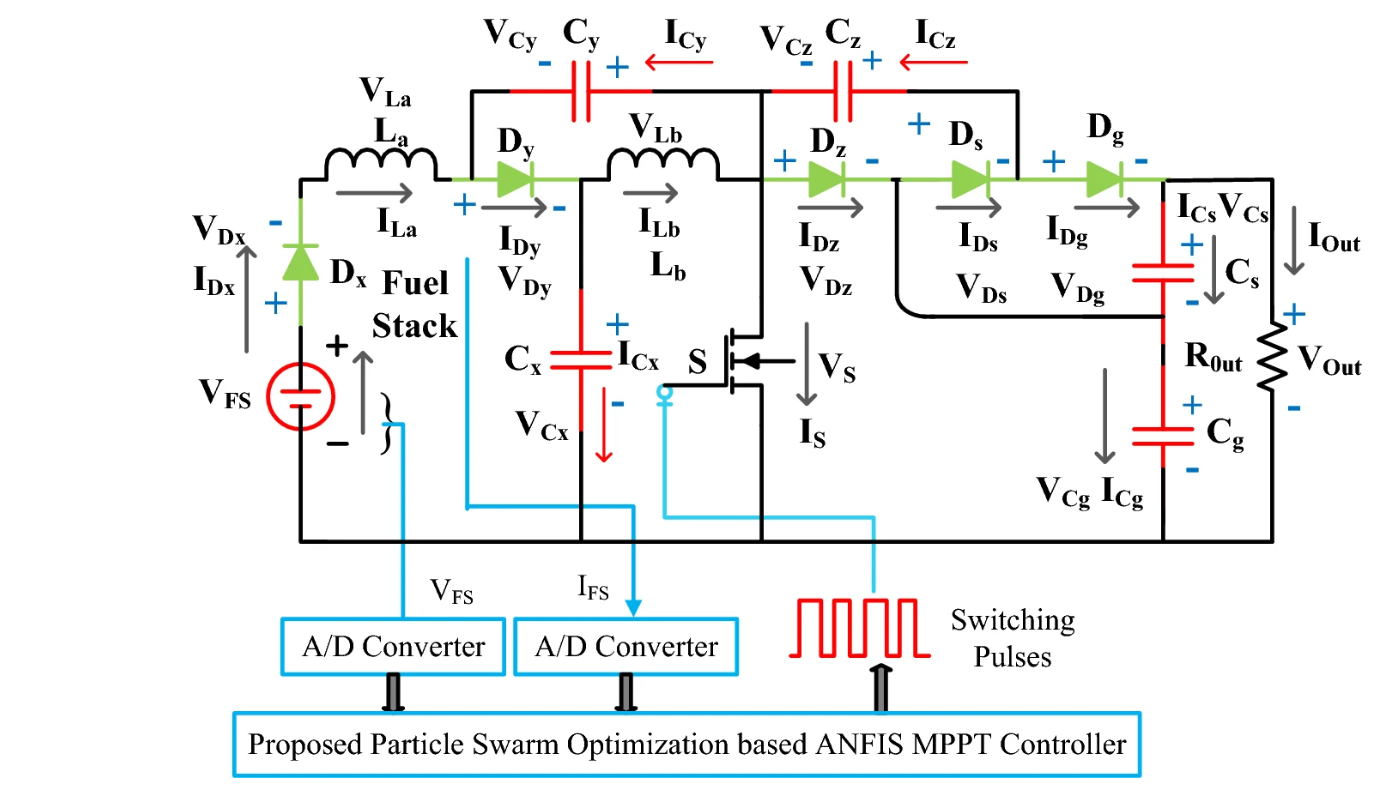 Methodologies for Increasing Efficiency of Fuel Stack Technology for Energy GenerationSaumitra Jagdale19 November 20243102
Presently, power companies are moving towards renewable energy systems. Conventional energy sources are more expensive because they require a vast network to be maintained and huge human resources. Also, they harm the environment by releasing several harmful gases. As the industry’s focus shifts toward renewable energy sources, energy systems powered by Proton Exchange Membrane Fuel Stacks (PEMFS) are gaining traction.
Read More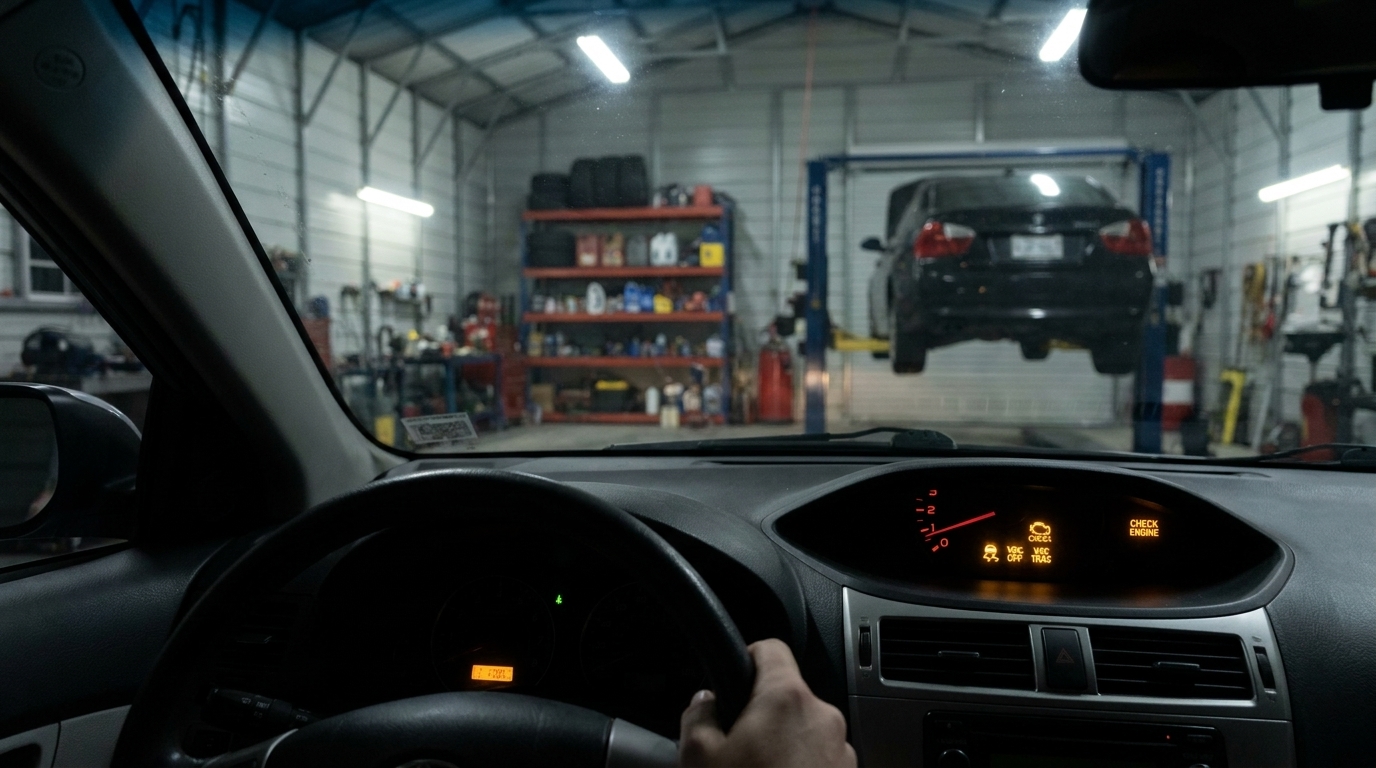 VSC Light Meaning, Causes, and Step-by-Step DiagnosticsUTMEL19 May 20263491
A VSC (Vehicle Stability Control) light indicates the system is disabled, often as a fail-safe triggered by unrelated engine faults like a loose gas cap. While the stability system prevents lateral skidding, it shuts down when sensor data is unreliable. Proper diagnosis requires an ABS-capable OBD2 scanner. Resolving the root engine code, checking wheel speed sensors, or performing a zero-point calibration usually restores system function.
Read More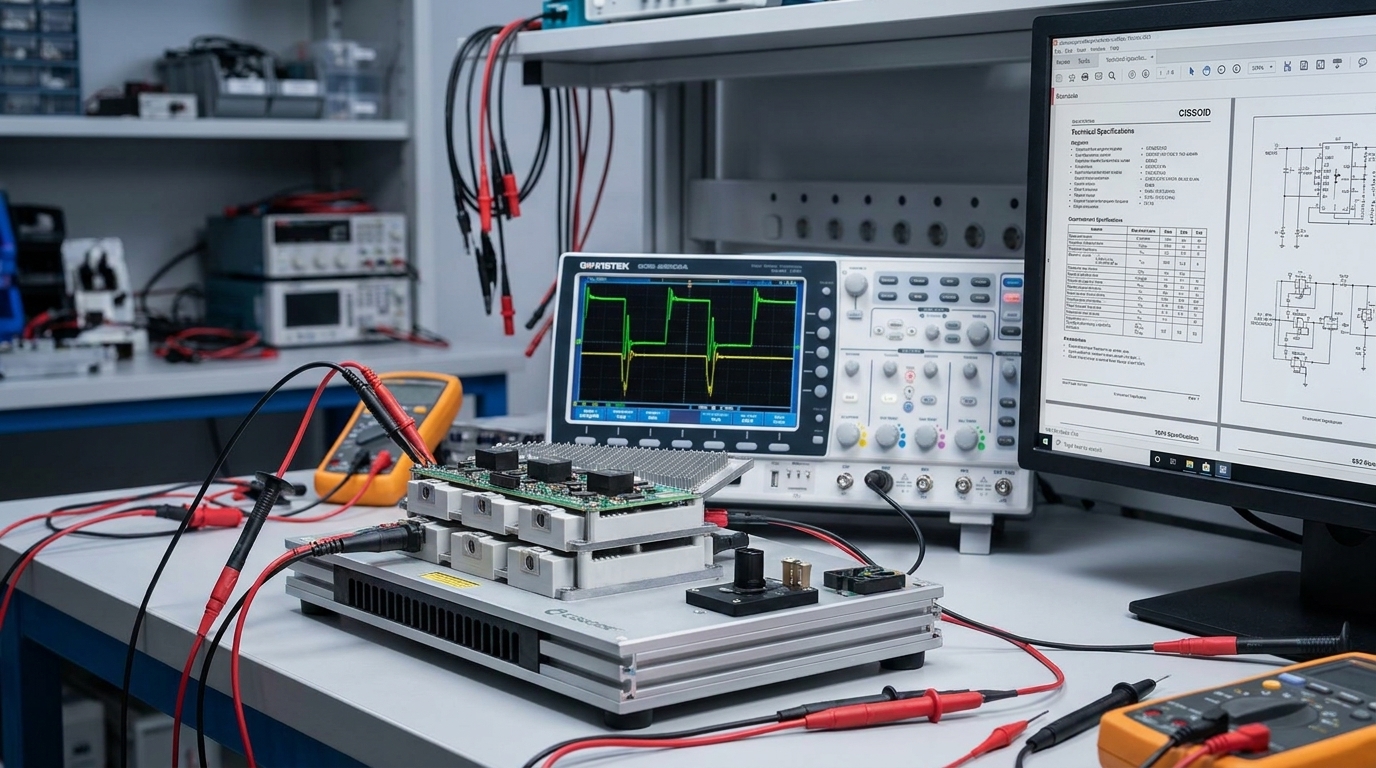 What JEDEC JEP203 and JEP204 Actually Change for SiC Qualification Engineers and Component BuyersUTMEL29 July 2026481
Summary: When JEDEC published JEP203 and JEP204 on June 3, 2026[1], most coverage treated them as an announcement. They are better understood as the first shared language the silicon carbide industry has had for two problems that have quietly consumed engineering hours since the first commercial SiC MOSFETs shipped: short-circuit evaluation that produces numbers you can compare across suppliers, and a consolidated reference of stress procedures so qualification engineers stop reinventing test plans from scratch. This article explains what changes on Monday morning and what to ask suppliers for now.
Read More 2nm vs 3nm Chips: What the Latest Process Nodes Mean for PerformanceUTMEL19 August 20261571
The shift from 3nm to 2nm process nodes marks a fundamental change in transistor architecture, moving from FinFET to Gate-All-Around (GAA) nanosheets. This transition delivers meaningful improvements in performance, power, and density, but also introduces new challenges like SRAM scaling limits, thermal density, and backside power delivery. The article compares TSMC, Samsung, and Intel approaches, offering a practical decision framework for engineering teams.
Read More
Subscribe to Utmel !


