Product
 Brand
Brand Articles
 Tools
Tools
How Can Memory Adapt and Influence the Smart Age of the Future?
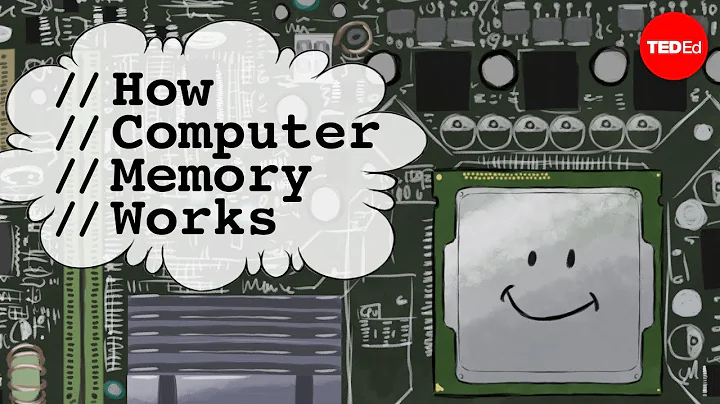
How computer memory works - Kanawat Senanan
Memory is an integral part of semiconductor components and its market size accounts for approximately one-third of the overall semiconductor market. Memory can be divided into NAND Flash (40%), NOR Flash (1%), DRAM (58%), and others (1%).
Different Types of Memory
DRAM entered the commercial market in the 1970s and became the largest branch of the storage market with its extremely high read and write speeds; the emergence of feature phones ushered in the explosion of the NOR Flash market; the PC era saw an increasing demand for storage capacity, making low-cost, high-capacity NAND Flash the best choice.
DRAM is dynamic random memory, which is volatile, meaning that it needs to be refreshed and charged every once in a while, otherwise the internal data will disappear, and is generally used in computer memory, mobile phones, and mobile devices. NAND Flash, also known as flash memory, is a non-volatile memory and is widely used in the eMMC/EMCP, USB flash drives, solid-state drives, and other markets. NOR Flash, on the other hand, has a lower storage density compared to NAND, is slower to write and slightly more complex to operate, and is more commonly used in automotive electronics.

Figure 1: Classification of memory
The market is currently dominated by NAND Flash, Nor Flash, and DRAM memories. As technologies continue to evolve and improve, more and more types of memory are becoming available, with more difficult technical requirements and higher performance. These include ferroelectric memory (FRAM), phase change memory (PRAM), magnetic memory (MRAM), resistive memory (RRAM), and, most recently, UltraRAM.
Global Memory Market Size and Growth Rate
Today, semiconductor memory has become the largest market segment in the semiconductor industry, accounting for approximately one-third of the global semiconductor industry. IC Insights forecasts that semiconductor memory will continue to grow at a CAGR of 6.8% over the next five years.
The global memory chip market has maintained an upward trend amidst fluctuations, with the market size increasing from US$54.6 billion in 2005 to US$122.9 billion in 2020, at a compound growth rate of 5.6%. IC Insights expects the global memory chip market size to grow by 22% year-on-year in 2021 and to exceed US$200 billion in 2023.
Status and Future Trends of the Memory Industry
With the advent of the era of everything smart, emerging applications such as artificial intelligence and smart cars will have higher requirements for data storage in terms of speed, power consumption, capacity, and reliability, prompting the rapid development of new memories and influencing the future memory market pattern.
Although DRAM is fast, it has high power consumption, low capacity, and high cost, and is unable to save data in case of power failure, limiting the use of scenarios; NOR Flash and NAND Flash have low read and write speeds, and storage density is limited by the process. The market is in need of memory products that can meet new scenarios, and new memories with breakthroughs in performance are about to explode.
Currently, there are four main types of new memories.
Phase-change RAM represented by 3D Xpoint, jointly developed by Intel and Micron.
Ferroelectric RAM is represented by the companies Ramtron and Symetrix.
Magnetic RAM, represented by Everspin (USA).
Resistive RAM, represented by Panasonic, Crossbar, and Xinyuan Semiconductor.
MRAM has the best read/write rates and lifetime and theoretically has the opportunity to replace existing memory and external memory, but due to the quantum tunneling effect involved, large-scale manufacturing is difficult to ensure uniformity, and storage capacity and yields are slow to climb. Until further breakthroughs are made in the process, MRAM products are mainly suitable for special applications with low capacity requirements and the emerging IoT embedded storage sector.
The main problem with the current products is that the storage density is too low to replace NAND Flash in terms of capacity, and the cost and yield of Intel 3D Xpoint are one of the bottlenecks, judging from its continued losses. Current PCM products are mainly used as persistent memory and SSD cache in low-latency storage.
FRAM has the advantage of fast read and writes speeds and a good lifetime, but its memory cells are based on dual transistors, and dual resistor cells, cell size is at least twice that of DRAM, storage density is limited and the cost is high. And its reads are destructive and must be offset by subsequent writes after each read to restore the content of that bit to its original state. In terms of materials, the current ferroelectric crystal materials PZT and SBT both suffer from fatigue degradation and environmental pollution, and perfect commercialization has yet to be found. Two companies, Ramtron and Symetrix, are currently leading the development of FRAM.
ReRAM is fully compatible with CMOS in terms of process and can be scaled up to advanced process nodes relatively easily. However, due to the random nature of the conductive channels in the storage medium, it is difficult to guarantee the homogeneity of large-scale arrays in binary storage. It is also because of this feature that ReRAM is generally considered to have a unique advantage in neural network computing. There is an opportunity for future ReRAM-related products to be used in the field of acceleration chips for specific algorithms.
The new storage industry is not yet mature, and the opportunities outweigh the challenges. Compared to traditional DRAM and NAND Flash, the new storage industry has not yet formed an industry monopoly, and the product lines are not clear enough. Technologically, the future storage technology route is not yet clear, and there are opportunities for technology to catch up or even overtake. On the market, with the rapid development of countries in emerging fields such as 5G and artificial intelligence, storage demand is showing explosive growth and there is a broad enough potential market for new types of storage.
Reference:
1. TMTPOST: How ReRAM's New Memory Could Influence the Future Storage Landscape?
2. CENA: This Article Clearly Illustrates the New Type of Memory.
Related News
1、Chip Packaging Lead Time Has Grown to 50 Weeks
2、Eight Internet of Things (IoT) Trends for 2022
3、Demand for Automotive Chips Will Surge 300%
4、Volkswagen CFO: Chip Supply Shortage Will Continue Until 2024
5、BMW CEO: The Car Chip Problem Will Not Be Solved Until 2023
6、Shenzhen: This Year Will Focus on Promoting SMIC and CR Micro 12-inch Project
 UTMEL
UTMEL
We are the professional distributor of electronic components, providing a large variety of products to save you a lot of time, effort, and cost with our efficient self-customized service. careful order preparation fast delivery service
 UTMEL 2024 Annual gala: Igniting Passion, Renewing BrillianceUTMEL18 January 20245009
As the year comes to an end and the warm sun rises, Utmel Electronics celebrates its 6th anniversary.
Read More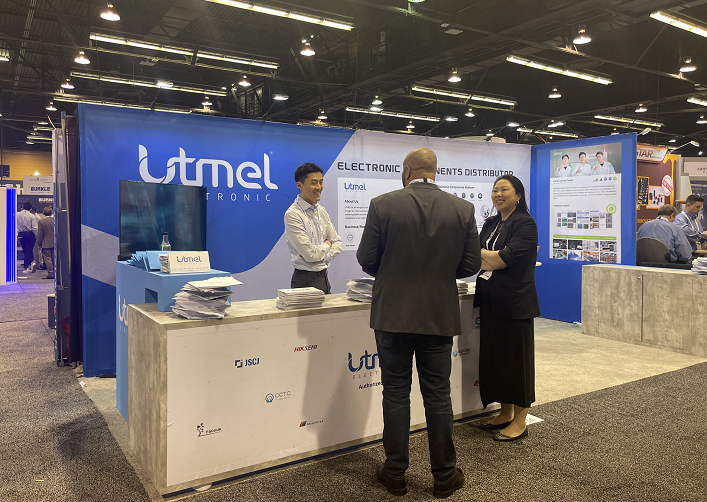 Electronic Components Distributor Utmel to Showcase at 2024 IPC APEX EXPOUTMEL10 April 20245994
Utmel, a leading electronic components distributor, is set to make its appearance at the 2024 IPC APEX EXPO.
Read More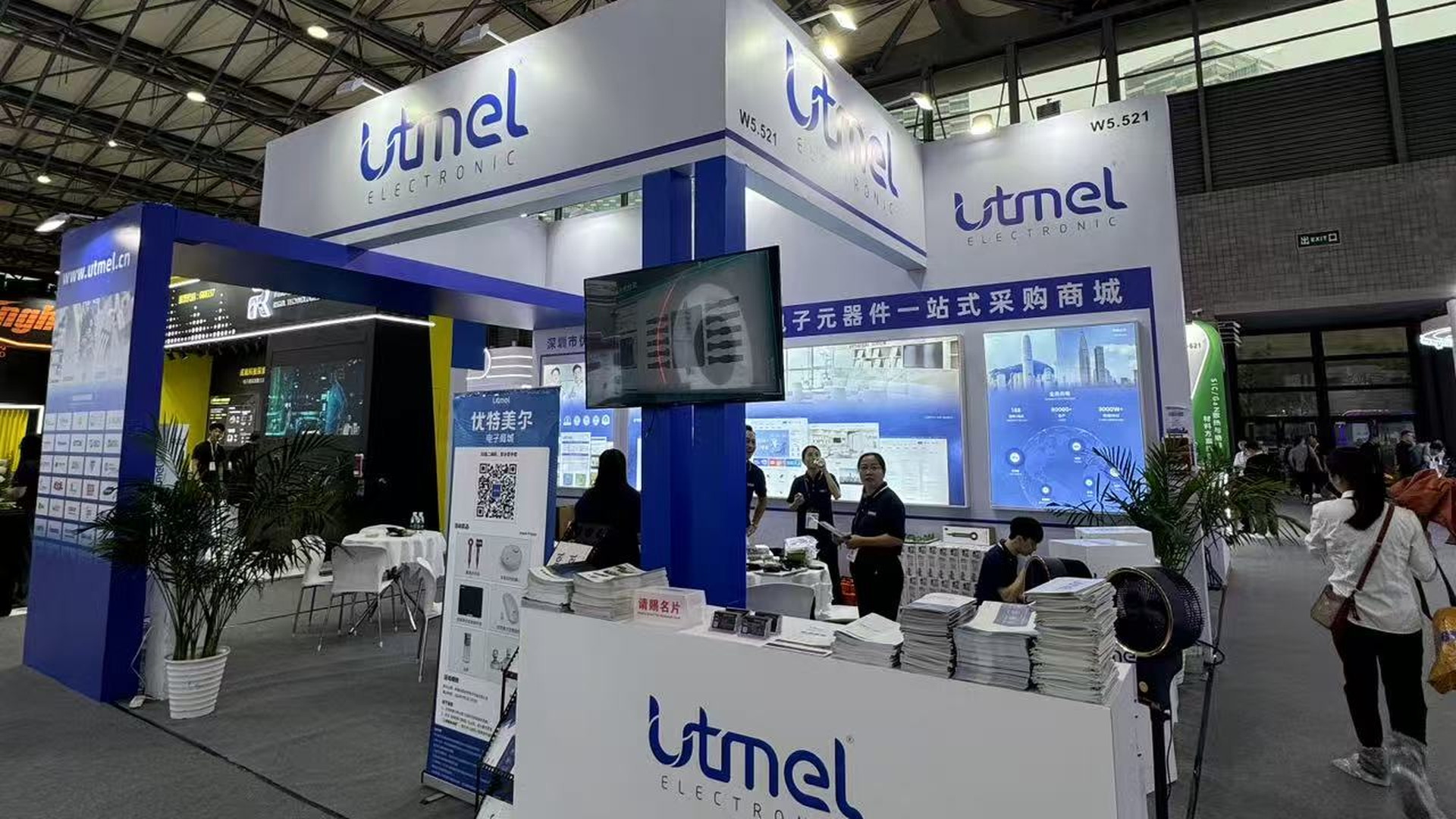 UTMEL Showcases One-Stop Electronic Component Sourcing Services at electronica Shanghai 2026UTMEL07 July 2026261
SHANGHAI, China, July 7, 2026 - UTMEL, a one-stop electronic components sourcing platform operated by Shenzhen Utmel Intelligent Electronic Co., Ltd., successfully participated in electronica Shanghai 2026, held from July 1 to 3, 2026 at the Shanghai New International Expo Centre.
Read More Electronic components distributor UTMEL to Showcase at electronica ChinaUTMEL07 June 20244584
The three-day 2024 Electronica China will be held at the Shanghai New International Expo Center from July 8th to 10th, 2024.
Read More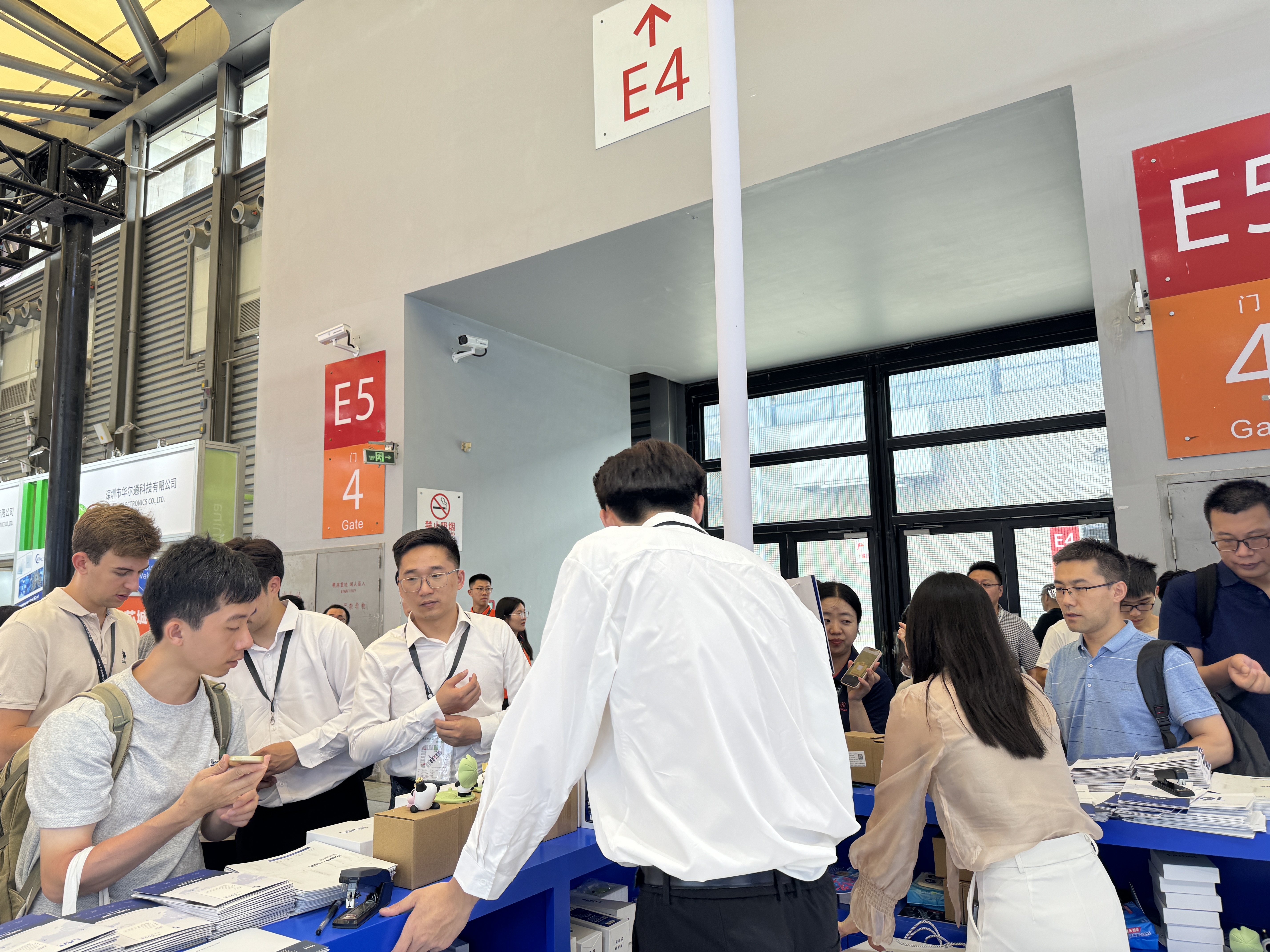 Electronic components distributor UTMEL Stands Out at electronica china 2024UTMEL09 July 20245185
From July 8th to 10th, the three-day electronica china 2024 kicked off grandly at the Shanghai New International Expo Center.
Read More
Subscribe to Utmel !
![AMEOF8-24S277NZ-120]() AMEOF8-24S277NZ-120
AMEOF8-24S277NZ-120aimtec
![AMEOFL10-12S277HANZ]() AMEOFL10-12S277HANZ
AMEOFL10-12S277HANZaimtec
![AMES25-15S277NZ-Q]() AMES25-15S277NZ-Q
AMES25-15S277NZ-Qaimtec
![AMEOF65-24SHAMJZ]() AMEOF65-24SHAMJZ
AMEOF65-24SHAMJZaimtec
![AME15-5SVZ-STD]() AME15-5SVZ-STD
AME15-5SVZ-STDaimtec
![AMEL10-5S277HAVZ-ST]() AMEL10-5S277HAVZ-ST
AMEL10-5S277HAVZ-STaimtec
![AMES25-48S277NZ-Q]() AMES25-48S277NZ-Q
AMES25-48S277NZ-Qaimtec
![AME10-5S277PEVZ]() AME10-5S277PEVZ
AME10-5S277PEVZaimtec
![AME25-3S277PEVZ]() AME25-3S277PEVZ
AME25-3S277PEVZaimtec
![AME5-512T277NZ-120]() AME5-512T277NZ-120
AME5-512T277NZ-120aimtec