Product
 Brand
Brand Articles
 Tools
Tools
PMIC - Gate Drivers: A Purpose-Built Integrated Circuit

Gate driver vs. integrated driver
A PMIC (Power Management IC), also known as a power management IC, is a purpose-built integrated circuit whose function is to manage power for the main system, for example.
PMICs are commonly used in devices that use batteries as a power source, such as mobile phones or portable media players. As these devices generally have more than one power source (e.g. batteries and USB power supplies), the system requires multiple power sources of different voltages and the need to control the charging and discharging of the batteries, meeting such requirements in the traditional way would take up a lot of space and increase product development time, hence the emergence of PMICs.
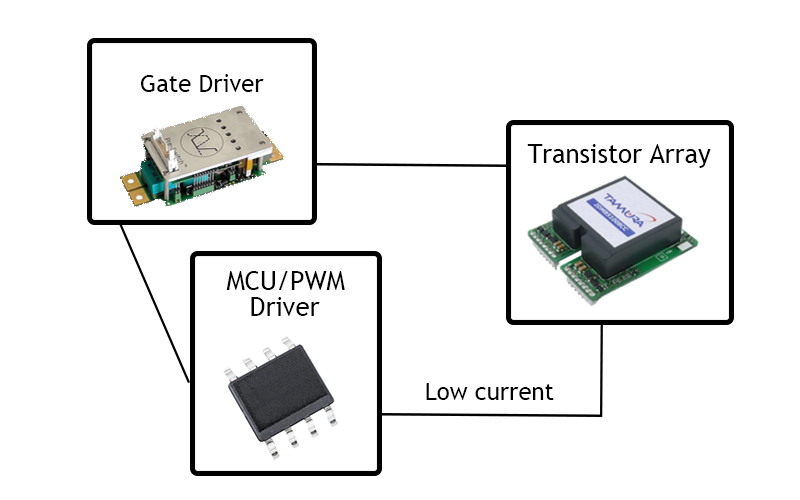
A power management integrated circuit (PMIC) is a highly integrated device with many on-board functional circuit modules. PMICs from ADI with integrated battery chargers or USB power managers solve the battery charging problem by providing multiple system rails in a portable product, all in a small form factor. control supports seamless conversion and manages the power flow between different input sources, such as wall adapters, USB ports and Li-ion batteries, while prioritising power supply to the system load. The efficient switch-mode power supply battery management module supports higher charging currents from wall adapters and USB power supplies. For this series of PMICs, the main features of the battery charger include independent operation, high charging current and overhang voltage accuracy and thermal regulation; in addition, the DC-DC converter includes switching and linear regulators.
PCB Design With PMICs
Power density, signal cross-coupling, component placement and the number of PCB layers are key areas that designers must consider. The complex integration of multiple power supplies in a single PMIC package can make PCB design difficult.
PCB stacking (number of PCB layers) must be considered before laying out said PCB layout with different dedicated ground, signal and power supply layers. Good layer build-up is essential for differential mode emissions, external noise sensitivity, common mode emissions, crosstalk and electrical performance.
The placement of components is essential for any good PCB layout. Components can be placed in different ways depending on the particular application. Each PCB must be adjusted appropriately and may require several trade-offs. During component placement, it is critical to start with the PMIC input pins as the input capacitors are used for local power supply, especially for transient power requirements.
PMIC performance is critical to data integrity and should be secured from hazards such as interference and corruption. The layout must keep attackers away from noise-sensitive signals and protect sensitive signals from other attackers.
Planes and signals form another standard PMIC routing layout consideration. It is recommended that the second layer (below the component mounting layer) be used as a grounding layer, as the IC must have a low impedance to ground. The ground impedance can be effectively reduced by components such as input capacitors, thus creating a low parasitic effect through the connection. The ground layer can also act as a shield for inductive and capacitive noise sources on this component mounting layer.
When routing the PCB for the PMIC, the buck converter must be considered first, as the buck converter includes the switching power supply, which has a power assembly integrated within the IC. The converter's ground pin and input typically transmit a large amount of high-frequency switching current. Inductance and resistance are minimised by using thick wire routing. The reduced resistance minimises unnecessary power losses and the low inductance minimises switching voltage spikes, thus ensuring reliable operation. An alignment inductance of 1 nH minimum can cause problems. Thicker alignments provide efficient, reliable operation of systems and converters and improve line transient response. If the input capacitors and pins are kept close together, the wiring distance will be kept to a minimum, making it easier to achieve low-impedance wiring. Another advantage of this arrangement is that the chance of inductive coupling is reduced, as the input pin connections transmit switching currents at ultra-fast edge rates.
Other Functions of the PMIC
Due to the need to coordinate with the host system, a signal interface is required to communicate with the host system, typically using a serial interface such as I²C or SPI. Some PMICs with simpler functions are connected directly to the MCU's GPIO with a separate signal.
Some PMICs can be connected to a back-up power supply for the real time clock and some have simple power status indicators, such as LEDs to indicate battery charge and discharge status.
Some PMICs are designed for a particular family of MCUs, and the company developing the corresponding MCU will have off-the-shelf firmware to support the operation of the PMIC.
Related News
1、Chip Packaging Lead Time Has Grown to 50 Weeks
2、Eight Internet of Things (IoT) Trends for 2022
3、Demand for Automotive Chips Will Surge 300%
4、Volkswagen CFO: Chip Supply Shortage Will Continue Until 2024
5、BMW CEO: The Car Chip Problem Will Not Be Solved Until 2023
6、Shenzhen: This Year Will Focus on Promoting SMIC and CR Micro 12-inch Project
 UTMEL
UTMEL
We are the professional distributor of electronic components, providing a large variety of products to save you a lot of time, effort, and cost with our efficient self-customized service. careful order preparation fast delivery service
 UTMEL 2024 Annual gala: Igniting Passion, Renewing BrillianceUTMEL18 January 20245009
As the year comes to an end and the warm sun rises, Utmel Electronics celebrates its 6th anniversary.
Read More Electronic Components Distributor Utmel to Showcase at 2024 IPC APEX EXPOUTMEL10 April 20245994
Utmel, a leading electronic components distributor, is set to make its appearance at the 2024 IPC APEX EXPO.
Read More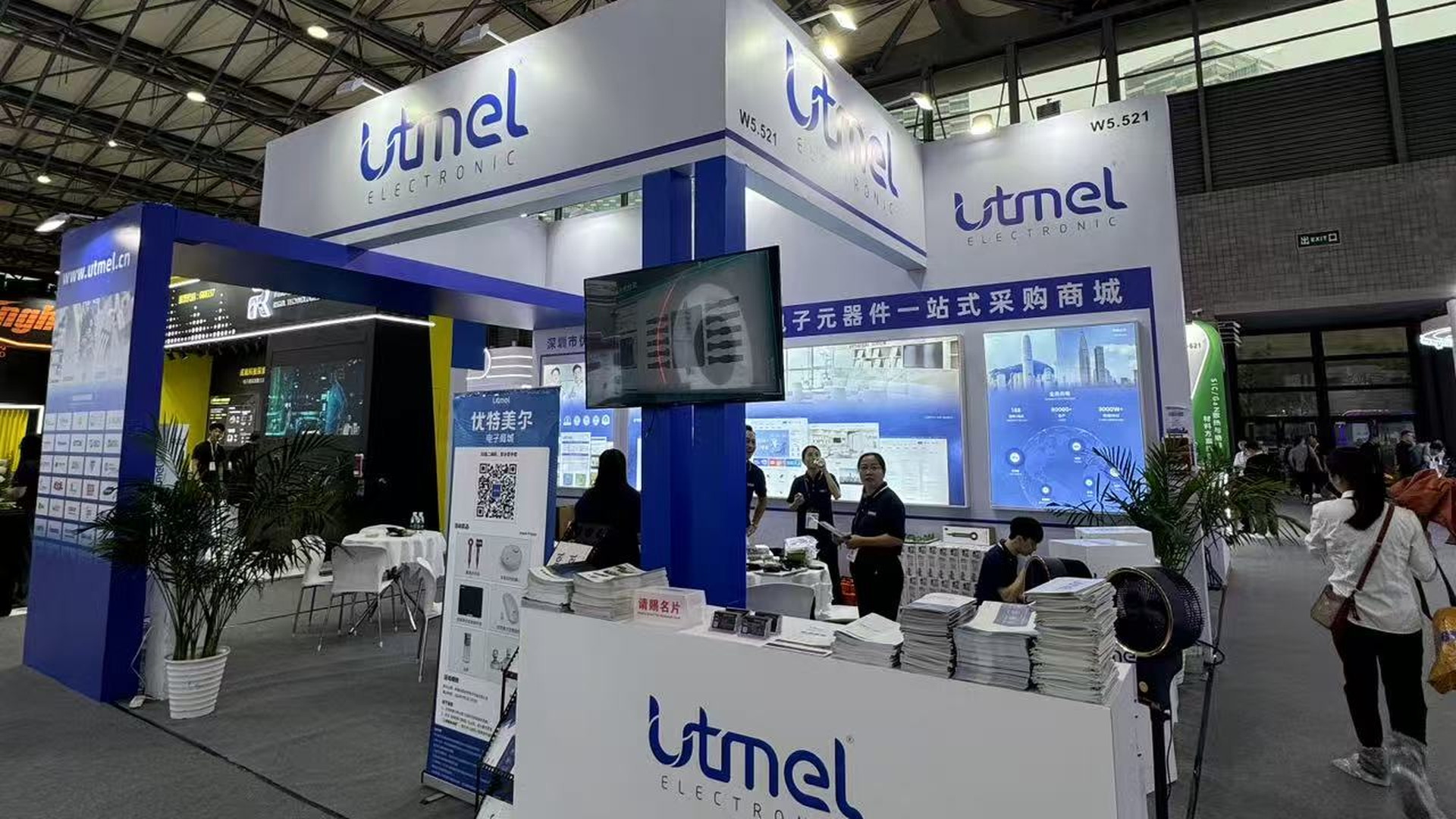 UTMEL Showcases One-Stop Electronic Component Sourcing Services at electronica Shanghai 2026UTMEL07 July 2026261
SHANGHAI, China, July 7, 2026 - UTMEL, a one-stop electronic components sourcing platform operated by Shenzhen Utmel Intelligent Electronic Co., Ltd., successfully participated in electronica Shanghai 2026, held from July 1 to 3, 2026 at the Shanghai New International Expo Centre.
Read More Electronic components distributor UTMEL to Showcase at electronica ChinaUTMEL07 June 20244584
The three-day 2024 Electronica China will be held at the Shanghai New International Expo Center from July 8th to 10th, 2024.
Read More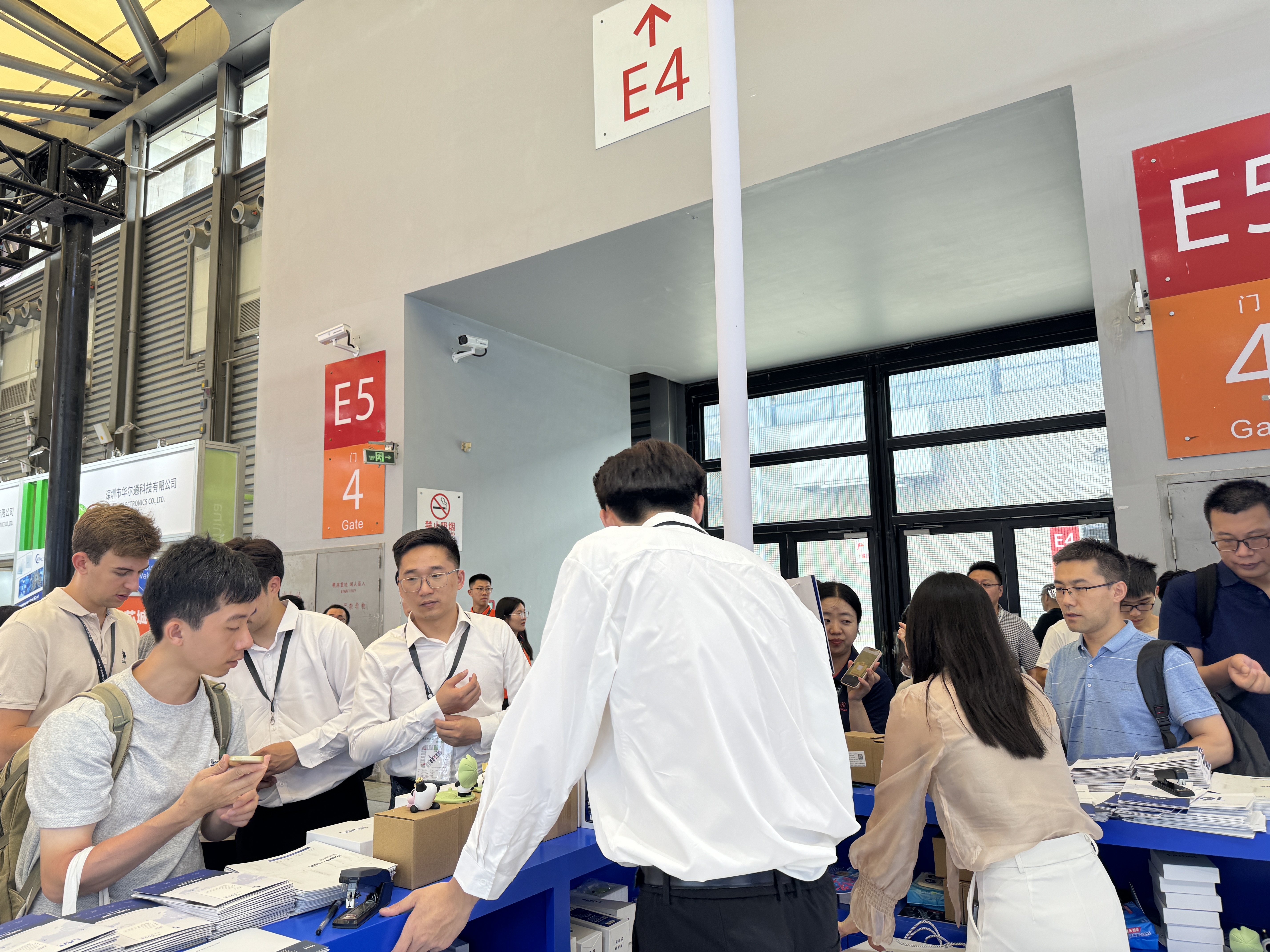 Electronic components distributor UTMEL Stands Out at electronica china 2024UTMEL09 July 20245185
From July 8th to 10th, the three-day electronica china 2024 kicked off grandly at the Shanghai New International Expo Center.
Read More
Subscribe to Utmel !
![AMEOF8-24S277NZ-120]() AMEOF8-24S277NZ-120
AMEOF8-24S277NZ-120aimtec
![AMEOFL10-12S277HANZ]() AMEOFL10-12S277HANZ
AMEOFL10-12S277HANZaimtec
![AMES25-15S277NZ-Q]() AMES25-15S277NZ-Q
AMES25-15S277NZ-Qaimtec
![AMEOF65-24SHAMJZ]() AMEOF65-24SHAMJZ
AMEOF65-24SHAMJZaimtec
![AME15-5SVZ-STD]() AME15-5SVZ-STD
AME15-5SVZ-STDaimtec
![AMEL10-5S277HAVZ-ST]() AMEL10-5S277HAVZ-ST
AMEL10-5S277HAVZ-STaimtec
![AMES25-48S277NZ-Q]() AMES25-48S277NZ-Q
AMES25-48S277NZ-Qaimtec
![AME10-5S277PEVZ]() AME10-5S277PEVZ
AME10-5S277PEVZaimtec
![AME25-3S277PEVZ]() AME25-3S277PEVZ
AME25-3S277PEVZaimtec
![AME5-512T277NZ-120]() AME5-512T277NZ-120
AME5-512T277NZ-120aimtec