Product
 Brand
Brand Articles
 Tools
Tools
Oregon's Semiconductor Boost: Governor Announces $240 Million Investment
Oregon’s initiative to bolster semiconductor activity has been successful, according to Governor Tina Kotek. She has revealed plans to distribute $240 million, set aside to enhance the state's semiconductor industry, to 15 Oregon semiconductor facilities. The state's tech companies, including Hewlett-Packard, Jireh Semiconductor Incorporated, Microchip Technology, and Intel, are among those set to receive significant funding. The companies have proposed more than $43 billion in investment in the coming years, promising to create approximately 6,300 jobs. Vince Porter, Kotek’s policy advisor on economic development, spoke positively about the impact of the bipartisan effort approved earlier this year. He noted that the state incentives approved in April were expected to generate between $5 billion and $10 billion in total investment.
However, he also cautioned that the projected cash could end up being less than $40 billion as project realities come into focus. The funding is part of a $240 million outlay approved by Oregon lawmakers during this year's legislative session, as the state vied for a portion of the $52 billion in federal funds made available by the 2022 CHIPS and Science Act. The Oregon CHIPS Fund was established to help tech companies maintain or expand their operations in the state by purchasing or preparing land for new construction, developing facilities on existing property, or investing significantly in new research. Despite the optimism, the specifics of what these companies are proposing have been kept confidential. The state received 16 applications for its semiconductor funding, totaling $504 million in requests, and only one applicant was turned down. The awards approved by Kotek are contingent on successful contract negotiations, and some may change. A second round of funding will depend on lawmakers releasing an additional $50 million approved earlier this year. The governor's office did not offer any indication that an expansion was in progress. Semiconductors are Oregon's largest export, and the state hosts 15% of the industry's workforce nationwide. The state's longstanding position as a semiconductor hub has allowed it to leverage its $240 million more efficiently than other states, according to Porter.
 UTMEL
UTMEL
We are the professional distributor of electronic components, providing a large variety of products to save you a lot of time, effort, and cost with our efficient self-customized service. careful order preparation fast delivery service
 Power Semiconductor Procurement After the Nexperia Shake-Up—NXP for Stability, ON for Technology, or Nexperia for Value?UTMEL04 November 20254807
The recent supply chain turmoil surrounding Netherlands-based Nexperia has sent shockwaves through the global semiconductor industry, forcing procurement professionals to re-evaluate their sourcing strategies.
Read More AI Computing Power Gap: How Token Consumption is Reshaping Server Component SourcingUTMEL23 June 2026889
As global token consumption drives the transition to high-density 100kW+ AI data centers, power delivery networks require advanced Wide-Bandgap semiconductors (SiC/GaN) and high-capacitance MLCCs. This shift has triggered a component procurement crisis with lead times exceeding 24 weeks. To bypass shortages, hardware buyers must abandon just-in-time manufacturing and leverage independent global distributor networks to secure critical power and passive components.
Read More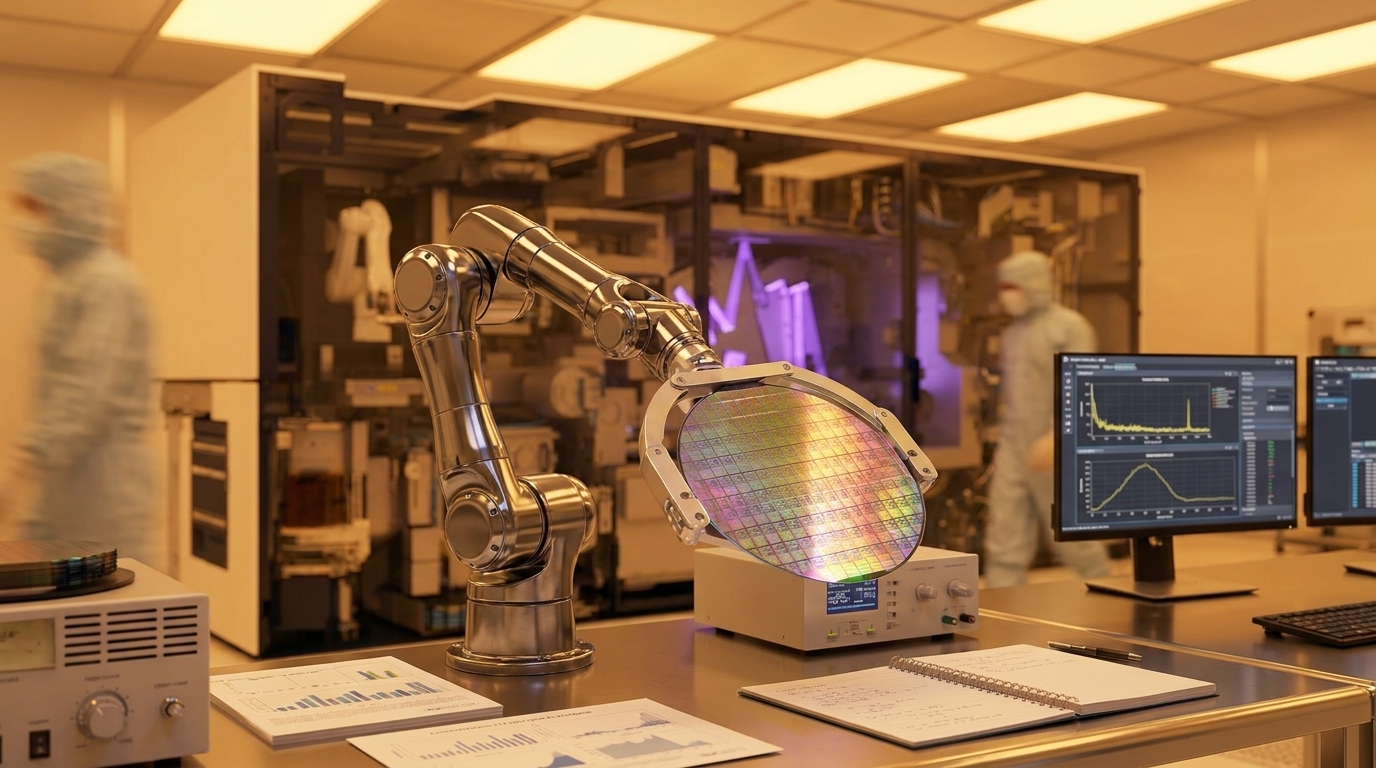 The BSPDN Revolution: Overcoming IR Drop in Sub-2nm GAAFET Nodes with Backside Power DeliveryUTMEL25 June 2026793
As semiconductor manufacturing enters the sub-2nm era, Backside Power Delivery Networks (BSPDN) are replacing traditional front-side routing to overcome critical IR drop bottlenecks. By separating power and signal delivery, chipmakers like Intel and TSMC drastically improve performance and density in GAAFET designs. However, this radical shift introduces manufacturing complexities, thermal challenges, and demands advanced packaging and power management solutions.
Read More Power Management ICs Trends 2026: AI Demand, Supply Risks, and Sourcing StrategiesUTMEL06 July 20261265
As AI server racks surpass 100kW by 2026, data centers are shifting toward wide-bandgap semiconductors like SiC and GaN. However, this demand has triggered a critical shortage of mature-node Power Management ICs (PMICs). To prevent production halts, sourcing teams must abandon 'just-in-time' models, implement proactive 'just-in-case' strategies, and rapidly qualify pin-to-pin alternative components to secure their supply chains.
Read More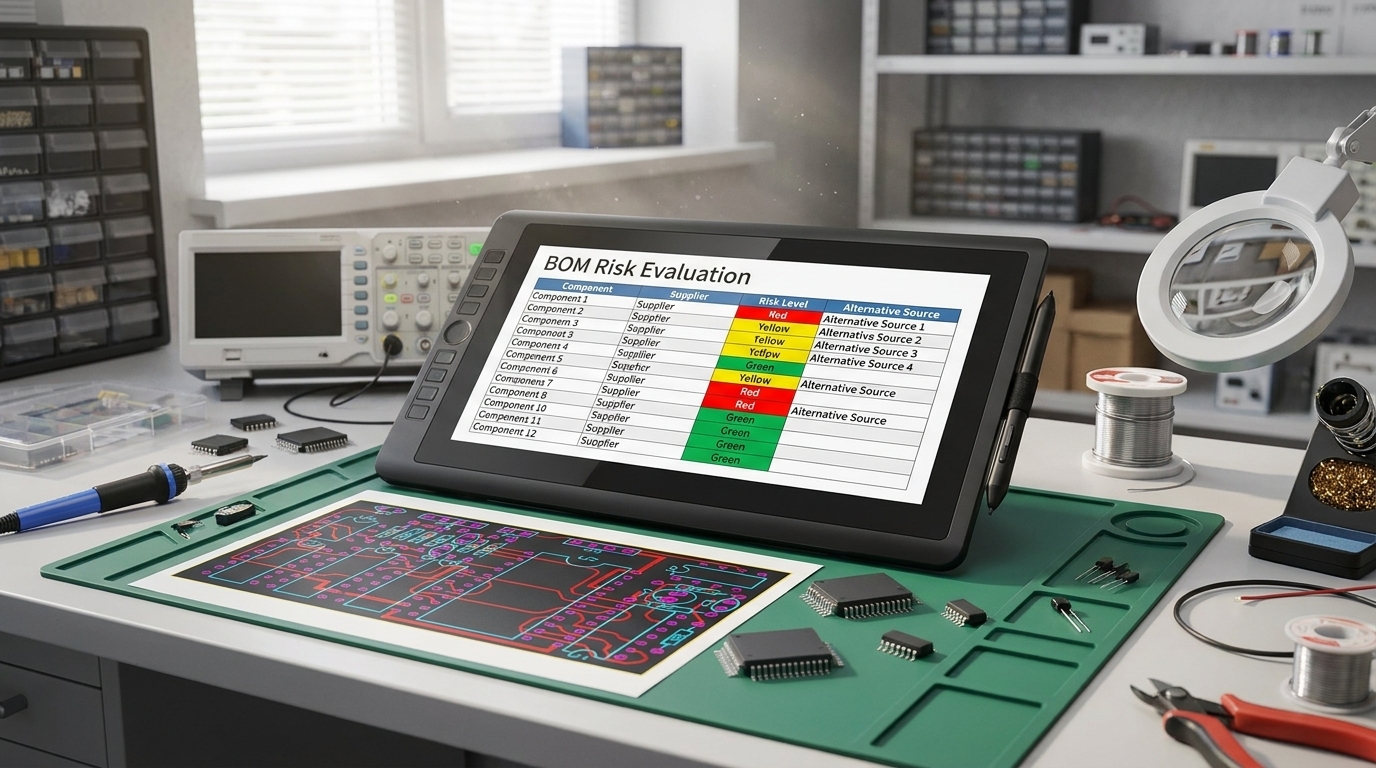 onsemi Synaptics Acquisition Impact: BOM Risk Checklist and Second-Source Strategy for Edge AI DesignsUTMEL27 July 2026287
The onsemi acquisition of Synaptics provides hardware program managers a 12-to-18-month window before potential product cancellations occur in mid-2027. This guide outlines how to audit BOM exposure across overlap and non-core product lines, calculate Last-Time-Buy volumes including hidden storage costs, establish proactive second-sourcing triggers, and implement supply chain monitoring to prevent line-down events.
Read More
Subscribe to Utmel !
![MS27466E23C32P]() MS27466E23C32P
MS27466E23C32PCorsair Electrical Connectors
![ACS06AD36-1S-025]() ACS06AD36-1S-025
ACS06AD36-1S-025Amphenol
![109-1073H]() 109-1073H
109-1073HSanyo Denki America Inc.
![110060123]() 110060123
110060123Seeed Technology Co., Ltd
![BLM03BB220SN1D]() BLM03BB220SN1D
BLM03BB220SN1DMurata Electronics
![MMZ0603S100CT000]() MMZ0603S100CT000
MMZ0603S100CT000TDK Corporation
![CL05B104KB54PNC]() CL05B104KB54PNC
CL05B104KB54PNCSamsung Electro-Mechanics
![314253-1]() 314253-1
314253-1TE Application Tooling
![BLM15AX601SN1D]() BLM15AX601SN1D
BLM15AX601SN1DMurata Electronics
![BLM18HD102SN1D]() BLM18HD102SN1D
BLM18HD102SN1DMurata Electronics