Product
 Brand
Brand Articles
 Tools
Tools
Power Semiconductor Procurement After the Nexperia Shake-Up—NXP for Stability, ON for Technology, or Nexperia for Value?
In October 2025, the Dutch government seized control of the Chinese-owned company, citing national security concerns, which prompted a retaliatory export ban from Beijing [1]. This geopolitical standoff has created a near-crisis for global automakers and other industries reliant on Nexperia's foundational chips, raising a critical question for buyers: in a volatile market, where should you place your bets? This article provides a forward-looking analysis for procurement leaders, comparing the stability of NXP Semiconductors, the technological edge of ON Semiconductor, and the cost-effectiveness of Nexperia to help navigate this new, complex landscape.
The Shared Past and Divergent Paths of Nexperia, NXP, and ON
To make informed sourcing decisions, it is crucial to understand the distinct corporate DNA and business focus of these three major players. Their intertwined history, originating from the electronics giant Philips, has shaped their current product portfolios and market positioning.
Nexperia’s roots trace back to the standard products division of Philips Semiconductors. This division was spun off with the rest of Philips Semiconductors to form NXP in 2006. A decade later, in 2016, NXP divested its standard products business to a consortium of Chinese investors, giving rise to an independent Nexperia [2]. While ON Semiconductor does not share a direct lineage with Philips, it has emerged as a formidable competitor, particularly after NXP’s divestment, by aggressively expanding its portfolio through strategic acquisitions, such as its purchase of Fairchild Semiconductor.
This history has resulted in distinct areas of specialization, which are critical for procurement alignment.
| Manufacturer | Core Product Areas | Key Markets (Revenue Focus) | Competitive Differentiator |
| Nexperia | Discrete Components, MOSFETs, ESD Protection | Automotive (>60%), Industrial | High-reliability automotive-grade, #1 global market share in discretes |
| NXP | Automotive MCUs, RF Chips, High-Power Mixed-Signal | Automotive (#2 global market share) | System-level automotive solutions, high-end secure connectivity |
| ON Semi | Power Devices (IGBT/SiC), Image Sensors | Electric Vehicles, Industrial Power | Leadership in wide-bandgap (SiC) technology, dominant in ADAS sensors |
This table clarifies the strategic focus of each company. For standard automotive-grade discretes, Nexperia has historically been the go-to supplier. For complex automotive systems requiring integrated MCUs and secure connectivity, NXP is the established leader. For cutting-edge power applications in electric vehicles, ON Semiconductor’s investment in Silicon Carbide (SiC) technology gives it a significant advantage.
Navigating the Supply Chain Shockwave: Alternatives to Nexperia
The immediate concern for many procurement teams is the reliability of Nexperia’s supply chain. The company’s Dongguan, China, assembly and testing plant, which handles approximately 70% of its production, was directly impacted by the suspension of wafer supplies from its Dutch facilities [3]. While Nexperia China has stated it has sufficient inventory to meet demand through the end of the year, the long-term stability remains uncertain, particularly for next-generation products like 12-inch IGBTs.
For procurement managers seeking to de-risk their supply chains, both NXP and ON Semiconductor offer viable alternatives, though not without trade-offs.
•High-Compatibility Replacements: For basic automotive-grade diodes and low-voltage MOSFETs, NXP’s legacy product lines, which share a common technological heritage with Nexperia, offer a direct and low-risk alternative. The validation process for these components is often straightforward due to their shared design and manufacturing processes.
•Performance-Driven Substitutions: For industrial ESD protection and other standard power components, ON Semiconductor provides a broad portfolio with significant parameter overlap (often exceeding 80%), making it a strong candidate for substitution.
•Challenging Transitions: Replacing Nexperia’s more advanced products, such as its 48V platform MOSFETs designed for emerging applications like AI servers and mild-hybrid vehicles, is more complex. NXP lacks direct competitors in this space, and while ON Semiconductor offers similar products, they require extensive compatibility testing. Furthermore, Nexperia’s proprietary small-footprint packages (e.g., DFN) can create physical design challenges when switching suppliers.
A Three-Dimensional Decision Matrix: Cost, Lead Time, and Risk
Effective procurement balances cost, delivery, and risk. Here’s how the three companies compare in the current climate:
•Cost Structure: All three are Integrated Device Manufacturers (IDMs), but their cost advantages differ. Nexperia has traditionally offered a 10-15% cost advantage on mature, high-volume components due to its focus on 8-inch wafer production. However, the current supply disruption may lead to short-term price hikes. NXP commands a premium for its high-end MCUs and system-level solutions but offers stability through long-term pricing agreements. ON Semiconductor is driving down the cost of its SiC devices through aggressive capacity expansion, making its offerings for EVs and renewable energy increasingly cost-competitive.
•Lead Time and Delivery: As of November 2025, NXP offers the lowest risk, with a globally diversified manufacturing footprint and stable lead times of 8-12 weeks for standard products. ON Semiconductor presents a low-to-medium risk; while its SiC components have longer lead times (16-20 weeks) due to high demand, its standard power products are readily available. Nexperia is currently a medium-to-high risk. While existing inventory may cover immediate needs, the delivery of new products and the long-term supply from its Dongguan facility are uncertain.
•Geopolitical and Operational Risk: Nexperia faces the most significant geopolitical risk, being at the center of the US-China-EU tech rivalry. Its high concentration of back-end production in China also poses an operational risk. NXP faces risks related to international trade policies and potential export controls on its high-end chips. ON Semiconductor is exposed to fluctuations in the price of raw materials, such as SiC substrates, and regional risks associated with its US-based fabs.
The Next Frontier: Aligning Procurement with Future Tech Trends
Beyond managing the current crisis, strategic procurement involves anticipating future technology needs. The roadmaps of these three companies reveal their bets on the future of the automotive and industrial sectors.
•Nexperia is focused on the evolution of 48V systems, targeting high-growth markets like AI server power supplies and robotics. Its development of 12-inch IGBTs, expected to be in mass production by late 2025, is key to this strategy.
•NXP is doubling down on its strength in high-performance computing, with its S32 platform of automotive MCUs and processors positioned to power the next generation of software-defined vehicles.
•ON Semiconductor has made a strategic pivot to Silicon Carbide (SiC), investing heavily to become the leader in this high-growth market. With a dominant position in the EV traction inverter market and a five-fold increase in SiC production capacity, ON is well-positioned to capitalize on the global transition to electrification [4].
For procurement leaders, this means that if your company’s future roadmap is heavily dependent on SiC for high-voltage EV applications, establishing a long-term partnership with ON Semiconductor is a prudent move. If your focus is on the 48V ecosystem, keeping a close watch on Nexperia’s new product development is essential.
From Reactive Sourcing to Proactive Portfolio Management
The Nexperia crisis is a stark reminder that a reactive, cost-focused procurement strategy is no longer sufficient. Building a resilient supply chain requires a proactive, portfolio-based approach. This involves:
1.Establishing a "Core + Alternate" Supplier Model: For every critical component, identify a primary (core) supplier and at least one pre-qualified alternate. For example, a car manufacturer might designate NXP as its core supplier for MCUs and Nexperia for discrete components, with ON Semiconductor qualified as an alternate for both.
2.Diversifying Geographic Exposure: Actively manage geographic risk by sourcing from suppliers with a diversified manufacturing footprint. Avoid over-reliance on a single country or region for critical components.
3.Building Strategic Partnerships: Move beyond transactional relationships to build long-term partnerships with key suppliers. This can provide greater visibility into their supply chain, better access to new technologies, and more favorable terms during periods of disruption.
Conclusion
The power semiconductor landscape is in flux. The Nexperia shake-up has exposed the vulnerabilities of a globalized supply chain and forced a reassessment of procurement priorities. There is no single "best" supplier; the optimal choice depends on a careful balancing of stability, technology, and cost. NXP offers unparalleled stability and system-level expertise for complex automotive applications. ON Semiconductor provides a clear technological advantage in the high-growth SiC market. And Nexperia, despite its current challenges, remains a compelling option for high-volume, cost-sensitive components, provided the geopolitical risks can be managed.
Ultimately, the winners in this new era will be the procurement organizations that move from a tactical, cost-driven approach to a strategic, risk-aware portfolio management model. By understanding the unique strengths and weaknesses of each supplier and building a diversified and resilient supply chain, they can not only navigate the current crisis but also position their companies for long-term success.
References
[1] CNBC. "Where the Nexperia auto chip crisis stands now." November 1, 2025. https://www.cnbc.com/2025/11/01/where-the-nexperia-auto-chip-crisis-stands-now.html
[2] The Chip Letter. "Nexperia's Long History, Tangled Present and Uncertain Future." October 18, 2025. https://thechipletter.substack.com/p/the-tangled-past-present-and-future
[3] Reuters. "Nexperia cuts wafer supplies to Chinese plant, ratcheting up auto chip crisis." October 31, 2025. https://www.reuters.com/world/europe/nexperia-suspends-supplies-wafers-chinese-assembly-plant-letter-shows-2025-10-31/
[4] onsemi. "onsemi Celebrates Expansion of Silicon Carbide Production Facility in Hudson, New Hampshire." August 11, 2022. https://investor.onsemi.com/news-releases/news-release-details/onsemi-celebrates-expansion-silicon-carbide-production-facility '''
 UTMEL
UTMEL
We are the professional distributor of electronic components, providing a large variety of products to save you a lot of time, effort, and cost with our efficient self-customized service. careful order preparation fast delivery service
 Power Semiconductor Procurement After the Nexperia Shake-Up—NXP for Stability, ON for Technology, or Nexperia for Value?UTMEL04 November 20254857
The recent supply chain turmoil surrounding Netherlands-based Nexperia has sent shockwaves through the global semiconductor industry, forcing procurement professionals to re-evaluate their sourcing strategies.
Read More AI Computing Power Gap: How Token Consumption is Reshaping Server Component SourcingUTMEL23 June 2026936
As global token consumption drives the transition to high-density 100kW+ AI data centers, power delivery networks require advanced Wide-Bandgap semiconductors (SiC/GaN) and high-capacitance MLCCs. This shift has triggered a component procurement crisis with lead times exceeding 24 weeks. To bypass shortages, hardware buyers must abandon just-in-time manufacturing and leverage independent global distributor networks to secure critical power and passive components.
Read More The BSPDN Revolution: Overcoming IR Drop in Sub-2nm GAAFET Nodes with Backside Power DeliveryUTMEL25 June 2026893
As semiconductor manufacturing enters the sub-2nm era, Backside Power Delivery Networks (BSPDN) are replacing traditional front-side routing to overcome critical IR drop bottlenecks. By separating power and signal delivery, chipmakers like Intel and TSMC drastically improve performance and density in GAAFET designs. However, this radical shift introduces manufacturing complexities, thermal challenges, and demands advanced packaging and power management solutions.
Read More Power Management ICs Trends 2026: AI Demand, Supply Risks, and Sourcing StrategiesUTMEL06 July 20261401
As AI server racks surpass 100kW by 2026, data centers are shifting toward wide-bandgap semiconductors like SiC and GaN. However, this demand has triggered a critical shortage of mature-node Power Management ICs (PMICs). To prevent production halts, sourcing teams must abandon 'just-in-time' models, implement proactive 'just-in-case' strategies, and rapidly qualify pin-to-pin alternative components to secure their supply chains.
Read More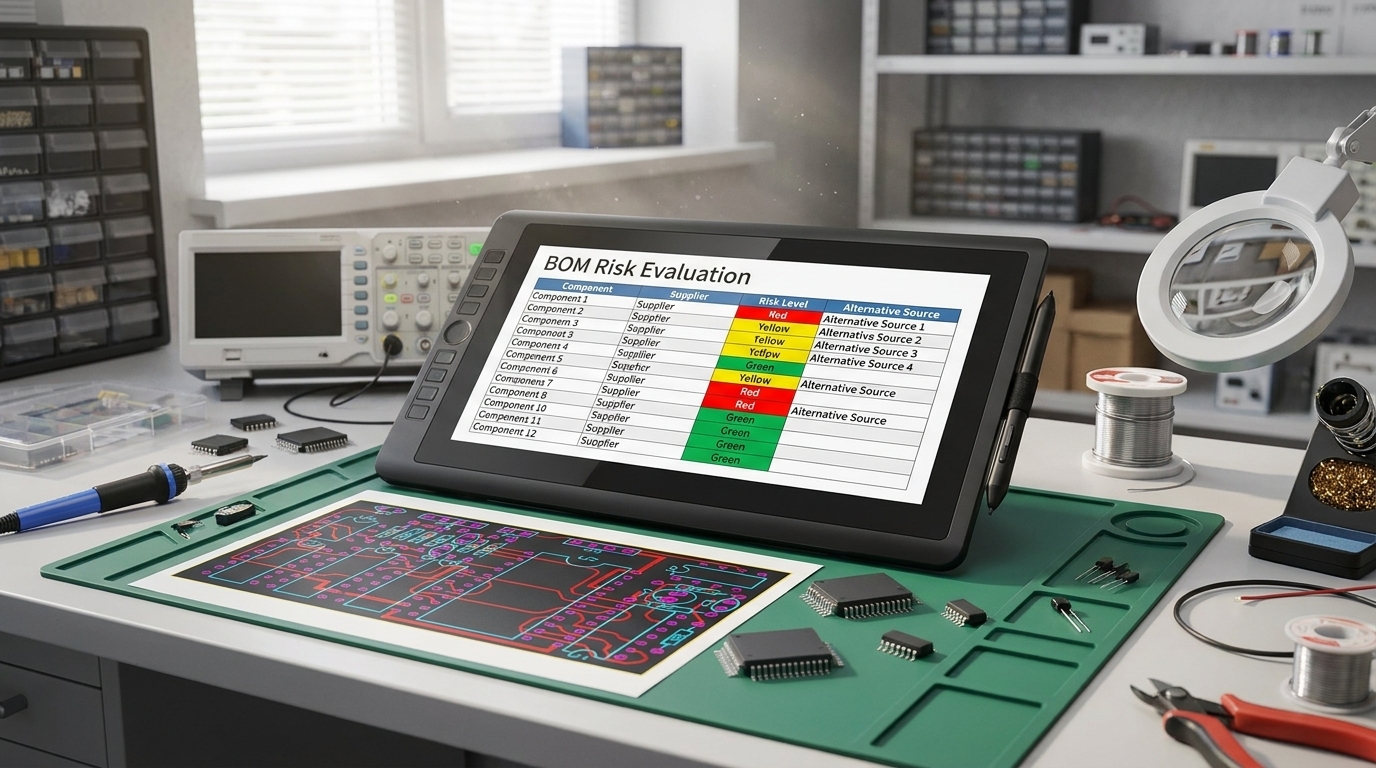 onsemi Synaptics Acquisition Impact: BOM Risk Checklist and Second-Source Strategy for Edge AI DesignsUTMEL27 July 2026330
The onsemi acquisition of Synaptics provides hardware program managers a 12-to-18-month window before potential product cancellations occur in mid-2027. This guide outlines how to audit BOM exposure across overlap and non-core product lines, calculate Last-Time-Buy volumes including hidden storage costs, establish proactive second-sourcing triggers, and implement supply chain monitoring to prevent line-down events.
Read More
Subscribe to Utmel !
![BLM18PG121SN1D]() BLM18PG121SN1D
BLM18PG121SN1DMurata Electronics
![TP3420AV309]() TP3420AV309
TP3420AV309Texas Instruments
![19-217/R6C-AL1M2VY/3T]() 19-217/R6C-AL1M2VY/3T
19-217/R6C-AL1M2VY/3TEverlight Electronics Co Ltd
![MPZ2012S102AT000]() MPZ2012S102AT000
MPZ2012S102AT000TDK Corporation
![SE2537L-R]() SE2537L-R
SE2537L-RSkyworks Solutions Inc.
![SKY81294-14-001]() SKY81294-14-001
SKY81294-14-001Skyworks Solutions Inc.
![HMC588LC4BTR]() HMC588LC4BTR
HMC588LC4BTRAnalog Devices Inc.
![80HCPS1432CRM]() 80HCPS1432CRM
80HCPS1432CRMRenesas Electronics America Inc.
![DS21Q48N]() DS21Q48N
DS21Q48NMaxim Integrated
![ALT6702RM45Q7]() ALT6702RM45Q7
ALT6702RM45Q7Skyworks Solutions Inc.