

G400S SoM: Specifications, Datasheet, Dimensions
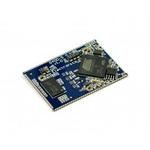


System-On-Modules - SOM G400-S SMD SOM 400MHz 32bit ARM9
This article will unlock more details about G400S, a 120 pin surface-mount module (SMT).
G400S Pinout
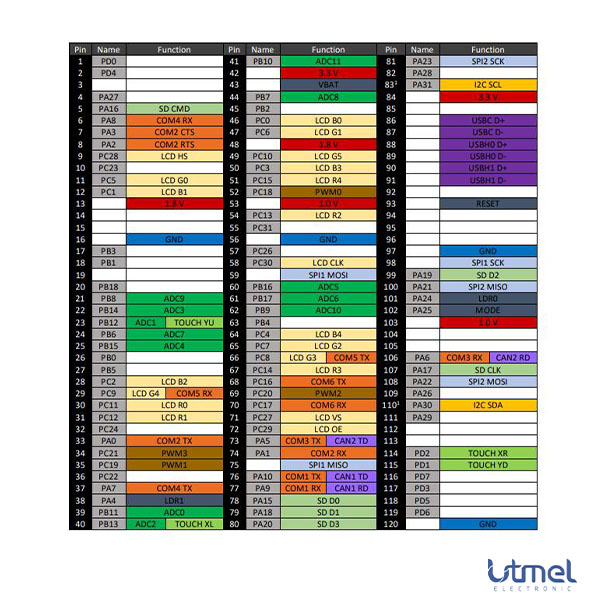
G400S Pinout
G400S Description
The G400S SoM is powerful, low-cost, surface-mount System on Modules (SoM) running Microsoft's .NET Micro Framework. The .NET Micro Framework enables the SoM to be programmed from Microsoft Visual Studio using a USB or serial cable. Programming in a modern managed language, such as C# or Visual Basic, allows developers to accomplish more work in less time by taking advantage of the extensive built-in libraries for networking, file systems, graphical interfaces, and more.
Specifications
- TypeParameter
- Factory Lead Time6 Weeks
- Operating Temperature
The operating temperature is the range of ambient temperature within which a power supply, or any other electrical equipment, operate in. This ranges from a minimum operating temperature, to a peak or maximum operating temperature, outside which, the power supply may fail.
-40°C~85°C - Published2001
- Size / Dimension
In electronic components, the parameter "Size / Dimension" refers to the physical dimensions of the component, such as its length, width, and height. These dimensions are crucial for determining how the component will fit into a circuit or system, as well as for ensuring compatibility with other components and the overall design requirements. The size of a component can also impact its performance characteristics, thermal properties, and overall functionality within a given application. Engineers and designers must carefully consider the size and dimensions of electronic components to ensure proper integration and functionality within their designs.
1.90 x 1.30 48.3mmx33.1mm - Part Status
Parts can have many statuses as they progress through the configuration, analysis, review, and approval stages.
Active - Moisture Sensitivity Level (MSL)
Moisture Sensitivity Level (MSL) is a standardized rating that indicates the susceptibility of electronic components, particularly semiconductors, to moisture-induced damage during storage and the soldering process, defining the allowable exposure time to ambient conditions before they require special handling or baking to prevent failures
6 (Time on Label) - Speed
In electronic components, "Speed" typically refers to the rate at which data can be processed or transferred within the component. It is a measure of how quickly the component can perform its functions, such as executing instructions or transmitting signals. Speed is often specified in terms of frequency, such as clock speed in processors or data transfer rate in memory modules. Higher speed components can perform tasks more quickly, leading to improved overall performance in electronic devices. It is an important parameter to consider when designing or selecting electronic components for specific applications.
400MHz - RAM Size
RAM size refers to the amount of random access memory (RAM) available in an electronic component, such as a computer or smartphone. RAM is a type of volatile memory that stores data and instructions that are actively being used by the device's processor. The RAM size is typically measured in gigabytes (GB) and determines how much data the device can store and access quickly for processing. A larger RAM size allows for smoother multitasking, faster loading times, and better overall performance of the electronic component. It is an important factor to consider when choosing a device, especially for tasks that require a lot of memory, such as gaming, video editing, or running multiple applications simultaneously.
32KB Internal 128MB External - Core Processor
The term "Core Processor" typically refers to the central processing unit (CPU) of a computer or electronic device. It is the primary component responsible for executing instructions, performing calculations, and managing data within the system. The core processor is often considered the brain of the device, as it controls the overall operation and functionality. It is crucial for determining the speed and performance capabilities of the device, as well as its ability to handle various tasks and applications efficiently. In modern devices, core processors can have multiple cores, allowing for parallel processing and improved multitasking capabilities.
ARM926EJ-S - Module/Board Type
Module/Board Type refers to the specific type or form factor of an electronic component, module, or circuit board. It describes the physical layout, size, shape, and configuration of the component or board, which determines how it can be mounted, connected, and integrated into a larger system. Common module/board types include single-board computers, microcontroller boards, expansion modules, and various types of interface boards. Understanding the module/board type is crucial for selecting compatible components, designing circuits, and ensuring proper functionality and connectivity within an electronic system.
MPU Core - Flash Size
Flash size refers to the amount of non-volatile memory available in an electronic component, typically measured in bytes, kilobytes, megabytes, or gigabytes. It determines how much data or instructions can be stored permanently even when power is removed. Flash memory is commonly used in devices such as microcontrollers, smartphones, USB drives, and solid-state drives to store firmware, applications, and user data. The flash size can significantly impact the functionality and performance of a device, influencing how many applications can be installed or how much data can be retained.
4MB External - RoHS Status
RoHS means “Restriction of Certain Hazardous Substances” in the “Hazardous Substances Directive” in electrical and electronic equipment.
ROHS3 Compliant
G400S Features
· NET Micro Framework
· RoHS Lead-Free
· 400 MHz ARM 9 Atmel SAM9X35
· 64 Mbytes available RAM
· 1.4 Mbytes available flash
· Embedded LCD controller
· 89 to 102 interrupt capable GPIO
· 2 SPI
· 1 I2C
· 6 UART
· 2 CAN
· 4 PWM
· 8 to 12 10-bit analogue input
· 4-bit SD/MMC memory card interface
· Low power modes
· -40°C to +85°C operational
· RTC
· Watchdog
· Threading
· USB host
· USB client
· SQLite database
· TCP/IP with SSL
o Full .NET socket interface
o Ethernet o Wi-Fi o PPP
· Graphics o Images
o Fonts
o Controls
· File System
o Full .NET file interface
o SD cards
o USB drives
· Native extensions
o Runtime Loadable Procedures
o Device register access
· Signal controls
o Generation
o Capture
o Pulse measurement
G400S Applications
Vending machines
POS Terminals
Measurement tools and testers
Networked sensors
Robotics
Central alarm system
Smart appliances
Industrial automation devices
G400S vs. G400D
| G400S | G400D | |
| Package | 120 pin surface-mount module (SMT) | 200 pin SODIMM module |
| Dimensions | 48.3x33.1 x 4.6 mm | 67.6x31.8x 4.1 mm |
| GPIO | 89 | 102 |
| Analog Input | 12 | 8 |
| Ethernet | ENC28J60 over SPI | Ethernet PHY Built-in base 100 |
G400S vs. G400D
G400S Dimensions
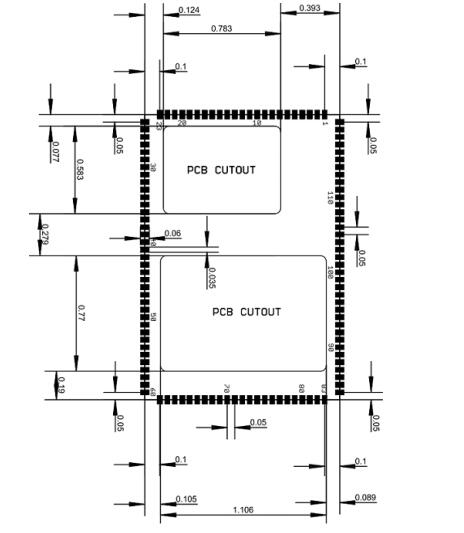
G400S Dimensions
G400S Manufacturer
Since 2003, GHI Electronics has been a world leader in providing embedded hardware-software core modules to help companies in reducing cost, complexity, and time to market. Specializing in embedded IoT, we offer a complete platform of hardware and software tools to help engineers create secure connected embedded products, from prototype to production, in record time.
Datasheet PDF
- Datasheets :
What is G400S?
The G400S SoM is powerful, low-cost, surface-mount System on Modules (SoM) running Microsoft's .NET Micro Framework. The .NET Micro Framework enables the SoM to be programmed from Microsoft Visual Studio using a USB or serial cable. Programming in a modern managed language, such as C# or Visual Basic, allows developers to accomplish more work in less time by taking advantage of the extensive built-in libraries for networking, file systems, graphical interfaces, and more.
What package does the G400S come?
The G400S comes with a 120 pin surface-mount module (SMT).
What is the general purpose input and output of G400S?
GPIOs can read and write logical high and low signals. Keep the following in mind:
1. They default to inputs with internal weak pull-up resistors
2. They operate on 3.3 V logic levels.
3. They are not 5 V tolerant.
4. They have controllable pull-up and pull-down resistors.
5. All pins are interrupt capable.
6. See the processor’s documentation for information on sourcing and sinking current.
 ATSAM D20E17A/ATSAMD20E18A/ATSAMD20J18A Microcontroller: A Deep Dive Analysis
29 February 202477
 TL431CZ Automotive Adjustable Voltage Reference: Pinout, Datasheet, and Applications
16 September 2021559
 CP0402W2700FNTR Coupler: Features, Applications and Datasheet
14 August 2024250
 MC33164 Micropower Undervoltage Sensing Circuit: Pinout, Features and Datasheet
29 March 2022942
 Ways to Pick Infineon IRLML6402TRPBF Online
18 August 2025173
 LM301A Operational Amplifier: Pinout, Features and Datasheet
08 November 20211512
 LM555 vs. NE555: What Difference is between LM555 and NE555?
13 March 202414249
 Unveiling the SANYO LC87F5R96B 8-Bit Microcontroller: An In-depth Exploration
29 February 202491
 What is a Fiber Optic Connector?
27 October 20255814
 Detailed Analysis of Analog IC
22 November 20213133
 How to Select Stepper Motor Controllers for Precision
19 July 2025519
 Review of Flux-Concentrated Transverse Flux Permanent Magnet Machines
15 December 20231992
 What causes the Noise of Electronic Equipment when it is Running?
01 August 20222185
 What is a Servo Drive?
16 June 20213807
 Real-time Cloud Analytics in Semiconductor Manufacturing
01 November 20221162
 Introduction to Electrochemical Sensors
19 November 202517857
GHI Electronics, LLC
In Stock
United States
China
Canada
Japan
Russia
Germany
United Kingdom
Singapore
Italy
Hong Kong(China)
Taiwan(China)
France
Korea
Mexico
Netherlands
Malaysia
Austria
Spain
Switzerland
Poland
Thailand
Vietnam
India
United Arab Emirates
Afghanistan
Åland Islands
Albania
Algeria
American Samoa
Andorra
Angola
Anguilla
Antigua & Barbuda
Argentina
Armenia
Aruba
Australia
Azerbaijan
Bahamas
Bahrain
Bangladesh
Barbados
Belarus
Belgium
Belize
Benin
Bermuda
Bhutan
Bolivia
Bonaire, Sint Eustatius and Saba
Bosnia & Herzegovina
Botswana
Brazil
British Indian Ocean Territory
British Virgin Islands
Brunei
Bulgaria
Burkina Faso
Burundi
Cabo Verde
Cambodia
Cameroon
Cayman Islands
Central African Republic
Chad
Chile
Christmas Island
Cocos (Keeling) Islands
Colombia
Comoros
Congo
Congo (DRC)
Cook Islands
Costa Rica
Côte d’Ivoire
Croatia
Cuba
Curaçao
Cyprus
Czechia
Denmark
Djibouti
Dominica
Dominican Republic
Ecuador
Egypt
El Salvador
Equatorial Guinea
Eritrea
Estonia
Eswatini
Ethiopia
Falkland Islands
Faroe Islands
Fiji
Finland
French Guiana
French Polynesia
Gabon
Gambia
Georgia
Ghana
Gibraltar
Greece
Greenland
Grenada
Guadeloupe
Guam
Guatemala
Guernsey
Guinea
Guinea-Bissau
Guyana
Haiti
Honduras
Hungary
Iceland
Indonesia
Iran
Iraq
Ireland
Isle of Man
Israel
Jamaica
Jersey
Jordan
Kazakhstan
Kenya
Kiribati
Kosovo
Kuwait
Kyrgyzstan
Laos
Latvia
Lebanon
Lesotho
Liberia
Libya
Liechtenstein
Lithuania
Luxembourg
Macao(China)
Madagascar
Malawi
Maldives
Mali
Malta
Marshall Islands
Martinique
Mauritania
Mauritius
Mayotte
Micronesia
Moldova
Monaco
Mongolia
Montenegro
Montserrat
Morocco
Mozambique
Myanmar
Namibia
Nauru
Nepal
New Caledonia
New Zealand
Nicaragua
Niger
Nigeria
Niue
Norfolk Island
North Korea
North Macedonia
Northern Mariana Islands
Norway
Oman
Pakistan
Palau
Palestinian Authority
Panama
Papua New Guinea
Paraguay
Peru
Philippines
Pitcairn Islands
Portugal
Puerto Rico
Qatar
Réunion
Romania
Rwanda
Samoa
San Marino
São Tomé & Príncipe
Saudi Arabia
Senegal
Serbia
Seychelles
Sierra Leone
Sint Maarten
Slovakia
Slovenia
Solomon Islands
Somalia
South Africa
South Sudan
Sri Lanka
St Helena, Ascension, Tristan da Cunha
St. Barthélemy
St. Kitts & Nevis
St. Lucia
St. Martin
St. Pierre & Miquelon
St. Vincent & Grenadines
Sudan
Suriname
Svalbard & Jan Mayen
Sweden
Syria
Tajikistan
Tanzania
Timor-Leste
Togo
Tokelau
Tonga
Trinidad & Tobago
Tunisia
Turkey
Turkmenistan
Turks & Caicos Islands
Tuvalu
U.S. Outlying Islands
U.S. Virgin Islands
Uganda
Ukraine
Uruguay
Uzbekistan
Vanuatu
Vatican City
Venezuela
Wallis & Futuna
Yemen
Zambia
Zimbabwe