

 Product
 Brand
Brand Articles
 Tools
Tools
CP0402W2700FNTR Coupler: Features, Applications and Datasheet


RF DIR COUPLR 700MHZ-2.7GHZ 0402
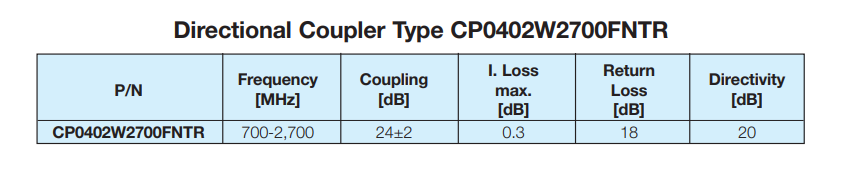
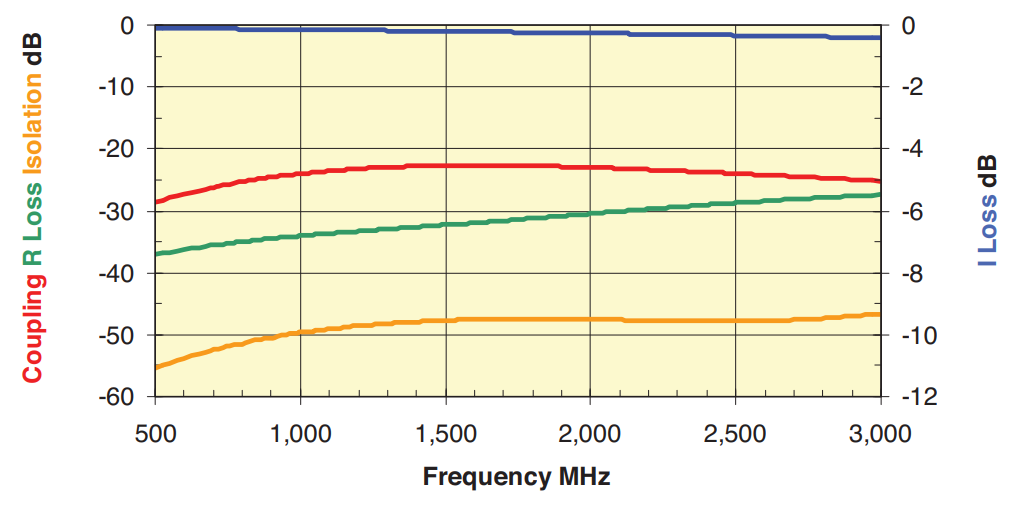
Thinfilm multilayer technology is used to create the ITF High Directivity Broad Band LGA Coupler. The technology allows for the development of a miniature component with excellent high-frequency performance and a durable construction for stable automatic assembly. Over a small frequency range, the Wide Band High Directivity Coupler maintains a robust coupling factor.
CP0402W2700FNTR Features
• Inherent Low Profile
• Self Alignment during Reflow
• Excellent Solderability
• Low Parasitics
• Better Heat Dissipation
• Operating/Storage Temp -40°C to +85°C
• Power Rating 3W RF Cont
Specifications
- TypeParameter
- Factory Lead Time14 Weeks
- Contact Plating
Contact plating (finish) provides corrosion protection for base metals and optimizes the mechanical and electrical properties of the contact interfaces.
Tin - Mount
In electronic components, the term "Mount" typically refers to the method or process of physically attaching or fixing a component onto a circuit board or other electronic device. This can involve soldering, adhesive bonding, or other techniques to secure the component in place. The mounting process is crucial for ensuring proper electrical connections and mechanical stability within the electronic system. Different components may have specific mounting requirements based on their size, shape, and function, and manufacturers provide guidelines for proper mounting procedures to ensure optimal performance and reliability of the electronic device.
Surface Mount - Package / Case
refers to the protective housing that encases an electronic component, providing mechanical support, electrical connections, and thermal management.
0402 (1005 Metric) - Number of Pins4
- Packaging
Semiconductor package is a carrier / shell used to contain and cover one or more semiconductor components or integrated circuits. The material of the shell can be metal, plastic, glass or ceramic.
Tape & Reel (TR) - Published2013
- Part Status
Parts can have many statuses as they progress through the configuration, analysis, review, and approval stages.
Active - Moisture Sensitivity Level (MSL)
Moisture Sensitivity Level (MSL) is a standardized rating that indicates the susceptibility of electronic components, particularly semiconductors, to moisture-induced damage during storage and the soldering process, defining the allowable exposure time to ambient conditions before they require special handling or baking to prevent failures
1 (Unlimited) - Termination
Termination in electronic components refers to the practice of matching the impedance of a circuit to prevent signal reflections and ensure maximum power transfer. It involves the use of resistors or other components at the end of transmission lines or connections. Proper termination is crucial in high-frequency applications to maintain signal integrity and reduce noise.
SMD/SMT - Max Operating Temperature
The Maximum Operating Temperature is the maximum body temperature at which the thermistor is designed to operate for extended periods of time with acceptable stability of its electrical characteristics.
85°C - Min Operating Temperature
The "Min Operating Temperature" parameter in electronic components refers to the lowest temperature at which the component is designed to operate effectively and reliably. This parameter is crucial for ensuring the proper functioning and longevity of the component, as operating below this temperature may lead to performance issues or even damage. Manufacturers specify the minimum operating temperature to provide guidance to users on the environmental conditions in which the component can safely operate. It is important to adhere to this parameter to prevent malfunctions and ensure the overall reliability of the electronic system.
-40°C - Applications
The parameter "Applications" in electronic components refers to the specific uses or functions for which a component is designed. It encompasses various fields such as consumer electronics, industrial automation, telecommunications, automotive, and medical devices. Understanding the applications helps in selecting the right components for a particular design based on performance, reliability, and compatibility requirements. This parameter also guides manufacturers in targeting their products to relevant markets and customer needs.
General Purpose - Construction
Construction in electronic components refers to the design and materials used in the manufacturing of the components. It encompasses the physical structure, arrangement, and integration of various parts like substrates, conductors, and insulators. The construction impacts the performance, reliability, and thermal properties of the component, influencing how it interacts with electrical signals and other components in a circuit. Different construction techniques can also affect the size, weight, and cost of the electronic component.
COMPONENT - Frequency
In electronic components, the parameter "Frequency" refers to the rate at which a signal oscillates or cycles within a given period of time. It is typically measured in Hertz (Hz) and represents how many times a signal completes a full cycle in one second. Frequency is a crucial aspect in electronic components as it determines the behavior and performance of various devices such as oscillators, filters, and communication systems. Understanding the frequency characteristics of components is essential for designing and analyzing electronic circuits to ensure proper functionality and compatibility with other components in a system.
700MHz~2.7GHz - Case Code (Metric)
Case Code (Metric) in electronic components refers to a standardized system that specifies the dimensions of surface-mount devices (SMD) in millimeters, consisting of a four-digit number where the first two digits represent the width and the last two digits represent the height of the component, measured in tenths of a millimeter. The metric case codes are standardized by organizations such as the EIA and IEC, and are often compared to the Imperial code which uses inches, allowing for easier identification and selection of components across different regions and industries. This coding system is widely used in the design and manufacturing of electronic devices, particularly in applications requiring compact and efficient component layouts, and is essential for engineers and designers to ensure proper component selection and facilitate the assembly process in electronic manufacturing.
1005 - Case Code (Imperial)
The term "Case Code (Imperial)" in electronic components refers to a standardized system used to specify the physical dimensions and package types of components, particularly capacitors and resistors. This code helps manufacturers and engineers identify the size and form factor of the component, ensuring compatibility with circuit designs and PCB layouts. In the context of electronic components, the Case Code (Imperial) typically follows a numerical format that indicates the length and width of the component in inches. For example, a Case Code of 1206 signifies a component that measures 0.12 inches by 0.06 inches. This coding system is essential for selecting the correct components for specific applications, as it provides a quick reference to the physical characteristics of the part, including its footprint and mounting style.
0402 - RF/Microwave Device Type
The parameter "RF/Microwave Device Type" in electronic components refers to the specific type or category of devices designed to operate within the radio frequency (RF) and microwave frequency ranges. These devices are engineered to handle high-frequency signals and are commonly used in various applications such as wireless communication, radar systems, satellite communication, and more. Examples of RF/Microwave device types include amplifiers, filters, mixers, oscillators, antennas, and transceivers. Understanding the RF/Microwave device type is crucial for selecting the appropriate component that meets the requirements of a particular RF system or application.
DIRECTIONAL COUPLER - Insertion Loss (dB)
Insertion Loss (dB) is a parameter used to measure the amount of signal loss that occurs when a component is inserted into a transmission line or circuit. It is typically expressed in decibels (dB) and represents the difference in signal power before and after the insertion of the component. A higher insertion loss value indicates greater signal attenuation or reduction in signal strength. Insertion loss is an important consideration in electronic components such as filters, amplifiers, and connectors, as it can impact the overall performance and efficiency of a system. Minimizing insertion loss is often a key design goal to ensure optimal signal integrity and transmission quality.
0.3 dB - Characteristic Impedance
Characteristic impedance is a fundamental property of transmission lines and refers to the specific impedance that a transmission line presents to an electrical wave propagating along it. It is determined by the physical parameters of the transmission line, including its inductance and capacitance per unit length. When the line is terminated with a load that matches its characteristic impedance, maximum power transfer occurs, minimizing reflections and signal losses. In high-frequency applications, maintaining the characteristic impedance is crucial for signal integrity and performance.
50Ohm - Return Loss
In telecommunications, return loss is a measure in relative terms of the power of the signal reflected by a discontinuity in a transmission line or optical fiber.
18dB - Coupler Type
The parameter "Coupler Type" in electronic components refers to the method by which signals are transferred between two circuits or systems. It defines the physical and functional characteristics of the coupling mechanism, which can be electrical, optical, or mechanical. Common examples include capacitive, inductive, or transformer couplers in electrical applications and fiber optic couplers in optical applications. The choice of coupler type affects factors such as signal integrity, impedance matching, and cross-talk.
Standard - Coupling Factor
Coupling Factor (CF) measures the coupling between classes excluding coupling due to inheritance. It is the ratio between the number of actually coupled pairs of classes in a scope (e.g., package) and the possible number of coupled pairs of classes. CF is primarily applicable to object-oriented systems.
24dB - RoHS Status
RoHS means “Restriction of Certain Hazardous Substances” in the “Hazardous Substances Directive” in electrical and electronic equipment.
ROHS3 Compliant
CP0402W2700FNTR Advantages
• Inherent Low Profile
• Self Alignment during Reflow
• Excellent Solderability
• Low Parasitics
• Better Heat Dissipation
CP0402W2700FNTR Applications
• Mobile communications
• Satellite TV receivers
• GPS
• Vehicle location systems
• Wireless LAN’s
CP0402W2700FNTR Frequency
CP0402W2700FNTR Dimensions
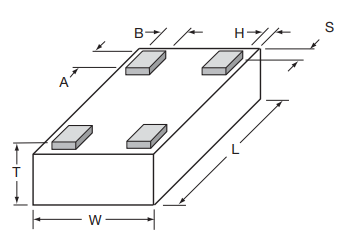
mm (inches)
| L | 1.00±0.05 (0.040±0.002) |
| W | 0.58±0.04 (0.023±0.002) |
| T | 0.35±0.05 (0.014±0.002) |
| A | 0.20±0.05 (0.008±0.002) |
| B | 0.18±0.05 (0.007±0.002) |
| S, H | 0.05±0.05 (0.002±0.002) |
Parts with Similar Specs
Trend Analysis
Datasheet PDF
- Datasheets :
- ReachStatement :
 A Comprehensive Guide to LTC6601IUF-1#PBF Active Filter Interface
06 March 2024155
 LM358AP OPAMP: Pinout, Specification, Datasheet
14 August 20246859
 SHT15 Humidity Sensor: Datasheet, Pinout and Features
06 September 20212592
 LM7905CT Voltage Regulator: Application, Specification, Datasheet
07 June 20213726
 Unlocking the Potential of the PIC18F4520IML Microcontroller
29 February 2024135
 A Comprehensive Guide to OP07CS8#PBF Operational Amplifier
06 March 2024180
 Can a 1616 battery be replaced by a 1620?
20 April 202266447
 PIC12F683 Microcontroller: 8-Bit, Datasheet, Pinout, Block Diagram
13 April 20226228
 Solid-state Drive (SSD): Classification and Architecture
22 May 202117537
 The History of Microscope
21 October 20218265
 GlobalFoundries Unveils $4 Billion Expansion in Singapore to Meet Rising Chip Demand
13 September 20234103
 Oregon's Semiconductor Boost: Governor Announces $240 Million Investment
06 October 20233346
 2026 Passive Components Market Update: Sourcing Tactics Amid Price Hikes and Lead Time Extensions
15 June 20265741
 Everything You Need to Know about RF Chip
14 January 202621195
 Amorphous Silicon Solar Cells: Features, Structure and Applications
22 August 20226825
 Comprehensive Analysis of Each Functional Circuit of Switching Power Supply
06 May 20225908
AVX Corporation
In Stock
United States
China
Canada
Japan
Russia
Germany
United Kingdom
Singapore
Italy
Hong Kong(China)
Taiwan(China)
France
Korea
Mexico
Netherlands
Malaysia
Austria
Spain
Switzerland
Poland
Thailand
Vietnam
India
United Arab Emirates
Afghanistan
Åland Islands
Albania
Algeria
American Samoa
Andorra
Angola
Anguilla
Antigua & Barbuda
Argentina
Armenia
Aruba
Australia
Azerbaijan
Bahamas
Bahrain
Bangladesh
Barbados
Belarus
Belgium
Belize
Benin
Bermuda
Bhutan
Bolivia
Bonaire, Sint Eustatius and Saba
Bosnia & Herzegovina
Botswana
Brazil
British Indian Ocean Territory
British Virgin Islands
Brunei
Bulgaria
Burkina Faso
Burundi
Cabo Verde
Cambodia
Cameroon
Cayman Islands
Central African Republic
Chad
Chile
Christmas Island
Cocos (Keeling) Islands
Colombia
Comoros
Congo
Congo (DRC)
Cook Islands
Costa Rica
Côte d’Ivoire
Croatia
Cuba
Curaçao
Cyprus
Czechia
Denmark
Djibouti
Dominica
Dominican Republic
Ecuador
Egypt
El Salvador
Equatorial Guinea
Eritrea
Estonia
Eswatini
Ethiopia
Falkland Islands
Faroe Islands
Fiji
Finland
French Guiana
French Polynesia
Gabon
Gambia
Georgia
Ghana
Gibraltar
Greece
Greenland
Grenada
Guadeloupe
Guam
Guatemala
Guernsey
Guinea
Guinea-Bissau
Guyana
Haiti
Honduras
Hungary
Iceland
Indonesia
Iran
Iraq
Ireland
Isle of Man
Israel
Jamaica
Jersey
Jordan
Kazakhstan
Kenya
Kiribati
Kosovo
Kuwait
Kyrgyzstan
Laos
Latvia
Lebanon
Lesotho
Liberia
Libya
Liechtenstein
Lithuania
Luxembourg
Macao(China)
Madagascar
Malawi
Maldives
Mali
Malta
Marshall Islands
Martinique
Mauritania
Mauritius
Mayotte
Micronesia
Moldova
Monaco
Mongolia
Montenegro
Montserrat
Morocco
Mozambique
Myanmar
Namibia
Nauru
Nepal
New Caledonia
New Zealand
Nicaragua
Niger
Nigeria
Niue
Norfolk Island
North Korea
North Macedonia
Northern Mariana Islands
Norway
Oman
Pakistan
Palau
Palestinian Authority
Panama
Papua New Guinea
Paraguay
Peru
Philippines
Pitcairn Islands
Portugal
Puerto Rico
Qatar
Réunion
Romania
Rwanda
Samoa
San Marino
São Tomé & Príncipe
Saudi Arabia
Senegal
Serbia
Seychelles
Sierra Leone
Sint Maarten
Slovakia
Slovenia
Solomon Islands
Somalia
South Africa
South Sudan
Sri Lanka
St Helena, Ascension, Tristan da Cunha
St. Barthélemy
St. Kitts & Nevis
St. Lucia
St. Martin
St. Pierre & Miquelon
St. Vincent & Grenadines
Sudan
Suriname
Svalbard & Jan Mayen
Sweden
Syria
Tajikistan
Tanzania
Timor-Leste
Togo
Tokelau
Tonga
Trinidad & Tobago
Tunisia
Turkey
Turkmenistan
Turks & Caicos Islands
Tuvalu
U.S. Outlying Islands
U.S. Virgin Islands
Uganda
Ukraine
Uruguay
Uzbekistan
Vanuatu
Vatican City
Venezuela
Wallis & Futuna
Yemen
Zambia
Zimbabwe


