Product
 Brand
Brand Articles
 Tools
Tools
Step-by-Step Guide to 2.2 k Ohm Resistor Color Code in 2025
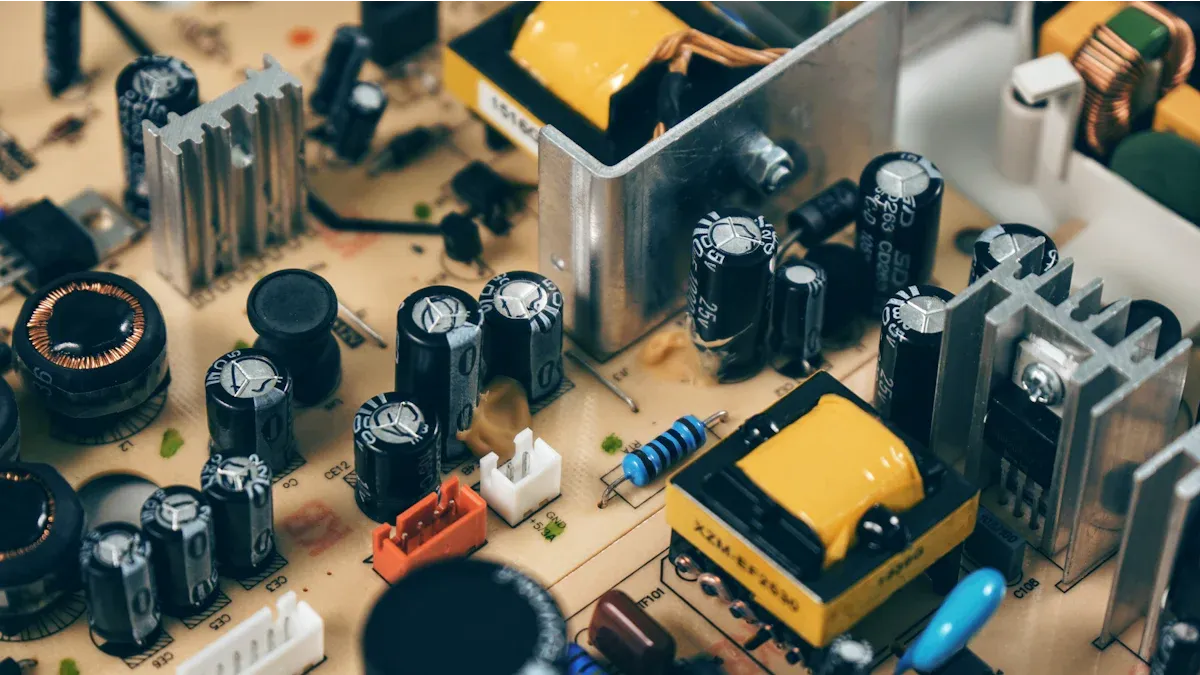
You can identify resistors with ease when you know what to look for. Many beginners struggle to spot a 2.2 ohm resistor or a 2.2 k ohm resistor color code. You do not need special tools to identify resistors. Every resistor shows its value using colored bands. If you want to find a 2.2 ohm resistor, you only need to match the color sequence. You will see that every 2.2 ohm resistor uses the same color bands. Practice will help you identify resistors faster. You will soon spot a 2.2 ohm resistor in any kit.
2.2 k Ohm Resistor Color Code
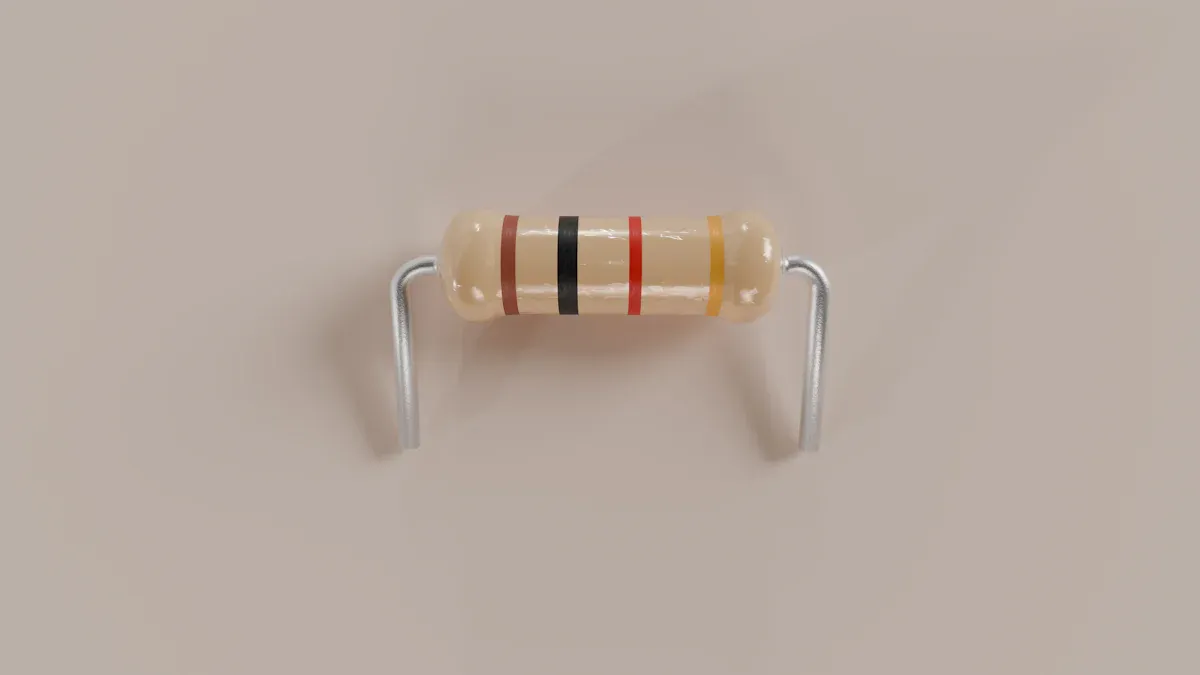
When you want to identify a 2.2 k ohm resistor color code, you need to look at the colored bands on the resistor body. These bands tell you the value and tolerance. You will find two main types: 4-band and 5-band resistors. Each type uses a different pattern to show the same value. Learning to read both types helps you work with any resistor you find in your projects.
4-Band Color Code
You will see four colored bands on a standard 4-band resistor. Each band has a special meaning. The first two bands show the digits. The third band is the multiplier. The fourth band tells you the tolerance. For a 2.2 k ohm resistor color code, the bands are:
First band: Red (2)
Second band: Red (2)
Third band: Red (×100)
Fourth band: Gold (±5% tolerance) or Silver (±10% tolerance)
Here is a table to help you remember:
| Band Position | Color | Meaning |
|---|---|---|
| 1st | Red | 2 (first digit) |
| 2nd | Red | 2 (second digit) |
| 3rd | Red | ×100 (multiplier) |
| 4th | Gold | ±5% (tolerance) |
| 4th (option) | Silver | ±10% (tolerance) |
You can spot this color pattern on most 2.2 k ohm resistors in kits and circuits.
5-Band Color Code
Some resistors use five bands for more accuracy. The 5-band 2.2 k ohm resistor color code adds an extra digit for better precision. You will see:
First band: Red (2)
Second band: Red (2)
Third band: Black (0)
Fourth band: Red (×100 multiplier)
Fifth band: Brown (±1% tolerance)
This pattern gives you a value of 2200 ohms with a tighter tolerance. The table below shows the details:
| Band Position | Color | Meaning |
|---|---|---|
| 1st | Red | 2 (first digit) |
| 2nd | Red | 2 (second digit) |
| 3rd | Black | 0 (third digit) |
| 4th | Red | ×100 (multiplier) |
| 5th | Brown | ±1% (tolerance) |
You will often find this type of resistor in precision circuits where accuracy matters.
Quick Reference Table
You can use a quick reference table to find the 2.2 k ohm resistor color code fast. This table shows the color, digit value, multiplier, and tolerance for each band. It also helps you decode other resistor values.
| Color | Digit Value | Multiplier | Tolerance | Temperature Coefficient (ppm/K) |
|---|---|---|---|---|
| Black | 0 | ×1 | N/A | N/A |
| Brown | 1 | ×10 | N/A | 100 |
| Red | 2 | ×100 | N/A | 50 |
| Orange | 3 | ×1,000 | N/A | 15 |
| Yellow | 4 | ×10,000 | N/A | 25 |
| Green | 5 | ×100,000 | N/A | N/A |
| Blue | 6 | ×1,000,000 | N/A | N/A |
| Violet | 7 | ×10,000,000 | N/A | N/A |
| Gray | 8 | ×100,000,000 | N/A | N/A |
| White | 9 | ×1,000,000,000 | N/A | N/A |
| Gold | N/A | ×0.1 | ±5% | N/A |
| Silver | N/A | ×0.01 | ±10% | N/A |
| None | N/A | N/A | ±20% | N/A |
Tip: Always read the bands from left to right, starting with the band closest to the edge. This helps you avoid mistakes when reading the 2.2 k ohm resistor color code.
You now have the tools to spot the correct color bands for both 4-band and 5-band resistors. With this knowledge, you can quickly identify a 2.2 k ohm resistor in any electronics project.
How to Read Color Coded Resistors
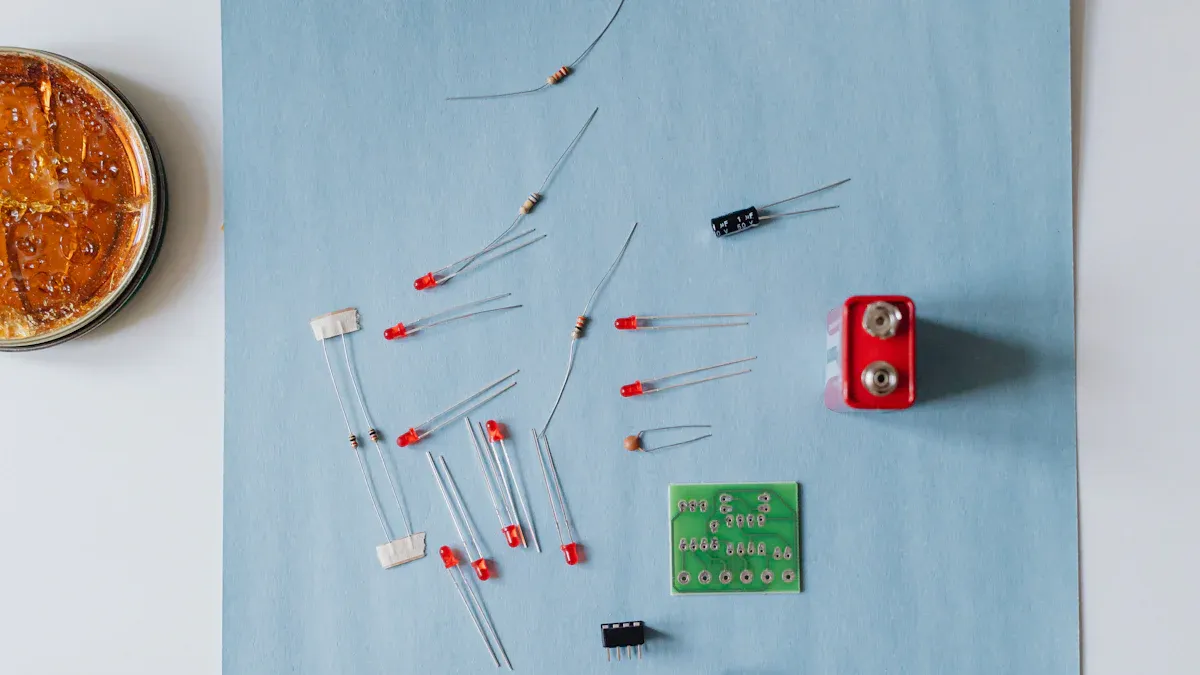
Reading Direction
When you pick up a 2.2 ohm resistor, you need to know how to read the bands in the right order. Start by finding the tolerance band. This band is usually gold, silver, or brown. It sits farther from the other bands and has extra space before it. Hold the resistor so the tolerance band is on the right side. The bands that are closer together should be on the left. Now, read the color bands from left to right. This method works for all color coded resistors.
Tip: Always check the spacing between the bands. The first band is closest to the edge, while the tolerance band is set apart.
Here is a simple way to remember the steps:
Place the resistor with this band on the right.
Identifying Tolerance Bands
The tolerance band tells you how much the actual value of your 2.2 ohm resistor can vary. Most 2.2 ohm resistors use a gold band for ±5% tolerance. Some use a brown band for ±1% or a silver band for ±10%. The table below shows the most common tolerance band colors:
| Tolerance Band Color | Tolerance Value |
|---|---|
| Gold | ±5% |
| Silver | ±10% |
| Brown | ±1% |
You should always check the tolerance band before reading the rest of the color coded resistors. This helps you avoid mistakes and ensures you get the correct value.
Using a Color Code Chart
A color code chart helps you decode any 2.2 ohm resistor quickly. The chart lists each color, its digit value, and its multiplier. In 2025, most educational materials use the standard 4-band and 5-band color code charts. These charts follow the IEC 60063 standard, which makes it easy to find the value of any resistor. You can find these charts in textbooks, online tools, and classroom posters.
If you ever feel unsure, keep a color code chart nearby. Many students use these charts when learning to read color coded resistors. Practice with your chart and a real 2.2 ohm resistor to build your skills.
Step-by-Step: How to Read 2.2 k Ohm Resistor
4-Band Step-by-Step
You can read a 2.2 k ohm resistor with a 4-band color code by following these steps:
Hold the resistor so the tolerance band (usually gold or silver) is on the right side. This band sits farther from the other bands.
Look at the bands from left to right, starting with the band closest to the edge.
Use a color code chart to match each color to its digit. For a 2.2 k ohm resistor, the first band is red (2), the second band is red (2), and the third band is red (multiplier ×100).
The fourth band shows the tolerance. Gold means ±5%, and silver means ±10%.
Combine the first two digits (2 and 2) to get 22. Multiply 22 by 100 to get 2200 ohms, or 2.2 k ohms.
Check the tolerance to know how much the actual value can vary.
Tip: Always double-check the color bands under good lighting. Some colors can look similar, especially if the resistor is old.
5-Band Step-by-Step
Some resistors use a 5-band color code for more accuracy. Here is how you read a 2.2 k ohm resistor with five bands:
Hold the resistor with the tolerance band (often brown) on the right side.
Read the five bands from left to right.
The first three bands show the digits. For a 2.2 k ohm resistor, the colors are red (2), red (2), and black (0).
The fourth band is the multiplier. Red means ×100.
The fifth band shows the tolerance. Brown means ±1%.
Put the digits together (2, 2, 0) to get 220. Multiply 220 by 100 to get 22,000 ohms. For a 2.2 k ohm resistor, you should see 2, 2, 0, red, and brown. If you see 22,000 ohms, check if you have read the bands in the right order. For 2.2 k ohms, the correct sequence is red, red, black, red, brown.
Note: The 5-band code gives you a more precise resistor value. You will often find these in circuits that need high accuracy.
Verifying with a Multimeter
You can use a digital multimeter to check if your resistor matches the color code value. Here is how you do it:
Set your multimeter to the resistance mode. Choose a range that covers 2.2 k ohms, such as 20kΩ.
Hold the resistor by the body. Place one probe on each lead. Make sure you press the probes firmly for a good connection.
Look at the display. A good resistor will show a value close to 2.2 k ohms. The reading should fall between about 2.09 k and 2.31 k ohms if the tolerance is ±5%.
If the display shows '1' or 'OL', try a higher range setting. If the reading is near zero, use a lower range.
Do not measure the resistor while it is in a circuit. Other parts can change the reading.
Remember, temperature and tolerance can affect the result. If the value is far from 2.2 k ohms, the resistor may be faulty.
✅ Using a multimeter helps you confirm the resistor value. This step is important if you want to avoid mistakes in your project.
Common Mistakes to Avoid
Misreading Colors
You may find it hard to tell the difference between some bands on a 2.2 ohm resistor. Red, orange, and brown can look very similar, especially if you work in poor lighting. Old 2.2 ohm resistor bands can fade or get dirty, making it even harder to see the right color. If you read the bands from the wrong side, you will get the wrong value for your 2.2 ohm resistor. Always start reading from the end where the bands are closer together. Many beginners also mix up violet and grey bands. This mistake can lead you to use the wrong 2.2 ohm resistor in your project.
Tip: Use a bright light and, if needed, a magnifying glass to check each 2.2 ohm resistor before you use it.
Confusing Band Types
You might think every 2.2 ohm resistor uses four bands, but some have five or even six. If you count the bands wrong, you will not get the right value. Many people confuse the multiplier band with the tolerance band on a 2.2 ohm resistor. The third band is the multiplier, and the last band shows tolerance. This is a common problem, especially with 5-band 2.2 ohm resistor types. If you mix these up, you could pick a 2.2 ohm resistor that does not work for your circuit.
Always count the bands first.
Remember, the multiplier comes before the tolerance band on a 2.2 ohm resistor.
If you feel unsure, check your answer with a multimeter.
Overlooking Tolerance
You may forget to check the tolerance band on your 2.2 ohm resistor. This band tells you how much the actual value can change. If you skip this step, you might use a 2.2 ohm resistor that is not accurate enough for your needs. Some circuits need a 2.2 ohm resistor with a tight tolerance. Others can use a wider range. Always look for the last band on your 2.2 ohm resistor and match it to the tolerance chart.
Note: If you cannot read the bands on your 2.2 ohm resistor, use a multimeter to check the value. This helps you avoid mistakes from faded or dirty bands.
2.2 Ohm Resistor Color Code vs 2.2 k Ohm
Key Differences
You might think a 2.2 ohm resistor and a 2.2 k ohm resistor look similar, but they work very differently in a circuit. The 2.2 ohm resistor color code uses red, red, gold, and gold bands. This code tells you the resistor has a very low resistance. The 2.2 k ohm resistor uses red, red, red, and gold bands. This color code shows a much higher resistance. If you mix up these two, your circuit will not work as planned.
A 2.2 ohm resistor lets a lot of current flow. You use it when you need to limit current just a little. The 2.2 k ohm resistor blocks much more current. You use it when you want to protect parts or control voltage. The 2.2 ohm resistor color code is easy to remember, but you must always check the bands carefully. Even one wrong band can change the resistor’s value by a huge amount.
| Resistor Type | Color Code (4-band) | Resistance Value |
|---|---|---|
| 2.2 ohm resistor | Red-Red-Gold-Gold | 2.2 Ω |
| 2.2 k ohm resistor | Red-Red-Red-Gold | 2,200 Ω (2.2 kΩ) |
Why It Matters
You need to know the difference between a 2.2 ohm resistor and a 2.2 k ohm resistor to keep your circuits safe and working. The 2.2 ohm resistor color code helps you pick the right part for high current paths. If you use a 2.2 ohm resistor where you need a 2.2 k ohm resistor, too much current will flow. This can damage your circuit or even cause parts to burn out.
If you use the wrong resistor, your project might not work, or you could break important parts. Always double-check the color bands before you place a 2.2 ohm resistor in your circuit.
The 2.2 k ohm resistor is common in voltage dividers, sensor circuits, and digital systems. Its higher resistance protects other parts and helps your circuit behave as expected. The 2.2 ohm resistor, on the other hand, is best for applications where you need only a small resistance.
The 2.2 k ohm resistor balances between high and low resistance values.
It is commonly used in voltage dividers, sensor circuits, and digital systems as pull-up or pull-down resistors.
Its high resistance helps protect other components and is essential for precise circuit behavior.
The resistor's affordability and availability make it a popular choice in electronics projects.
You can avoid mistakes by learning the 2.2 ohm resistor color code and always checking your work. This habit keeps your circuits safe and reliable.
Tips for Accurate Identification
Good Lighting
You need good lighting to see the bands on a 2.2 ohm resistor clearly. Many resistors have small bands that can look faded or similar in dim light. Place your work area near a window or use a bright desk lamp. Natural light helps you see the true colors on each resistor. If you work at night, choose a lamp with a white bulb. This makes it easier to spot the red, gold, and other bands on a 2.2 ohm resistor. Good lighting helps you avoid mistakes when you identify resistors, especially if you work with old or dusty parts.
Tip: Always check the bands under strong light before you read the value. This simple step can prevent errors in your electronics projects.
Using Magnification
Sometimes, the bands on a 2.2 ohm resistor are very thin or hard to see. You can use a magnifying glass or a jeweler’s loupe to make the bands look bigger. This tool helps you tell the difference between similar colors, like red and brown. Magnification is helpful if you have trouble seeing small details or if the resistor is old. Many hobbyists keep a small magnifier on their workbench for this reason. You will find it much easier to read the bands and avoid mixing up the digits or multipliers on a 2.2 ohm resistor.
Hold the magnifier close to the resistor.
Move it until the bands look sharp and clear.
Double-check each band before you record the value.
Keeping a Chart Handy
You may not remember every band value for each 2.2 ohm resistor. A color code chart helps you decode the bands quickly. Most resistors do not have printed numbers, so you must use the chart to find the value and tolerance. Keep a printed chart on your desk or save a digital version on your phone. This chart lets you check the meaning of each band without guessing. You can use it for 4-band, 5-band, or even 6-band resistors. When you use a chart, you make fewer mistakes and save time during your projects.
Note: A color code chart is a must-have for anyone who works with resistors. It helps you select the right 2.2 ohm resistor and keeps your circuits safe.
A chart also helps you avoid confusion with similar patterns. For example, a 2.2k ohm resistor uses red, red, red, and gold bands. The first two reds mean '2' and '2', the third red is the multiplier (100), and gold shows ±5% tolerance. If you ever feel unsure, check the chart and confirm with a multimeter for best results.
Understanding the color code for a 2.2 k ohm resistor helps you work confidently with electronics. Start by identifying the tolerance band and reading the digits and multiplier. Practice with different resistor values to spot color differences and avoid mistakes. Always use a multimeter to confirm your reading. Explore tutorials and guides to strengthen your skills. With regular practice, you will master resistor identification and build a strong foundation in electronics.
FAQ
What if I cannot tell the difference between red and brown bands?
Use a magnifying glass and bright light. Red looks brighter than brown. If you still feel unsure, check the value with a multimeter. This tool gives you an exact reading.
Can I use a 2.2 k ohm resistor in place of a 2.2 ohm resistor?
No, you cannot. A 2.2 k ohm resistor has much higher resistance. Your circuit will not work as expected. Always match the resistor value to your project needs.
How do I know if my resistor is 4-band or 5-band?
Count the colored bands. A 4-band resistor has four bands. A 5-band resistor has five. The extra band in a 5-band resistor gives more precise values.
What should I do if the color bands are faded or dirty?
Clean the resistor gently with a soft cloth.
If you still cannot read the bands, use a multimeter.
Replace the resistor if you cannot confirm the value.
Is it safe to measure a resistor while it is in a circuit?
No, you should not measure a resistor in-circuit. Other parts can affect the reading. Always remove the resistor before testing with a multimeter.
 UTMEL
UTMEL
We are the professional distributor of electronic components, providing a large variety of products to save you a lot of time, effort, and cost with our efficient self-customized service. careful order preparation fast delivery service
 Power Converter with Inbuilt Charging technology using WBG DevicesSaumitra Jagdale18 January 20242226
Although plug-in electric vehicles (PEVs) have gained traction globally, reducing cost, weight, and volume, while enhancing power conversion efficiency in chargers remains crucial. PEVs, recognized by governments for curbing fossil fuel consumption and emissions, rely on sizable battery packs for substantial all-electric range coverage.
Read More How to Choose the Best Deep Cycle Battery in 2024 | Reviews and Buying GuideUTMEL21 July 20252487
You will learn about deep-cycle batteries in this post, including their main characteristics, things to think about while selecting one, and more.
Read More CR123A vs 123A Batteries Explained for 2025UTMEL27 May 20252942
CR123A and 123A batteries differ in capacity, lifespan, and compatibility. Learn how these differences affect your device's performance and safety.
Read More A Guide to the Best AG13 Battery SubstitutesUTMEL27 May 20251812
Discover the top AG13 battery equivalents for 2025, including LR44, SR44, 357, and A76. Compare performance, compatibility, and cost for your devices.
Read More CR2450 vs CR2032 BatteriesUTMEL18 June 20252027
CR2450 vs CR2032: CR2450 offers higher capacity and is larger, ideal for high-drain devices, while CR2032 suits compact, low-power gadgets. Learn more.
Read More
Subscribe to Utmel !
![P5916G6-BK]() P5916G6-BK
P5916G6-BKAnderson Power Products, Inc.
![M22-1900005]() M22-1900005
M22-1900005Harwin Inc.
![R191455000]() R191455000
R191455000Radiall USA, Inc.
![5745968-8]() 5745968-8
5745968-8TE Connectivity AMP Connectors
![SDEB-9S(55)]() SDEB-9S(55)
SDEB-9S(55)Hirose Electric Co Ltd
![2744380]() 2744380
2744380Phoenix Contact
![R280222000]() R280222000
R280222000Radiall USA, Inc.
![SNT-100-BK-G-H]() SNT-100-BK-G-H
SNT-100-BK-G-HSamtec Inc.
![HDBB-25S(05)]() HDBB-25S(05)
HDBB-25S(05)Hirose Electric Co Ltd
![E6341G2]() E6341G2
E6341G2Anderson Power Products, Inc.