

 Product
 Brand
Brand Articles
 Tools
Tools
Introduction to Light-emitting Diode

Light Emitting Diode (LED) Working Principle
Summary: A Light-Emitting Diode (LED) is a highly efficient semiconductor device that converts electrical energy directly into light via electroluminescence. This updated 2026 guide covers LED working principles, key parameters, material types, and the latest trends in smart lighting and Mini-LED display technologies.
Table of Contents
I. What Is a Light-Emitting Diode (LED)?
A light-emitting diode (LED) is a ubiquitous semiconductor device that emits light when an electric current passes through it. This process, known as electroluminescence, occurs through the recombination of electrons and holes within the diode's structure. LEDs are renowned for their ability to efficiently convert electrical energy into light energy, making them a cornerstone of modern technology. Their applications are vast and continue to expand, ranging from general lighting and flat-panel displays to automotive lighting and advanced medical devices.
When electrons and holes recombine, they can radiate light across the visible spectrum. This property allows for the creation of LEDs that produce different colors. For instance, Gallium Arsenide (GaAs) diodes typically emit red light, Gallium Phosphide (GaP) diodes emit green light, Silicon Carbide (SiC) diodes emit yellow light, and Gallium Nitride (GaN) diodes emit blue light. Chemically, LEDs are broadly categorized into two main types: traditional inorganic light-emitting diodes (LEDs) and organic light-emitting diodes (OLEDs), which are based on organic compounds.
First developed in 1962, early LEDs could only produce a low-intensity red light. Over the decades, continuous technological advancements have led to the development of a wide array of monochromatic and white-light LEDs. Today, commercially available LEDs span the entire visible spectrum, as well as infrared and ultraviolet wavelengths. Initially used as simple indicator lights and in display panels, LEDs are now a dominant technology in high-resolution displays and general-purpose lighting, having largely replaced incandescent and fluorescent sources in many applications.
II. What Are the Key Parameters of LEDs?
The key parameters of LEDs include limit parameters like maximum power consumption and forward current, alongside electrical and optical parameters such as luminous intensity and peak wavelength.
1. Limit Parameters
Allowable Power Consumption (Pm): This is the maximum power that an LED can handle, calculated as the product of the forward DC voltage and the current. Exceeding this value will cause the LED to overheat and fail.
Maximum Forward DC Current (IFm): The maximum continuous forward DC current that can be passed through the LED. Exceeding this can permanently damage the diode.
Maximum Reverse Voltage (VRm): The maximum reverse voltage that can be applied across the LED without causing breakdown and damage.
Working Environment (Topm): The ambient temperature range within which the LED can operate safely and efficiently. Operating outside this range can lead to reduced performance and lifespan.
2. Electrical and Optical Parameters
Spectral Distribution and Peak Wavelength: An LED does not emit light at a single wavelength but rather over a range. The peak wavelength (λp) is the wavelength at which the LED emits the most intense light.
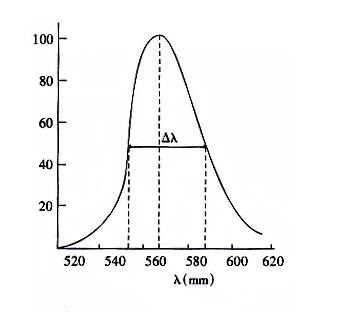
Figure 1: Spectral distribution and peak wavelength of an LED.
Luminous Intensity (Iv): This measures the brightness of an LED in a specific direction, typically along the central axis. It is measured in candelas (cd) or, more commonly for LEDs, millicandelas (mcd).
Spectral Half-Width (Δλ): This represents the spectral purity of the light. It is the width of the spectrum at half of the peak luminous intensity. A smaller value indicates a more monochromatic light.
Viewing Angle (2θ1/2): This is the total angle at which the luminous intensity is at least half of the axial intensity. A wider viewing angle means the light is more spread out.
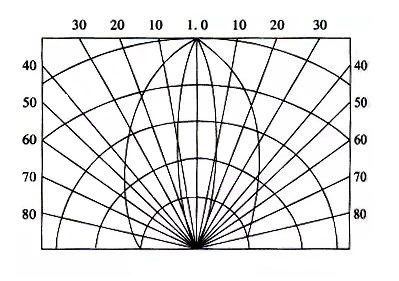
Figure 2: Angle distribution of luminous intensity for different LED types.
Forward Current (If): The recommended continuous forward current for normal operation. For optimal lifespan, it is often recommended to operate below the maximum rated current.
Forward Voltage (Vf): The voltage drop across the LED when it is operating at a specified forward current (e.g., 20mA). This value typically ranges from 1.4V to 3V and decreases as the temperature increases.
V-I Characteristics: The relationship between the voltage applied across the LED and the current that flows through it. The LED begins to conduct and emit light significantly only after the voltage reaches a certain threshold.
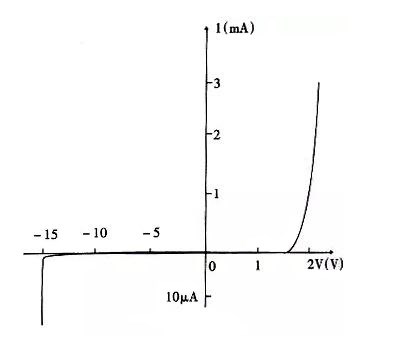
Figure 3: V-I characteristics of a typical LED.
III. How Do Light-Emitting Diodes Work?
Light-emitting diodes work by passing an electric current through a PN junction, causing electrons and holes to recombine and release energy in the form of photons. The core of a light-emitting diode is a semiconductor wafer composed of a P-type semiconductor and an N-type semiconductor. The region where these two materials meet is called a PN junction. In certain semiconductor materials, when minority carriers (e.g., electrons in the P-region) and majority carriers (e.g., holes in the P-region) recombine at this junction, they release excess energy in the form of photons (light). This process directly converts electrical energy into light energy. When a reverse voltage is applied, it becomes difficult to inject minority carriers across the junction, and thus no light is emitted.
The light emission process can be understood by considering three conditions:
1. No Voltage Applied
Without any external voltage, electrons from the N-type material diffuse across the PN junction to fill holes in the P-type material. This creates a thin insulating layer called the depletion region, where there are no free charge carriers (electrons or holes). As a result, no current can flow.
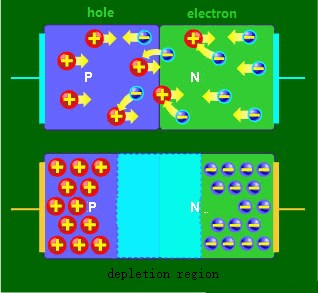
Figure 4: Depletion region in an LED with no applied voltage.
2. Forward Voltage Applied
When a forward voltage is applied (positive terminal to the P-type material, negative to the N-type), it opposes the depletion region's internal field. This allows electrons from the N-region and holes from the P-region to be injected across the junction. As they recombine, they release energy as photons, producing light. The energy released, and thus the wavelength (color) of the light, depends on the semiconductor material's bandgap. This is why different materials are used to create LEDs of different colors.
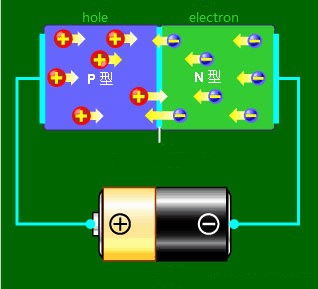
Figure 5: Recombination of electrons and holes under forward voltage, emitting light.
3. Reverse Voltage Applied
When a reverse voltage is applied (positive terminal to the N-type material, negative to the P-type), it reinforces the depletion region. Electrons in the N-type material are attracted toward the positive terminal, and holes in the P-type material are attracted toward the negative terminal, pulling them away from the junction. This widens the depletion region and prevents current from flowing, so no light is emitted.
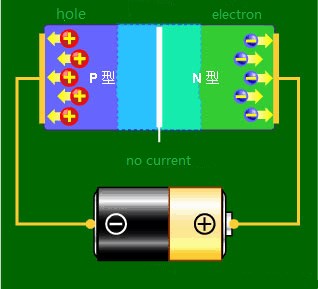
Figure 6: Widened depletion region under reverse voltage, blocking current flow.
IV. What Are the Different Types of LEDs?
LEDs are primarily categorized by their structure (Through-Hole, SMD, COB), emitted light spectrum (Visible, IR, UV), and chemical composition (Inorganic, OLED). Here are some of the most common types:
1. Based on Structure and Packaging
Through-Hole LEDs: These are the classic, small, bulb-shaped LEDs with two long metal leads for mounting on printed circuit boards (PCBs). They are commonly used as indicator lights.
Surface-Mount Device (SMD) LEDs: These are compact, low-profile LEDs designed to be mounted directly onto the surface of a PCB. Their small size and high brightness make them ideal for general lighting, displays, and backlighting.
Chip-on-Board (COB) LEDs: COB technology involves mounting multiple LED chips directly onto a substrate to form a single module. This results in a dense array of LEDs that provides a uniform, high-intensity light source, often used in high-power applications like downlights and high-bay lights.
| LED Packaging Type | Primary Characteristics | Common Applications |
|---|---|---|
| Through-Hole | Durable, easy to solder manually, directional light | Indicator lights, hobbyist projects, legacy electronics |
| SMD (Surface-Mount) | Compact, high brightness, wide viewing angle | LED strips, display screens, modern PCB designs |
| COB (Chip-on-Board) | High intensity, excellent thermal management, uniform light | Industrial lighting, high-bay lights, premium downlights |
2. Based on Emitted Light
Visible-Light LEDs: These emit light in the visible spectrum and are available in various colors, including red, green, blue, yellow, and amber. White light is typically produced by combining a blue LED with a yellow phosphor coating or by mixing red, green, and blue (RGB) LEDs.
Infrared (IR) LEDs: These emit light in the infrared spectrum, which is invisible to the human eye. They are widely used in remote controls, night-vision systems, and optical communication.
Ultraviolet (UV) LEDs: These emit light in the ultraviolet spectrum and are used for applications such as curing, sterilization, and forensic analysis.
3. Based on Chemical Composition
Inorganic LEDs: The most common type, made from inorganic semiconductor materials like Gallium Nitride (GaN) and Gallium Arsenide (GaAs).
Organic Light-Emitting Diodes (OLEDs): These use organic compounds to form the emissive layer. OLEDs can be made into thin, flexible sheets and are used to create vibrant, high-contrast displays for TVs, smartphones, and lighting panels.
V. What Materials Are Used in Light-Emitting Diodes?
The color of light emitted by an LED is determined by its semiconductor material, such as Gallium Nitride (GaN) for blue light or Gallium Arsenide Phosphide (GaAsP) for red and yellow light. Different materials have different bandgaps, which dictates the energy and wavelength of the emitted photons. The table below lists some common semiconductor materials and the corresponding colors they produce.
| LED Material | Color |
|---|---|
| Gallium Arsenide (GaAs) | Infrared |
| Aluminum Gallium Arsenide (AlGaAs) | Red and Infrared |
| Gallium Arsenide Phosphide (GaAsP) | Red, Orange, and Yellow |
| Gallium Phosphide (GaP) | Red, Yellow, and Green |
| Aluminum Gallium Indium Phosphide (AlGaInP) | High-Brightness Red, Orange, and Yellow |
| Indium Gallium Nitride (InGaN) | Green, Blue, and White (with phosphor) |
| Silicon Carbide (SiC) | Blue |
| Zinc Selenide (ZnSe) | Blue |
| Gallium Nitride (GaN) | Blue, Green |
VI. What Are the Main Applications of LEDs?
LEDs are widely used in general lighting, automotive illumination, LCD/OLED display backlighting, and communication signal displays due to their high efficiency and durability. The unique properties of LEDs—high efficiency, long lifespan, durability, and compact size—have enabled their use in a vast and growing range of applications. From simple indicators to complex lighting systems, LEDs have become an integral part of modern life.
1. Display Screens and Communication Signal Displays
LEDs are fundamental to modern display technology. Large-format video displays, billboards, and public information signs use arrays of RGB LEDs to create bright, dynamic images that are visible even in direct sunlight. In traffic signals and pedestrian crossings, LEDs have replaced traditional incandescent bulbs, offering greater reliability, longer life, and significant energy savings.
2. Automotive Industry
The automotive sector has widely adopted LEDs for both interior and exterior lighting. They are used in headlights, taillights, brake lights, and turn signals, where their fast response time enhances safety. Inside the vehicle, LEDs provide illumination for dashboards, infotainment displays, and ambient lighting, offering design flexibility and a premium feel.
3. LCD and OLED Display Backlighting
LEDs are the primary backlighting technology for liquid crystal displays (LCDs) used in televisions, computer monitors, and mobile devices. More recently, advanced technologies like Mini-LEDs have emerged, using thousands of tiny LEDs to create more precise local dimming zones, resulting in significantly improved contrast and image quality. This has positioned Mini-LED TVs as strong competitors to OLED displays, which do not require a backlight as each pixel emits its own light.
4. LED Lighting
General lighting is one of the largest markets for LEDs. LED bulbs and fixtures are now the standard for residential, commercial, and industrial lighting, offering dramatic energy savings and much longer lifespans compared to legacy technologies. The flexibility of LEDs has also enabled innovative lighting designs and the development of smart lighting systems that can be controlled remotely and customized for color and intensity.
5. Other Applications
LEDs are found in countless other products, including decorative lighting like Christmas lights, children's toys, and power indicators on electronic devices. Their low voltage requirements and durability make them safe and versatile for a wide range of consumer and industrial applications.
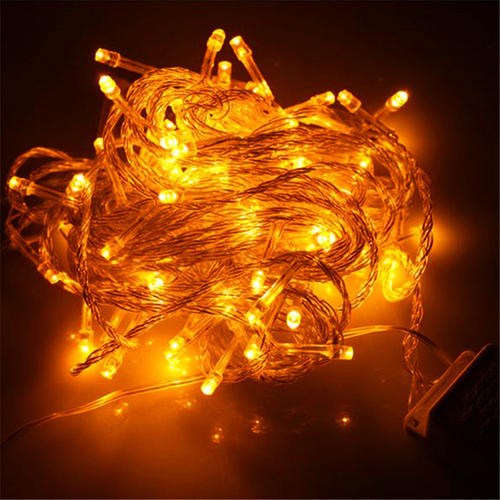
Figure 12: LED Christmas lights are popular for their vibrant colors, safety, and energy efficiency.
VII. What Are the Top LED Lighting Technology Trends in 2026?
The top LED technology trends for 2026 include the rapid adoption of Mini-LED displays, AI-integrated smart lighting, and human-centric tunable white LEDs. The field of LED technology continues to evolve at a rapid pace. While many of the trends predicted in previous years have materialized, new advancements are shaping the future of lighting and displays. Here is an updated look at the key trends as of 2026.
1. Ever-Increasing Efficiency and Lifespan
As of 2026, the luminous efficacy of commercial LED products has reached over 200 lm/W , with some high-end products exceeding 250 lm/W. In laboratory settings, researchers continue to push the boundaries, with theoretical efficiencies approaching 330 lm/W. Lifespans have also improved, with many commercial LEDs now rated for 50,000 to 100,000 hours of operation. This continuous improvement solidifies the LED's position as the most energy-efficient and long-lasting lighting technology available.
2. Closing the "Green Gap"
The "green gap"—the historically lower efficiency of green LEDs compared to their red and blue counterparts—has been a major focus of research. While the gap is not yet fully closed, significant progress has been made through new materials and device structures, such as V-defect engineering and novel carrier injection methods. These advancements are critical for improving the efficiency of color-mixed (RGB) white light systems and expanding the color gamut of LED displays.
3. Smart Lighting and IoT Integration
The integration of LEDs with information technology has given rise to a booming smart lighting market, valued at approximately $25 billion in 2026 and projected to exceed $50 billion by 2030 . As semiconductor devices, LEDs are easily controlled, making them perfect for IoT applications. Modern smart lighting systems offer features like remote control via mobile apps, automated scheduling, and dynamic adjustment of color temperature and brightness. Over 85% of residential LED strips now support RGB color-changing modes, and integration with smart home ecosystems has become standard.
4. The Rise of Mini-LED and the Evolution of Displays
While OLED technology continues to dominate the high-end display market, particularly in smartphones, Mini-LED backlighting has emerged as a powerful competitor for larger screens like TVs and monitors. By using thousands of tiny LEDs for backlighting, Mini-LED displays achieve superior contrast and brightness compared to traditional LCDs. Major manufacturers including Sony, Samsung, Hisense, and TCL have introduced RGB Mini-LED backlight systems in 2025-2026, creating a new tier of high-performance displays that bridge the gap between conventional LEDs and OLEDs.
5. Human-Centric Lighting
There is a growing emphasis on designing lighting systems that benefit human health and well-being. Tunable white LEDs, which can adjust their color temperature from warm (2700K) to cool white (6500K), are a key component of this trend. These systems can be programmed to mimic the natural changes in daylight, helping to regulate our circadian rhythms, improve mood, and boost productivity. This human-centric approach is becoming a standard feature in modern architectural and commercial lighting.
6. Advanced Color Rendering and Spectral Control
The traditional Color Rendering Index (CRI) is being supplemented by more advanced metrics as the spectral flexibility of LEDs increases. The ability to precisely control the spectral output of LEDs allows for the creation of light sources optimized for specific tasks, such as enhancing the color vibrancy of retail products, creating ideal growing conditions for plants in agricultural lighting, or providing optimal illumination for medical procedures.
7. Sustainable and Eco-Friendly Lighting
As global awareness of environmental issues grows, the lighting industry is placing greater emphasis on sustainability. LEDs already consume significantly less energy than traditional light sources, but manufacturers are now focusing on using recyclable materials, reducing hazardous substances, and designing products for easier end-of-life recycling. Natural lighting solutions that integrate daylight harvesting with LED systems are also gaining attention.
VIII. 2026 Update Summary
This article was originally published in 2020 and has been comprehensively updated in March 2026 to reflect the latest advancements in LED technology. Key updates include:
Updated Performance Metrics: Luminous efficacy and lifespan figures have been revised to reflect current 2026 standards, with commercial LEDs now commonly exceeding 200 lm/W and offering lifespans of 50,000-100,000 hours.
Smart Lighting and IoT: The section on trends has been significantly expanded to cover the rapid growth of smart lighting, its integration with the Internet of Things (IoT), and the rise of human-centric lighting systems that optimize for circadian rhythms and well-being.
Display Technology Advancements: The article now includes comprehensive information on the emergence of Mini-LED backlighting as a major technology in the display market, creating a new competitive landscape alongside OLEDs for high-end TVs and monitors.
Green LED Progress: Information on the "green gap" has been updated to note the significant research progress made in improving the efficiency of green LEDs through advanced materials and device structures.
Content Enhancement: The entire article has been thoroughly reviewed to correct any errors, improve clarity, enhance readability, and ensure all technical information is current and accurate for 2026. All original images have been retained for continuity and reference.
The continued innovation in LED technology ensures that it will remain a critical component in energy-efficient lighting, advanced displays, and smart connected systems for the foreseeable future.
Frequently Asked Questions
How long do modern LEDs actually last?
Modern LEDs typically last between 50,000 and 100,000 hours depending on the operating environment and thermal management. Unlike traditional incandescent bulbs that burn out suddenly, LEDs slowly dim over time, maintaining functional brightness for years or even decades.
Can LED lights help reduce electricity bills?
Yes, LEDs consume up to 80% less energy than traditional incandescent bulbs and significantly less than compact fluorescent lamps (CFLs). Upgrading a home or commercial space to LED lighting provides a rapid return on investment through substantially lower monthly electricity costs.
Do LED lights emit UV radiation?
Standard LEDs used for general lighting emit virtually no ultraviolet (UV) radiation. This makes them safer for human skin and ideal for illuminating sensitive materials like artwork, fabrics, or historical artifacts that would otherwise degrade under UV exposure.
What is the difference between OLED and LED?
Traditional LEDs use a backlight to illuminate pixels on a display, whereas OLEDs (Organic Light-Emitting Diodes) feature self-illuminating organic compounds. Because OLED pixels can turn off completely, they offer infinite contrast ratios and deeper blacks compared to standard LED screens.
 UTMEL
UTMEL
We are the professional distributor of electronic components, providing a large variety of products to save you a lot of time, effort, and cost with our efficient self-customized service. careful order preparation fast delivery service
What is a light emitting diode and how does it work?
A light-emitting diode (LED) is a semiconductor light source that emits light when current flows through it. Electrons in the semiconductor recombine with electron holes, releasing energy in the form of photons. Recent developments have produced high-output white light LEDs suitable for room and outdoor area lighting.
What does light emitting diode mean?
In the simplest terms, a light-emitting diode (LED) is a semiconductor device that emits light when an electric current is passed through it. Light is produced when the particles that carry the current (known as electrons and holes) combine together within the semiconductor material.
What is the working principle of light emitting diode?
Working Principle: A light-emitting diode is a two-lead semiconductor light source. It is a p–n junction diode that emits light when activated. When a suitable voltage is applied to the leads, electrons are able to recombine with electron holes within the device, releasing energy in the form of photons.
What is LED and its applications?
LEDs (Light Emitting Diodes) are the latest development in the lighting industry. Made popular by their efficiency, range of color, and long lifespan, LED lights are ideal for numerous applications including night lighting, art lighting, and outdoor lighting.
Can you use an LED as a diode?
Practically, LED can not be used as diodes. ... Reverse voltage rating (PIV rating) of LEDs is less than 5-10 volts, which is not enough for most of the applications. 2. Reverse leakage current even for low reverse voltages (less than 5-10 volts) is too large for LEDs.
 All You Need to Know About Rectifier CircuitUTMEL24 April 202518083
All You Need to Know About Rectifier Circuit
Read More 15 Key Elements of Diode SelectionUTMEL26 November 202119401
Hello everyone, I am Rose. Welcome back to the new post today. Diodes are one of the most common components in our circuit boards. So, what factors should be considered when selecting models?
Read More What is a PIN Diode?UTMEL04 February 202110547
While diodes with a simple PN junction are by far the most common type of diode in operation, in a variety of applications, other forms of diode may be used. The PIN diode is one type that is used for a number of circuits. In a variety of places, this diode type is used. For RF switching, the PIN diode is very fine, and the PIN structure in photodiodes is very useful as well.
Read More Microwave Diode: Introduction and TypesUTMEL07 January 202126481
Microwave diodes are diodes that work in the microwave frequency band. It is a solid-state microwave device. Microwave band usually refers to the frequency from 300 MHz to 3000 GHz. After the discovery of the point contact diode effect at the end of the 19th century, microwave diodes such as PIN diodes, varactor diodes, and Schottky diode tubes appeared one after another. Microwave diodes have the advantages of small size and high reliability, and are used in microwave oscillation, amplification, frequency conversion, switching, phase shifting and modulation.
Read More What Determines the Maximum Operating Frequency of a Diode?UTMEL29 June 202213333
Hello, wish you a wonderful day. In this essay, we first pose the following query: what determines the diode's maximum operating frequency? In regards to the solution, the first thing we need to understand is that the junction capacitance and the reverse recovery time of the diode are two distinct concepts. The charging and discharging times of the junction capacitance cannot match the reverse recovery time. You say that, why? Let's start by taking a look at these facts.
Read More
Subscribe to Utmel !
![NFM21PC104R1E3D]() NFM21PC104R1E3D
NFM21PC104R1E3DMurata Electronics
![BLM15PX331SN1D]() BLM15PX331SN1D
BLM15PX331SN1DMurata Electronics
![MPZ1608S300ATAH0]() MPZ1608S300ATAH0
MPZ1608S300ATAH0TDK Corporation
![BLM18BB470SN1D]() BLM18BB470SN1D
BLM18BB470SN1DMurata Electronics
![MMZ0402S151CT000]() MMZ0402S151CT000
MMZ0402S151CT000TDK Corporation
![BLM15HB221SN1D]() BLM15HB221SN1D
BLM15HB221SN1DMurata Electronics
![BLM18KG221SN1D]() BLM18KG221SN1D
BLM18KG221SN1DMurata Electronics
![MPZ1608S102ATA00]() MPZ1608S102ATA00
MPZ1608S102ATA00TDK Corporation
![BL02RN2R1M2B]() BL02RN2R1M2B
BL02RN2R1M2BMurata Electronics
![BLM15PX471SN1D]() BLM15PX471SN1D
BLM15PX471SN1DMurata Electronics


