

 Product
 Brand
Brand Articles
 Tools
Tools
Voltage Regulator: Types, Working, and Applications

Voltage Regulator: Op Amp as Voltage Regulator
Catalog
Ⅰ What is a voltage regulator?
An electronic device's power supply unit transforms input power into the desired form (AC-DC or DC-AC) and the desired voltage/current characteristics. A voltage regulator is a part of the power supply device that, under all operating conditions, ensures a stable, continuous voltage supply. During power changes and differences in loads, it controls voltage. As well as DC voltages, it will control AC.
Usually, a voltage regulator takes a higher input voltage and releases a lower output voltage that is more stable. Their secondary usage is also to shield the circuit from potentially damaging/frying voltage surges.
Both electrical instruments, i.e. voltage and current, are designated to work at fixed power ratings. Although current usage is dynamic and depends on the load of the device, for the proper operation of the device, the voltage supply is set and preferably constant. It is the duty of a voltage regulator to preserve the optimal voltage required for the system. They both have voltage regulators for your laptop, wall adapter, and coffee machine.
Ⅱ Working Principle of voltage regulators
A voltage regulator is a circuit that, regardless of changes to the input voltage or load conditions, creates and maintains a defined output voltage.
The battery in your car that gets powered from the alternator, the plug in your house that supplies all the energy you want, the mobile phone that you probably have on hand every minute of the day, all of which require a particular voltage to operate. Fluctuating outputs jumping from ±2V will trigger your charging devices to have an inefficient operation and likely even harm. There are a number of reasons why a voltage fluctuation can occur: the state of the power grid, turning off and on other appliances, time of day, environmental influences, etc. Join the voltage regulator, because of the need for a stable, continuous voltage.
Voltage regulators (VRs) regulate the voltages within a range that is consistent with the other electrical elements of a power supply. While voltage regulators are more generally used for converting DC/DC power, some may also convert AC/AC or AC/DC power. DC/DC voltage regulators will be the subject of this report.
Ⅲ Types of voltage regulators
The voltage regulators used in electronic low-voltage systems are typically integrated circuits. More modern and mechanically broad voltage regulators are used by power distribution centers that deliver AC power to residential and industrial customers to retain rated 110 V (US household standards) voltage independent of consumption demands across the region.
Voltage regulators can be used in integrated circuits, electromechanical systems, or solid-state automated regulators, depending on the physical configuration. Linear and switching regulators are the most general classifications for active voltage regulators (using amplifier components such as transistors or op-amps).
Easy transistor-based systems that are commonly packaged as ICs are linear regulators. In order to regulate the output voltage against a reference voltage, their internal circuitry uses differential amplifiers. Set output or adjustable control can be applied by linear voltage regulators. Currently, they require an input current equal to the output current.
Switching regulators switch a series of high-frequency ON/OFF equipment, changing the voltage service cycle emitted as the output. Buck, boost, and buck-boost are their traditional topologies. During the step-down voltage, buck converters are more effective and are also able to step up the output current. Boost converters will step up the output voltage to more than the input voltage, such as the TPS6125 from Texas Instruments (TI).
Linear voltage regulator integrated circuits
For positive and negative voltage output, the most common DC linear fixed voltage regulator ICs used in electronic circuits are the 78XX and 79XX series. The XX stands for a voltage output varying from 2.5 V to 35 V that can accommodate up to 2 A current. They are available in packaging for surface-mount, TO-3, and TO-220. They have three pins for connection, an input, a typical GND, and a pin for output. Often commercially available are voltage regulator units.
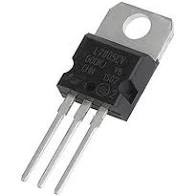
LM7805
The STMicroelectronics LM7805 supplies +5 V of output voltage and GND terminal, while TI's LM7912 provides -12 V of output. With respect to the GND terminal, the negative voltages are only a relative comparison.
Linear voltage regulators with very low electromagnetic interference and fast response to voltage fluctuations are low-cost and easy-to-use ICs. Although they are beneficial for basic applications, using them has a few disadvantages.

LM317 IC Family Schematic
The constant and rated output voltage can be given by the 78XX and 79XX ICs only if the input voltage is at least 2.5 V or higher than the output voltage. For starters, if it is powered by a 9 V Li-Ion battery, you can't obtain a 9 V output from an LM7809 IC.
The voltage drop occurs because these ICs operate effectively as pseudo-resistors and, as heat, release the extra input battery power. This is inefficient and using heat sinks or fans, the heat has to be dissipated. In order to maintain reliable temperature levels, high voltage high-current ICs require large heat sinks or continuous fan use. High input voltages have very poor performance of 20% for low outputs, such as a 24 V input to an LM7805.
The LM317 is a DC linear adjustable voltage regulator that enables the output voltage to be changed using resistors based on an external R1/R2 voltage divider concept. It is simple to use and, as shown, requires two resistors. Over a positive voltage range of 1.25 V to 37 V, it can provide up to 1.5 A current. Other versions of the LM317 IC family, LM317L and LM317M provide a current of 100 mA and 500 mA, respectively.
Ⅳ Basic Parameters for a Voltage Regulator IC
The input voltage, output voltage, and output current are some of the essential parameters to remember when using a voltage regulator. To decide which VR topology is consistent with the IC of a consumer, these parameters are used.
Depending on the application, other parameters can be important, including quiescent current, switching frequency, thermal resistance, and feedback voltage.
Quiescent current is crucial when output is a priority during light-load or standby modes. Maximizing the switching frequency helps smaller device solutions by considering switching frequency as a parameter.
In addition, thermal resistance is important for extracting heat from the unit and dissipating it throughout the system. If an internal MOSFET is used in the controller, so all losses (conductive and dynamic) are dissipated into the package and must be taken into consideration when determining the optimum IC temperature.
Another important parameter to analyze is feedback voltage since it defines the lowest output voltage the voltage regulator will accommodate. Looking at the voltage comparison parameters is normal. This limits the lower output voltage, the specificity of which impacts the accuracy of the control of the output voltage.
Ⅴ Applications of voltage regulators
To power sensors, op-amps, and other electronic modules that require both voltages, positive and negative voltage regulators can be used together.
Using the LM7805 output on the 5 V pin, all popular microcontroller production boards, such as those from Arduino and Raspberry Pi, can be driven. Arduino boards also have an onboard low-dropout voltage regulator to regulate the power input coming from the barrel jack or Vin, such as On Semiconductor's NCP1117S.
One of the most significant elements of an electrical circuit is voltage regulators. For its secure and reliable operation, they are accountable. Extremely high voltage regulators use high current electrical circuits in industrial environments on heavy equipment with high power ratings.
Ⅵ Limitations of Voltage Regulators
One of the key drawbacks of linear regulators is that they may be unreliable since in some usage cases they dissipate large quantities of electricity. A linear regulator's voltage drop is equal to a voltage drop through a resistor. For eg, there is a 2V drop between the terminals, with a 5V input voltage and a 3V output voltage, and the performance is limited to 3V/5V (60 percent ). For applications of lower VIN / VOUT differentials, this means that linear regulators are better suited.
As using greater input voltages results in high power dissipation that can overheat and destroy devices, it is important to remember the approximate power dissipation of a linear regulator in service.
In comparison to switching regulators, which often give boost (step-up) and buck-boost conversion, another disadvantage of linear voltage regulators is that they are only capable of buck (step-down) conversion.
Switching regulators are highly efficient, but some limitations include that they are typically less cost-effective than linear regulators, greater in size, more complex, and if their external components are not properly chosen, they may produce more noise. For a particular application, noise can be very critical, as noise can influence the operation and efficiency of the circuit, as well as EMI performance.
 UTMEL
UTMEL
We are the professional distributor of electronic components, providing a large variety of products to save you a lot of time, effort, and cost with our efficient self-customized service. careful order preparation fast delivery service
1.What are voltage regulators used for?
Voltage regulator, any electrical or electronic device that maintains the voltage of a power source within acceptable limits. The voltage regulator is needed to keep voltages within the prescribed range that can be tolerated by the electrical equipment using that voltage.
2.What are the symptoms of a bad voltage regulator?
Symptoms of a Bad or Failing Instrument Voltage Regulator Dim or flickering gauges. One of the first symptoms of an issue with the voltage regulator is dim or flickering gauges. Inaccurate or erratic readings. Another symptom of an issue with the voltage regulator is inaccurate or erratic readings from the voltage regulator. Inoperable instrument cluster.
3.What happens when the voltage regulator goes bad?
A bad voltage regulator can even affect your car's engine. For example, as this car part stops working properly, you might notice your car's engine sputters or stalls once in a while. It might also have trouble accelerating as you drive.
4.Do you need a voltage regulator?
Probably more than 90% of products require a voltage regulator of some kind, making them one of the most commonly used electrical components. Unless you're able to run everything directly off battery voltage or an external AC/DC adapter voltage, a voltage regulator is required.
5.How does a 12V voltage regulator work?
The voltage regulator monitors the voltage coming out of the alternator and, when it reaches a threshold of about 14.5 volts, the regulator reduces the current in the rotor to weaken the magnetic field. When the voltage drops below this threshold, the current to the rotor is increased.
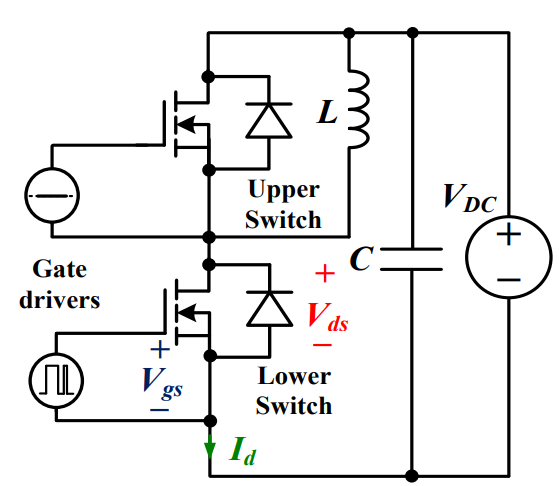 Discovering New and Advanced Methodology for Determining the Dynamic Characterization of Wide Bandgap DevicesSaumitra Jagdale15 March 20242529
For a long era, silicon has stood out as the primary material for fabricating electronic devices due to its affordability, moderate efficiency, and performance capabilities. Despite its widespread use, silicon faces several limitations that render it unsuitable for applications involving high power and elevated temperatures. As technological advancements continue and the industry demands enhanced efficiency from devices, these limitations become increasingly vivid. In the quest for electronic devices that are more potent, efficient, and compact, wide bandgap materials are emerging as a dominant player. Their superiority over silicon in crucial aspects such as efficiency, higher junction temperatures, power density, thinner drift regions, and faster switching speeds positions them as the preferred materials for the future of power electronics.
Read More A Comprehensive Guide to FPGA Development BoardsUTMEL11 September 202516892
This comprehensive guide will take you on a journey through the fascinating world of FPGA development boards. We’ll explore what they are, how they differ from microcontrollers, and most importantly, how to choose the perfect board for your needs. Whether you’re a seasoned engineer or a curious hobbyist, prepare to unlock new possibilities in hardware design and accelerate your projects. We’ll cover everything from budget-friendly options to specialized boards for image processing, delve into popular learning paths, and even provide insights into essential software like Vivado. By the end of this article, you’ll have a clear roadmap to navigate the FPGA landscape and make informed decisions for your next groundbreaking endeavor.
Read More Applications of FPGAs in Artificial Intelligence: A Comprehensive GuideUTMEL29 August 20254045
This comprehensive guide explores FPGAs as powerful AI accelerators that offer distinct advantages over traditional GPUs and CPUs. FPGAs provide reconfigurable hardware that can be customized for specific AI workloads, delivering superior energy efficiency, ultra-low latency, and deterministic performance—particularly valuable for edge AI applications. While GPUs excel at parallel processing for training, FPGAs shine in inference tasks through their adaptability and power optimization. The document covers practical implementation challenges, including development complexity and resource constraints, while highlighting solutions like High-Level Synthesis tools and vendor-specific AI development suites from Intel and AMD/Xilinx. Real-world applications span telecommunications, healthcare, autonomous vehicles, and financial services, demonstrating FPGAs' versatility in mission-critical systems requiring real-time processing and minimal power consumption.
Read More 800G Optical Transceivers: The Guide for AI Data CentersUTMEL24 December 20255449
The complete guide to 800G Optical Transceiver standards (QSFP-DD vs. OSFP). Overcome supply shortages and scale your AI data center with Utmel Electronic.
Read More The 2026 Engineer’s Guide: Choosing the Right MCU for Your Next IoT & New Energy ProjectUTMEL30 April 2026332
A comprehensive comparison of 2026's leading MCUs from ST, NXP, and Microchip across power efficiency, processing performance, connectivity, and ecosystems to help engineers select the optimal chip for next-gen IoT and new energy projects.
Read More
Subscribe to Utmel !
![NBSG16BAR2]() NBSG16BAR2
NBSG16BAR2ON Semiconductor
![MOC3021VM]() MOC3021VM
MOC3021VMON Semiconductor
![TDA7803A-ZSX]() TDA7803A-ZSX
TDA7803A-ZSXSTMicroelectronics
![HCS362-I/ST]() HCS362-I/ST
HCS362-I/STMicrochip Technology
![MOC3041SVM]() MOC3041SVM
MOC3041SVMON Semiconductor
![DLPA3000CPFD]() DLPA3000CPFD
DLPA3000CPFDTexas Instruments
![HCS301T/SN]() HCS301T/SN
HCS301T/SNMicrochip Technology
![MOC3021SVM]() MOC3021SVM
MOC3021SVMON Semiconductor
![ATECC508A-MAHCZ-S]() ATECC508A-MAHCZ-S
ATECC508A-MAHCZ-SMicrochip Technology
![MOC3082SM]() MOC3082SM
MOC3082SMON Semiconductor


