

 Product
 Brand
Brand Articles
 Tools
Tools
LM317M Voltage Regulator: Pinout, Equivalent and Circuits


Adjustable 2.54mm LM317M PMIC 3 TO-220-3
The LM317M is an adjustable three−terminal positive voltage regulator. This voltage regulator is exceptionally easy to use and requires only two external resistors to set the output voltage. Furthermore, Huge range of Semiconductors, Capacitors, Resistors and IcS in stock. Welcome RFQ.
LM317M Pinout
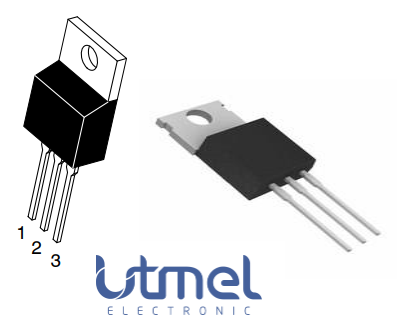
Pinout
LM317M CAD Model
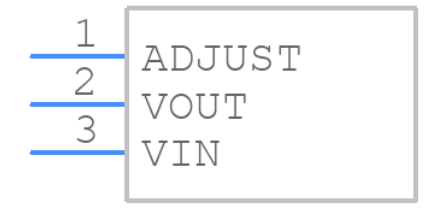
PCB Symbol
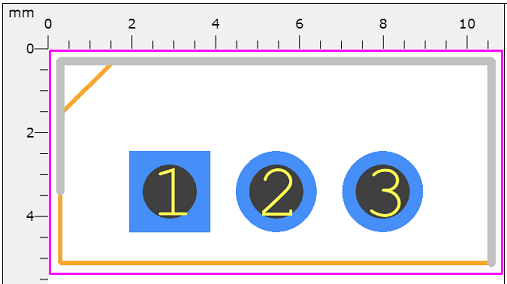
PCB Footprint
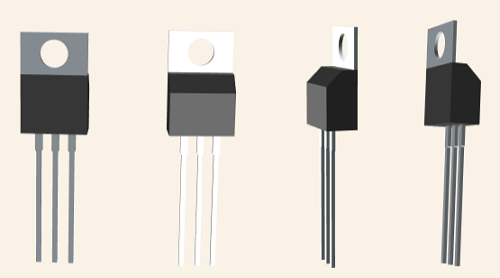
3D Model
LM317M Overview
The LM317M is an adjustable three−terminal positive voltage regulator capable of supplying in excess of 500 mA over an output voltage range of 1.2 V to 37 V. This voltage regulator is exceptionally easy to use and requires only two external resistors to set the output voltage. Further, it employs internal current limiting, thermal shutdown and safe area compensation, making it essentially blow−out proof. The LM317M serves a wide variety of applications including local, on−card regulation. This device also makes an especially simple adjustable switching regulator, a programmable output regulator, or by connecting a fixed resistor between the adjustment and output, the LM317M can be used as a precision current regulator.
This article provides you with a basic overview of the LM317M voltage regulator, including its pin descriptions, features and specifications, etc., to help you quickly understand what LM317M is.
LM317M Features
● Output Current in Excess of 500 mA
● Output Adjustable between 1.2 V and 37 V
● Internal Thermal Overload Protection
● Internal Short Circuit Current Limiting
● Output Transistor Safe−Area Compensation
● Floating Operation for High Voltage Applications
● Eliminates Stocking Many Fixed Voltages
● NCV Prefix for Automotive and Other Applications Requiring Unique Site and Control Change Requirements; AEC−Q100 Qualified and PPAP Capable
● Pb−Free Devices
Specifications
- TypeParameter
- Lifecycle Status
Lifecycle Status refers to the current stage of an electronic component in its product life cycle, indicating whether it is active, obsolete, or transitioning between these states. An active status means the component is in production and available for purchase. An obsolete status indicates that the component is no longer being manufactured or supported, and manufacturers typically provide a limited time frame for support. Understanding the lifecycle status is crucial for design engineers to ensure continuity and reliability in their projects.
ACTIVE (Last Updated: 2 days ago) - Factory Lead Time8 Weeks
- Mount
In electronic components, the term "Mount" typically refers to the method or process of physically attaching or fixing a component onto a circuit board or other electronic device. This can involve soldering, adhesive bonding, or other techniques to secure the component in place. The mounting process is crucial for ensuring proper electrical connections and mechanical stability within the electronic system. Different components may have specific mounting requirements based on their size, shape, and function, and manufacturers provide guidelines for proper mounting procedures to ensure optimal performance and reliability of the electronic device.
Through Hole - Mounting Type
The "Mounting Type" in electronic components refers to the method used to attach or connect a component to a circuit board or other substrate, such as through-hole, surface-mount, or panel mount.
Through Hole - Package / Case
refers to the protective housing that encases an electronic component, providing mechanical support, electrical connections, and thermal management.
TO-220-3 - Number of Pins3
- Weight4.535924g
- Operating Temperature
The operating temperature is the range of ambient temperature within which a power supply, or any other electrical equipment, operate in. This ranges from a minimum operating temperature, to a peak or maximum operating temperature, outside which, the power supply may fail.
0°C~125°C TJ - Packaging
Semiconductor package is a carrier / shell used to contain and cover one or more semiconductor components or integrated circuits. The material of the shell can be metal, plastic, glass or ceramic.
Tube - Published2006
- JESD-609 Code
The "JESD-609 Code" in electronic components refers to a standardized marking code that indicates the lead-free solder composition and finish of electronic components for compliance with environmental regulations.
e3 - Pbfree Code
The "Pbfree Code" parameter in electronic components refers to the code or marking used to indicate that the component is lead-free. Lead (Pb) is a toxic substance that has been widely used in electronic components for many years, but due to environmental concerns, there has been a shift towards lead-free alternatives. The Pbfree Code helps manufacturers and users easily identify components that do not contain lead, ensuring compliance with regulations and promoting environmentally friendly practices. It is important to pay attention to the Pbfree Code when selecting electronic components to ensure they meet the necessary requirements for lead-free applications.
yes - Part Status
Parts can have many statuses as they progress through the configuration, analysis, review, and approval stages.
Active - Moisture Sensitivity Level (MSL)
Moisture Sensitivity Level (MSL) is a standardized rating that indicates the susceptibility of electronic components, particularly semiconductors, to moisture-induced damage during storage and the soldering process, defining the allowable exposure time to ambient conditions before they require special handling or baking to prevent failures
1 (Unlimited) - Number of Terminations3
- ECCN Code
An ECCN (Export Control Classification Number) is an alphanumeric code used by the U.S. Bureau of Industry and Security to identify and categorize electronic components and other dual-use items that may require an export license based on their technical characteristics and potential for military use.
EAR99 - Terminal Finish
Terminal Finish refers to the surface treatment applied to the terminals or leads of electronic components to enhance their performance and longevity. It can improve solderability, corrosion resistance, and overall reliability of the connection in electronic assemblies. Common finishes include nickel, gold, and tin, each possessing distinct properties suitable for various applications. The choice of terminal finish can significantly impact the durability and effectiveness of electronic devices.
Tin (Sn) - Packing Method
The packing method in electronic components refers to the technique used to package and protect the component during shipping and handling. It encompasses various forms including tape and reel, tray, tube, or bulk packaging, each suited for different types of components and manufacturing processes. The choice of packing method can affect the ease of handling, storage, and the efficiency of assembly in automated processes. Additionally, it plays a crucial role in ensuring the reliability and integrity of the components until they are used in electronic devices.
RAIL - Terminal Position
In electronic components, the term "Terminal Position" refers to the physical location of the connection points on the component where external electrical connections can be made. These connection points, known as terminals, are typically used to attach wires, leads, or other components to the main body of the electronic component. The terminal position is important for ensuring proper connectivity and functionality of the component within a circuit. It is often specified in technical datasheets or component specifications to help designers and engineers understand how to properly integrate the component into their circuit designs.
SINGLE - Peak Reflow Temperature (Cel)
Peak Reflow Temperature (Cel) is a parameter that specifies the maximum temperature at which an electronic component can be exposed during the reflow soldering process. Reflow soldering is a common method used to attach electronic components to a circuit board. The Peak Reflow Temperature is crucial because it ensures that the component is not damaged or degraded during the soldering process. Exceeding the specified Peak Reflow Temperature can lead to issues such as component failure, reduced performance, or even permanent damage to the component. It is important for manufacturers and assemblers to adhere to the recommended Peak Reflow Temperature to ensure the reliability and functionality of the electronic components.
260 - Number of Functions1
- Terminal Pitch
The center distance from one pole to the next.
2.54mm - Time@Peak Reflow Temperature-Max (s)
Time@Peak Reflow Temperature-Max (s) refers to the maximum duration that an electronic component can be exposed to the peak reflow temperature during the soldering process, which is crucial for ensuring reliable solder joint formation without damaging the component.
40 - Base Part Number
The "Base Part Number" (BPN) in electronic components serves a similar purpose to the "Base Product Number." It refers to the primary identifier for a component that captures the essential characteristics shared by a group of similar components. The BPN provides a fundamental way to reference a family or series of components without specifying all the variations and specific details.
LM317M - Pin Count
a count of all of the component leads (or pins)
3 - Number of Outputs1
- Voltage - Input (Max)
Voltage - Input (Max) is a parameter in electronic components that specifies the maximum voltage that can be safely applied to the input of the component without causing damage. This parameter is crucial for ensuring the proper functioning and longevity of the component. Exceeding the maximum input voltage can lead to electrical overstress, which may result in permanent damage or failure of the component. It is important to carefully adhere to the specified maximum input voltage to prevent any potential issues and maintain the reliability of the electronic system.
40V - Output Voltage
Output voltage is a crucial parameter in electronic components that refers to the voltage level produced by the component as a result of its operation. It represents the electrical potential difference between the output terminal of the component and a reference point, typically ground. The output voltage is a key factor in determining the performance and functionality of the component, as it dictates the level of voltage that will be delivered to the connected circuit or load. It is often specified in datasheets and technical specifications to ensure compatibility and proper functioning within a given system.
37V - Output Type
The "Output Type" parameter in electronic components refers to the type of signal or data that is produced by the component as an output. This parameter specifies the nature of the output signal, such as analog or digital, and can also include details about the voltage levels, current levels, frequency, and other characteristics of the output signal. Understanding the output type of a component is crucial for ensuring compatibility with other components in a circuit or system, as well as for determining how the output signal can be utilized or processed further. In summary, the output type parameter provides essential information about the nature of the signal that is generated by the electronic component as its output.
Adjustable - Max Output Current
The maximum current that can be supplied to the load.
500mA - Operating Supply Voltage
The voltage level by which an electrical system is designated and to which certain operating characteristics of the system are related.
40V - Output Configuration
Output Configuration in electronic components refers to the arrangement or setup of the output pins or terminals of a device. It defines how the output signals are structured and how they interact with external circuits or devices. The output configuration can determine the functionality and compatibility of the component in a circuit design. Common types of output configurations include single-ended, differential, open-drain, and push-pull configurations, each serving different purposes and applications in electronic systems. Understanding the output configuration of a component is crucial for proper integration and operation within a circuit.
Positive - Accuracy
Accuracy in electronic components refers to the degree to which a measured value agrees with the true or accepted value. It evaluates the precision of a component in providing correct output or measurement under specified conditions. High accuracy indicates minimal deviation from the actual value, while low accuracy shows significant error in measurement. This parameter is crucial in applications where precise data is essential for reliable performance and decision-making.
4 % - Max Output Voltage
The maximum output voltage refers to the dynamic area beyond which the output is saturated in the positive or negative direction, and is limited according to the load resistance value.
37V - Number of Regulators
A regulator is a mechanism or device that controls something such as pressure, temperature, or fluid flow. The voltage regulator keeps the power level stabilized. A regulator is a mechanism or device that controls something such as pressure, temperature, or fluid flow.
1 - Min Input Voltage
The parameter "Min Input Voltage" in electronic components refers to the minimum voltage level that must be applied to the component for it to operate within its specified parameters. This value is crucial as providing a voltage below this minimum threshold may result in the component malfunctioning or not functioning at all. It is important to adhere to the specified minimum input voltage to ensure the proper operation and longevity of the electronic component. Failure to meet this requirement may lead to potential damage to the component or the overall system in which it is used.
4.2V - Protection Features
Protection features in electronic components refer to the built-in mechanisms or functionalities designed to safeguard the component and the overall system from various external factors or internal faults. These features are crucial for ensuring the reliability, longevity, and safety of the electronic device. Common protection features include overvoltage protection, overcurrent protection, reverse polarity protection, thermal protection, and short-circuit protection. By activating these features when necessary, the electronic component can prevent damage, malfunctions, or hazards that may arise from abnormal operating conditions or unforeseen events. Overall, protection features play a vital role in enhancing the robustness and resilience of electronic components in diverse applications.
Over Current, Over Temperature - Current - Quiescent (Iq)
The parameter "Current - Quiescent (Iq)" in electronic components refers to the amount of current consumed by a device when it is in a quiescent or idle state, meaning when it is not actively performing any tasks or operations. This parameter is important because it represents the baseline power consumption of the device even when it is not actively being used. A lower quiescent current (Iq) value is desirable as it indicates that the device is more energy-efficient and will consume less power when not in use, which can help extend battery life in portable devices and reduce overall power consumption in electronic systems. Designers often pay close attention to the quiescent current specification when selecting components for low-power applications or battery-operated devices.
10mA - Halogen Free
The term "Halogen Free" in electronic components refers to a specific characteristic of the materials used in the manufacturing of the component. Halogens are a group of elements that include fluorine, chlorine, bromine, iodine, and astatine. These elements are commonly used in flame retardants and other materials in electronics. However, the presence of halogens can pose environmental and health risks when the components are disposed of or recycled.Therefore, electronic components labeled as "Halogen Free" are manufactured without the use of halogenated materials. This designation indicates that the components do not contain any halogens, making them safer for the environment and human health. Halogen-free components are becoming increasingly popular in the electronics industry due to the growing awareness of environmental concerns and regulations regarding hazardous substances in electronic products.
Halogen Free - PSRR
PSRR stands for Power Supply Rejection Ratio. It is a measure of how well a device, such as an amplifier or a voltage regulator, can reject variations in the power supply voltage. A high PSRR value indicates that the device is able to maintain its performance even when the power supply voltage fluctuates. This parameter is important in ensuring stable and reliable operation of electronic components, especially in applications where the power supply voltage may not be perfectly regulated. A good PSRR helps to minimize noise and interference in the output signal of the device.
80dB ~ 65dB (120Hz) - Reference Voltage
A voltage reference is an electronic device that ideally produces a fixed (constant) voltage irrespective of the loading on the device, power supply variations, temperature changes, and the passage of time. Voltage references are used in power supplies, analog-to-digital converters, digital-to-analog converters, and other measurement and control systems. Voltage references vary widely in performance; a regulator for a computer power supply may only hold its value to within a few percent of the nominal value, whereas laboratory voltage standards have precisions and stability measured in parts per million.
1.3V - Dropout Voltage
Dropout voltage is the input-to-output differential voltage at which the circuit ceases to regulate against further reductions in input voltage; this point occurs when the input voltage approaches the output voltage.
2.1V - Dropout Voltage1-Nom
Dropout Voltage1-Nom is a parameter commonly found in voltage regulators and power management ICs. It refers to the minimum voltage difference required between the input voltage and the output voltage for the regulator to maintain regulation. In other words, it is the minimum voltage drop that the regulator can handle while still providing a stable output voltage. This parameter is important to consider when designing power supply circuits to ensure that the regulator can operate within its specified voltage range and maintain proper regulation under varying load conditions.
3V - Min Output Voltage
Min Output Voltage refers to the lowest voltage level that an electronic component, such as a voltage regulator or power supply, can provide reliably under specified conditions. It indicates the minimum threshold required for proper operation of connected devices. Operating below this voltage may lead to device malfunction or failure to operate as intended.
1.2V - Power Supply Rejection Ratio (PSRR)
Power Supply Rejection Ratio (PSRR) is a measure of how well an electronic component, such as an operational amplifier or voltage regulator, can reject changes in its supply voltage. It indicates the ability of the component to maintain a stable output voltage despite fluctuations in the input supply voltage. A higher PSRR value signifies better performance in rejecting noise and variations from the power supply, leading to improved signal integrity and more reliable operation in electronic circuits. PSRR is typically expressed in decibels (dB).
80dB - Output Voltage Accuracy
Output voltage accuracy is a crucial parameter in electronic components, especially in devices like voltage regulators and power supplies. It refers to how closely the actual output voltage matches the specified or desired voltage level. This parameter is typically expressed as a percentage of the nominal output voltage. A higher accuracy value indicates that the output voltage is more consistent and reliable, which is important for ensuring proper functioning of electronic circuits and devices. Manufacturers often provide specifications for output voltage accuracy to help users select components that meet their requirements for precision and performance.
4 % - Height15.748mm
- Length10.2616mm
- Width4.826mm
- REACH SVHC
The parameter "REACH SVHC" in electronic components refers to the compliance with the Registration, Evaluation, Authorization, and Restriction of Chemicals (REACH) regulation regarding Substances of Very High Concern (SVHC). SVHCs are substances that may have serious effects on human health or the environment, and their use is regulated under REACH to ensure their safe handling and minimize their impact.Manufacturers of electronic components need to declare if their products contain any SVHCs above a certain threshold concentration and provide information on the safe use of these substances. This information allows customers to make informed decisions about the potential risks associated with using the components and take appropriate measures to mitigate any hazards.Ensuring compliance with REACH SVHC requirements is essential for electronics manufacturers to meet regulatory standards, protect human health and the environment, and maintain transparency in their supply chain. It also demonstrates a commitment to sustainability and responsible manufacturing practices in the electronics industry.
No SVHC - Radiation Hardening
Radiation hardening is the process of making electronic components and circuits resistant to damage or malfunction caused by high levels of ionizing radiation, especially for environments in outer space (especially beyond the low Earth orbit), around nuclear reactors and particle accelerators, or during nuclear accidents or nuclear warfare.
No - RoHS Status
RoHS means “Restriction of Certain Hazardous Substances” in the “Hazardous Substances Directive” in electrical and electronic equipment.
ROHS3 Compliant - Lead Free
Lead Free is a term used to describe electronic components that do not contain lead as part of their composition. Lead is a toxic material that can have harmful effects on human health and the environment, so the electronics industry has been moving towards lead-free components to reduce these risks. Lead-free components are typically made using alternative materials such as silver, copper, and tin. Manufacturers must comply with regulations such as the Restriction of Hazardous Substances (RoHS) directive to ensure that their products are lead-free and environmentally friendly.
Lead Free
LM317M Functional Block Diagram
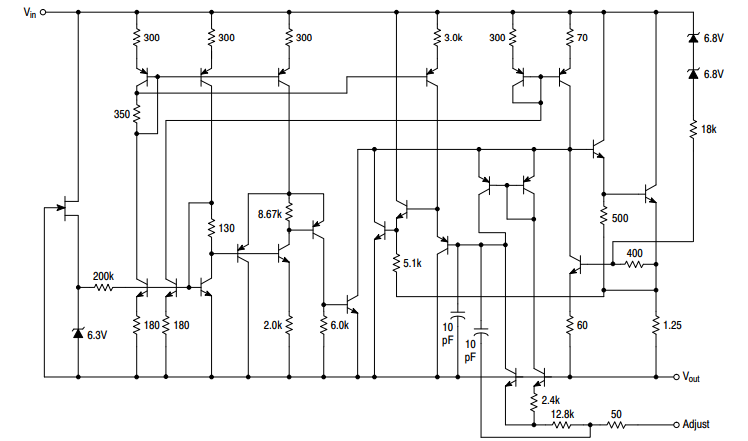
Representative Schematic Diagram
LM317M Marking Diagrams
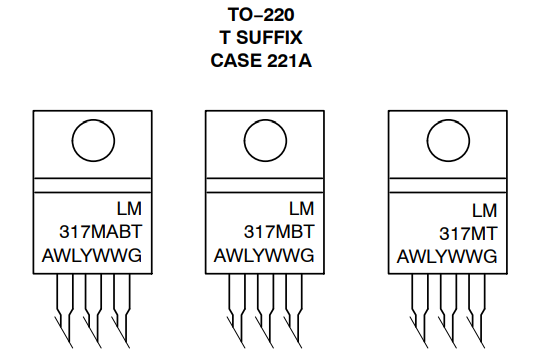
Marking Diagrams
LM317M Test Circuits
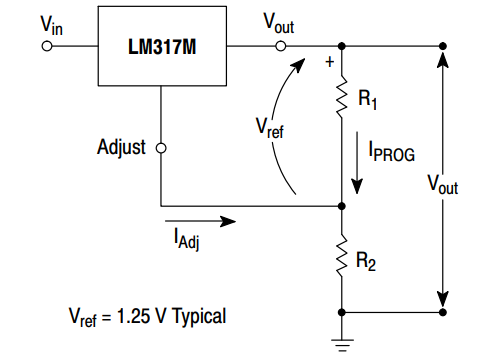
Basic Circuit Configuration
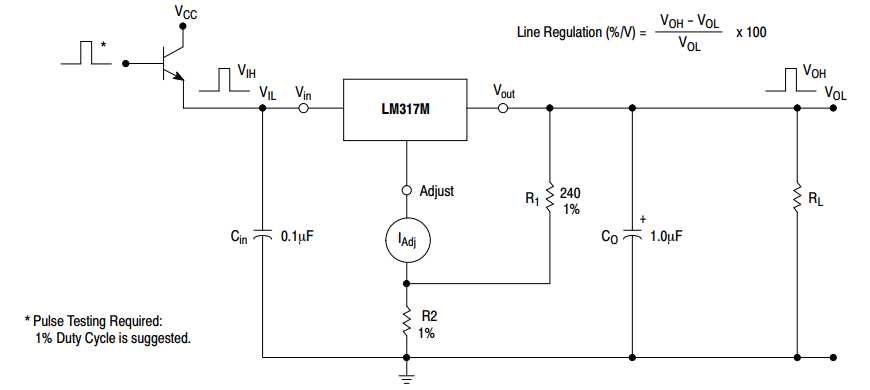
Line Regulation and Line Test Circuit
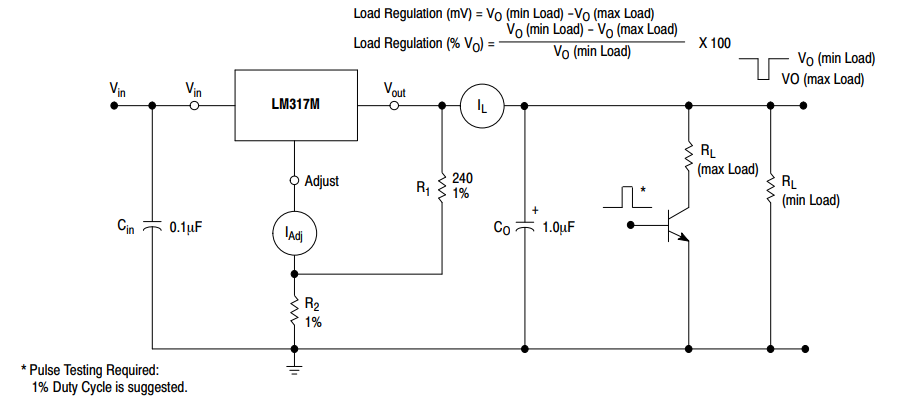
Load Regulation and Load Test Circuit
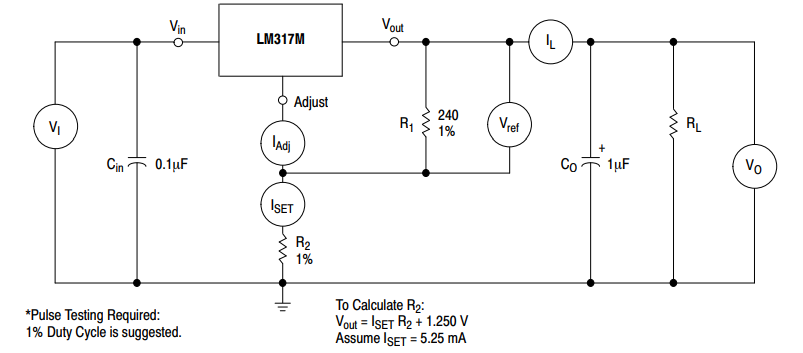
Standard Test Circuit
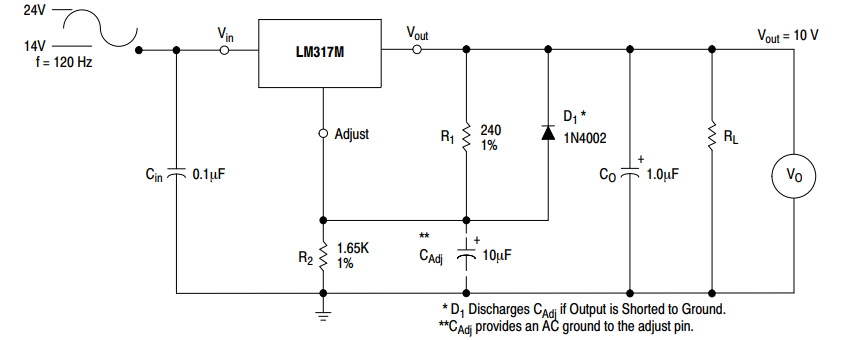
Ripple Rejection Test Circuit
LM317M Equivalent
| Model number | Manufacturer | Description |
| 7703401TA | TT Electronics Resistors | Adjustable Positive Standard Regulator, 1.2V Min, 1.3V Max, TO-257, 3 PIN |
| LM117H/883C | Texas Instruments | 1.2 V-37V ADJUSTABLE POSITIVE REGULATOR, MBCY3, METAL CAN, TO-39, 3 PIN |
| 7703401UA | International Rectifier | Adjustable Positive Standard Regulator, 1.5V Min, 5.5V Max, BIPolar |
| LM317HVG | TT Electronics Power and Hybrid / Semelab Limited | ADJUSTABLE POSITIVE REGULATOR, MSFM3, METAL, TO-257, 3 PIN |
| LM317KMDC | National Semiconductor Corporation | IC VREG 1.2 V-37 V ADJUSTABLE POSITIVE REGULATOR, UUC, DIE, Adjustable Positive Single Output Standard Regulator |
| LM317H | Texas Instruments | 1.5-A, 40-V, adjustable linear voltage regulator 3-TO 0 to 0 |
| LM117MHVHR1 | TT Electronics Resistors | Adjustable Positive Standard Regulator, MBCY3, TO-39, 3 PIN |
| LM117H-BSS2 | TT Electronics Resistors | Adjustable Positive Standard Regulator, MBCY3, TO-39, 3 PIN |
| LM317HVK | Linear Technology | IC VREG 1.2 V-57 V ADJUSTABLE POSITIVE REGULATOR, MBFM2, METAL CAN, TO-3, 2 PIN, Adjustable Positive Single Output Standard Regulator |
| SG117IG/883B | Linfinity Microelectronics | Adjustable Positive Standard Regulator, 1.2V Min, 37V Max, BIPolar, PSFM3, TO-257, 3 PIN |
Parts with Similar Specs
- ImagePart NumberManufacturerPackage / CaseNumber of PinsNumber of OutputsMax Output CurrentMin Input VoltageVoltage - Input (Max)Min Output VoltageOutput VoltageMax Output VoltageAccuracyDropout VoltageView Compare
![LM317MTG]()
LM317MTG
TO-220-3
3
1
500 mA
4.2 V
40V
1.2 V
37 V
37 V
4 %
2.1 V
![LM317BTG]()
TO-220-3
3
1
500 mA
4.2 V
40V
1.2 V
37 V
37 V
4 %
2.1 V
![LM317T-DG]()
TO-220-3
3
1
400 mA
4.2 V
40V
1.2 V
37 V
37 V
-
1.95 V
![LM317TG]()
TO-220-3
3
1
400 mA
4.2 V
40V
1.2 V
37 V
37 V
-
2.25 V
![LM317MBTG]()
TO-220-3
3
1
400 mA
4.2 V
40V
1.2 V
37 V
-
-
-


LM317M Application
● Adjustable Current Limiter
● 5 V Electronic Shutdown Regulator
● Slow Turn−On Regulator
● Current Regulator
LM317M Package

TO−220 Package
LM317M Manufacturer
On Semiconductor (Nasdaq: ON) is a manufacturer engaging itself in reducing energy use. It features a comprehensive portfolio of power, signal management, and logic, custom solutions that are energy efficient. It acts as a world-class supply chain with high reliability and a network of manufacturing facilities, sales, offices, and design centers in key markets through North America, Europe, and the Asia Pacific regions.
Datasheet PDF
- Datasheets :
- PCN Assembly/Origin :
- Environmental Information :
Trend Analysis
Is the maximum output current of LM317M 1.5A?
The maximum output current of LM317M is 1/2 of LM317, estimated at 750mA.
The maximum output current of LM317 is 1.5A. What happens if the load makes the current greater than 1.5A?
If the load is greater than 1.5A, LM317 will protect no output or continue to heat up until it burns out.
M5237L or LM317 are used as adjustable power supplies, which one has better performance?
The electrical performance largely depends on the manufacturing structure, wiring and other processes. The circuit of LM317 is simpler. When self-made, the possibility of problems caused by poor structure and craftsmanship will be smaller.
 ATmega328P Series: 8-bit AVR Microcontroller Design Guide
15 January 20261657
 ADM242ANZ Receiver: Pinout, Specification, and Datasheet
02 June 2021641
 THS7314 Video Amplifiers:Pinout, Datasheet and Application
25 June 20213254
 TDA7498E vs. TPA3116D2 : Which one is better?
26 February 202230856
 ULN2004A Darlington Array: Pinout, Equivalent and Datasheet
29 November 20217440
 LIS2DHTR Motion Sensor: 3-Axis, Application Hint, Datasheet PDF
23 February 20221862
![RP2040 VS ATMEGA328 VS ESP32 VS STM32[Video]: Comparison some parameters of Microcontrollers](https://res.utmel.com/Images/Article/2556d243-de71-4c53-82cd-f80372b12c36.jpg) RP2040 VS ATMEGA328 VS ESP32 VS STM32[Video]: Comparison some parameters of Microcontrollers
RP2040 VS ATMEGA328 VS ESP32 VS STM32[Video]: Comparison some parameters of Microcontrollers23 September 202324921
 AD9959 Frequency Synthesizer: Pinout, Datasheet, Application Circuit
28 September 20211978
 What is Wi-Fi 7?
20 August 20215843
 Thermistor: Characteristics, Classification, Symbol and Applications
10 December 202524630
 What are Avalanche Diodes?
02 April 202013917
 Arm's IPO: A New Chapter in Chip Technology
30 August 20232529
 Ceramic Capacitor Dielectrics Explained: C0G, X7R, Y5V and How to Choose
14 July 202613321
 Parking Access Control System using Arduino
29 August 20236348
 Selection and Optimization of Peripheral Components for DC-DC Boost Regulator
15 April 20222292
 Using SiC-GaN to Create Two-Phase Interleaved DC-DC Converters for Plug-in Electric Vehicles
03 February 20232925
ON Semiconductor
In Stock: 40
Minimum: 1 Multiples: 1
Qty
Unit Price
Ext Price
1
$0.902867
$0.90
10
$0.851761
$8.52
100
$0.803548
$80.35
500
$0.758065
$379.03
1000
$0.715155
$715.16
Not the price you want? Send RFQ Now and we'll contact you ASAP.
Inquire for More Quantity
![NCP114ASN290T1G]() NCP114ASN290T1G
NCP114ASN290T1GON Semiconductor
![NCV1117DT33T5G]() NCV1117DT33T5G
NCV1117DT33T5GON Semiconductor
![NCP1117DT33]() NCP1117DT33
NCP1117DT33ON Semiconductor
![NCP1117LPST33T3G]() NCP1117LPST33T3G
NCP1117LPST33T3GON Semiconductor
![MC7805CTG]() MC7805CTG
MC7805CTGON Semiconductor
![MC78L05ACDR2G]() MC78L05ACDR2G
MC78L05ACDR2GON Semiconductor
![MC78M05BDTRKG]() MC78M05BDTRKG
MC78M05BDTRKGON Semiconductor
![NCP551SN33T1G]() NCP551SN33T1G
NCP551SN33T1GON Semiconductor
![LM2931CDR2G]() LM2931CDR2G
LM2931CDR2GON Semiconductor
![LM317D2TR4G]() LM317D2TR4G
LM317D2TR4GON Semiconductor


