Product
 Brand
Brand Articles
 Tools
Tools
Why RFID Technology Matters for Retail Innovation Today
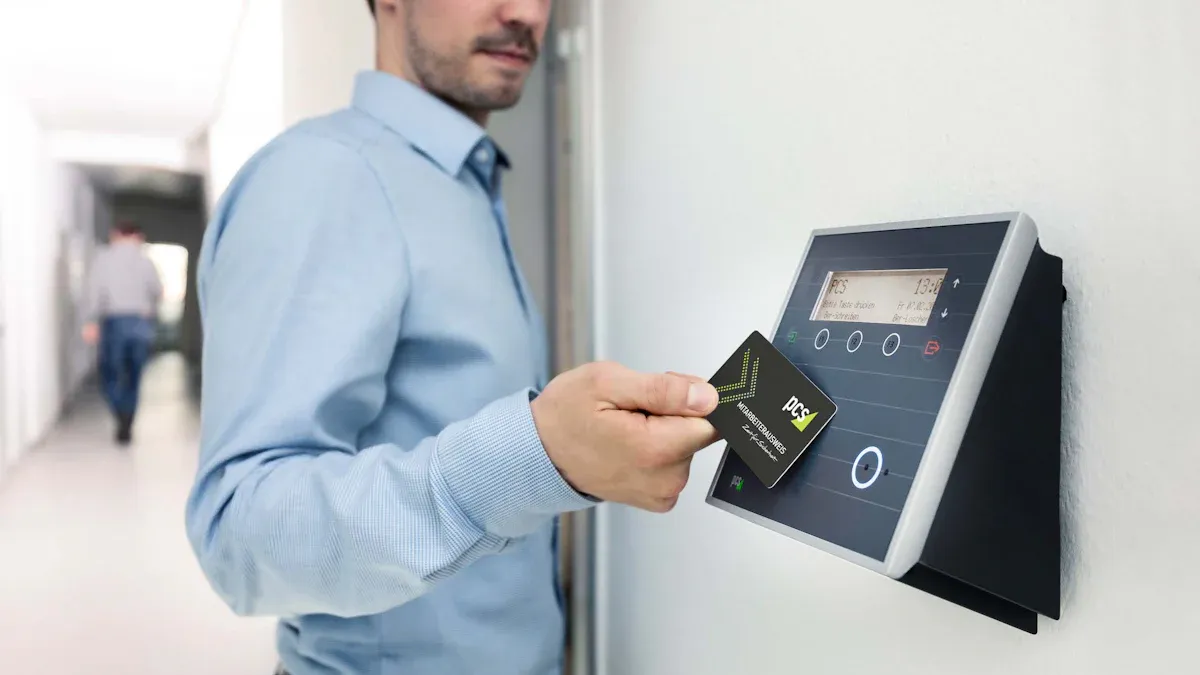
RFID technology is revolutionizing how you manage retail operations. By using RFID tags, you can track products with precision and reduce manual errors. This technology boosts inventory accuracy from an average of 65% to over 95%, with some retailers achieving up to 99%. These improvements streamline supply chains and ensure shelves stay stocked, enhancing the shopping experience. RFID also provides real-time data, empowering you to make smarter decisions and stay ahead of competitors. In today’s fast-paced retail world, adopting RFID is no longer optional—it’s essential for success.
Core Benefits of RFID Technology

Enhancing Inventory Accuracy with RFID Tags
Radio frequency identification (RFID) tags are transforming inventory management by providing unparalleled accuracy. When you use RFID technology, you can track products with precision, reducing errors caused by manual processes. Companies that implement RFID systems often see inventory accuracy jump from 63% to 95%, ensuring that stock levels align with customer demand.
Retail giants like Macy's and Decathlon have reported remarkable results. Macy's achieved a 60% reduction in out-of-stock items and boosted sales by 10%. Decathlon experienced similar success, cutting stockouts by 50% and increasing sales by up to 30%. These improvements highlight the benefits of RFID inventory tracking in maintaining optimal stock levels and driving revenue growth.
| Benefit | Improvement/Reduction |
|---|---|
| Inventory accuracy | Improves from ~70% to over 98% |
| Stockouts | Reduced by up to 50% |
| Cycle counting | Reduced by 95% |
| Over-Stocking | Reduced by 6% |
By leveraging RFID tags, you can achieve improved inventory accuracy, reduce stockouts, and streamline operations—all of which contribute to a better shopping experience for your customers.
Boosting Operational Efficiency Through RFID Tracking
RFID tracking systems enhance operational efficiency by automating processes that were once time-consuming and error-prone. These systems allow you to monitor inventory movement in real time, reducing the need for manual audits and cycle counts. Businesses that deploy RFID technology report labor cost reductions of 20–40% and audit preparation time cut by 90%.
The efficiency gains extend beyond labor savings. RFID systems improve audit speed by 25–40%, enabling faster and more accurate inventory checks. This streamlined approach ensures that your operations run smoothly, minimizing disruptions and maximizing productivity.
| Key Steps in Production Efficiency Analysis | Description |
|---|---|
| Data Cleansing | Preparing data for analysis by removing inaccuracies. |
| Data Processing | Organizing and structuring data for effective analysis. |
| KPI Estimation | Identifying key performance indicators to measure efficiency. |
| Data Analytics | Analyzing data to derive insights on production efficiency. |
When you integrate RFID tracking into your operations, you unlock the potential for significant cost savings and operational efficiency improvements, making your business more agile and competitive.
Improving Customer Experience with Real-Time Inventory Tracking
Real-time inventory tracking powered by RFID technology ensures that customers find the products they need when they need them. By reducing out-of-stock instances by 50% or more, RFID systems enhance customer satisfaction and loyalty. A large U.S. retail chain successfully addressed inaccurate inventory counts and stockouts by implementing RFID-based tracking, leading to better inventory control and improved customer experiences.
With RFID systems, you can provide accurate product availability information across all channels, supporting seamless omnichannel shopping experiences. Customers benefit from faster service and fewer frustrations, while you gain valuable data to optimize inventory management and meet demand effectively.
Tip: Real-time inventory tracking not only improves customer satisfaction but also boosts sales by ensuring that popular items remain available.
By adopting RFID inventory tracking, you create a frictionless shopping experience that keeps customers coming back and strengthens your brand reputation.
RFID’s Role in Modern Retail Trends
Supporting Omnichannel Shopping with RFID Technology
RFID technology plays a vital role in enabling seamless omnichannel shopping experiences. By improving inventory visibility across all channels, RFID ensures that customers can shop effortlessly, whether online, in-store, or through a hybrid approach. You can use RFID tags to track products in real time, ensuring accurate stock levels and reducing discrepancies. This level of precision allows you to fulfill orders faster and more reliably, meeting customer expectations.
During the pandemic, 87% of retailers reported that RFID improved their omnichannel capabilities. Additionally, 66% of RFID adopters now offer five or more omnichannel services, such as buy-online-pickup-in-store (BOPIS) and same-day delivery. These services are critical for modern retail operations, where convenience and speed are top priorities.
| Benefit | Description |
|---|---|
| Omnichannel Shopping | RFID improves inventory visibility across channels, supporting seamless shopping experiences. |
| Real-Time Data | Provides retailers with immediate insights to respond to demand changes effectively. |
| Inventory Accuracy | Adoption of RFID has led to significant improvements in stock accuracy and reduction of discrepancies. |
By leveraging RFID systems, you can create a unified shopping experience that keeps customers satisfied and loyal.
Enabling Frictionless Retail Experiences
RFID technology is transforming the way customers interact with retail environments. With RFID tags, you can enable frictionless shopping experiences by automating processes like checkout and product authentication. For example, RFID-powered self-checkout systems allow customers to scan and pay for items without waiting in long lines. This reduces frustration and enhances the overall shopping experience.
Real-time tracking of products also ensures that customers find what they need quickly. Accurate inventory data minimizes the chances of stockouts, leading to faster service and happier customers. Additionally, RFID systems help streamline returns and exchanges by providing instant product verification, saving time for both you and your customers.
Note: Frictionless retail experiences not only improve customer satisfaction but also boost operational efficiency by reducing manual tasks.
By adopting RFID technology, you can create a smooth and enjoyable shopping journey that sets your business apart from competitors.
Driving Data-Driven Decisions with RFID Systems
RFID systems provide you with valuable data that can drive smarter business decisions. By collecting real-time information on inventory movement, sales trends, and customer behavior, RFID enables you to optimize operations and improve efficiency. For instance, you can use RFID data to identify popular products and adjust stock levels accordingly, ensuring that high-demand items are always available.
Data analytics tools, combined with RFID systems, allow you to uncover patterns and insights that were previously hidden. Techniques like association, classification, and clustering help you analyze operational performance and identify areas for improvement. This approach enhances decision-making and supports digital transformation in retail.
| Benefit | Description |
|---|---|
| Automation of Operations | RFID reduces human error and operational costs by automating inventory management processes. |
| Enhanced Order Fulfillment | Real-time data helps optimize stock levels and improve order accuracy, crucial for e-commerce. |
| Loss Prevention | Detailed tracking aids in detecting shrinkage and theft, enhancing overall inventory control. |
By integrating RFID systems into your operations, you can harness the power of data to stay competitive and adapt to changing market demands.
Challenges and Solutions in RFID Implementation
Managing Costs of RFID Technology
Implementing RFID technology can be expensive, especially for smaller retailers. The initial investment includes tags, readers, and software, which often requires a substantial budget. Beyond these upfront costs, integrating RFID systems with existing IT infrastructure can be time-consuming and complex. Evaluating costs involves understanding components like hardware, software, and integration services. The total cost varies based on your facility size and operational needs, making budgeting a critical step.
Insight: Research shows that inventory inaccuracies caused by misplacement errors increase operational costs. RFID technology mitigates these inaccuracies, reducing expenses and improving supply chain efficiency.
To manage costs effectively, you can adopt a budgeting framework that categorizes expenses. This approach helps identify areas where cost management is most critical. By optimizing your investment in RFID systems, you can achieve long-term savings through improved inventory accuracy and operational efficiency.
Addressing Privacy Concerns in RFID Tracking
Privacy concerns are a significant challenge in RFID tracking. Consumers often worry about how their data is collected and used, especially in retail environments. Studies highlight the need for regulatory frameworks to address these issues. Without proper safeguards, customers may feel apprehensive about RFID deployment.
To alleviate these concerns, you can implement transparent policies that explain how RFID systems handle data. Educating customers about the benefits of RFID, such as enhanced loss prevention and faster product authentication, can build trust. Additionally, adopting encryption and secure protocols ensures that sensitive information remains protected. By prioritizing privacy, you can foster confidence among your customers while leveraging RFID technology effectively.
Simplifying Integration of RFID Tags with Existing Systems
Integrating RFID tags with your current systems can be challenging. Compatibility issues often arise, requiring significant adjustments to IT infrastructure. This process can disrupt operations and delay implementation. However, simplifying integration is possible with careful planning and the right tools.
Start by assessing your existing systems and identifying potential gaps. Collaborate with RFID vendors to ensure compatibility and streamline the integration process. Many RFID systems now offer modular solutions that adapt to your infrastructure without extensive modifications. By taking these steps, you can minimize disruptions and unlock the full potential of RFID tracking in your retail operations.
The Future of RFID in Retail Innovation
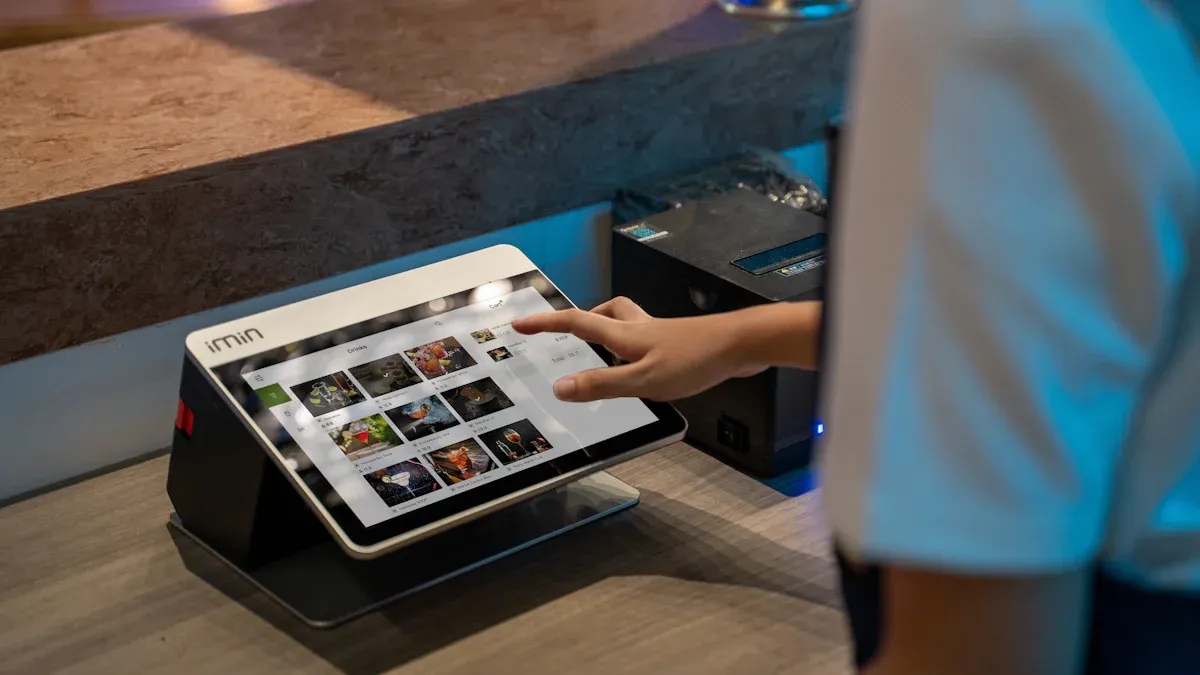
Real-Time Inventory Tracking with IoT Integration
The integration of RFID with IoT is reshaping the future of retail. By combining RFID systems with IoT sensors, you can achieve real-time inventory tracking that ensures nearly 100% accuracy. This transformation reduces stock discrepancies by 25% and improves order fulfillment rates by 35%. Businesses adopting these systems report faster operations and fewer errors, making inventory management more efficient.
AI-powered platforms, such as IBM Watson Supply Chain, further enhance this integration. These systems analyze RFID data to optimize workflows, detect anomalies, and predict maintenance needs. For example, a distribution center using IoT-enabled RFID tracking improved order fulfillment speed by 35%, demonstrating the potential of this technology in next-generation retail.
Tip: Investing in IoT-integrated RFID systems positions your business for digital transformation, enabling smarter decisions and streamlined supply chain operations.
| Improvement Type | Percentage Increase/Reduction |
|---|---|
| Inventory Accuracy | Up to 99% |
| Reduction in Stock Discrepancies | 25% |
| Improvement in Order Fulfillment | 35% |
Expanding RFID Use Cases in Supply Chain Automation
RFID technology is driving innovation across diverse industries, including retail. In supply chain automation, RFID tags provide real-time visibility, ensuring products move efficiently from warehouses to stores. For instance, RFID tags on pallets enable shipment verification, reducing delays and errors.
Retailers benefit from automated stocktaking, which eliminates manual processes and improves operational efficiency. Other industries, such as healthcare and agriculture, also leverage RFID for asset tracking and workflow optimization. Hospitals use RFID-enabled wristbands for patient authentication, while farmers monitor crop growth and livestock with RFID systems.
| Sector | Use Case Description |
|---|---|
| Transportation & Logistics | RFID tags on pallets enable tracking through the supply chain, enhancing real-time visibility and shipment verification. |
| Manufacturing | RFID tags improve work-in-process tracking and ensure materials are in the right place for streamlined workflows. |
| Agriculture | RFID monitors crop growth and livestock, driving precision agriculture and asset tracking for equipment. |
| Healthcare | NFC-enabled patient wristbands enhance safety and workflow efficiency. |
Note: Expanding RFID use cases in supply chain automation ensures quick and accurate checkout processes, better product authentication, and a streamlined supply chain.
Enhancing Predictive Analytics with RFID Technology
RFID technology, combined with AI, is revolutionizing predictive analytics in retail. AI algorithms analyze RFID data to identify patterns, detect theft, and optimize asset utilization. This integration transforms raw data into actionable insights, enabling smarter decisions and operational improvements.
For example, RFID systems with AI achieve read accuracy rates of up to 99.5%, reducing inventory tracking errors by 30–50%. These advancements support digital transformation by automating processes and enhancing efficiency. Predictive analytics also help forecast demand, ensuring products remain available and improving customer satisfaction.
| Impact Description | Quantified Result |
|---|---|
| Read Accuracy | Up to 99.5% |
| Reduction in Inventory Tracking Errors | 30-50% |
| Operational Efficiency Improvements | Significant improvements |
Insight: By leveraging RFID and AI, you can create a future of retail that prioritizes efficiency, automation, and customer-centric solutions.
RFID technology is transforming retail by delivering unmatched benefits. It enhances loss prevention, improves inventory accuracy, and boosts operational efficiency. Retailers like Macy's have used RFID to track theft incidents and recover stolen goods, demonstrating its strategic value. Serialization features also strengthen legal cases, making theft prosecution more effective.
The future of RFID looks promising. Analysts forecast an 11.9% annual growth rate for the RFID market from 2025 to 2032. Integration with IoT and Industry 4.0 is driving innovation, helping businesses achieve enhanced customer experiences and operational excellence. By adopting RFID, you position your retail operations for long-term success.
FAQ
What is RFID technology, and how does it work?
RFID stands for Radio Frequency Identification. It uses radio waves to transfer data between a tag and a reader. You attach RFID tags to items, and readers scan them to track inventory or gather information. This process happens quickly and without manual input.
How does RFID improve inventory management?
RFID tracks inventory in real time. It reduces errors by automating stock counts and ensures accurate data. You can locate items instantly, avoid stockouts, and optimize inventory levels. This technology saves time and boosts efficiency in your operations.
Is RFID technology expensive to implement?
RFID systems require upfront costs for tags, readers, and software. However, you save money in the long term by reducing labor costs, improving inventory accuracy, and minimizing losses. Many retailers find the investment worthwhile due to its operational benefits.
Are there privacy concerns with RFID tracking?
Yes, privacy concerns exist. RFID can collect data about items and locations, which worries some consumers. You can address this by using encryption, secure protocols, and transparent policies to protect sensitive information and build trust with your customers.
Can RFID integrate with existing systems?
Yes, RFID can integrate with your current systems. You need to assess compatibility and work with vendors to streamline the process. Modular RFID solutions simplify integration, allowing you to enhance operations without major disruptions.
 UTMEL
UTMEL
We are the professional distributor of electronic components, providing a large variety of products to save you a lot of time, effort, and cost with our efficient self-customized service. careful order preparation fast delivery service
 Explain in Detail the Three Sharp Weapons to Eliminate EMC: Capacitors/Inductors/Magnetic BeadsUTMEL24 December 20214431
Filter capacitors, common mode inductors, and magnetic beads are all typical components in EMC design circuits, and they're the three main tools for reducing electromagnetic interference.The notion of removing the three principal EMC weapons from the design is examined in-depth in this article.
Read More Everything You Need to Know about RF ChipUTMEL14 January 202618992
RF chip is one of the most important cores of cell phone terminals. The RF chip is responsible for RF transceiver, frequency synthesis, and power amplification.
Read More What are Electromagnetic Waves?UTMEL07 December 20215060
Hello everyone, I am Rose. Today I will introduce Electromagnetic waves to you. Electromagnetic waves are a type of electromagnetic energy.It can be considered the most perfect signal carrier because it can be carried without restriction in open space, as well as through metal transmission lines and controlled freely.
Read More Is Electromagnetic Radiation from Base Stations Terrible?UTMEL06 December 20214440
Hello everyone, I am Rose. Today I will introduce electromagnetic radiation to you. Through this article, I hope that everyone can better understand electromagnetic radiation and protect themselves better.
Read More Antenna: Principles, Performance Parameters and ClassificationUTMEL15 November 20218126
An antenna is a transducer that takes a guided wave propagating on a transmission line and transforms it into an electromagnetic wave propagating in an unbounded medium (usually free space) or vice versa. It is a component used in radio equipment to transmit or receive electromagnetic waves.
Read More
Subscribe to Utmel !
![MT9V024IA7XTC-DP]() MT9V024IA7XTC-DP
MT9V024IA7XTC-DPON Semiconductor
![HEDS-5540#A11]() HEDS-5540#A11
HEDS-5540#A11Broadcom Limited
![AR0521SR2C09SURA0-DR]() AR0521SR2C09SURA0-DR
AR0521SR2C09SURA0-DRON Semiconductor
![FSS1500NST]() FSS1500NST
FSS1500NSTHoneywell Sensing and Productivity Solutions
![MT9V034C12STC-DR]() MT9V034C12STC-DR
MT9V034C12STC-DRON Semiconductor
![AR0135CS2M25SUEA0-DPBR]() AR0135CS2M25SUEA0-DPBR
AR0135CS2M25SUEA0-DPBRON Semiconductor
![HEDS-9140#I00]() HEDS-9140#I00
HEDS-9140#I00Broadcom Limited
![HEDS-5540#A12]() HEDS-5540#A12
HEDS-5540#A12Broadcom Limited
![D6F-P0010A1]() D6F-P0010A1
D6F-P0010A1Omron Electronics Inc-EMC Div
![NOIP1SE5000A-QDI]() NOIP1SE5000A-QDI
NOIP1SE5000A-QDION Semiconductor