Product
 Brand
Brand Articles
 Tools
Tools
Everything You Need to Know about RF Chip
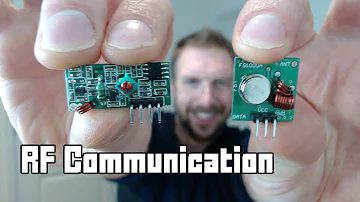
Radio-Frequency (RF) Communication Modules
2026 Executive Summary: In modern telecommunications, the distinction between RF Chips and Baseband Chips remains critical for 5G and emerging 6G devices. The RF Chip (Transceiver) acts as the courier, converting analog radio waves into electrical signals, while the Baseband Chip (Modem) acts as the brain, translating those signals into digital data (internet, voice, video). This guide explores their architecture, updated for the 2026 mobile landscape.
2026 Guide Catalog | |
Ⅲ RF Circuit Principles & Architecture
| |
Ⅰ Overview: RF vs. Baseband in 2026
In the context of 2026 smartphone architecture, the core components have evolved but the fundamental roles remain distinct: the RF chip handles physical transmission, while the baseband chip acts as the digital modem.
A modern 5G/6G-ready smartphone is a complex system composed of five critical subsystems:
RF (Radio Frequency) Front-End: The analog interface that sends and receives information via electromagnetic waves (Sub-6GHz and mmWave).
Baseband Processor (Modem): The digital brain responsible for information processing, protocol management (5G NR, LTE), and signal modulation.
Power Management (PMIC): Critical in 2026 for managing the high energy demands of AI processors and high-refresh screens.
Peripherals: Hardware interfaces including OLED/Micro-LED displays, haptic sensors, and biometrics.
Software/OS: The ecosystem (Android 16, iOS 19, etc.) including drivers, middleware, and AI-driven applications.
In the cellular terminal, the RF chip and the baseband chip are the two most important cores. The RF chip is responsible for the RF transceiver functions, frequency synthesis, and power amplification. The Baseband chip is responsible for high-speed signal processing and protocol encoding/decoding.
Ⅱ How do RF and Baseband Chips Interact?
The relationship between these two chips is defined by modulation and demodulation: the baseband creates the data map, and the RF builds the vehicle to transport it.
RF refers to Radio Frequency. While historically associated with FM/AM radio, in 2026, RF encompasses the complex spectrum used by 5G Standalone (SA) networks, Wi-Fi 7, and emerging 6G research.
The baseband acts as the center point (0Hz reference) for the signal. In modern digital communications, "baseband" refers to the unmodulated digital signal. For example, when you download a file, the data exists as a baseband signal inside the processor before it is transmitted.
Key Technical Distinction:
The baseband chip (or Modem) includes the channel codec, source codec, and complex AI-driven signaling processing to manage network traffic.
The RF chip performs the frequency upconversion (for transmitting) and downconversion (for receiving), shifting signals from the baseband range to the gigahertz range (e.g., 3.5GHz or 28GHz) required for air transmission.
Ⅲ RF Circuit Principles & Architecture
Radio Frequency works by generating high-frequency AC electromagnetic waves. While traditional definitions list the range as 300KHz ~ 300GHz, 2026 standards push the upper limits with Terahertz (THz) research for 6G. However, commercial RF typically operates between 600MHz and 70GHz (mmWave).
A radio frequency chip is the component that converts these electrical signals into waveforms for the antenna. It includes:
Power Amplifier (PA): Boosts signal strength for transmission.
Low Noise Amplifier (LNA): Amplifies weak incoming signals without adding static.
Antenna Switch/Module: Routes signals between transmit and receive paths.
Receiver Circuit Analysis
The receiver process is a critical chain of "cleaning" and amplifying the signal. The antenna converts electromagnetic waves from a 5G/4G base station into a weak AC current. This signal passes through filtering and high-frequency amplification before being sent to the Intermediate Frequency (IF) or Direct Conversion stage for demodulation.
The circuit focus involves three main areas: (1) The receiving circuit structure, (2) Component functions, and (3) Signal flow logic.
1. Circuit structure
The receiver circuit architecture includes the antenna, antenna switch, filters (SAW/BAW), LNA, and the demodulator. The diagram below illustrates a classic superheterodyne architecture, though modern 2026 devices often utilize Zero-IF (Direct Conversion) to reduce component count.

Figure 1: Classic Receiver circuit block diagram (Conceptual)
2. The function and role of each component
1) Cell phone antenna

Smartphone antenna structure (Internal)
Modern cell phone antennas are predominantly built-in, using MIMO (Multiple Input Multiple Output) technology.
Role: a) Converts electromagnetic waves (5G/LTE signals) into weak electrical current. b) Converts amplified transmission current back into electromagnetic waves.
2) Antenna switch (Front-End Module)

In 2026 devices, the antenna switch is part of a highly integrated Front-End Module (FEM). It handles complex switching between multiple bands (e.g., n78, n28, mmWave).
Role:
Time Division Duplexing (TDD): Rapidly switching between Transmit (TX) and Receive (RX) modes.
Band Switching: Routing signals for 5G, LTE, and Legacy GSM bands efficiently.
3) Filters (SAW/BAW)
Structure: Modern phones use Surface Acoustic Wave (SAW) and Bulk Acoustic Wave (BAW) filters.
Function: To strictly filter out noise and adjacent channel interference, ensuring only the specific cellular frequency enters the LNA.
4) High frequency amplifier (Low Noise Amplifier - LNA)
Function:
Amplifies the extremely weak signal received from the antenna (often as low as -100 dBm) to a level usable by the demodulator.
Maintains a high Signal-to-Noise Ratio (SNR), crucial for high-speed 5G data throughput.
5) RF Receiver / Signal Processor (Transceiver)
Structure: In modern SoCs (like Snapdragon or Dimensity), this integration includes the demodulator, phase discriminator, and frequency synthesizers.
Function:
a) Downconversion: Takes the carrier frequency (e.g., 3.5GHz) and mixes it with a Local Oscillator (LO) signal to strip the carrier wave.
b) IQ Extraction: Extracts the I (In-phase) and Q (Quadrature) data streams, which contain the actual digital information.
c) Clock Generation: Uses high-precision crystal oscillators (e.g., 26MHz/38.4MHz) to synchronize timing.
3. Receiving signal flow (Summary)
The 2026 Workflow: Antenna → Front-End Module (Switch/Filter) → LNA → Downconverter/Mixer → Baseband Processor. The result is pure digital data (RXI/RXQ) ready for the phone's CPU to process into video, audio, or web content.
Transmitter Circuit Analysis
The transmitter reverses the process: taking digital data and "carrying" it onto a radio wave to reach the cell tower. The Logic circuit (Baseband) modulates the data, which is then upconverted to the target frequency (e.g., 890M-915M for GSM Legacy, or 3300-4200M for 5G Sub-6).
1. Circuit structure
The transmitter consists of the Modulator, Transmit Voltage Controlled Oscillator (TX-VCO), Power Amplifier (PA), and Power Control Loop.

Figure 2: Transmitter circuit architecture
2. The function and role of each component
1) The Transmitter Modulator
Located inside the RF transceiver, this component modulates the baseband information (TXI/TXQ) onto the carrier wave. In 2026, this handles complex modulation schemes like 256-QAM or 1024-QAM for high data rates.
2) Transmit Voltage Controlled Oscillator (TX-VCO)
The voltage-controlled oscillator generates the precise radio frequency. It changes the frequency based on input voltage, allowing the phone to "hop" channels as directed by the network.
3) Power Amplifier (PA)
Structure: Modern PAs use advanced materials like Gallium Nitride (GaN) or Gallium Arsenide (GaAs) for efficiency.
Role: Amplifies the signal magnitude significantly so it can travel kilometers to the nearest base station. This component consumes the most battery power during a call or upload.
4) Power Control Loop
Function: Ensures the phone transmits only with the necessary power. Transmitting too loudly wastes battery and interferes with other users; transmitting too softly results in dropped calls.
5) Power Level Standards (Legacy vs. Modern)
Cellular networks use strict power classes. While modern 5G uses dynamic "Closed Loop Power Control" adjusting thousands of times per second, the table below illustrates the foundational Legacy GSM Power Levels to visualize how signal strength relates to output power.
Signal Level | 0 | 1 | 2 | 3 | 4 | 5 | 6 | 7 |
Output Power (mW) | 603 | 603 | 603 | 250 | 100 | 40 | 16 | 6.8 |
Table: Legacy GSM Power Level Reference (Inverse relationship: Strong Signal = Low TX Power).
6) Power Controller
This acts as a comparator. It samples the outgoing power, compares it to the network's requested level, and adjusts the amplifier voltage instantaneously. This loop is critical for maintaining connection stability without draining the 2026 era high-capacity batteries.
3. Transmitting signal flow
The transmission workflow in 2026 follows this path:
Digital Processing: The Baseband/Modem processes user data into I/Q streams.
Modulation & Upconversion: The RF Transceiver modulates this data and the VCO lifts the frequency to the carrier band (e.g., 5G n78).
Amplification: The Power Amplifier (PA) boosts the signal based on distance to the tower.
Emission: The signal passes through the Front End Module and antenna, radiating as electromagnetic waves.
 UTMEL
UTMEL
We are the professional distributor of electronic components, providing a large variety of products to save you a lot of time, effort, and cost with our efficient self-customized service. careful order preparation fast delivery service
1. What are RF wireless chips?
RF and wireless chips are integrated circuits (IC) that are designed specifically for radio frequency (RF), microwave, and other wireless communications or data transmission applications. Receivers are RF and wireless chips that are designed to receive signals or data from antennas or from other system devices.
2. Is RF better than Bluetooth?
The advantage of RF is that this technology has a wider signal range, which can be up to 30 yards. Bluetooth (which is a type of RF) is an open wireless technology standard for transmitting data over short distances. It uses radio waves at a particular frequency for data transmission from device to device.
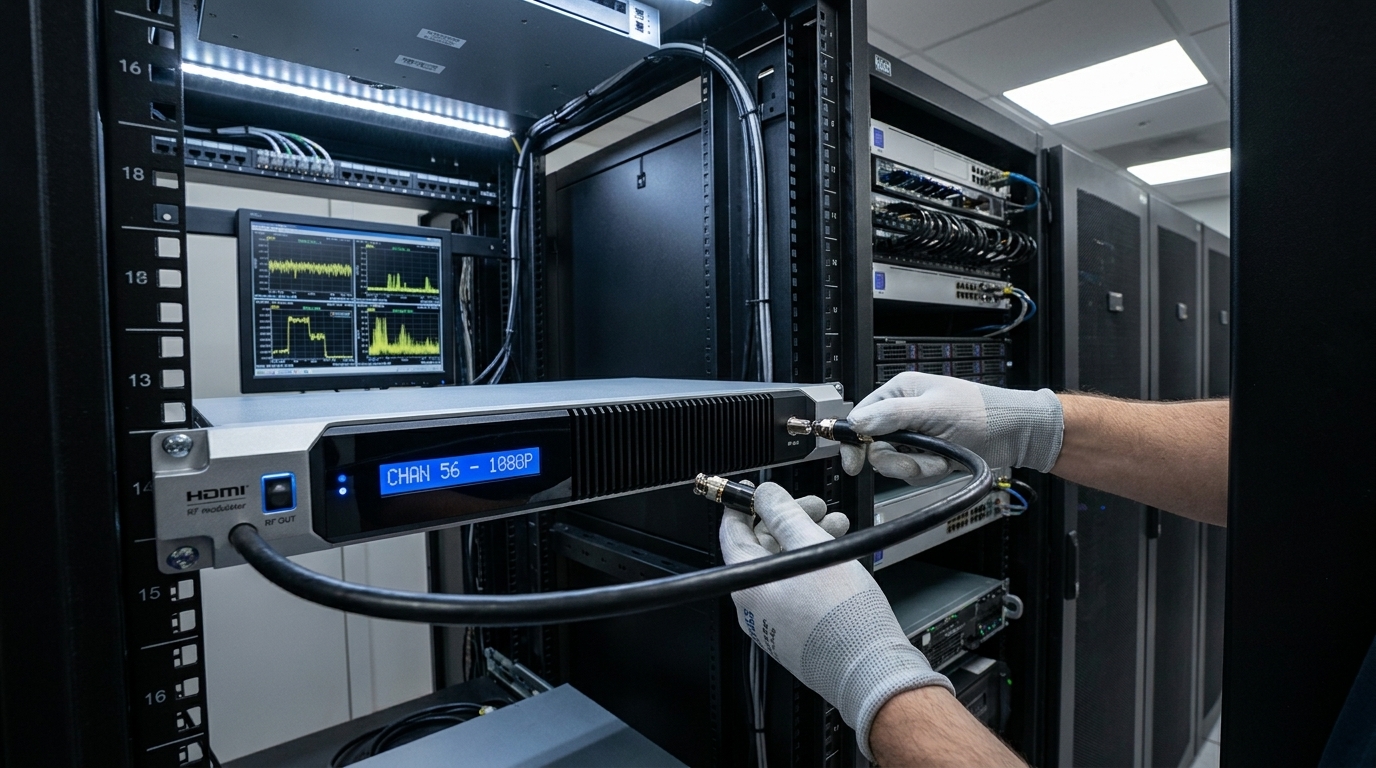 HDMI RF Modulators: Architecture, Setup, Types, and Commercial ApplicationsUTMEL18 May 2026683
An HDMI RF modulator is a specialized hardware device designed to encode and modulate baseband digital audio and video signals into radio frequency (RF) formats. By converting an HDMI source into an RF signal, these devices allow high-definition content to be distributed over standard coaxial cable infrastructure.
Read More Smartphone RF Chips Availability Forecast 2026: Lead-Time Risks and AlternativesUTMEL14 July 2026414
In 2026, the smartphone supply chain faces intense pressure as generative AI chips monopolize wafer and packaging capacity. Consequently, mobile manufacturers endure rising BOM costs and a projected 13.9% drop in shipments. While RF front-end lead times hover at 16 to 26 weeks, procurement teams must adopt multi-sourcing strategies, leverage specialized nodes like RF-SOI, and transition to "Just-in-Case" inventory models to survive.
Read More Explain in Detail the Three Sharp Weapons to Eliminate EMC: Capacitors/Inductors/Magnetic BeadsUTMEL24 December 20214936
Filter capacitors, common mode inductors, and magnetic beads are all typical components in EMC design circuits, and they're the three main tools for reducing electromagnetic interference.The notion of removing the three principal EMC weapons from the design is examined in-depth in this article.
Read More Everything You Need to Know about RF ChipUTMEL14 January 202621373
RF chip is one of the most important cores of cell phone terminals. The RF chip is responsible for RF transceiver, frequency synthesis, and power amplification.
Read More What are Electromagnetic Waves?UTMEL07 December 20215736
Hello everyone, I am Rose. Today I will introduce Electromagnetic waves to you. Electromagnetic waves are a type of electromagnetic energy.It can be considered the most perfect signal carrier because it can be carried without restriction in open space, as well as through metal transmission lines and controlled freely.
Read More
Subscribe to Utmel !
![HEDS-5500#A14]() HEDS-5500#A14
HEDS-5500#A14Broadcom Limited
![ASX340AT2C00XPED0-DPBR]() ASX340AT2C00XPED0-DPBR
ASX340AT2C00XPED0-DPBRON Semiconductor
![PEC11R-4015F-S0024]() PEC11R-4015F-S0024
PEC11R-4015F-S0024Bourns Inc.
![AR0237CSSC00SPRA0-DR]() AR0237CSSC00SPRA0-DR
AR0237CSSC00SPRA0-DRON Semiconductor
![MFRC52201HN1,115]() MFRC52201HN1,115
MFRC52201HN1,115NXP USA Inc.
![NOIP1SN0500A-QTI]() NOIP1SN0500A-QTI
NOIP1SN0500A-QTION Semiconductor
![E2E-X1R5E2-M3]() E2E-X1R5E2-M3
E2E-X1R5E2-M3Omron Automation and Safety
![PEC11R-4225F-N0024]() PEC11R-4225F-N0024
PEC11R-4225F-N0024Bourns Inc.
![M24SR16-YMN6T/2]() M24SR16-YMN6T/2
M24SR16-YMN6T/2STMicroelectronics
![HEDS-9711-150]() HEDS-9711-150
HEDS-9711-150Broadcom Limited