Product
 Brand
Brand Articles
 Tools
Tools
Long Life Small Volume Detector Switch for Intelligent Applications

TD1150 Detector Switch
| Topics covered in this article: |
| Ⅰ. Market trends and challenges |
| Ⅱ. What is a detector switch? |
| Ⅲ. How to select the detector switch? |
| Ⅳ. Critical applications |
| Ⅴ. For all types of electronic designs |
Since 2014, the implementation of Internet of Things (IoT) technology has made smart connected devices attract a lot of attention in the broad market. Many smart home technologies are driving the transition from passive, unconnected devices to actively connected devices. Whether at home or on the go, smart home devices can provide advanced control over connected devices, simplifying people's lives and providing richer functions. Such devices are usually supported by innovative electromechanical controls or switches. As the space inside IoT devices continues to shrink, their internal components must also become smaller.
According to Markets and Markets, the market cap of the IoT segment is expected to reach $1,463.2 billion by 2027, up from just $250.7 billion in 2019, with a compound annual growth rate (CAGR) of 24.9% over the forecast period. More specifically, the global smart home market is expected to grow from $78.3 billion in 2020 to $135.3 billion in 2025, with a CAGR of 11.6% over the forecast period. This growth has been driven by factors such as the increasing number of Internet users, the implementation of home monitoring in remote areas, the growing demand for energy efficiency, the expansion of smart home product lines, and the growing concern of the general population for security and convenience.
Ⅰ. Market trends and challenges
The potential for IoT applications is endless. It enables remote monitoring while collecting data for analysis. This data can be interpreted and used to create a 360-degree view of the home, enabling OEMs to develop better products to meet people's needs. While the overall demand for IoT devices declines during the COVID-19 pandemic, new IoT devices emerge again, many of which are related to improving health and quality of life.
The trend toward miniaturization of IoT devices is nothing new. Traditional quick switches are too bulky to fit into palm-sized IoT devices, and the limited space of PCB requires a smaller detection switch to replace the commonly used quick switches, about 80% of devices in smart home IoT applications now have detection switches as essential core components.
In addition, IoT device makers want to integrate as many functions and collect as much data as possible in ever-shrinking products. This often requires more electronics to be packed into a small package, which further demands miniaturization and design flexibility.
Ⅱ. What is a detector switch?
A detection switch, also known as a "detector" switch, is a memS switch that detects (or senses) any movement or activation caused by an object on its actuator. There is a contact terminal below the detection switch. If the switch is on, a few milliamps or microamps will flow through it when an electrical signal is connected to the terminal. The signal stream can be connected to other IoT devices to trigger a series of instructions to perform specific tasks on other devices.

Figure. 1 Structure Diagram of Main Components of Detector Switch
Detection switches provide engineers with a flexible solution for designing applications that require "fretting" detection by moving contact devices. These switches are very strong and do not suffer any damage over thousands of iterations. They are packaged in small sizes and provide a wide range of displacement distance detection, while also meeting the design requirements of small space on the PCB.

Figure. 2 Fretting Surface Mount Detector Switch Mounted on PCB
The detection switch concept is derived from the traditional quick switch, as a smaller alternative to the larger quick switch that can deliver much larger currents (from a few milliamps to a few amperes). The biggest drawback of the quick switch is its size, especially for the increasingly small Internet of Things devices and other handheld devices. The fretting detection switch saves up to 50% of space compared to similar quick-acting switches. making it an ideal choice for IoT applications.

Figure. 3 Schematic Diagram of the Main Building Blocks of the HDT0001 Detector Switch
Detection switches also provide a signal level current (DC voltage) for IoT devices and home electronics. The low current detection switch consumes little or no power, making it an ideal solution for battery applications. Also, detection switches do not require UL /ENEC certification.
With its miniature size and flexible mounting, the switch can be placed in almost any position on the PCB, including flat, vertical, and even upside down. When designing products and solutions, there is no constraint for designers to use plug and play detection switches,
In addition to its compact size, the detection switch has many advantages. It allows production lines to use robots to quickly pick and place and weld on PCBs. More than 90% of test switches use surface mount (SMD) terminals, which means they are designed for SMT machine equipment. Its manufacturing process does not require any manual intervention, so it can ensure the quality of the switch and avoid pollution and dirt caused by the manual handling of the switch.
Ⅲ. How to select the detection switch?
Select the correct detection switch based on application requirements. There are a variety of detection switches available to meet almost all application requirements. Specific options to consider include:
Size: divided into standard (about 13mm), small size compact (about 6mm), and ultra micro (about 2mm).
Life span: 100,000 to 1 million cycles
Environmental conditions: applicable to all levels of IPxx from the normal environment to the harsh environment.
Operating force: 35g to 50g
Execution mode: push fin, horizontal push, vertical push, and angle push rod
Actuator length: 1.4mm to 2.67mm
The direction of execution: vertical or horizontal, top or side, right or left.
Stroke: 1.05mm to 3.14mm
End connection: including surface mount (SMT), through-hole fixation, panel embedded/chassis screw fixation, and other installation methods, suitable for different installation and fixation requirements.
Operating temperature range: -40°C to 85°C, can operate in a harsh environment. Detection switches are unipolar and are usually normally open or normally closed. In addition, there is a risk of flux penetration during welding when the test switch is not sealed. Therefore, attention should be paid to this in the manufacturing process of welding the detection switch to the PCB.
Ⅳ. Critical applications
Detection switches are commonly used for the following smart home applications:
Cleaning robot: check whether a dust box is installed and the position of the robot wheel direction.
Smart door and window locks: Detect locks in forced open positions from the inside. The lock cannot be manually opened externally.
Earplug: Start charging when the earplug is placed into the charging base, and check whether the charging base is in the open or closed position.
Security camera: Detects the limit position of lens rotation
Safety door: Check whether the door is open or closed
Smoke detectors, smoke detectors, and alarm panel tamper-proof function test detection switches can also be used for a variety of other intelligent applications, from the detection of digital camera lid opening/closing, enlarge/reducing function or connection or remove the lens, to detect utility meter cover is removed to prevent been tampered with.
Ⅴ. For all types of electronic designs
In order to meet the challenges mentioned above and meet the requirements of the industry, switch manufacturers such as Utmel offer a wide range of detection switch products. Compact and reliable detection switches are ideal for space-constrained electronic designs. Moreover, it achieves design flexibility and functionality by providing a variety of options, enabling iot devices to innovate and be imaginative.
 UTMEL
UTMEL
We are the professional distributor of electronic components, providing a large variety of products to save you a lot of time, effort, and cost with our efficient self-customized service. careful order preparation fast delivery service
1. What is a detection switch?
A detection switch, also known as a "detector" switch, is a memS switch that detects (or senses) any movement or activation caused by an object on its actuator.
2. How to choose a detection switch?
We should select the correct detection switch based on application requirements, such as size, life span, operating force, stroke and so on.
3. Where can we use a detection switch?
We can use it for smart home applications like cleaning robot, earplug, safety door and so on.
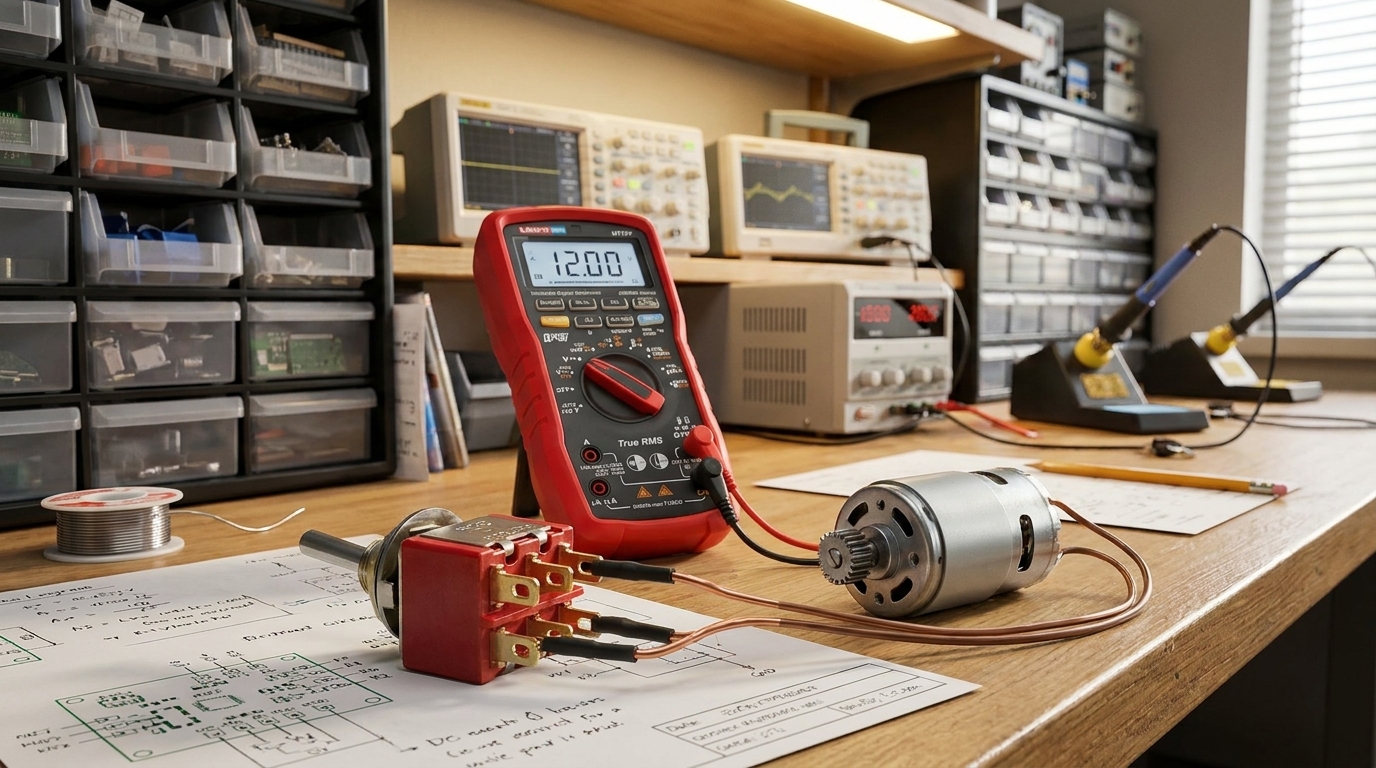 The Complete Guide to DPDT Switches: Function, Wiring, and ApplicationsUTMEL23 May 20262235
This comprehensive guide explores Double Pole Double Throw (DPDT) switches, explaining their core anatomy, distinct ON-ON and ON-OFF-ON configurations, and essential wiring methods like DC motor polarity reversal and A/B source selection. It also covers various physical designs, selection criteria such as ratings and materials, and effective troubleshooting steps to resolve common circuit failures.
Read More Long Life Small Volume Detector Switch for Intelligent ApplicationsUTMEL16 March 20224927
Hello everyone, I am Rose. Welcome to the new post today. This article will introduce what is a detection switch, how to choose a detection switch and where to use a detection switch.
Read More Analog Switch: Types and ApplicationUTMEL25 March 202115779
The analog switch is mainly to complete the signal switching function in the signal chain. The switching mode of the MOS tube is adopted to realize the switching off or on of the signal link.
Read More Toggle Switches: Features, Types and ApplicationsUTMEL23 January 202111373
Toggle switch adopts integrated circuit technology and SMT appearance device technology to manufacture a new generation of photoelectric switch devices. It has intelligent functions such as delay, expansion, external synchronization, anti-interference, high reliability, stable working area, and self-diagnosis. This novel photoelectric switch is an active photoelectric detection system electronic switch that uses pulse modulation. The cold light source used is infrared light, red light, green light and blue light, etc., which can be quickly and without contact and damage Control the state and action of various solid, liquid, transparent, black, soft, smoke and other substances.
Read More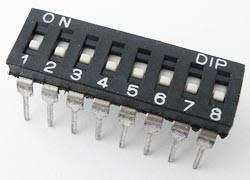 DIP Switch: Introduction and ClassificationUTMEL20 January 202117382
DIP switch is an address switch used for operation control, using the principle of 0/1 binary coding. It is a miniature switch that can be toggled by hand. Dip switches are widely used in data processing, communication, remote control and anti-theft automatic alarm systems and other products that require manual programming.
Read More
Subscribe to Utmel !