Product
 Brand
Brand Articles
 Tools
Tools
An Analysis of Low Pressure on Partial Discharge in Micro-Voids in Aviation
With a forecasted doubling of air traffic every 15 years and a 5% annual growth rate, collaborative initiatives from government and non-government organizations are boosting research and development in electrified technologies. However, the path to electrification faces certain challenges, particularly in rendering electrified aircraft financially competitive against traditional fuel-based counterparts.
The electrification journey represents modern technology with a goal to eliminate obstacles in the next two to three decades. A key challenge involves enhancing the specific power in electric machines and converters, which is crucial for the economic viability of electrified aircraft. Advancements in power electronic converters using wide bandgap (WBG) semiconductors introduce new hurdles, especially in insulation systems.
The use of WBG semiconductors exposes insulating materials to high-frequency, fast-rise square wave voltages, necessitating a delicate understanding and mitigation of partial discharges. As the industry explores electrification at higher altitudes, the impact of harsh environmental conditions emerges as a pivotal factor. This calls for an approach to a successful transition towards a more sustainable and electrified aviation future.
Finite-Element Analysis
To study partial discharge (PD) modelling, understanding the mechanisms for PD identification is crucial. A common PD type arises from voids formed during insulating material manufacturing. Due to their lower dielectric constant, these voids, considered weak regions, are highly susceptible to PDs. PD occurrence is intricately linked to the electric field distribution in the medium. PD inception necessitates two conditions: provision of free electrons and a sufficiently high electric field. Accurate estimation of the electric field distribution, achievable through numerical methods like element analysis (FEA), enables precise PD evaluation, making FEA a valuable tool in PD modelling.
PD Inception: The confirmation of a Partial Discharge (PD) event involves the provision of initial electrons. PD Inception occurs when the electric field intensity within air-filled voids surpasses a critical threshold known as PD Inception Field (Einc). This threshold, Einc, represents the minimum electric field magnitude associated with the maximum discharge path length in the direction of the electric field.
PD Extinction and Model Dynamics: Determining the duration and calculating the charge magnitude of a discharge activity necessitates using a criterion for PD extinction time. The collisions between electrons and atoms persist during PD activity until a point where electrons lack sufficient energy to further propagate the streamer. Similar to the PD inception criterion, the PD extinction criterion is also a field-dependent condition. Throughout PD activity, the decline in an electric field inside the air bubble is attributed to the higher conductivity of the cavity compared to its normal state. Investigating changes in the rate, intensity, and spectrum of PD activity is crucial, particularly in the context of aircraft experiencing severe environmental conditions at higher altitudes. Among the significant environmental changes, the air pressure drop plays a pivotal role, as both the inception and extinction fields are dependent on pressure. Additionally, the dielectric constant (relative permittivity) is influenced by pressure, further emphasizing the need for a comprehensive exploration of PD dynamics under these circumstances.
Algorithm Used in Modelling the System
Figure 1 shows the modelling process to analyze the sensitivity analysis for any parameter like pressure. The process involves evaluating the influence of pressure on Partial Discharge (PD) occurrences.
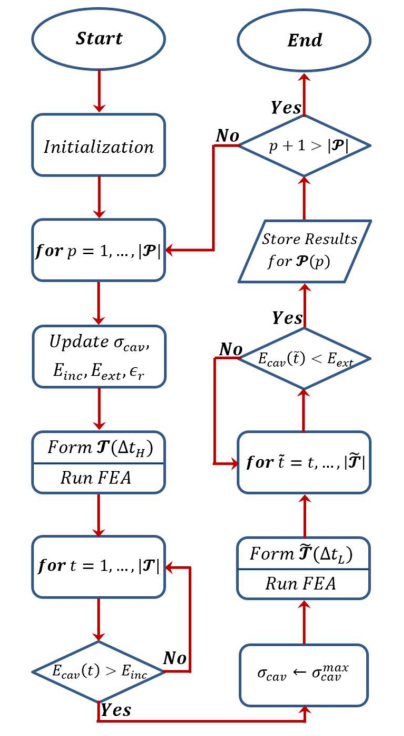
Figure 1: The modelling flow diagram showing the effect of air pressure on PD characteristics
As illustrated in the flowchart, a series of pressure levels (ρ) is subjected to investigation. For each pressure level (σcav), PD Inception Field (Εinc), Extinction Electric Field (Εext), and dielectric permittivity (εr) undergo updates as per predefined relationships. Preceding PD ignition, the time domain is discretized into a time set (τ) using a timestep (ΔtH). Subsequently, the Finite Element Analysis (FEA) model runs for this time set, evaluating the PD inception criterion at each time step (t) until criterion satisfaction. Upon PD ignition, cavity conductivity rises from near-zero to a maximum value (σmaxcav). To pinpoint the extinction time, the time set is adjusted by adding instances with a lower time step (ΔtL). The FEA model is rerun for the modified time set (τ-), with the first time step,̃t, post-PD ignition meeting the extinction criterion determining PD extinction time. This iterative process extends to all considered pressures and is implemented using MATLAB integrated with COMSOL Multiphysics for FEA modelling.
Results Obtained
The study involves a setup comprising two spherical electrodes—one serving as the high-voltage electrode and the other as the ground electrode—embedded in a cylindrical block of silicone gel (ε=2.7 at Normal Temperature and Pressure). Additionally, there's a spherical air-filled cavity at the centre of the mass of the cylinder, as depicted in Figure 2. The geometric symmetry allows for a 2D axisymmetric representation to estimate the electric field.
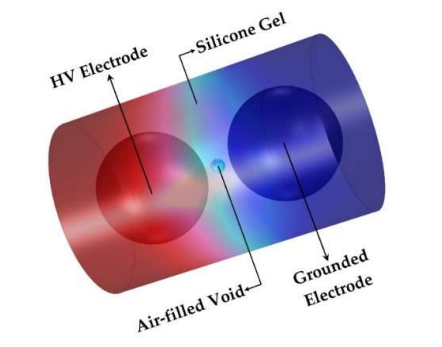
Figure 2: Spherical electrodes used in the experiment
In Figure 3, variations in PD true charge with pressure are illustrated. True charge values are averaged across different rise times (1ns ~ 1 μs). The graph reveals that PD events at higher altitudes exhibit increased intensity. At Ρ = 4 psi, the mean true charge magnitude is 11% higher compared to Ρ= 14.7 psi (sea level).
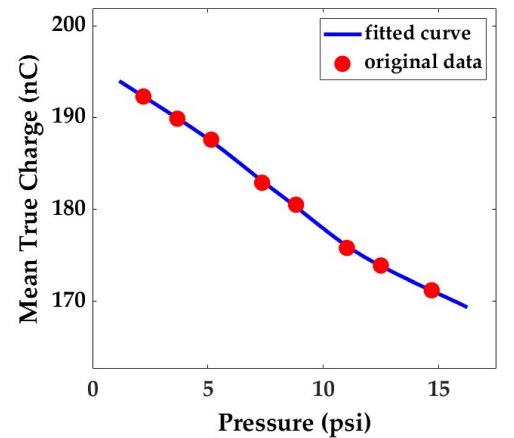
Figure 3: Mean true PD charge magnitude vs pressure
Conclusion
An experiment was conducted to explore the challenges towards the transition to electrified aircraft for decarbonization in the aviation industry. The primary issue lies in the low specific power of potential systems replacing conventional engines. The study focused on the detrimental effects of high-frequency, fast-rise voltage on silicone gel, the current-encapsulating material for power modules. Additionally, it evaluated the impact of low-pressure conditions, revealing that even minor micro-voids can contribute to partial discharge occurrences.
These findings underscore the necessity of reinforcing insulation systems and developing new materials for future electrified aircraft, highlighting their significance alongside technologies enhancing power module-specific power.
 Saumitra Jagdale
Saumitra Jagdale is a Backend Developer, Freelance Technical Author, Global AI Ambassador (SwissCognitive), Open-source Contributor in Python projects, Leader of Tensorflow Community India, and Passionate AI/ML Enthusiast
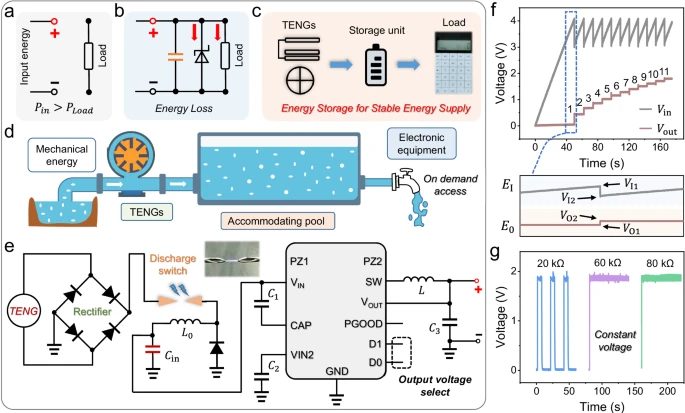 Improving the Energy Conversion Efficiency of Triboelectric NanogeneratorsSaumitra Jagdale19 November 20243076
There is a huge growth in demand for self-sustaining electronic devices, as the traditional power-generating devices fail in remote and harsh environments due to the periodic requirement of battery changes. Also, these devices are frequency specific; some work only in high frequency and some in low frequency. Triboelectric nanogenerators (TENGs) provide a promising solution by efficiently converting mechanical energy into electricity as they are versatile, compact, and cheap, making them a popular choice.
Read More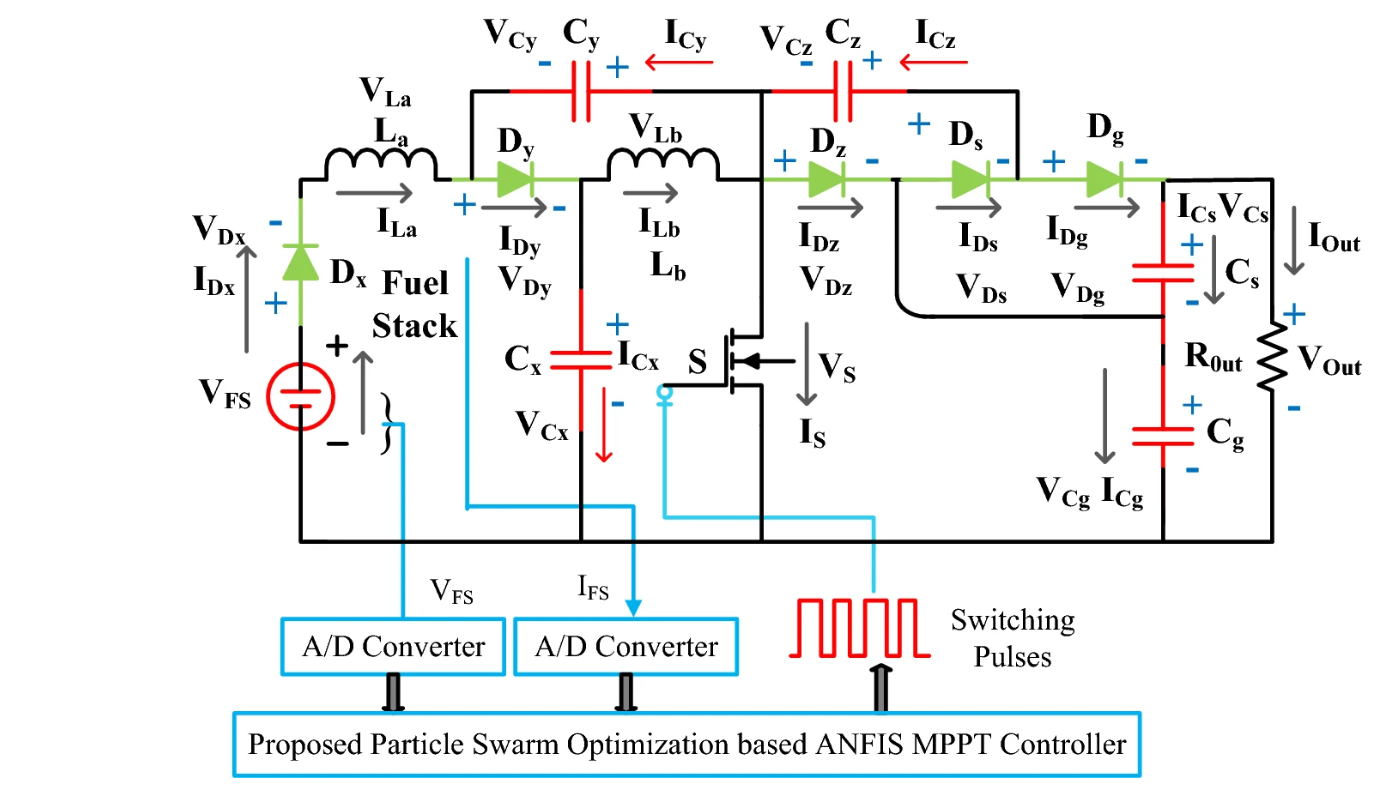 Methodologies for Increasing Efficiency of Fuel Stack Technology for Energy GenerationSaumitra Jagdale19 November 20242979
Presently, power companies are moving towards renewable energy systems. Conventional energy sources are more expensive because they require a vast network to be maintained and huge human resources. Also, they harm the environment by releasing several harmful gases. As the industry’s focus shifts toward renewable energy sources, energy systems powered by Proton Exchange Membrane Fuel Stacks (PEMFS) are gaining traction.
Read More VSC Light Meaning, Causes, and Step-by-Step DiagnosticsUTMEL19 May 2026960
A VSC (Vehicle Stability Control) light indicates the system is disabled, often as a fail-safe triggered by unrelated engine faults like a loose gas cap. While the stability system prevents lateral skidding, it shuts down when sensor data is unreliable. Proper diagnosis requires an ABS-capable OBD2 scanner. Resolving the root engine code, checking wheel speed sensors, or performing a zero-point calibration usually restores system function.
Read More Edge AI and Embodied AI: Why Intelligence Is Moving Into Devices and RobotsUTMEL18 June 2026398
AI is no longer only a cloud service answering prompts from a distant data center. It is increasingly becoming a local capability inside cameras, appliances, wearables, vehicles, gateways, factory machines, and robots. That shift matters because the next wave of AI is not just about generating text or images. It is about sensing the physical world, making decisions under time and power limits, and acting through real hardware.
Read More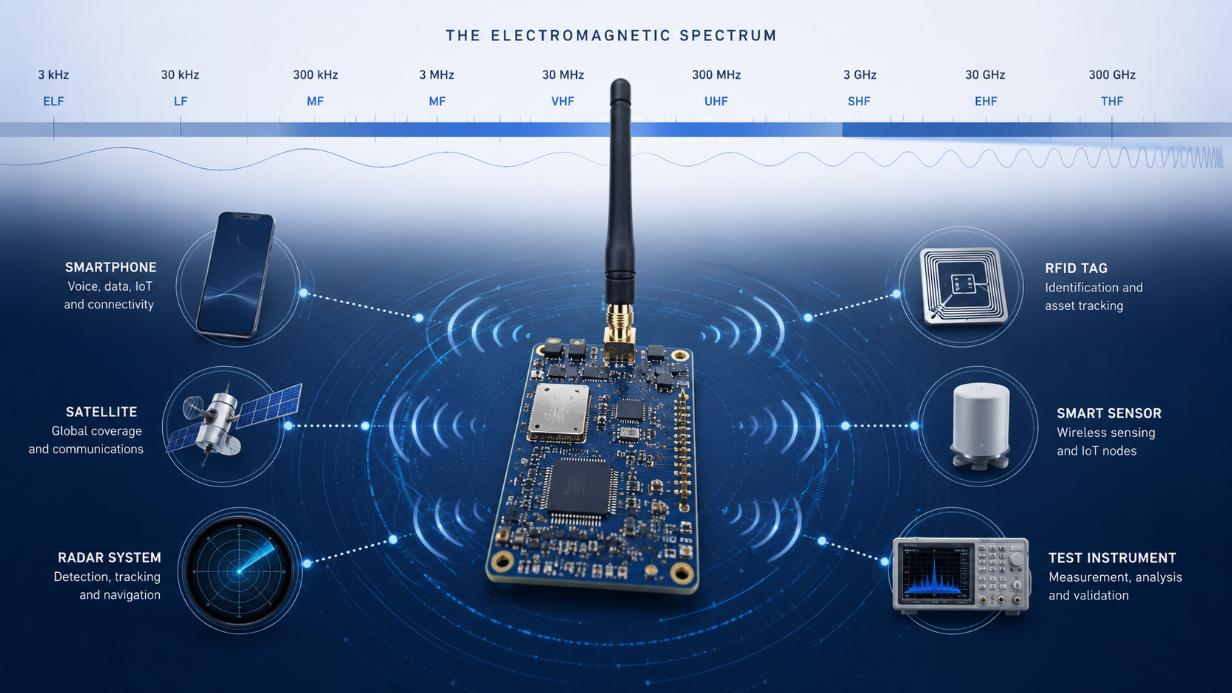 RF Technology: Complete Guide to Specifications, Frequency Bands, Components, and ApplicationsUTMEL22 June 2026224
Learn what RF technology is, how radio-frequency systems work, which specifications matter, where RF is used, and how to choose RF components for wireless, IoT, radar, RFID, and test applications.
Read More
Subscribe to Utmel !
![C115373-0006]() C115373-0006
C115373-0006C&K
![C115373-0008]() C115373-0008
C115373-0008C&K
![75958]() 75958
75958Wiha
![7-1579014-2]() 7-1579014-2
7-1579014-2TE Connectivity / AMP
![63443-7551]() 63443-7551
63443-7551Molex
![63443-7517]() 63443-7517
63443-7517Molex
![63443-7549]() 63443-7549
63443-7549Molex
![63443-7552]() 63443-7552
63443-7552Molex
![63443-7550]() 63443-7550
63443-7550Molex
![CT150-2C-JN2V]() CT150-2C-JN2V
CT150-2C-JN2VJAE Electronics