Product
 Brand
Brand Articles
 Tools
Tools
Key Networking Solutions Trends Every IT Leader Should Know
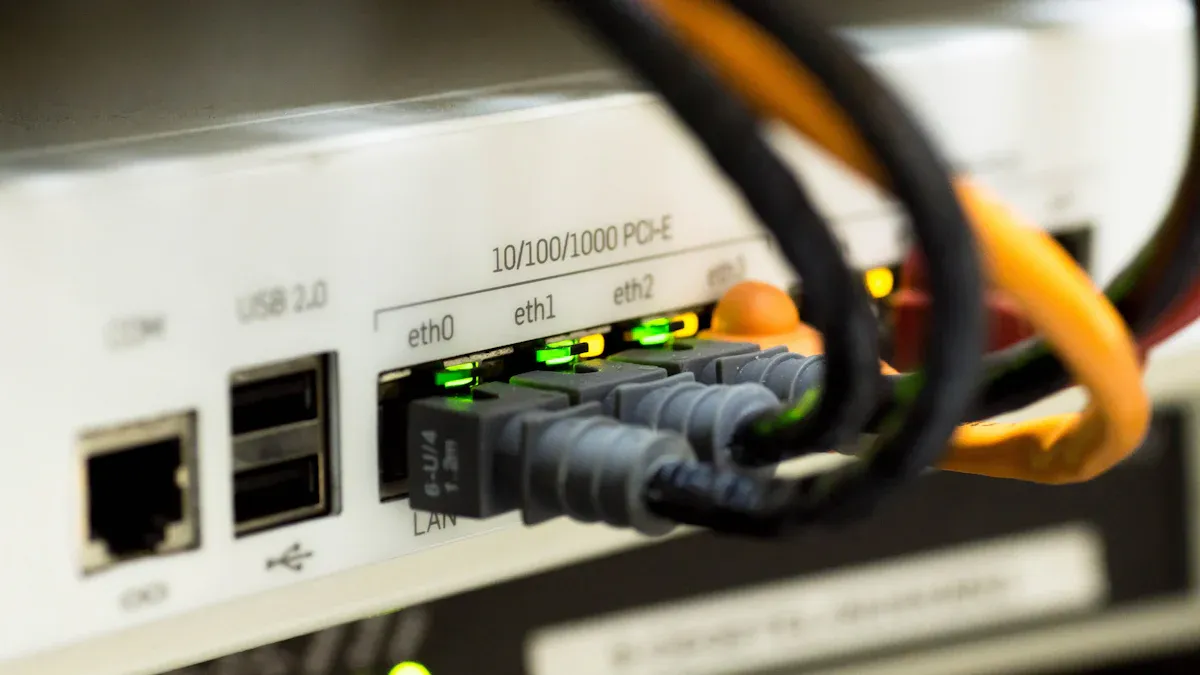
IT leaders must anticipate it networking trends to remain competitive in a rapidly evolving digital landscape. The 2025 gartner strategic roadmap highlights the critical role of advanced networking solutions in security and agility. Organizations face growing challenges, including rising cyberattacks and increased cloud adoption.
| Category | Statistic |
|---|---|
| Global IT Spending Growth | 5.7%–8% in 2024 |
| AI Investment | $200 billion by 2025 |
| Cyberattack Incidence | 68% of organizations in 2023 |
| Multicloud Adoption | 86% of organizations |
Understanding these networking solutions trends empowers teams to drive innovation and achieve operational excellence. The 2025 gartner strategic roadmap urges leaders to prioritize future-proof strategies for sustainable growth.
Network-as-a-Service
Overview
Network as a service (NaaS) changes how organizations approach networking. Instead of building and maintaining their own network infrastructure, companies can now subscribe to flexible, cloud-based networking solutions. This model allows IT teams to scale resources up or down as needed. NaaS supports remote and hybrid work, cloud migration, and virtualization. Major providers like AT&T, Verizon, Cisco, and IBM lead the market. North America holds the largest share due to advanced technology and strong research investments.
NaaS adoption continues to rise, especially among small and medium-sized enterprises. These organizations seek lower infrastructure costs and faster digital transformation.
| Aspect | Evidence Summary |
|---|---|
| Market Drivers | Scalability, cost efficiency, cloud migration, remote/hybrid work, SD-WAN |
| Dominant Segments | WAN segment leads with 32.4% CAGR; cloud-based services grow fastest |
| Key Players | AT&T, Verizon, Cisco, IBM, Oracle, VMware, Nokia |
| Regional Insights | North America leads due to tech maturity and R&D |
Benefits
Network as a service offers several advantages. Companies reduce capital expenditures by up to 35% and shift to a pay-as-you-go model. This approach lowers operational costs and increases flexibility. IT teams can focus on core business goals instead of managing complex network hardware. NaaS also improves network security and service quality. Continuous updates and security patches keep the network protected. The model supports rapid scaling, which is vital for businesses with changing needs.
Reduced CAPEX and operational costs
Enhanced flexibility and scalability
Improved security and service quality
Focus on core business functions
Impact
NaaS transforms how enterprises use networking solutions. Over 62% of organizations have adopted NaaS in the last three years. The IT and telecom sectors lead adoption, but healthcare and retail also see rapid growth. The COVID-19 pandemic accelerated investments in VPN, SD-WAN, and cloud networking. NaaS enables companies to respond quickly to market changes and support hybrid workforces. However, challenges remain, such as lack of standardization and complex deployments for large enterprises.
| Industry | Growth Rate (CAGR) | Notable Trends |
|---|---|---|
| IT & Telecom | 31.8% | Virtualization, BYOD, SD-WAN growth |
| Retail | Fastest growing | E-commerce, cloud adoption |
| Healthcare | Growing | Remote monitoring, secure access |
AI and Automation
AIOps
AIOps, or Artificial Intelligence for IT Operations, transforms how organizations manage their network environments. Companies use AIOps to analyze large volumes of network data, detect anomalies, and automate responses. Comcast Business and Gartner highlight that most organizations automate less than a quarter of their network activities today, showing room for growth. AIOps improves network performance by identifying issues before they disrupt operations. It also automates routine tasks, which allows IT teams to focus on strategic goals. Opengear’s survey shows that many leaders expect to increase AI investment for network management. This shift helps organizations respond faster to incidents and maintain network stability.
| Data Trend / Metric | Description / Value |
|---|---|
| AIOps Market Growth | $8.91B (2024) to $11.16B (2025), 25.3% CAGR |
| Projected AIOps Market by 2029 | Estimated to reach $32.56 billion |
| AI Business Usage Increase | 55% (2023) to 78% (2024) |
Generative AI
Generative AI brings new possibilities to networking solutions. It can create scripts and automate network configurations, reducing manual errors. Organizations use generative AI to speed up cloud resource setup and improve consistency. Investment in generative AI reached $33.9 billion globally in 2024, showing its growing importance. Generative AI also helps with incident management by detecting patterns and suggesting fixes. This technology supports proactive network management and reduces downtime.
It accelerates anomaly detection and remediation.
It enables smarter, more reliable network operations.
Agentic AI
Agentic AI combines autonomy and adaptability in network management. This technology creates workflows that adjust to changing network conditions. Agentic AI integrates with existing tools to make decisions quickly. It helps organizations manage complex networking environments with less human intervention. Industry experts note that agentic AI acts as an assistant, not a replacement, for network engineers. It improves efficiency and supports the transition to autonomous network operations. As networks become more complex, agentic AI will play a key role in keeping them secure and resilient.
Tip: Upskilling staff remains important as AI tools evolve. Human oversight ensures that AI-driven network solutions deliver the best results.
Cloud-Native Networking
Hybrid and Multi-Cloud
Hybrid and multi-cloud networking has become a core strategy for organizations seeking flexibility and resilience. Many companies now move from private data centers to cloud-first strategies. This shift supports hybrid work by enabling secure access to applications and data from any location. The 2025 EMA report highlights that improved flexibility, scalability, and cost optimization drive multi-cloud adoption. Enterprises can select cloud infrastructures that best fit their analytics workloads, which helps avoid vendor lock-in and accelerates innovation. Hybrid cloud analytics also enables organizations to allocate resources efficiently across public and private clouds. This approach supports the demands of hybrid work and ensures business continuity.
Nearly 50% of organizations transition to cloud-first strategies.
Multi-cloud environments handle diverse data sources and complex workloads.
Only 25% of organizations feel fully successful in managing hybrid multi-cloud networks, showing room for improvement.
Scalability
Scalability stands as a key benefit of cloud-native networking. Enterprises can scale resources up or down based on workload demands. Hybrid cloud analytics optimize resource allocation, which leads to cost efficiency. Veeam ONE provides over 150 pre-built reports and advanced analytics for monitoring resource utilization and capacity planning. These tools help organizations forecast needs and identify workload shifts between environments. The Intertoys case shows that multi-cloud migration to Microsoft Azure delivers scalable and cost-effective analytics. Organizations gain the ability to support rapid growth without overprovisioning infrastructure.
Note: Analytics and observability tools play a vital role in quantifying scalability benefits and cost savings in hybrid and multi-cloud environments.
Cloud Providers' Role
Cloud providers shape the future of networking in a cloud-centric world. They offer robust platforms that support hybrid and multi-cloud deployments. Providers deliver automation, security, and observability features that simplify network management. Enterprises rely on these platforms to ensure seamless integration between on-premises and cloud resources. Cloud providers also help organizations maintain compliance and optimize performance. Their services enable businesses to innovate quickly and respond to changing market needs.
Edge Computing

Low Latency
Edge computing brings computation closer to where data is generated. This approach reduces the distance information must travel, which lowers latency. Many organizations rely on edge solutions to support applications that demand instant responses. The rise of 5g networks has made low latency even more important. Edge devices process data locally, which means less time spent sending information to distant data centers. This setup supports seamless connectivity for users and devices.
Empirical reviews highlight several benefits of edge computing for low latency:
Edge systems significantly reduce delays in real-time data processing by placing computation near data sources.
The decentralized nature of edge networks ensures reliable and robust data handling.
Edge solutions improve efficiency for high-speed internet connectivity, especially in environments with many IoT devices.
However, studies show that practical latency improvements depend on the entire ecosystem. For example, research on 4G and 5g networks with edge computing found that real-world latency sometimes increases due to device energy limits and network factors. This means organizations must optimize both their edge infrastructure and mobile devices to achieve the best results.
Real-Time Applications
Edge computing powers many real-time applications across industries. Healthcare providers use edge solutions for real-time analytics, such as monitoring patients during the COVID-19 pandemic. In transportation, edge systems enable intelligent traffic management and vehicle-to-infrastructure communication. Manufacturing plants rely on edge networks to monitor equipment and prevent downtime. The internet of things plays a key role in these scenarios, as billions of IoT sensors generate massive data streams.
Case studies show that edge computing handles large IoT data volumes and enhances security through localized processing. Smart grids, retail, and agriculture also benefit from edge-enabled real-time decision-making. The combination of 5g and edge networks supports new use cases that require instant feedback and high reliability. As organizations deploy more IoT devices, they depend on edge solutions to maintain connectivity and performance.
Note: Edge computing, 5g, and the internet of things together create a foundation for future-ready, real-time digital services.
SDN and NFV
Programmability
SDN and NFV have changed how organizations manage their network. SDN separates the control logic from the hardware, which allows IT teams to program the network using software. This approach makes it easier to update, reconfigure, and automate network tasks. NFV lets companies run network functions on standard servers instead of special hardware. This shift reduces costs and speeds up deployments.
Recent technology studies show that hardware-accelerated virtual switch processing, like ASAP2 OvS offload, can reach almost 100 Gbps throughput for large packets without using the CPU. For small packets, this technology increases the packet rate by ten times, freeing up CPU resources for other tasks. These improvements support more virtual network functions and cloud-native applications on the same server. OpenFlow-based SDN also offers centralized control and service agility, making it easier to manage rapid network changes. Operators can use API-based controls to manage existing hardware, which helps them migrate smoothly while improving programmability.
Agility
SDN and NFV give organizations the agility to respond quickly to changing business needs. They enable dynamic provisioning of network services, so teams can deploy and scale virtual network functions without adding new hardware. This flexibility supports fast responses to traffic surges, new service launches, and policy changes.
Performance benchmarks highlight that software switch designs in NFV improve both throughput and latency. These gains show that SDN and NFV make the network more flexible and scalable. A mathematical framework now allows teams to measure how well a network can handle different demands and compare solutions directly. Use cases include cloud data centers, 5G networks, and edge computing. The software-defined wide area network is a key example, as it uses these technologies to deliver fast, reliable, and cost-effective connectivity. Together, SDN and NFV help organizations keep their networks responsive and ready for the future.
Secure Enterprise Networking
SASE
Secure enterprise networking now relies on unified SASE platforms to protect users and data everywhere. SASE, or Secure Access Service Edge, combines networking and security into a single cloud-delivered service. This approach gives organizations secure, fast access to applications, no matter where users work. Companies benefit from simplified management and consistent security policies across locations.
Many organizations choose SASE because it supports remote work and cloud adoption. Technologies like firewalls, anti-malware, and intrusion detection systems work together in a unified SASE solution. Managed Service Providers use AI and machine learning to optimize network performance and security. These tools help reduce downtime and improve operational efficiency. Mitchells & Butlers, for example, secures connectivity across 1,700 venues using Cisco Meraki, showing real-world benefits of secure enterprise networking.
SASE platforms adapt quickly to new threats. They use AI to detect risks and automate responses, keeping the modern enterprise network reliable and safe.
Zero Trust
Zero trust network access has become a core strategy for protecting sensitive data. Zero trust means that no user or device receives automatic trust, even if they connect from inside the network. Every access request goes through strict verification. This model uses AI and machine learning to spot unusual activity and respond fast to threats.
Organizations see less data loss and downtime with zero trust. They also meet compliance requirements more easily. Advanced cybersecurity measures, such as zero-trust architectures, help safeguard information and support business continuity.
Zero trust network access verifies every user and device.
AI-driven tools automate threat detection and response.
Companies reduce risk and improve reliability.
Secure enterprise networking strategies now focus on both unified SASE and zero trust. These solutions help organizations stay ahead of evolving cyber threats and support the demands of a modern enterprise network.
Network and Security Convergence
TCO Optimization
Network and security convergence helps organizations lower their total cost of ownership (TCO). Companies now face growing data demands from AI and cloud workloads. They need scalable and cost-efficient network architectures. The ACG Research report compares different data center interconnect options, such as Dark Fiber, Carrier Ethernet, and Wavelength Services. The report recommends that enterprises assess long-term bandwidth needs and regional fiber availability. This helps them select the best transport models. By choosing scalable and converged network infrastructures, organizations can reduce TCO and support future growth.
A Forrester Total Economic Impact™ study for Fortinet shows that converged network and security infrastructure delivers a 318% return on investment. Organizations see significant cost benefits by simplifying their architecture. They also experience a payback period of less than six months. Streamlined processes save resources and increase productivity for security and network teams by 50%. These results highlight the financial and operational advantages of TCO optimization.
Tip: Assessing long-term needs and regional options helps organizations make smart investments in converged infrastructure.
Simplified Management
Converged network and security solutions make management easier for IT teams. HPE’s hyperconverged infrastructure (HCI) solutions show how integrating compute, storage, and networking into one system reduces data center complexity. Centralized management allows teams to deploy and scale resources quickly. This approach streamlines IT operations and supports digital transformation.
A simplified architecture means fewer tools and less manual work. Teams can manage virtualized workloads from a single dashboard. This saves time and reduces errors. Organizations benefit from enhanced scalability and faster response to business needs. As a result, IT teams focus more on innovation and less on routine maintenance.
Centralized management improves efficiency.
Simplified deployment accelerates digital projects.
Enhanced scalability supports business growth.
Organizations that simplify management gain a competitive edge and prepare for future challenges.
Network Visibility
Monitoring Tools
Modern organizations rely on advanced monitoring tools to gain full visibility into their network. These tools track traffic, applications, and resources in real time. Teams use them to collect key metrics such as speed, latency, bandwidth, uptime, packet loss, jitter, throughput, and response times. Monitoring tools help IT professionals optimize resource allocation and improve application performance.
Continuous monitoring allows teams to detect issues before they affect users.
Enhanced visibility accelerates threat detection and reduces incident response time.
Application monitoring supports business transformation by identifying trends early.
Integration with security tools enables smarter and more secure networks.
Recent surveys show that only 33% of professionals feel very satisfied with current network performance monitoring tools. However, 84% expect a shift toward network intelligence within three years. This trend highlights the growing importance of real-time monitoring, automation, and AI-driven insights.
Proactive Management
Proactive management transforms network operations from reactive problem-solving to strategic planning. Real-time alerts and continuous monitoring enable early detection and resolution of issues. Distributed monitoring agents provide comprehensive coverage, ensuring no part of the network goes unchecked.
| Benefit | Description |
|---|---|
| Reduced Downtime | Early detection lowers downtime costs and improves reliability |
| Enhanced User Experience | Fast issue resolution keeps users productive and satisfied |
| Scalability | Monitoring strategies adapt as the network grows |
| Competitive Advantage | Strategic anticipation supports business goals and innovation |
Industry research uses both primary and secondary data to validate the effectiveness of proactive monitoring. Interviews with technology leaders and market analysis confirm that proactive strategies improve reliability and support growth. Best practices include continuous evaluation and optimization of monitoring tools. Organizations that adopt proactive management gain a clear edge in today’s digital landscape.
Next-Gen Wi-Fi
Wi-Fi 6
Wi-Fi 6 stands out as a major leap in wireless technology. This standard, also known as 802.11ax, delivers higher data rates and improved network efficiency. Organizations see clear benefits when deploying Wi-Fi 6 in offices, schools, and public spaces. The technology supports more devices at once, which makes it ideal for dense environments. According to industry reports, Wi-Fi 6 enables speeds up to 9.6 Gbit/s, while older Wi-Fi 4 only reaches 600 Mbit/s. This exponential increase allows users to stream, download, and collaborate without lag.
Wi-Fi 6 also improves battery life for connected devices. Chipsets like Broadcom’s BCM4389 show real-world speeds over 2 Gbps and reduce battery consumption by up to five times compared to legacy standards. The use of the 6 GHz band and wider channels doubles speeds and cuts latency in half. These features help organizations deliver reliable connectivity for remote work, IoT devices, and cloud applications.
Note: Wi-Fi 6 provides a strong foundation for digital transformation. It supports seamless connectivity for growing device ecosystems.
Wi-Fi 7
Wi-Fi 7 represents the next step in wireless innovation. This standard builds on the strengths of Wi-Fi 6 and introduces even faster speeds, lower latency, and greater capacity. Wi-Fi 7 uses advanced modulation and wider channels to achieve multi-gigabit performance. Enterprises can expect smoother video conferencing, faster file transfers, and better support for real-time applications.
The chipset market for Wi-Fi 6, Wi-Fi 6E, and Wi-Fi 7 continues to grow rapidly. Demand for enhanced network performance drives this trend. Wi-Fi 7 enables organizations to future-proof their networks and deliver exceptional connectivity experiences. As more devices and applications require high-speed access, Wi-Fi 7 ensures that networks remain agile and responsive.
| Feature | Wi-Fi 6 | Wi-Fi 7 |
|---|---|---|
| Max Speed | 9.6 Gbit/s | 30+ Gbit/s |
| Latency | ~10 ms | <5 ms |
| Channel Width | Up to 160 MHz | Up to 320 MHz |
| Device Density | High | Very High |
Wi-Fi 7 will transform how organizations approach next-gen wi-fi deployments, ensuring robust connectivity for the future.
5G and Private Networks
Private 5G
Private 5G transforms enterprise connectivity by delivering secure, high-speed wireless networks tailored for business needs. Companies use private 5G to support mission-critical applications, especially in environments where reliability and low latency matter most. North America leads the market, driven by digital transformation and rapid IoT adoption. The standalone deployment model dominates because it offers high bandwidth and low latency, which are essential for IT infrastructure and automation.
Major players like Infosys have launched private 5G solutions for enterprise customers. These solutions focus on secure, scalable connectivity for IoT devices and smart office buildings. In 2023, private 5G networks accounted for 65% of new network announcements, showing strong momentum. The share of 5G in all private wireless networks jumped from 11% in 2019 to 53% in 2023. IT and telecommunications sectors use private 5G to create ultra-smart office environments and improve communication infrastructure. Manufacturing, transportation, logistics, and healthcare also show strong adoption, using private 5G for automation, real-time tracking, and surveillance.
| Industry | Private 5G Announcements (H1 2023) | Forecasted Spending Share by 2027 |
|---|---|---|
| Manufacturing | 93 | 35% |
| Transport & Logistics | 42 | 13% |
| IT & Telecommunications | Ultra-smart office focus | N/A |
Industry Use Cases
Private 5G delivers measurable performance improvements and cost savings across industries. Automotive manufacturing plants report a 30% increase in production speed by using private 5G to automate vehicle assembly lines. Real-time robotic control and reduced downtime drive these gains. Industrial manufacturers achieve up to 75% annual savings by eliminating network-related disruptions and lowering material and labor costs.
Warehousing operations benefit from private 5G by coordinating automated guided vehicles and drones for inventory management. This reduces manual labor and errors. Companies often see a return on investment within a few months, faster than with WiFi6, due to fewer downtimes and operational delays. Private 5G networks require fewer access points than WiFi6, which lowers hardware and installation costs over time.
Note: Private 5G and IoT together enable real-time data collection, automation, and smarter decision-making in modern enterprises.
Emerging Technology Trends
Quantum Networking
Quantum networking stands at the forefront of emerging technology trends. Cisco highlights Quantum Key Distribution (QKD) as a leading application, offering provable security for sensitive data. Early deployments of QKD and experimental networks show strong potential for secure communications. Aliro Quantum reports that organizations can prepare by simulating quantum memories and launching pilot projects. These steps help teams understand the hardware, software, and expertise needed for scalable quantum networks. The Belfer Center explains that quantum networking relies on superposition, entanglement, and interference. Although the technology remains in an early research phase, experts project that quantum networking will become a significant force within five years. Industries such as AI, drug discovery, and distributed computing could see transformative impacts as quantum networks mature.
LEO Satellites
Low Earth Orbit (LEO) satellites deliver high-speed, low-latency connectivity for moving platforms and remote locations. In the railway sector, LEO satellites provide downlink speeds up to 100 Mbps and uplink speeds up to 20 Mbps. One-way latency drops to 10-15 milliseconds, much lower than traditional GEO satellites. These satellites use advanced modulation and coding schemes to achieve spectral efficiency between 0.67 and 4.8 bps/Hz. The following table summarizes key operational benefits:
| Metric | Value / Description |
|---|---|
| Downlink Bit Rate | Up to 100 Mbps |
| Uplink Bit Rate | Up to 20 Mbps |
| One-Way Latency | 10-15 ms (LEO) vs. 250 ms (GEO) |
| Spectral Efficiency | 0.67 to 4.8 bps/Hz |
| Capacity per Subscriber | Suitable for up to 0.1 users per km² |
| Integration Trends | Multipath TCP, onboard processing, support for 5G/6g standards |
LEO satellites integrate with terrestrial networks and edge devices, supporting advanced applications like video transmission and train control. These solutions improve broadband access for both onboard personnel and trackside systems.
AV/IT Integration
Audio-Visual (AV) and Information Technology (IT) integration continues to reshape network infrastructure. The adoption of LEO satellite communication and adaptable communication systems drives this trend in sectors like rail transport. Multipath TCP protocols and onboard processing enable seamless connectivity between terrestrial, satellite, and edge networks. This integration supports reliable resource orchestration and prepares organizations for future 6g standards. As AV and IT systems converge, teams gain enhanced network reliability and flexibility. These advancements help organizations deliver high-quality digital experiences and support real-time applications across distributed environments.
Organizations that embrace these emerging technology trends position themselves for innovation and long-term success.
Sustainability
Green Networking
Green networking has become a top priority for IT leaders who want to reduce their organization’s environmental impact. Companies now focus on energy-efficient network equipment and smarter protocols. They measure energy use at the device, protocol, and network levels. Standards from groups like ETSI help teams track energy efficiency in network hardware. These standards give clear metrics for energy consumption. With this data, organizations can optimize their networks and lower their carbon footprint.
Many businesses use these metrics to certify the energy performance of their network equipment. Certification helps teams identify areas for improvement and supports sustainability goals. Companies also consider the full lifecycle of their equipment, from manufacturing to disposal. Accurate measurement and certification ensure that green networking actions have real impact. Reports confirm that these practices lead to significant reductions in energy use across networking environments.
Green networking not only saves energy but also cuts costs and supports a healthier planet.
ESG Alignment
Environmental, Social, and Governance (ESG) alignment shapes how organizations approach networking solutions. Investors and customers now expect companies to show real progress on sustainability. IT leaders set clear ESG targets for their network operations. They choose vendors who share their values and offer energy-efficient products.
A strong ESG strategy includes regular reporting on energy use and emissions. Teams use dashboards and analytics to track progress. Many organizations publish annual sustainability reports to show their commitment. These reports build trust with stakeholders and highlight leadership in responsible technology.
Set measurable ESG goals for networking.
Select partners with proven sustainability records.
Share progress through transparent reporting.
🌱 Companies that align networking with ESG principles gain a competitive edge and help create a more sustainable future.
IT leaders who proactively adopt new networking solutions see measurable gains. The following table highlights real-world outcomes from embracing recent trends:
| Success Metric / Case Study | Description | Impact / Outcome |
|---|---|---|
| 30% decrease in security incidents | Financial organization adopting Zero Trust model | Fewer vulnerabilities and incidents in one year |
| 40% reduction in downtime | Technology firm using proactive monitoring | Faster issue detection and resolution |
| Northline case study | Improved network resilience | Fewer outages and lower costs |
Teams should review current strategies, prioritize investments, and launch pilot projects or training to stay ahead of these trends.
FAQ
What is the main benefit of Network-as-a-Service (NaaS)?
NaaS lets organizations scale network resources quickly. Teams reduce capital expenses and focus on business goals. Providers handle maintenance and security updates. This model supports remote work and cloud adoption.
How does AI improve network management?
AI analyzes network data and detects problems early. Teams use AI to automate routine tasks and respond faster to incidents. This leads to fewer outages and better network performance.
Why do companies choose hybrid and multi-cloud networking?
Hybrid and multi-cloud networking gives companies flexibility. They select the best cloud services for each workload. This approach avoids vendor lock-in and supports business growth.
What makes SASE important for enterprise security?
SASE combines networking and security in one cloud-based service. It protects users and data everywhere. Companies use SASE to simplify management and enforce consistent security policies.
How does green networking support sustainability goals?
Green networking uses energy-efficient equipment and smart protocols. Teams measure and reduce energy use. This helps organizations lower costs and meet environmental targets.
 UTMEL
UTMEL
We are the professional distributor of electronic components, providing a large variety of products to save you a lot of time, effort, and cost with our efficient self-customized service. careful order preparation fast delivery service
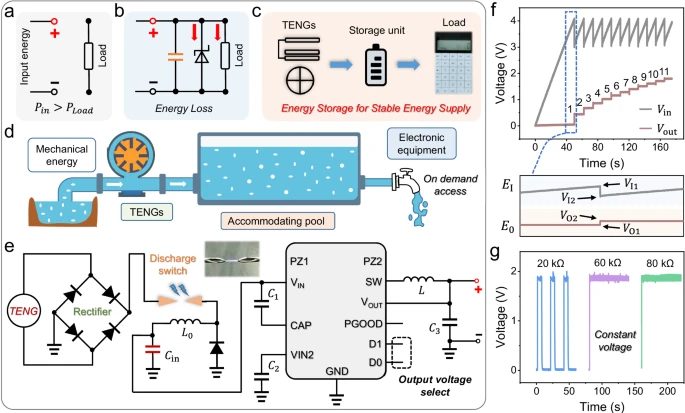 Improving the Energy Conversion Efficiency of Triboelectric NanogeneratorsSaumitra Jagdale19 November 20242576
There is a huge growth in demand for self-sustaining electronic devices, as the traditional power-generating devices fail in remote and harsh environments due to the periodic requirement of battery changes. Also, these devices are frequency specific; some work only in high frequency and some in low frequency. Triboelectric nanogenerators (TENGs) provide a promising solution by efficiently converting mechanical energy into electricity as they are versatile, compact, and cheap, making them a popular choice.
Read More Methodologies for Increasing Efficiency of Fuel Stack Technology for Energy GenerationSaumitra Jagdale19 November 20242597
Presently, power companies are moving towards renewable energy systems. Conventional energy sources are more expensive because they require a vast network to be maintained and huge human resources. Also, they harm the environment by releasing several harmful gases. As the industry’s focus shifts toward renewable energy sources, energy systems powered by Proton Exchange Membrane Fuel Stacks (PEMFS) are gaining traction.
Read More Reconfigurable Antennas: Improving Efficiency in Modern CommunicationRakesh Kumar, Ph.D.24 December 20242517
This article highlights the limitations of conventional antennas and discusses the advantages of reconfigurable antenna designs. It also explores various reconfiguration techniques, applications, and their potential to enhance efficiency.
Read More The Ultimate Guide to AI Noise Reduction Translation EarbudsUTMEL01 April 20256767
In today’s connected world, talking to others is very important. You’ve likely seen how global business, travel, and learning need easy chats in different languages. This need keeps growing because of new tech like 5G and edge computing. These make fast and smooth connections possible.
Read More Comparing Popular Jumper Wires for Electronics ProjectsUTMEL10 July 20251635
Compare top jumper wires for electronics projects in 2025. Explore options by material, length, gauge, and durability to find the best fit for your needs.
Read More
Subscribe to Utmel !
![XY2B-1404]() XY2B-1404
XY2B-1404Omron Electronics Inc-EMC Div
![17990000039]() 17990000039
17990000039HARTING
![CE-16-05500]() CE-16-05500
CE-16-05500TE Connectivity Raychem Cable Protection
![HR30-6R-6S-T01]() HR30-6R-6S-T01
HR30-6R-6S-T01Hirose Electric Co Ltd
![17990000033]() 17990000033
17990000033HARTING
![DX30-50SGP]() DX30-50SGP
DX30-50SGPHirose Electric Co Ltd
![XY2B-1402]() XY2B-1402
XY2B-1402Omron Electronics Inc-EMC Div
![P25-0423]() P25-0423
P25-0423Harwin Inc.
![16645-00000-10]()
![1212264]() 1212264
1212264Phoenix Contact