Product
 Brand
Brand Articles
 Tools
Tools
Top 10 High-Performance End Mills for Metalworking in 2025
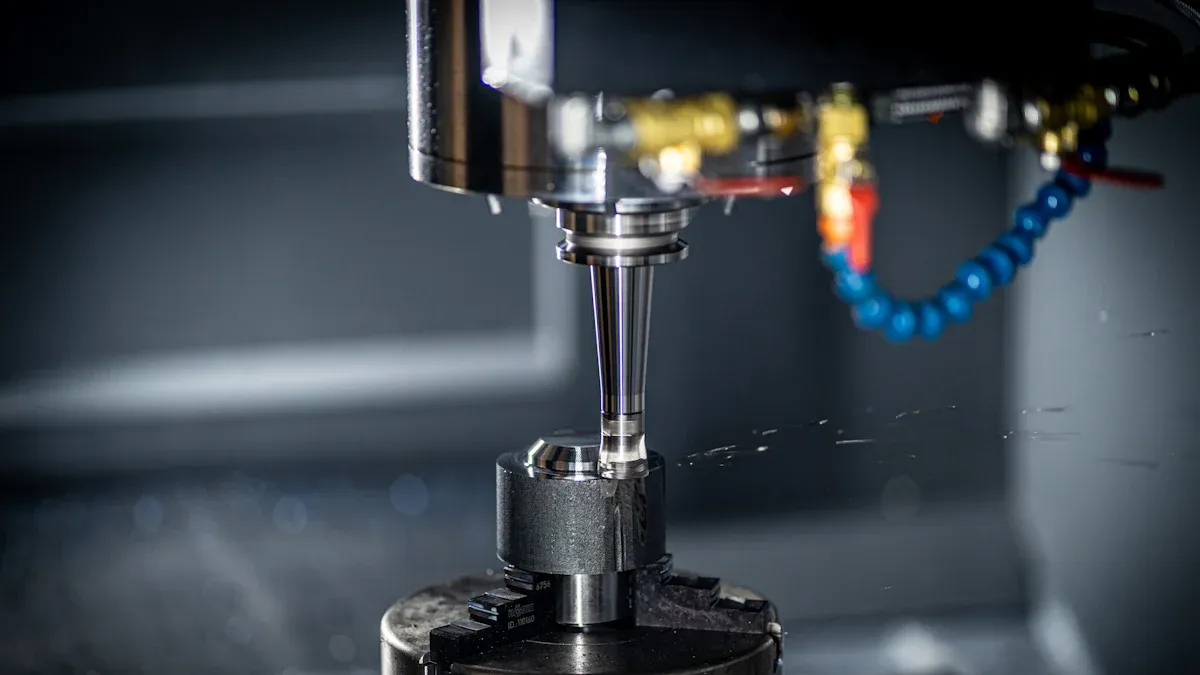
Selecting the right end mills in 2025 can transform your metalworking results. Advanced coatings like TiAlN and DLC now extend tool life and enable high-speed machining. Multi-flute designs and smart tool monitoring systems help you achieve tight tolerances, sometimes as precise as 0.0005 inches. The global market for end milling machines is projected to reach over USD 100 billion, driven by demand in automotive and aerospace sectors. These innovations let you boost productivity, achieve greater precision, and reduce downtime on the shop floor.
Top 10 End Mills for Metalworking
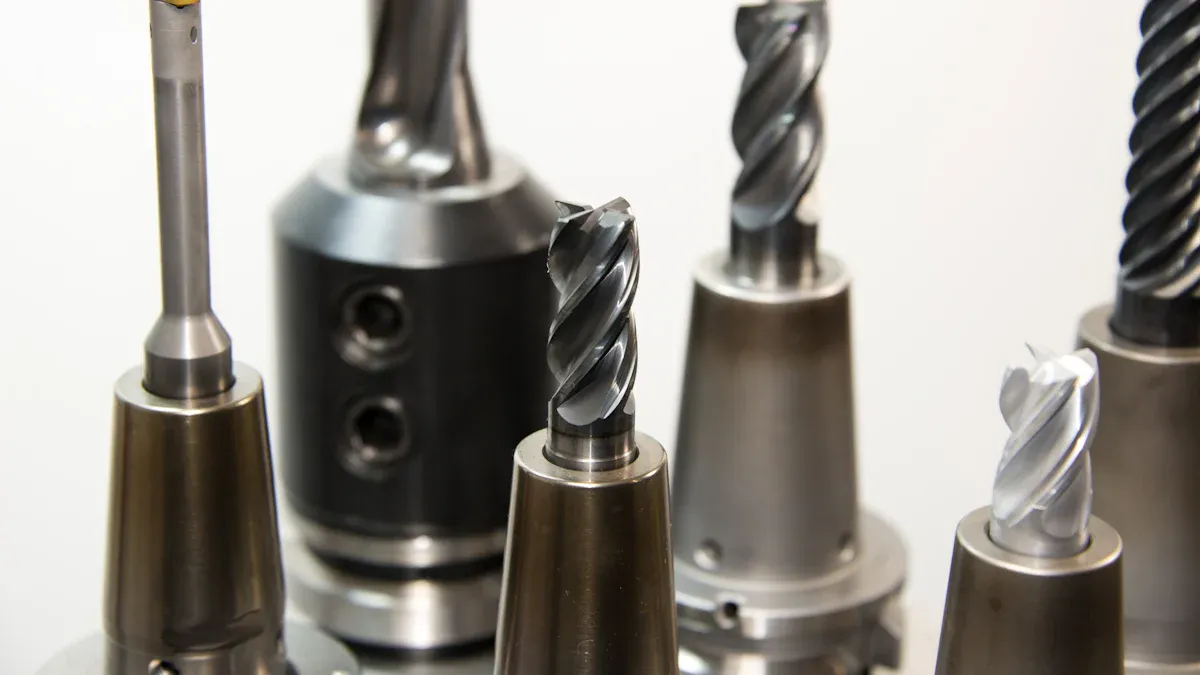
Gühring Solid Carbide End Mills
You can rely on Gühring solid carbide end mills for outstanding durability and cutting precision. Gühring uses high-quality carbide with controlled grain size and binder ratios. This approach increases hardness and toughness. Advanced coatings like TiAlN and AlCrN boost tool life by up to five times compared to uncoated tools. You will notice a 20% to 70% increase in cutting speed and improved surface finishes. Gühring’s optimized helix angles and flute designs help evacuate chips efficiently and reduce cutting forces. These features make Gühring a top choice for high-speed, high-precision machining in aerospace and automotive applications.
Tip: Gühring’s multilayer coatings provide excellent thermal insulation and reduce abrasive wear, so you can machine harder materials with less downtime.
| Performance Feature | Benefit for You |
|---|---|
| Multilayer PVD/CVD Coating | Longer tool life, higher cutting speeds |
| Optimized Geometry | Better chip evacuation, reduced vibration |
| High-Quality Carbide | Superior wear resistance, improved precision |
Kennametal High-Performance End Mills
Kennametal high-performance end mills deliver reliable results in demanding environments. You benefit from their cemented-carbide construction and advanced geometries. In tests on aerospace-grade aluminum, Kennametal tools achieved excellent surface finishes and maintained compressive residual stresses, which improve component durability. You can machine at high speeds and feeds while maintaining tight tolerances. Kennametal’s focus on innovation ensures you get tools that support high material removal rates and consistent quality.
Tested on aerospace alloys for high-speed machining
Delivers smooth surface finishes and strong residual stresses
Supports aggressive feeds and speeds for faster production
Seco C-Series End Mills
Seco C-Series end mills stand out for their versatility and performance across a range of metals. You can use them for both roughing and finishing operations. The C-Series features variable helix angles and advanced coatings, which reduce vibration and extend tool life. You will find these end mills especially useful in automotive and general engineering tasks. Seco’s commitment to R&D ensures you get tools that keep up with the latest machining demands.
SGS H-Carb 7-Flute End Mills
SGS H-Carb 7-Flute end mills offer you high productivity in high-speed machining. The seven-flute design allows for increased feed rates and smoother finishes. You can use these tools for difficult-to-machine materials like stainless steel and titanium. The H-Carb series uses advanced micro-grain carbide and specialized coatings to resist wear and heat. This means you spend less time changing tools and more time machining.
Mitsubishi Materials Solid End Mills
Mitsubishi Materials solid end mills give you advanced features for efficient metalworking. The VQ4MVM series, for example, handles steep ramping angles up to 30°, which reduces the need for pilot holes. The SMART MIRACLE (Al,Cr)N coating improves wear resistance and lowers cutting resistance. The ZERO-μ surface treatment helps chips evacuate quickly. You will see excellent surface finishes and reduced vibration, even at high speeds. While some users report mixed results in specific applications, Mitsubishi’s experimental data shows strong performance in stainless steel and other tough materials.
Kodiak Carbide End Mills
Kodiak carbide end mills provide you with American-made quality and consistent results. These tools use premium micro-grain carbide and feature a variety of flute designs for different applications. You can choose from uncoated or coated options, depending on your needs. Kodiak’s end mills work well in both CNC and manual machines, making them a flexible choice for job shops and production lines.
OSG Premium Carbide End Mills
OSG premium carbide end mills combine advanced geometry with high-performance coatings. You benefit from their sharp cutting edges and smooth chip evacuation. OSG’s proprietary coatings, such as WXL and WXS, increase tool life and allow for higher cutting speeds. You can use these end mills for a wide range of materials, including hardened steels and exotic alloys. OSG’s focus on precision makes them a favorite in mold and die industries.
Walter Prototyp End Mills
Walter Prototyp end mills help you achieve high precision and efficiency in modern manufacturing. The MT-TiCN Tiger·tec® Gold coating increases wear resistance and tool life, letting you produce up to 30% more components per tool in steel milling. Walter’s tools offer high toughness and reduced friction, suitable for both short runs and mass production. You can also benefit from Walter’s Industry 4.0 digital solutions, which support process reliability and productivity.
Note: Walter’s century-long expertise and innovative coatings make their end mills a reliable choice for precision engineering.
Sandvik Coromant CoroMill End Mills
Sandvik Coromant CoroMill end mills set the standard for innovation and reliability. You can choose from models like CoroMill MF80, which features a lightweight cutter body and high insert count for stable machining. The CoroMill Dura uses WhisperKut technology and can be reconditioned up to three times. Zertivo 2.0-coated CoroMill Plura HD end mills allow for a 30% increase in cutting speeds. These tools excel in vibration-prone setups and difficult-to-machine components, making them ideal for oil and gas, mold, and die industries.
| CoroMill Model | Key Feature/Benefit |
|---|---|
| MF80 | Lightweight, stable in long overhangs |
| Dura | WhisperKut, reconditionable |
| Plura HD | Zertivo 2.0 coating, higher cutting speeds |
| 316 | Versatile for various milling operations |
| MH20 | Minimal vibration, reliable for tough materials |
YG-1 Alu-Power End Mills
YG-1 Alu-Power end mills are designed for high-speed machining of aluminum and non-ferrous metals. You benefit from polished flutes and sharp cutting edges, which reduce built-up edge and improve chip evacuation. The Alu-Power series supports aggressive feeds and speeds, helping you maximize productivity in automotive and aerospace applications. YG-1’s focus on cost-effective performance makes these end mills a popular choice for high-volume production.
🛠️ Quick Fact: Milling tools, including high-performance end mills, hold the largest market share in the metalworking tools sector at 28.6%. The automotive industry drives much of this demand, especially in North America and Europe.
Understanding End Mills
What Are End Mills
You use end mills as cutting tools in milling machines. These tools remove material from metal workpieces with precision. Most end mills have a tough steel body that holds replaceable cutting inserts. You can find inserts made from carbide, ceramic, or cubic boron nitride (CBN). Each type offers unique benefits for different materials and speeds.
Carbide inserts give you hardness and wear resistance for high-speed cutting.
Ceramic inserts handle heat well and work best for hard materials.
CBN inserts cut superalloys and hardened steels with tight tolerances.
The end mill body includes insert pockets, clamping parts, and coolant channels.
Indexable designs let you replace only the inserts, saving time and money.
💡 Tip: Carbide inserts keep their sharpness at high temperatures, so you get accurate cuts and longer tool life.
Importance in Metalworking
You rely on end mills for most modern metalworking tasks. These tools help you shape, slot, and finish metal parts with accuracy. BT standard holders, which support end mills, play a key role in over 300 million high-precision machining operations every year. The automotive industry uses these tools to make essential vehicle parts. Aerospace and defense sectors also depend on them for reliable, high-speed machining. Hydraulic clamping systems, which hold end mills in place, account for 37% of the tool holder market. This shows how important precision and stability are in your work.
Over 500 case studies show the efficiency of BT standard holders.
Automation and robots use end mills for consistent, repeatable results.
More than 200 new machine applications now use BT-compatible holders.
Performance Factors
You can measure end mill performance using several key factors. Design features like wedge angle and flute valleys help remove chips and reduce damage. Software tools, such as Machining Advisor Pro, help you set the best speeds and feeds for your job. You should also look at metrics like throughput, energy use, and cost.
| Performance Metric | Description / Values |
|---|---|
| Throughput | 30.0 kg/h (optimal condition) |
| Specific Energy Consumption | 49.0 kW·h/ton (25% better than traditional mills) |
| Mean Particle Size | 2.14 mm |
| Rotational Speeds | 150–450 rpm (crushing unit), 1250–1750 rpm (hammer mill) |
| Feed Rate | 0.2 tons per hour |
| Operating Cost | $0.027 per kg |
You should track these metrics to improve quality, speed, and cost control in your shop. This helps you spot problems early and keep your operations running smoothly.
Criteria for Choosing High-Performance End Mills
Material and Coating
When you select high-performance end mills, start by looking at the material and coating. Ultrafine or sub-micron grain carbide substrates give you superior hardness and heat resistance. Advanced coatings like TiAlN, AlCrN, and DLC help reduce wear and extend tool life. These coatings also keep their stability at high temperatures, which is important for tough jobs. You should check for coatings applied by Physical Vapor Deposition (PVD) because this method creates a strong, even layer.
| Material/Coating Characteristic | Benchmark/Test Metric | Description/Significance |
|---|---|---|
| Substrate Hardness | +3100 Hv | High wear resistance |
| Oxidation Temperature | +1100°C | Coating stability |
| Grain Size of Carbide | Ultrafine/sub-micron | Better hardness, heat resistance |
| Coating Types | TiAlN, AlCrN, DLC | Improved tool life |
Tip: Use coated tools when you machine abrasive or high-wear materials to boost durability and performance.
Geometry and Flute Design
The geometry and flute design of your tool affect how well it cuts and how long it lasts. Square end mills work best for sharp corners and flat-bottom pockets. Ball end mills help you create smooth 3D shapes. Corner radius and corner rounding end mills reduce stress and improve tool strength. Flute count matters too. Two-flute tools clear chips quickly in soft metals. Four or more flutes give you better finishes and stability in hard materials. Variable helix and pitch designs help reduce chatter and vibration, making your cuts smoother.
| Flute Count | Advantages | Suitable Applications |
|---|---|---|
| 2 Flute | High chip clearance | Softer materials, slotting |
| 4-8 Flute | Stability, finish | Hard materials, finishing |
| Variable Helix/Pitch | Less chatter | General machining |
Application Suitability
You need to match your end mill to the job and the material. Carbide tools work best for aluminum, stainless steel, and hardened alloys. For aluminum, use two-flute end mills for fast chip removal. For steel, four-flute tools give you a better finish. Positive rake angles and variable helix designs help reduce cutting forces and extend tool life. Advanced coatings like TiAlN and AlCrN protect your tool when you machine tough metals. Always adjust your speed, feed, and cooling to fit the material.
Tool Life and Durability
Long tool life saves you money and keeps your shop running smoothly. High-performance end mills with advanced geometry and coatings can last up to 60% longer than standard tools. Precision manufacturing, such as tight diameter and radius tolerances, helps maintain consistent results. Modern monitoring systems can predict tool wear, so you know when to replace your tool before it fails. Custom carbide end mills with special coatings handle high speeds and hard materials, giving you reliable performance in demanding jobs.
🛡️ Note: Choosing the right combination of material, coating, and geometry ensures your end mills deliver top performance and durability.
End Mills Comparison Table
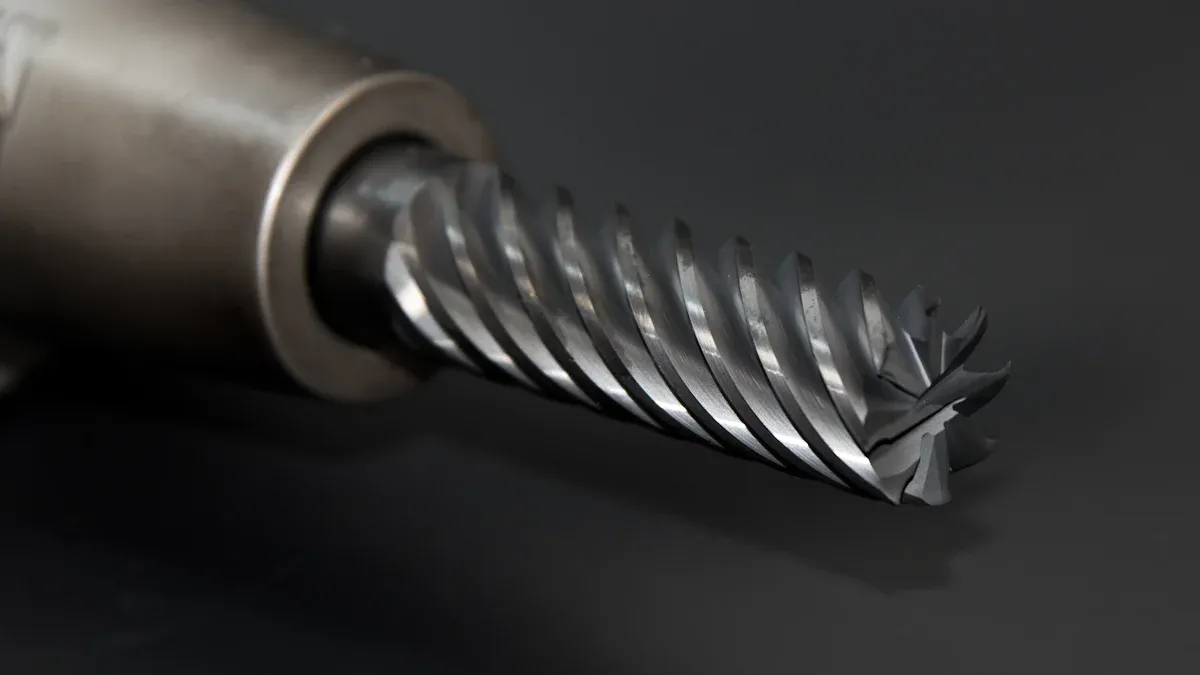
Choosing the right end mill can feel overwhelming. You want to see the differences between brands and models at a glance. A comparison table gives you a clear view of each tool’s strengths. You can check important features like material, coating, flute count, and best application. This layout helps you compare performance data and specifications side by side. You save time and make better choices for your shop.
Tip: Use this table to match your machining needs with the right end mill. Look for the features that matter most for your materials and production goals.
| Brand & Model | Material | Coating | Flute Count | Geometry/Feature | Best For | Max Speed (RPM) | Tool Life (Relative) |
|---|---|---|---|---|---|---|---|
| Gühring Solid Carbide | Carbide | TiAlN, AlCrN | 4-6 | Variable helix | Steel, alloys | 24,000 | ★★★★★ |
| Kennametal High-Performance | Carbide | TiAlN | 3-5 | Advanced geometry | Aerospace, aluminum | 22,000 | ★★★★☆ |
| Seco C-Series | Carbide | TiAlN | 4-7 | Variable helix | General, automotive | 20,000 | ★★★★☆ |
| SGS H-Carb 7-Flute | Carbide | Proprietary | 7 | High flute count | Stainless, titanium | 18,000 | ★★★★☆ |
| Mitsubishi Materials | Carbide | AlCrN | 4-6 | Steep ramping | Stainless, hard metals | 20,000 | ★★★★☆ |
| Kodiak Carbide | Carbide | TiAlN, Uncoated | 2-6 | Multiple options | CNC/manual, job shops | 16,000 | ★★★★☆ |
| OSG Premium Carbide | Carbide | WXL, WXS | 2-6 | Sharp edge, smooth chip | Hardened steel, molds | 22,000 | ★★★★★ |
| Walter Prototyp | Carbide | Tiger·tec® Gold | 4-6 | High toughness | Steel, mass production | 19,000 | ★★★★☆ |
| Sandvik Coromant CoroMill | Carbide | Zertivo 2.0 | 4-8 | WhisperKut, regrindable | Oil/gas, die/mold | 25,000 | ★★★★★ |
| YG-1 Alu-Power | Carbide | Uncoated | 2-3 | Polished flutes | Aluminum, non-ferrous | 30,000 | ★★★★☆ |
You can use this table to compare each end mill’s features and performance. Check the flute count and coating for your material. Look at the tool life rating to estimate how long each tool will last. The table uses consistent units and clear headers, so you can find what you need quickly. This side-by-side format makes it easy to spot the best fit for your next project.
How to Select the Right End Mill
Assessing Machining Needs
You should start by evaluating your machining requirements before choosing an end mill. Consider the stage of machining, such as roughing, finishing, or profiling. Each stage demands a specific tool type. For example, finishing end mills create smooth surfaces, while ball nose tools excel at 3D contours. Flute count matters as well. Two-flute tools work best for soft materials like aluminum, offering excellent chip removal. Three-flute options balance chip clearance and surface finish. Tool geometry and helix angle also play a role. A higher helix angle improves chip evacuation and reduces cutting forces. Solid carbide end mills provide hardness and rigidity, which help reduce vibration and improve precision. Coatings extend tool life and boost efficiency, especially when machining aluminum. Adjust shank diameter and length of cut to maximize rigidity and minimize deflection. Multi-functional tools can handle both roughing and finishing, improving shop efficiency. Corner radius size affects edge strength and surface finish. High-feed U-type end mills remove material quickly and evacuate chips efficiently. Always select high-quality tools to ensure consistent performance and longer tool life.
Manufacturer Reputation
You gain a significant advantage by choosing end mills from reputable manufacturers. Look for companies with a strong commitment to quality and precision. Innovation in tool design, such as advanced geometries and coatings, signals a forward-thinking manufacturer. Durability and tool life reflect the brand’s expertise. Customer reviews and industry surveys, like those from CNCCookbook, offer valuable insights into real-world performance. Reliable technical support helps you select the right tool for your application. Consider the manufacturer’s product range and customization options. Fast availability and reasonable lead times keep your operations running smoothly. Leading brands invest in research and development, maintain advanced testing facilities, and consistently deliver high-performing products.
🏆 Tip: Brands recognized for innovation and customer satisfaction often provide better long-term value and support.
Price vs. Performance
You need to balance cost with performance when selecting end mills. Lower-priced tools may seem attractive, but they often wear out faster and require more frequent replacement. High-performance end mills with advanced coatings and precise geometry can last longer and deliver better results, reducing downtime and scrap rates. Evaluate the total cost of ownership, not just the purchase price. Consider how tool life, machining speed, and surface finish impact your productivity and bottom line. Investing in premium tools from trusted manufacturers often leads to greater efficiency and lower overall costs.
Choosing the right end mills ensures you achieve top machining results and stay competitive as the market grows. You see rapid advances in high-speed machining, custom tool designs, and smart digital solutions.
Market growth comes from automation, precision engineering, and demand in aerospace and automotive sectors.
New coatings and hybrid geometries boost tool life and efficiency.
Sustainable practices and digital twins drive future innovation.

Use the criteria and comparison tools in this guide to make informed choices. Consult trusted suppliers or test recommended tools to maximize your shop’s performance.
FAQ
What is the main benefit of using coated end mills?
You get longer tool life and better performance. Coated end mills resist heat and wear. This means you can run your machines faster and produce smoother finishes.
How do you choose the right flute count?
You should match flute count to your material. Use fewer flutes for soft metals like aluminum. Choose more flutes for hard metals. More flutes give you a better finish and more stability.
Can you use the same end mill for roughing and finishing?
You can use multi-purpose end mills for both tasks. However, you get better results with dedicated tools. Roughing end mills remove material quickly. Finishing end mills create smooth surfaces.
How often should you replace your end mills?
You should monitor tool wear and replace end mills when you see signs of dullness or poor finish. Using a worn tool can damage your workpiece and machine.
Tip: Track tool life with a log or digital system to avoid unexpected downtime.
 UTMEL
UTMEL
We are the professional distributor of electronic components, providing a large variety of products to save you a lot of time, effort, and cost with our efficient self-customized service. careful order preparation fast delivery service
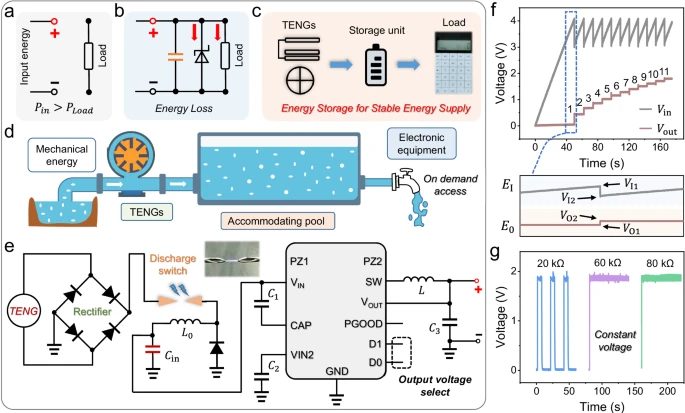 Improving the Energy Conversion Efficiency of Triboelectric NanogeneratorsSaumitra Jagdale19 November 20242949
There is a huge growth in demand for self-sustaining electronic devices, as the traditional power-generating devices fail in remote and harsh environments due to the periodic requirement of battery changes. Also, these devices are frequency specific; some work only in high frequency and some in low frequency. Triboelectric nanogenerators (TENGs) provide a promising solution by efficiently converting mechanical energy into electricity as they are versatile, compact, and cheap, making them a popular choice.
Read More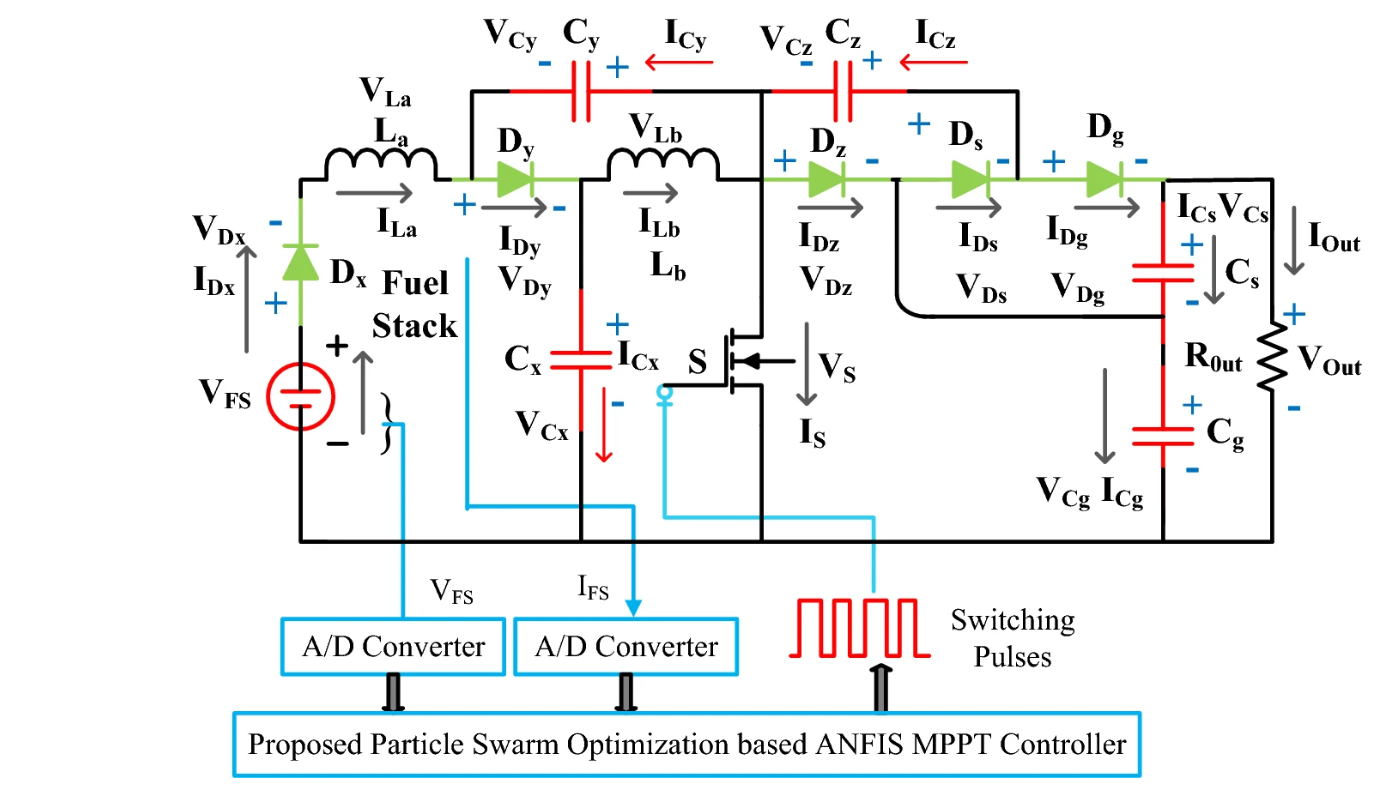 Methodologies for Increasing Efficiency of Fuel Stack Technology for Energy GenerationSaumitra Jagdale19 November 20242918
Presently, power companies are moving towards renewable energy systems. Conventional energy sources are more expensive because they require a vast network to be maintained and huge human resources. Also, they harm the environment by releasing several harmful gases. As the industry’s focus shifts toward renewable energy sources, energy systems powered by Proton Exchange Membrane Fuel Stacks (PEMFS) are gaining traction.
Read More VSC Light Meaning, Causes, and Step-by-Step DiagnosticsUTMEL19 May 2026113
A VSC (Vehicle Stability Control) light indicates the system is disabled, often as a fail-safe triggered by unrelated engine faults like a loose gas cap. While the stability system prevents lateral skidding, it shuts down when sensor data is unreliable. Proper diagnosis requires an ABS-capable OBD2 scanner. Resolving the root engine code, checking wheel speed sensors, or performing a zero-point calibration usually restores system function.
Read More Reconfigurable Antennas: Improving Efficiency in Modern CommunicationRakesh Kumar, Ph.D.24 December 20242906
This article highlights the limitations of conventional antennas and discusses the advantages of reconfigurable antenna designs. It also explores various reconfiguration techniques, applications, and their potential to enhance efficiency.
Read More The Ultimate Guide to AI Noise Reduction Translation EarbudsUTMEL01 April 20257864
In today’s connected world, talking to others is very important. You’ve likely seen how global business, travel, and learning need easy chats in different languages. This need keeps growing because of new tech like 5G and edge computing. These make fast and smooth connections possible.
Read More
Subscribe to Utmel !
![CAT-PT-EBTM-6-08-2.0-VT]() CAT-PT-EBTM-6-08-2.0-VT
CAT-PT-EBTM-6-08-2.0-VTSamtec, Inc.
![CAT-PT-LPHS-02-28]() CAT-PT-LPHS-02-28
CAT-PT-LPHS-02-28Samtec, Inc.
![CAT-PT-LPHS-02-20]() CAT-PT-LPHS-02-20
CAT-PT-LPHS-02-20Samtec, Inc.
![CAT-PT-LPHS-02-24]() CAT-PT-LPHS-02-24
CAT-PT-LPHS-02-24Samtec, Inc.
![CAT-PT-LPHS-10-28]() CAT-PT-LPHS-10-28
CAT-PT-LPHS-10-28Samtec, Inc.
![CAT-PT-LPHS-10-20]() CAT-PT-LPHS-10-20
CAT-PT-LPHS-10-20Samtec, Inc.
![CAT-PT-LPHS-02-16]() CAT-PT-LPHS-02-16
CAT-PT-LPHS-02-16Samtec, Inc.
![638082670]() 638082670
638082670Molex
![638083470]() 638083470
638083470Molex
![CAT-PT-LPHS-06-16]() CAT-PT-LPHS-06-16
CAT-PT-LPHS-06-16Samtec, Inc.