Product
 Brand
Brand Articles
 Tools
Tools
Google Acquires MicroLED Display Company Raxium, May Boost Its AR Headset

Google acquires MicroLED startup Raxium to help boost its AR ambitions | Engadget
On May 4 local time, Rick Osterloh, Google's senior vice president of devices and services, confirmed that the company has acquired Raxium, a MicroLED display company.
Raxium is a 5-year-old company based in Fremont, California, USA. The company's core technology is MicroLED technology, and its main products are MicroLED displays for AR headsets and other devices. According to The Information, Google is valuing Raxium at about $1 billion, although the exact terms of the deal will not be disclosed.
Figure 丨 Raxium Corporation (Source: Raxium)
According to the analysis, Google's acquisition of Raxium is also an important step in the company's layout of the meta-universe, MicroLED technology can be a significant increase in the performance of the display, is augmented reality (Augmented Reality, AR), virtual reality (Virtual Reality, VR) and mixed reality (Mixed Reality, MR) devices The key technology for the next generation of displays.
There is also news that Google plans to integrate Raxium's MicroLED technology for its latest AR headset. This is a key device currently being developed by Google Labs under the codename "Iris," and production is reportedly scheduled to begin in 2024.
In fact, Google has made several moves in the AR space recently. The company's latest wave of job ads includes a number of positions involving the AR operating system, as well as the development of AR headsets for the Iris project.
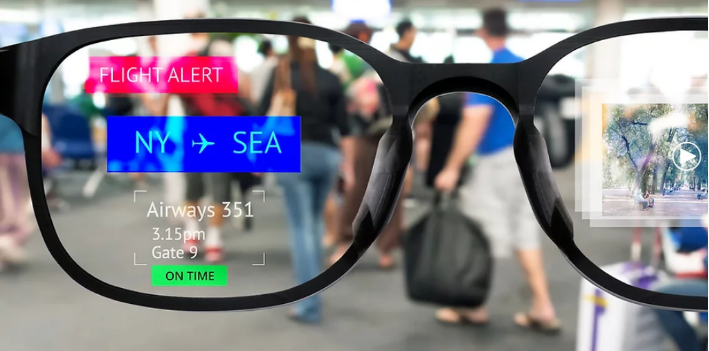
Figure 丨 Conceptual diagram of the AR glasses application scenario (source: Raxium)
Although the metaverse and AR/VR space were recently brought to life by Meta. In fact, before acquiring Raxium, Google also acquired the Canadian smart glasses startup North in 2020, which produces AR glasses with miniature laser "projectors" in the frame that project images in front of the user's eyes. Moreover, the AR glasses look almost indistinguishable from regular glasses. According to the analysis, the same technology is likely to be used in the Google Iris project's next-generation AR headset, where images will be projected onto the lens through a miniature projector on the frame of the AR headset.
And, Google is one of the first companies to enter the AR field, having developed the earliest consumer-grade AR device - Google Glass (Google Glass), but unfortunately, this product was shelved due to controversy.
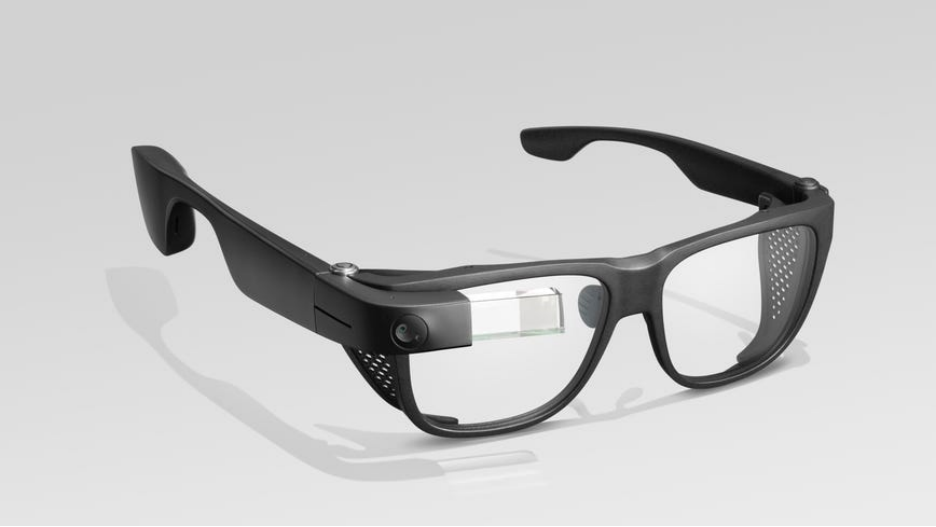
Figure丨Google Glass (Source: Google)
Charles King, an analyst at Pund-IT, noted that it is a little-known fact that after the unsuccessful launch of Google Glass as a consumer device, Google has shifted its focus to workplace solutions, with related achievements in areas such as healthcare.
With the rise of concepts such as the metaverse, consumers are more open to wearing devices such as AR glasses and AR headsets.

Figure 丨 AR glasses can be used for a variety of different occasions (source: Raxium)
However, Charles King believes that Google is not very interested in narrating the meta-universe story. Google's acquisition of Raxium is more about expanding Google's more robust, business-centric AR strategy. Moreover, the acquisition is a wake-up call to its competitors.
MicroLED is a promising emerging technology for displays that are already seen as the best choice for next-generation AR displays due to its greater energy efficiency, availability for bright environments, and vibrant colors.
In the display field, OLED was once seen as the most ideal choice for AR applications due to its high pixel density and the advantage of no backlight. However, the limitation of OLEDs in AR applications is that most AR headset devices are used in sunlit environments. As a result, the low brightness environment required by OLEDs can be an issue.
Guillaume Chansin, head of display research at DSCC, a display research organization, said, "MicroLEDs can be used in brighter environments than OLEDs, which is especially important for AR smart glasses that need to be used outdoors."
Unlike organic light-emitting diode OLED technology, MicroLED and Liquid Crystal Display (LCD) are also inorganic, but it has the same qualities as OLED such as high brightness, good color fidelity, high resolution, and high contrast. What's more, MicroLED is much less energy efficient, a key requirement for wearable devices such as AR headsets. This is one of the reasons why technology has become a key technology for strategic investment in the smart glasses sector.
Although Raxium has not yet launched a marketed product, it has reportedly developed a more effective MicroLED manufacturing technology that will use the same silicon as the raw material for most processors for manufacturing and will significantly reduce production costs. Currently, MicroLED technology is mainly used only for wall-mounted signs and other large and expensive screens.
In addition to Google, many other hardware companies are also investing and developing in the MicroLED field. For example, OPPO's Air Glass, which will be released at the end of 2021, is already equipped with MicroLED technology.
Apple acquired a MicroLED startup in 2014; Meta is currently working with Plessey on MicroLED technology, and Samsung's MicroLED TVs are already on sale.
In the AR device space, Google has many competitors. In addition to rebranding the Oculus Quest as "Quest" and launching the Quest 2 virtual reality headset, Meta is also working on a new AR device codenamed "Project Cambria". The company is also developing a new AR device codenamed "Project Cambria. Apple is also said to be working on MR headsets and an AR goggle. In addition, both Meta and Apple have acquired AR startups in recent years.
It is also known that Microsoft has released an AR device called "HoloLens", Snap has released smart glasses called "Spectacles", and the recently released Pixy, a flying camera, has added AR effects.
Reference:
https://www.theverge.com/2022/5/4/23057579/google-acquires-raxium-microled-ar-vr-displays
https://blog.google/inside-google/company-announcements/google-acquires-raxium/
Related News
1、Chip Packaging Lead Time Has Grown to 50 Weeks
2、Eight Internet of Things (IoT) Trends for 2022
3、Demand for Automotive Chips Will Surge 300%
4、Volkswagen CFO: Chip Supply Shortage Will Continue Until 2024
5、BMW CEO: The Car Chip Problem Will Not Be Solved Until 2023
6、Shenzhen: This Year Will Focus on Promoting SMIC and CR Micro 12-inch Project
 UTMEL
UTMEL
We are the professional distributor of electronic components, providing a large variety of products to save you a lot of time, effort, and cost with our efficient self-customized service. careful order preparation fast delivery service
 UTMEL 2024 Annual gala: Igniting Passion, Renewing BrillianceUTMEL18 January 20245009
As the year comes to an end and the warm sun rises, Utmel Electronics celebrates its 6th anniversary.
Read More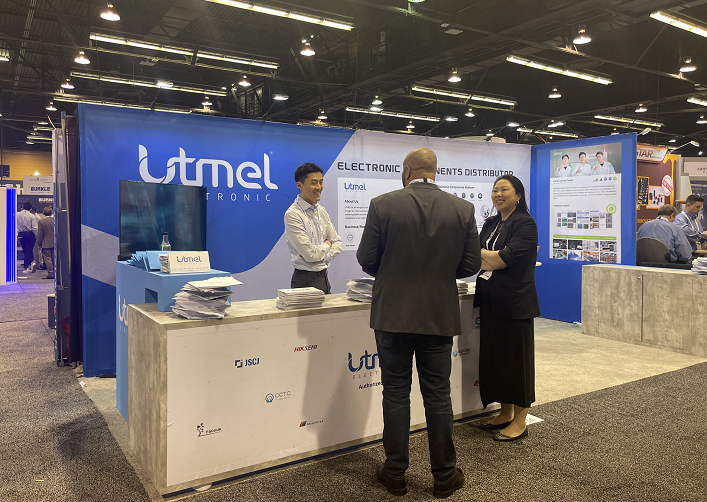 Electronic Components Distributor Utmel to Showcase at 2024 IPC APEX EXPOUTMEL10 April 20245994
Utmel, a leading electronic components distributor, is set to make its appearance at the 2024 IPC APEX EXPO.
Read More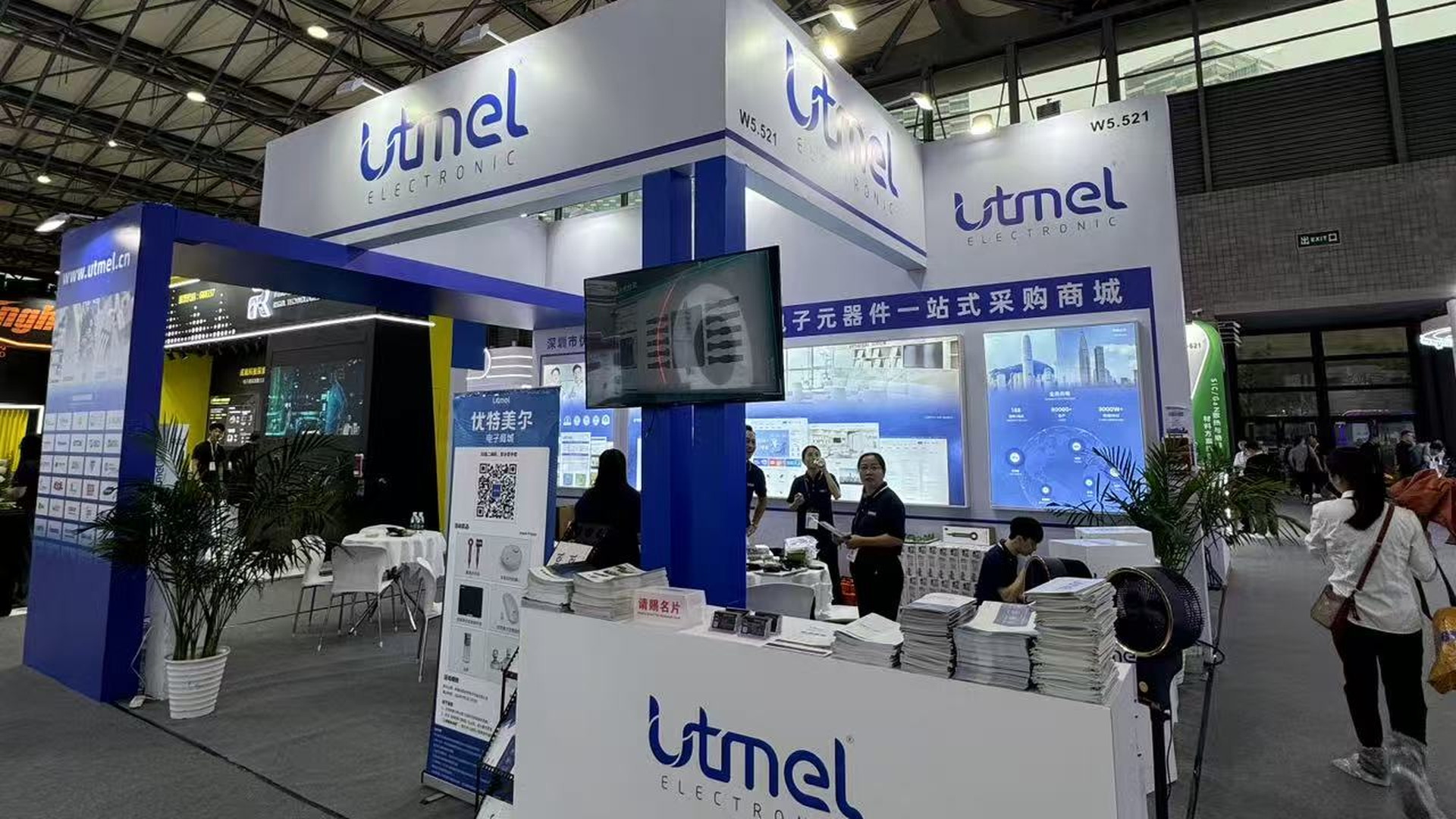 UTMEL Showcases One-Stop Electronic Component Sourcing Services at electronica Shanghai 2026UTMEL07 July 2026261
SHANGHAI, China, July 7, 2026 - UTMEL, a one-stop electronic components sourcing platform operated by Shenzhen Utmel Intelligent Electronic Co., Ltd., successfully participated in electronica Shanghai 2026, held from July 1 to 3, 2026 at the Shanghai New International Expo Centre.
Read More Electronic components distributor UTMEL to Showcase at electronica ChinaUTMEL07 June 20244584
The three-day 2024 Electronica China will be held at the Shanghai New International Expo Center from July 8th to 10th, 2024.
Read More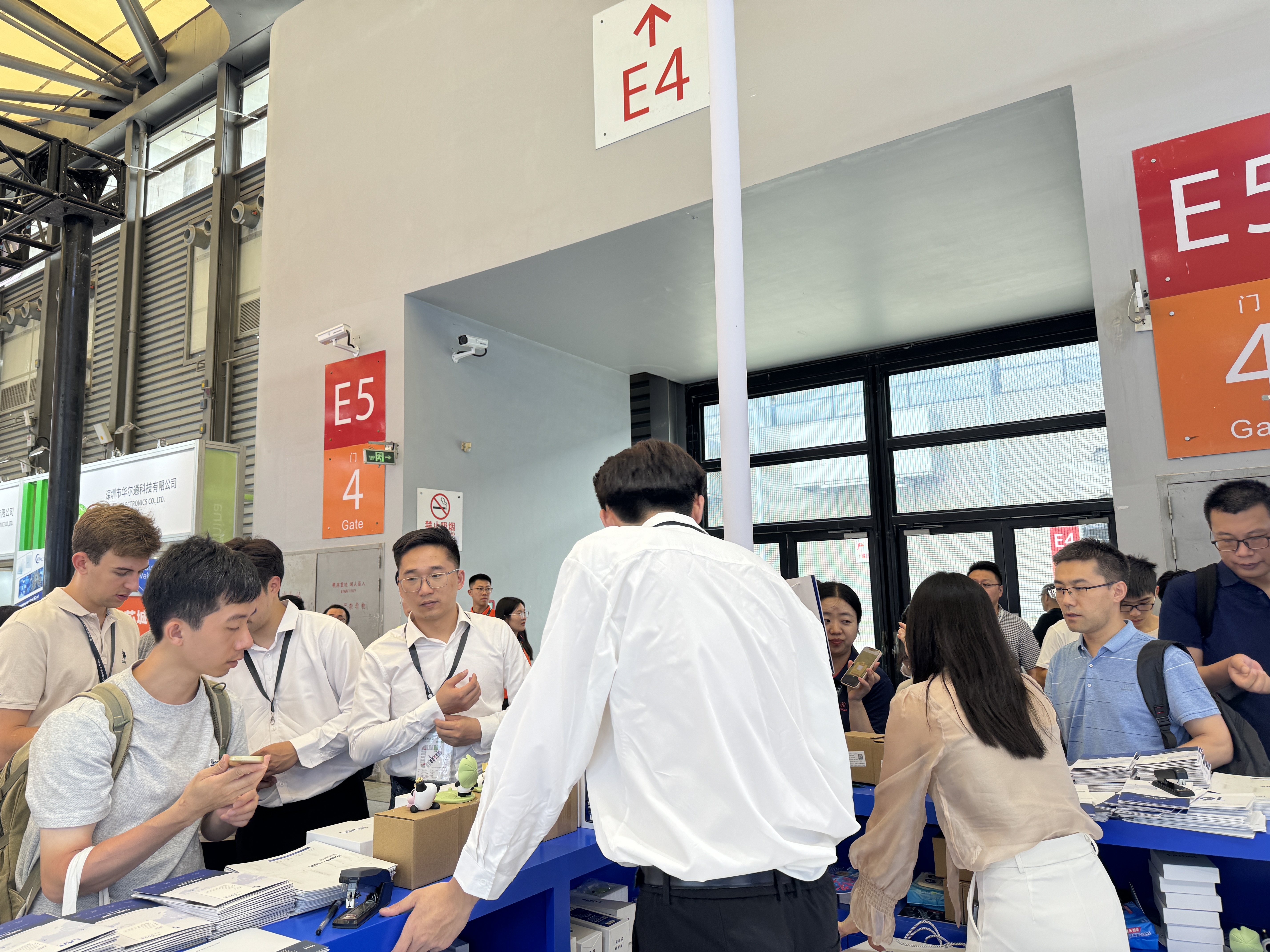 Electronic components distributor UTMEL Stands Out at electronica china 2024UTMEL09 July 20245185
From July 8th to 10th, the three-day electronica china 2024 kicked off grandly at the Shanghai New International Expo Center.
Read More
Subscribe to Utmel !
![AMEOF8-24S277NZ-120]() AMEOF8-24S277NZ-120
AMEOF8-24S277NZ-120aimtec
![AMEOFL10-12S277HANZ]() AMEOFL10-12S277HANZ
AMEOFL10-12S277HANZaimtec
![AMES25-15S277NZ-Q]() AMES25-15S277NZ-Q
AMES25-15S277NZ-Qaimtec
![AMEOF65-24SHAMJZ]() AMEOF65-24SHAMJZ
AMEOF65-24SHAMJZaimtec
![AME15-5SVZ-STD]() AME15-5SVZ-STD
AME15-5SVZ-STDaimtec
![AMEL10-5S277HAVZ-ST]() AMEL10-5S277HAVZ-ST
AMEL10-5S277HAVZ-STaimtec
![AMES25-48S277NZ-Q]() AMES25-48S277NZ-Q
AMES25-48S277NZ-Qaimtec
![AME10-5S277PEVZ]() AME10-5S277PEVZ
AME10-5S277PEVZaimtec
![AME25-3S277PEVZ]() AME25-3S277PEVZ
AME25-3S277PEVZaimtec
![AME5-512T277NZ-120]() AME5-512T277NZ-120
AME5-512T277NZ-120aimtec