Product
 Brand
Brand Articles
 Tools
Tools
How Nvidia Became a Chip Industry Giant

How Nvidia became a giant in the chip industry
It is clear to say that Nvidia (Nvidia) has become a giant in the chip industry. In addition to content creation, the company is a leader in the development of gaming graphics chips and video cards, and today it is one of the most prominent artificial intelligence processing companies on the planet.
NVIDIA was founded in 1993 by Jensen Huang (the company's current CEO), Chris Malachowsky, and Curtis Priem, who had no idea that the silicon they were building would eventually be chosen for supercomputers at facilities including the Department of Energy's Los Alamos National Laboratory. facilities, including the Department of Energy's Los Alamos National Laboratory.
The company, which initially focused on gaming and entertainment products, introduced its first chip, the NV1, in 1995, and while it wasn't a huge success, it did put NVIDIA on the map for video game maker Sega. Sega initially considered using NVIDIA's NV2 chip in the Dreamcast console, but later abandoned it.
In 1996, NVIDIA introduced the first Microsoft (Microsoft) DirectX driver, a software designed to render 3D graphics on personal computers with the Windows operating system. The following year, the company launched its first hit product, the NV3, also known as the Riva 128. Nvidia then sold as many as one million units of this card in its first four months on the market, generating revenue for future product development.
In January 1999, Nvidia went public at $12 per share, and by 2000, Nvidia's market position was strong enough to swallow up its former competitor, 3DFX, and that same year, Microsoft chose the chip giant to provide graphics for its first Xbox console.
In 2003, the company not only partnered with Blizzard to launch the hugely popular "World of Warcraft" but also with NASA to create a realistic simulation of Mars.
Nvidia continued to work with the console maker when Sony chose Nvidia to provide graphics for its PlayStation 3 in 2005. Five years later, Nvidia became Audi's graphics chip supplier, providing interfaces for various Audi models, and in 2015, the company introduced the Nvidia Drive chip for drive assist systems.
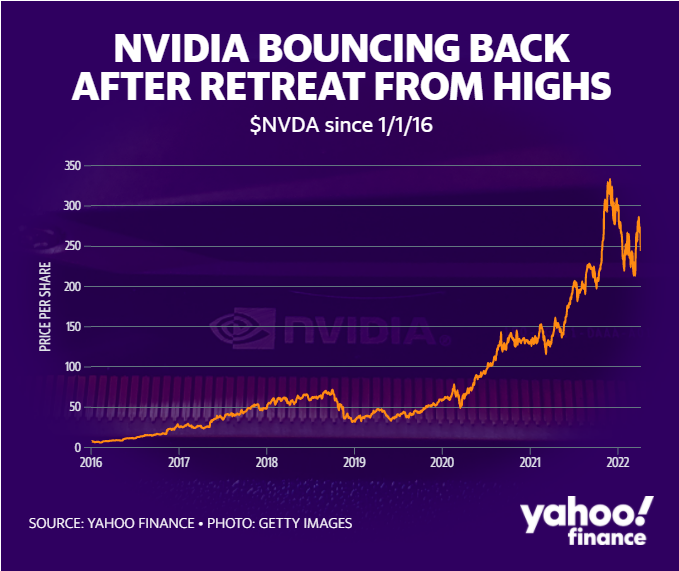
In 2016, Nvidia made a full-scale entry into artificial intelligence with the DGX-1 server for artificial intelligence applications. Since then, the company has continued to invest in AI. NVIDIA's stock price was flat year-over-year, rising from $7.40 per share in 2016 to $70.25 at the end of 2018, thanks to its data center products and graphics cards for crypto mining.
Two years later, NVIDIA introduced its RTX platform, bringing real-time ray tracing technology to gaming and digital imaging. This technology makes the light in graphics applications look as realistic as real life, greatly improving immersion.
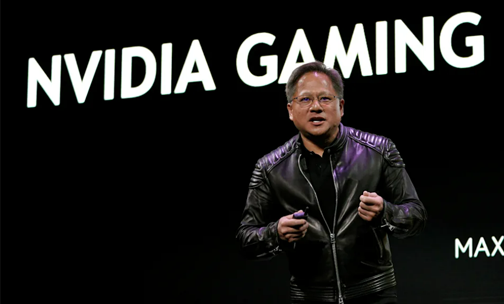
Today, Nvidia continues to provide graphics cards for gaming PCs and consoles around the world. But it goes far beyond that. in March 2022, the company debuted discrete CPUs for data centers and announced that it will use a version of its metaverse called Omniverse to better understand climate change.
While a global chip shortage is making it difficult for consumers to get new Nvidia cards, they remain one of the most sought-after products on the market.
However, Nvidia is not the only player in the graphics chip market. AMD has its own powerful line of Radeon chips, and Intel (Intel) is developing its own discrete graphics cards for laptops and desktops, putting further pressure on Nvidia (Nvidia) to continue to maintain its leadership in graphics technology.
Nevertheless, for a company that has gone from three engineers developing graphics cards to thousands of employees developing chips for future artificial intelligence supercomputers, Nvidia is still the leader in this field.
Related News
1、Chip Packaging Lead Time Has Grown to 50 Weeks
2、Eight Internet of Things (IoT) Trends for 2022
3、Demand for Automotive Chips Will Surge 300%
4、Volkswagen CFO: Chip Supply Shortage Will Continue Until 2024
5、BMW CEO: The Car Chip Problem Will Not Be Solved Until 2023
6、Shenzhen: This Year Will Focus on Promoting SMIC and CR Micro 12-inch Project
 UTMEL
UTMEL
We are the professional distributor of electronic components, providing a large variety of products to save you a lot of time, effort, and cost with our efficient self-customized service. careful order preparation fast delivery service
 UTMEL 2024 Annual gala: Igniting Passion, Renewing BrillianceUTMEL18 January 20245009
As the year comes to an end and the warm sun rises, Utmel Electronics celebrates its 6th anniversary.
Read More Electronic Components Distributor Utmel to Showcase at 2024 IPC APEX EXPOUTMEL10 April 20245994
Utmel, a leading electronic components distributor, is set to make its appearance at the 2024 IPC APEX EXPO.
Read More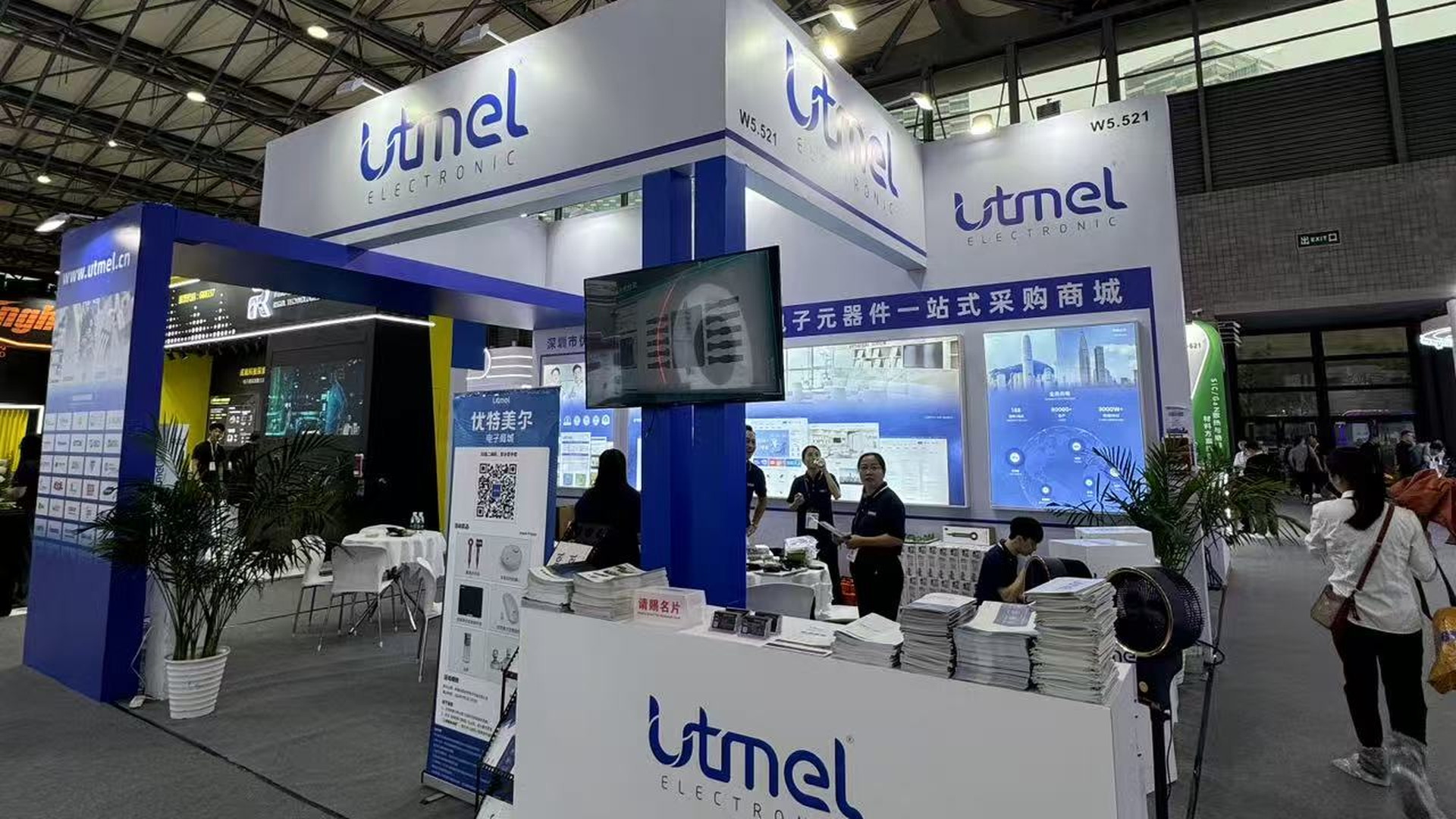 UTMEL Showcases One-Stop Electronic Component Sourcing Services at electronica Shanghai 2026UTMEL07 July 2026261
SHANGHAI, China, July 7, 2026 - UTMEL, a one-stop electronic components sourcing platform operated by Shenzhen Utmel Intelligent Electronic Co., Ltd., successfully participated in electronica Shanghai 2026, held from July 1 to 3, 2026 at the Shanghai New International Expo Centre.
Read More Electronic components distributor UTMEL to Showcase at electronica ChinaUTMEL07 June 20244584
The three-day 2024 Electronica China will be held at the Shanghai New International Expo Center from July 8th to 10th, 2024.
Read More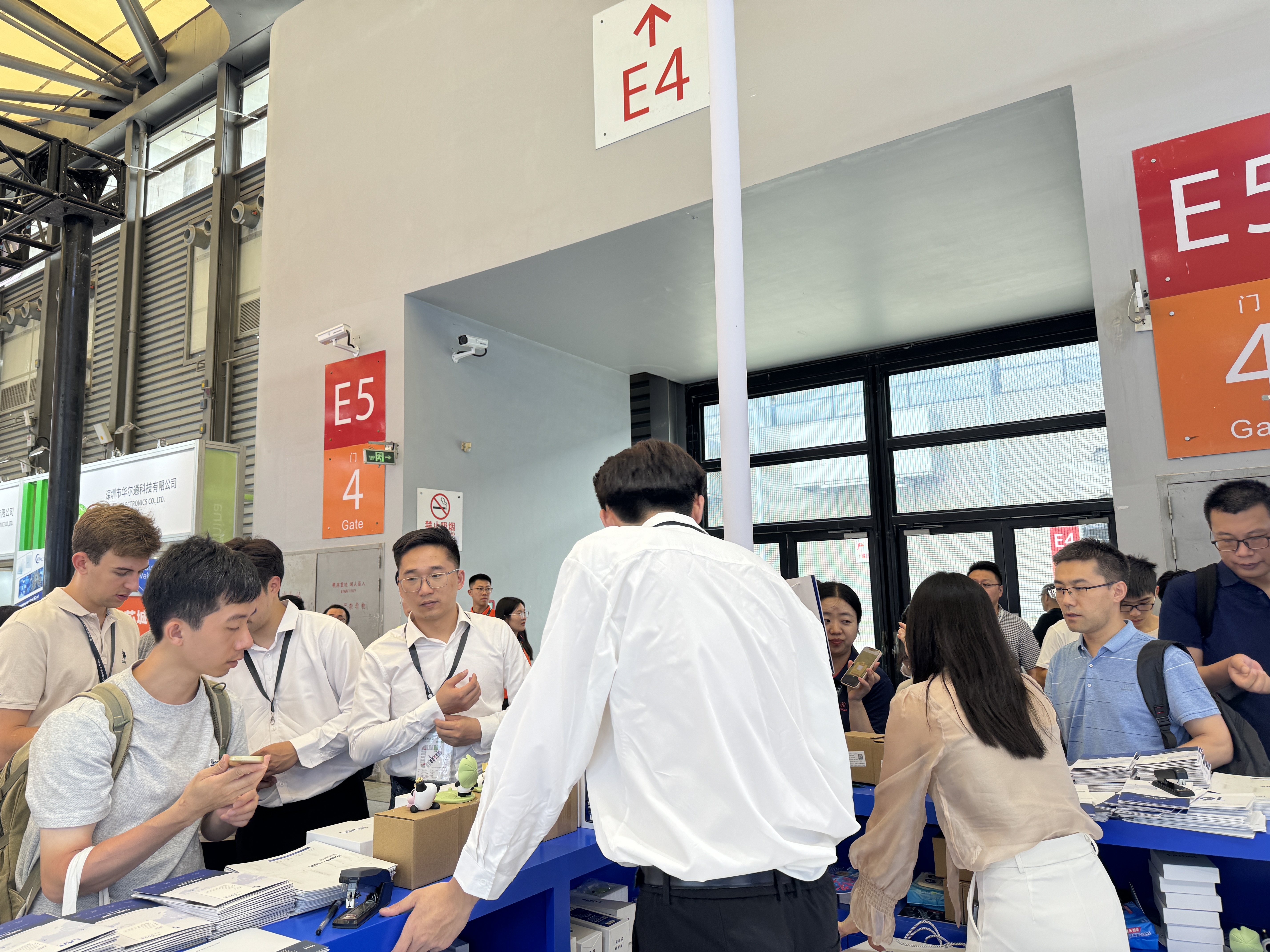 Electronic components distributor UTMEL Stands Out at electronica china 2024UTMEL09 July 20245185
From July 8th to 10th, the three-day electronica china 2024 kicked off grandly at the Shanghai New International Expo Center.
Read More
Subscribe to Utmel !
![AMEOF8-24S277NZ-120]() AMEOF8-24S277NZ-120
AMEOF8-24S277NZ-120aimtec
![AMEOFL10-12S277HANZ]() AMEOFL10-12S277HANZ
AMEOFL10-12S277HANZaimtec
![AMES25-15S277NZ-Q]() AMES25-15S277NZ-Q
AMES25-15S277NZ-Qaimtec
![AMEOF65-24SHAMJZ]() AMEOF65-24SHAMJZ
AMEOF65-24SHAMJZaimtec
![AME15-5SVZ-STD]() AME15-5SVZ-STD
AME15-5SVZ-STDaimtec
![AMEL10-5S277HAVZ-ST]() AMEL10-5S277HAVZ-ST
AMEL10-5S277HAVZ-STaimtec
![AMES25-48S277NZ-Q]() AMES25-48S277NZ-Q
AMES25-48S277NZ-Qaimtec
![AME10-5S277PEVZ]() AME10-5S277PEVZ
AME10-5S277PEVZaimtec
![AME25-3S277PEVZ]() AME25-3S277PEVZ
AME25-3S277PEVZaimtec
![AME5-512T277NZ-120]() AME5-512T277NZ-120
AME5-512T277NZ-120aimtec