Product
 Brand
Brand Articles
 Tools
Tools
Huawei Responded How to Solve the Problem of Chip Supply

Huawei's chip dream failed and its core business shattered/Its secret ways to bypass US sanctions
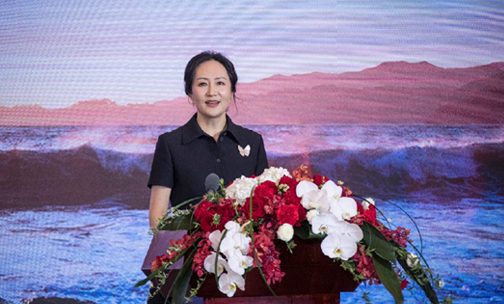
Yesterday, Huawei held an earnings presentation, which was also the public appearance of Huawei's Chief Financial Officer Ms. Meng Wanzhou again after her return to China.
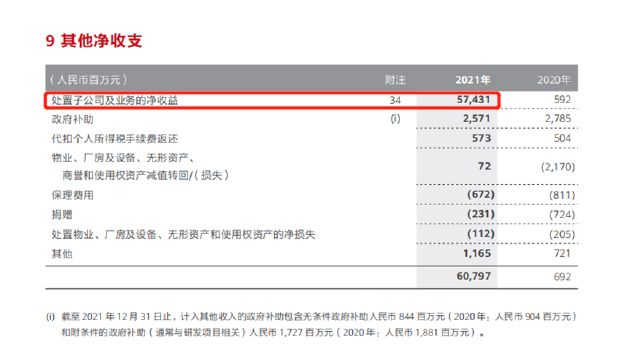
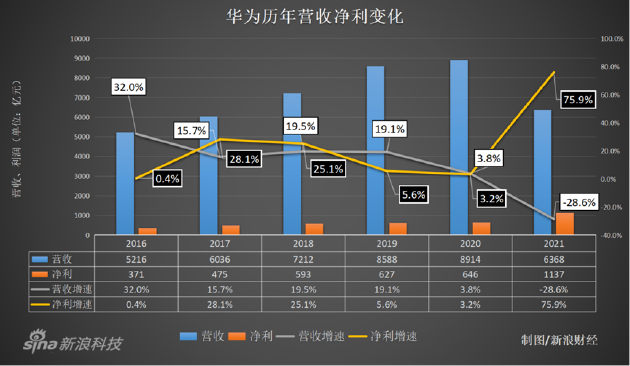
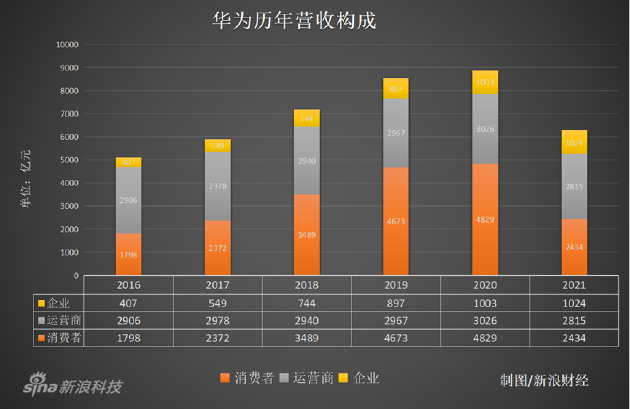
According to Meng, Huawei achieved global sales revenue of RMB 636.8 billion in 2021, down 28.6% year-on-year, of which the carrier business, enterprise business, and consumer business achieved revenue of RMB 281.5 billion, RMB 102.4 billion, and RMB 243.4 billion, respectively. Among them, especially in the consumer electronics business, the decline was higher. In terms of net profit, the company, on the other hand, earned RMB 113.7 billion in revenue, up 75.9% year-on-year. This was mainly due to the income gained from the sale of some of the company's businesses last year.
Meng further noted, "We have become smaller, but our profitability and cash flow access are increasing, and the company's ability to deal with uncertainty is improving."
And as can be seen from the relevant statistics, thanks to the company's improved profitability in its main business, Huawei's operating cash flow has increased significantly to RMB 59.7 billion in 2021; while the gearing ratio has reduced to a level of 57.8%, and the overall financial structure is strengthening in terms of resilience and elasticity.
In terms of R&D, according to Meng, Huawei will invest RMB 142.7 billion in R&D in 2021, accounting for 22.4% of its annual revenue. Both the number of R&D expenses and the R&D expense ratio are at the company's highest level in the past decade, and the cumulative R&D expenses invested in the past decade exceed RMB 845 billion. According to the information, Huawei is one of the world's largest patent-holding companies. As of December 31, 2021, Huawei held more than 45,000 validly licensed patents (over 110,000) worldwide, with more than 90% of the patents being invention patents, and about 107,000 people engaged in research and development, accounting for about 54.8% of the company's total workforce.
When talking about the company's current situation, Huawei's rotating chairman Guo Ping also pointed out that Huawei survived 2021, but in 2022, the company will continue to seek survival.
In Guo Ping's speech, he stressed that Huawei is now facing the difficulty of unavailability of advanced processes, so the company needs to be competitive in system engineering. He also pointed out that solving the chip problem is a complex and long process that requires patience. In the future, Huawei's chip solution may adopt a multi-core structure to improve chip performance.
Guo Ping stressed that in 2022 Huawei will continue to seek survival and development, relying on continuous strong investment in the field of research and development. He further pointed out that Huawei's problems cannot be solved by "scrimping and saving", but by optimizing the system architecture, improving software performance, and exploring theories, as well as building a highly reliable supply chain by solving technical and technological problems.
In response to a reporter's question, Huawei said that all employees worked hard through the ordeal in 2021, the team has become more united in these three years, the strategy has become clearer in these three years, and the company will continue to increase the strength of the talent, research and development areas to maintain the ability to continue to innovate, I believe that along these two directions continue to move forward, long-term sustainable to provide customers and partners with higher-value products and services.
Asked how to solve the problem of chip supply, Huawei responded in this way - from sand to chips, to solve the entire semiconductor problem, it should be said that it is a very complex and long project, requiring patience. Originally in the global environment, the duplication of these technologies developed, not necessarily commercially valuable. But in the case of market pattern and technology blockade, new demand will be created and investment in this area becomes commercially viable. We believe and are happy to see more and more companies participating in this market, and we are very happy to see their success. Just now in the introduction, I mentioned that in today's process is not available, a single point of technology encountered difficulties, we are actively looking for a system breakthrough. The future layout of the chip, our main communication products using multi-core structure, supporting the reconfiguration of the software architecture and performance multiplication, it should be said that the equivalent of injecting new life into the chip, which can enhance our continued supply capacity.
Some reporters even raised questions on the concern that whether Huawei will build its own fab. Huawei did not directly respond to this question but said: in the future, Huawei will be through the theory and system architecture reconstruction, with area for performance, with the stack for performance, so that less advanced processes can also continue Huawei in the future of the product can be competitive, Huawei will continue to work along this direction.
From the above introduction, we can see that Huawei in the consumer electronics business, including cell phones, the decline is high, when asked where this difficulty is mainly reflected in. Huawei replied that the U.S. sanctions for many years in a row have caused very great difficulties for Huawei, especially the cell phone business among consumers because the cell phone chip needs to have strong computing power, low power consumption, small size needs, we have difficulties to obtain.
"We are actively exploring solutions for cell phone sustainability with all parties concerned, and we are also expanding wearable, health products, whole house intelligence, etc., all of which have achieved high-speed development, and our wearable products, etc., have achieved very high-speed development, and our wearable watches and bracelets have over 100 million users. We will also look for new development opportunities inside several new scenarios." Huawei went on to say.
As for the automotive aspect of concern, Huawei's rotating chairman Guo Ping said that Huawei has deeply integrated the ICT capabilities accumulated over three decades with the automotive industry to help car companies build and sell good cars. Huawei has built seven smart car solutions and has listed more than 30 smart car parts. "We have cooperated deeply with a number of domestic and foreign car companies to help customers build good cars and achieve commercial success." Guo Ping said, in the new industrial division of labor under the cooperation model, Huawei adheres to the platform plus ecological development strategy, we will further increase the investment in ecology, together with partners to accelerate the progress of the automotive industry intelligence.
"Looking to the future, Huawei will move forward in the direction of digitalization, intelligence, and low carbonization, continue to increase investment, rely on the three elements of talent, scientific research, and innovative spirit, and strive to achieve the reconfiguration of the technology base. On this basis, Huawei assembles various ICT technologies and global experience to assist customers in various industries to carry out digital transformation and create value for customers and society." Guo Ping concluded.
Related News
1、MediaTek, Qualcomm announce joining Russia sanctions
2、Automotive chips rose across the board!
3、Apple M1 Ultra -- The Technology Behind the Chip Interconnection
4、Foxconn Announces Investment of $9 Billion to Build A Chip Factory in Saudi Arabia
5、Japanese Companies Increase Investment in Power Semiconductors
 UTMEL
UTMEL
We are the professional distributor of electronic components, providing a large variety of products to save you a lot of time, effort, and cost with our efficient self-customized service. careful order preparation fast delivery service
 UTMEL 2024 Annual gala: Igniting Passion, Renewing BrillianceUTMEL18 January 20245009
As the year comes to an end and the warm sun rises, Utmel Electronics celebrates its 6th anniversary.
Read More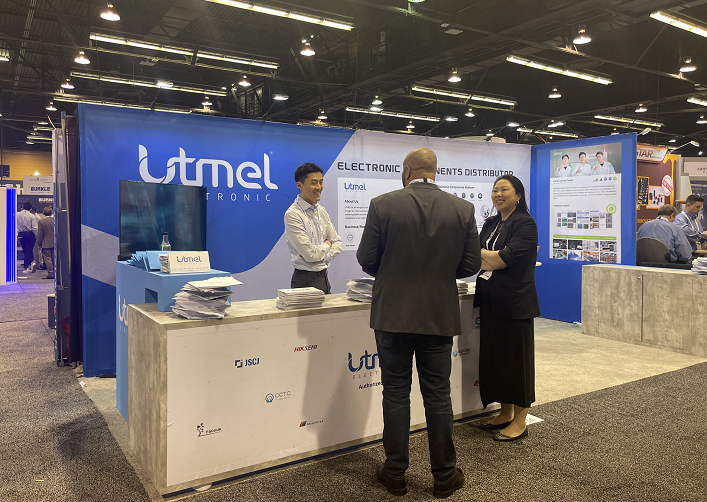 Electronic Components Distributor Utmel to Showcase at 2024 IPC APEX EXPOUTMEL10 April 20245994
Utmel, a leading electronic components distributor, is set to make its appearance at the 2024 IPC APEX EXPO.
Read More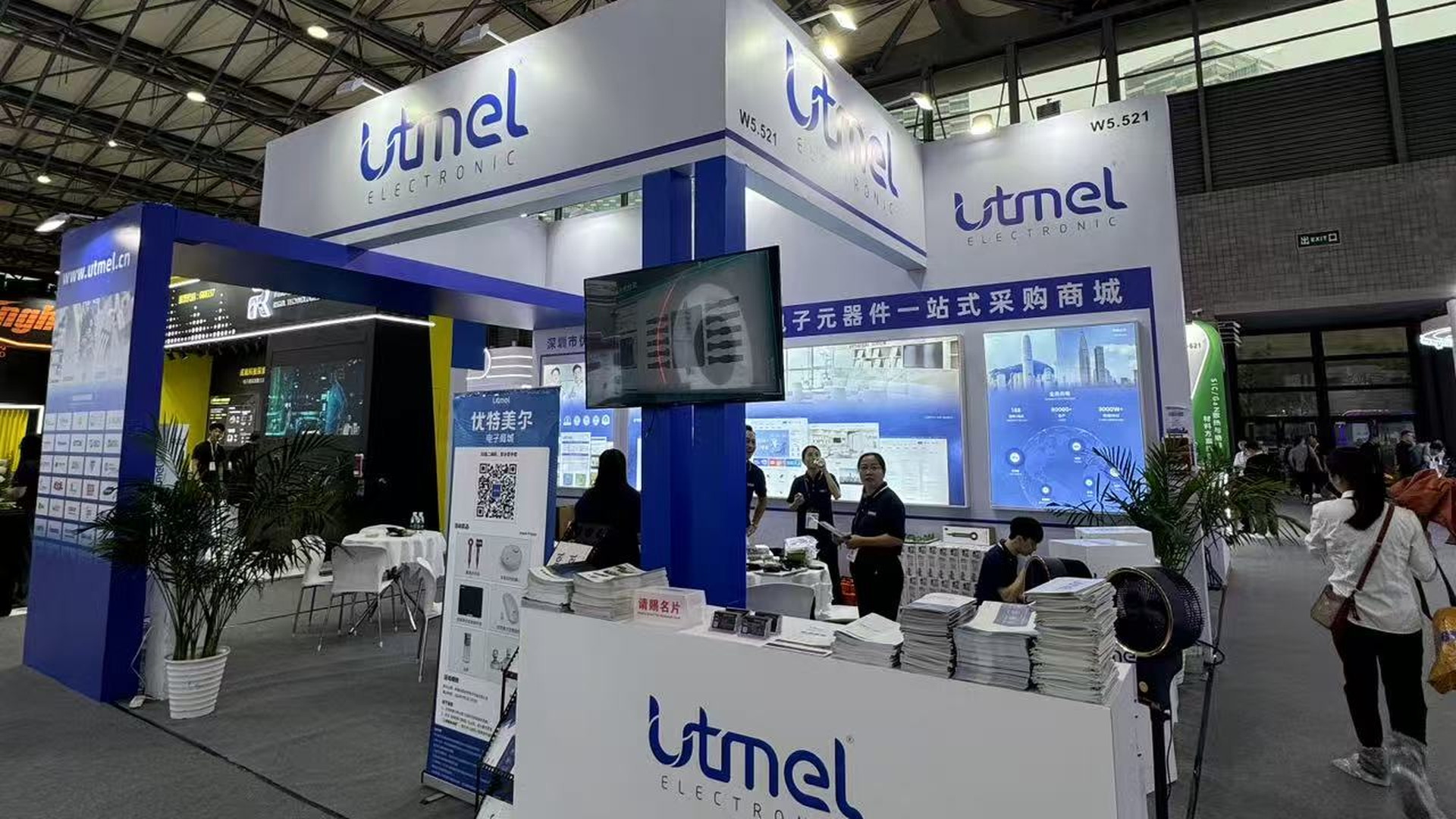 UTMEL Showcases One-Stop Electronic Component Sourcing Services at electronica Shanghai 2026UTMEL07 July 2026261
SHANGHAI, China, July 7, 2026 - UTMEL, a one-stop electronic components sourcing platform operated by Shenzhen Utmel Intelligent Electronic Co., Ltd., successfully participated in electronica Shanghai 2026, held from July 1 to 3, 2026 at the Shanghai New International Expo Centre.
Read More Electronic components distributor UTMEL to Showcase at electronica ChinaUTMEL07 June 20244584
The three-day 2024 Electronica China will be held at the Shanghai New International Expo Center from July 8th to 10th, 2024.
Read More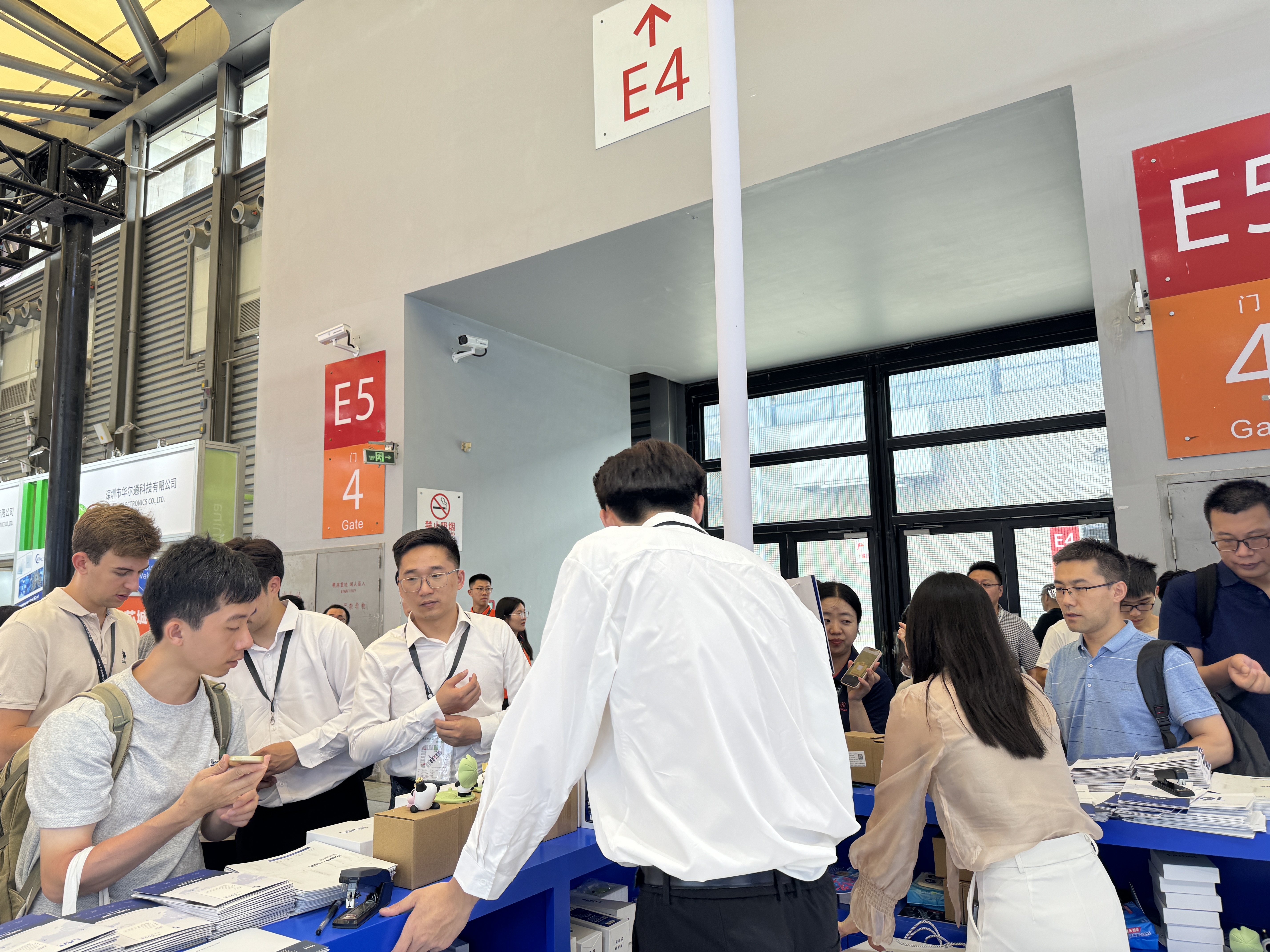 Electronic components distributor UTMEL Stands Out at electronica china 2024UTMEL09 July 20245185
From July 8th to 10th, the three-day electronica china 2024 kicked off grandly at the Shanghai New International Expo Center.
Read More
Subscribe to Utmel !
![PT15NH06-00839]() PT15NH06-00839
PT15NH06-00839Amphenol
![PT15YV18-01169]() PT15YV18-01169
PT15YV18-01169Amphenol
![PT15NV18-04631]() PT15NV18-04631
PT15NV18-04631Amphenol
![PT15LV18-10305]() PT15LV18-10305
PT15LV18-10305Amphenol
![PT6KH-02282]() PT6KH-02282
PT6KH-02282Amphenol
![PT15NH06-08515]() PT15NH06-08515
PT15NH06-08515Amphenol
![PT15WH06-04352]() PT15WH06-04352
PT15WH06-04352Amphenol
![PTC10LH01-00545]() PTC10LH01-00545
PTC10LH01-00545Amphenol
![PT15LV18-07074]() PT15LV18-07074
PT15LV18-07074Amphenol
![PTC10LV10-00645]() PTC10LV10-00645
PTC10LV10-00645Amphenol