Product
 Brand
Brand Articles
 Tools
Tools
STMicroelectronics: The European Powerhouse in Silicon Carbide Semiconductor Technology
STMicroelectronics (NYSE:STM), a leading semiconductor manufacturer in Europe, is making significant strides in the realm of silicon carbide technology. The company specializes in automotive chips, analog products, and microcontrollers, with a strong emphasis on silicon carbide technology. STMicroelectronics is one of the major players in the silicon carbide technology sector, alongside Infineon (OTCQX:IFNNY), ON Semiconductor (ON), and ROHM Semiconductor. The increasing use of silicon carbide and the growing semiconductor content per vehicle are major driving forces in the automotive semiconductor industry. The company's Automotive and Discrete Group (ADG) represents 37% of group revenue and has seen substantial growth in recent years. In FY21, it grew 32.5%, followed by a further 37.2% in FY22. This growth is driven by automotive electrification, ADAS systems, and 32-bit MCUs. The company's management expects the semiconductor content per car to accelerate in the coming years, driven by more technologies applied to premium cars and electric vehicles (EVs). STMicroelectronics is also a leader in silicon carbide technology, which is a new material better suited for longer-range electric vehicles.
The advantages of silicon carbide include high system-level efficiencies, low power loss, and increased temperature operations. The company is targeting more than EUR 5 billion in revenue from silicon carbide by FY30, with customers including major automakers such as BMW, Tesla, BYD, Renault, and Hyundai. In Q2 FY23, STMicroelectronics announced a joint venture with Sanan Optoelectronics to manufacture high-volume 200mm silicon carbide devices in China. These devices will be used for automotive electrification, industrial power, and energy applications. The company plans to start production in Q4 FY25 and achieve full operation by FY28. Despite being in a volatile industry, STMicroelectronics has shown impressive growth, with a 3-year revenue CAGR of approximately 19% and a 5-year CAGR of around 14%. The company's Q2 FY23 revenue increased by 12.7% year over year, with an operating margin improvement to 26.5% from 26.2% in the same quarter of the previous year. However, the company does face key risks, particularly relating to its high capital expenditures. The increasing capital expenditure has impacted their free cash flow generation. While these investments in manufacturing can help STMicroelectronics better control their supply chain and input costs, it also makes their business capital-intensive.
Despite these risks, STMicroelectronics is significantly undervalued, with a 'Strong Buy' rating assigned. The company's growth is expected to be driven by the increase in silicon content per car and the adoption of silicon carbide technology. The company will also benefit from the structural trend of automotive electrification.
 UTMEL
UTMEL
We are the professional distributor of electronic components, providing a large variety of products to save you a lot of time, effort, and cost with our efficient self-customized service. careful order preparation fast delivery service
 Power Semiconductor Procurement After the Nexperia Shake-Up—NXP for Stability, ON for Technology, or Nexperia for Value?UTMEL04 November 20254811
The recent supply chain turmoil surrounding Netherlands-based Nexperia has sent shockwaves through the global semiconductor industry, forcing procurement professionals to re-evaluate their sourcing strategies.
Read More AI Computing Power Gap: How Token Consumption is Reshaping Server Component SourcingUTMEL23 June 2026889
As global token consumption drives the transition to high-density 100kW+ AI data centers, power delivery networks require advanced Wide-Bandgap semiconductors (SiC/GaN) and high-capacitance MLCCs. This shift has triggered a component procurement crisis with lead times exceeding 24 weeks. To bypass shortages, hardware buyers must abandon just-in-time manufacturing and leverage independent global distributor networks to secure critical power and passive components.
Read More The BSPDN Revolution: Overcoming IR Drop in Sub-2nm GAAFET Nodes with Backside Power DeliveryUTMEL25 June 2026798
As semiconductor manufacturing enters the sub-2nm era, Backside Power Delivery Networks (BSPDN) are replacing traditional front-side routing to overcome critical IR drop bottlenecks. By separating power and signal delivery, chipmakers like Intel and TSMC drastically improve performance and density in GAAFET designs. However, this radical shift introduces manufacturing complexities, thermal challenges, and demands advanced packaging and power management solutions.
Read More Power Management ICs Trends 2026: AI Demand, Supply Risks, and Sourcing StrategiesUTMEL06 July 20261266
As AI server racks surpass 100kW by 2026, data centers are shifting toward wide-bandgap semiconductors like SiC and GaN. However, this demand has triggered a critical shortage of mature-node Power Management ICs (PMICs). To prevent production halts, sourcing teams must abandon 'just-in-time' models, implement proactive 'just-in-case' strategies, and rapidly qualify pin-to-pin alternative components to secure their supply chains.
Read More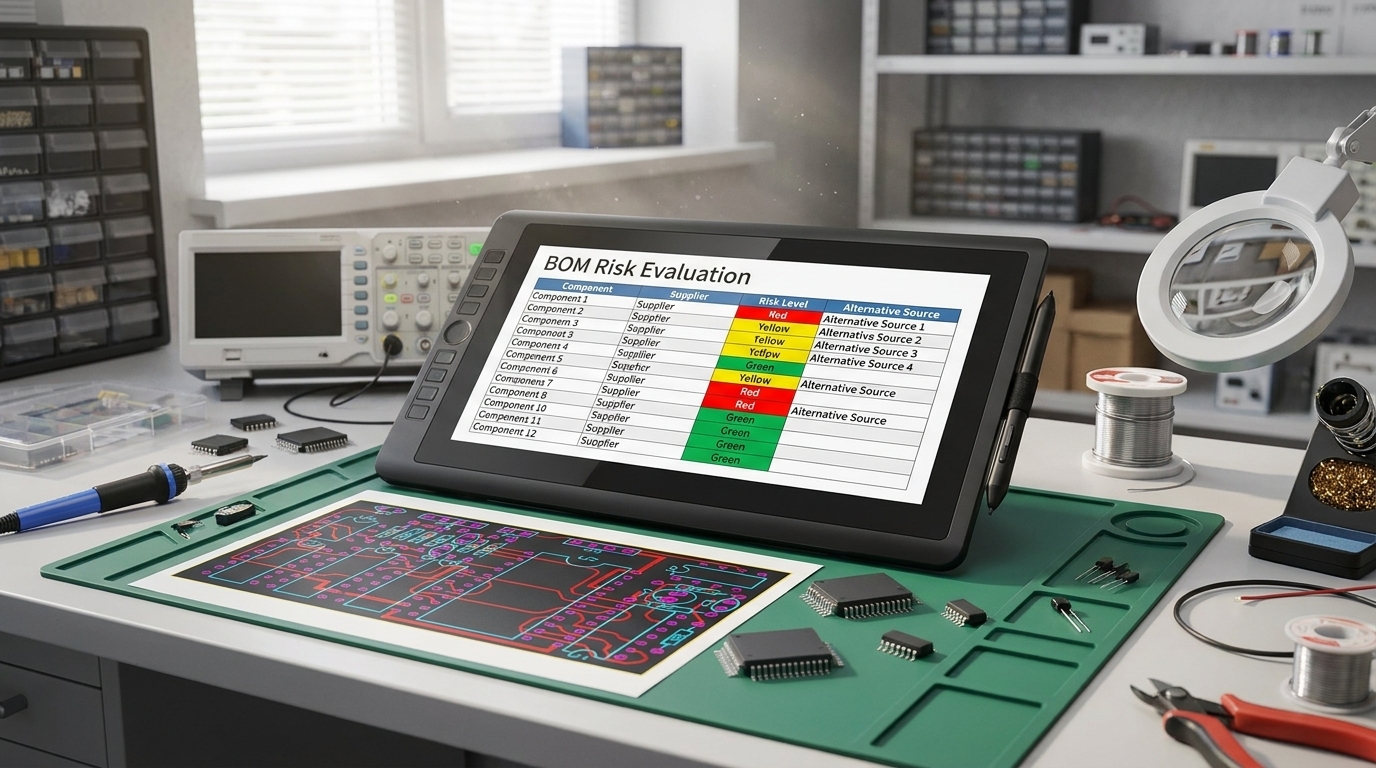 onsemi Synaptics Acquisition Impact: BOM Risk Checklist and Second-Source Strategy for Edge AI DesignsUTMEL27 July 2026288
The onsemi acquisition of Synaptics provides hardware program managers a 12-to-18-month window before potential product cancellations occur in mid-2027. This guide outlines how to audit BOM exposure across overlap and non-core product lines, calculate Last-Time-Buy volumes including hidden storage costs, establish proactive second-sourcing triggers, and implement supply chain monitoring to prevent line-down events.
Read More
Subscribe to Utmel !
![BLM15BD102SN1D]() BLM15BD102SN1D
BLM15BD102SN1DMurata Electronics
![H050X034H1T]() H050X034H1T
H050X034H1TPanduit Corp
![EMPLUS-CD]() EMPLUS-CD
EMPLUS-CDPanduit Corp
![03420014H]() 03420014H
03420014HLittelfuse Inc.
![10207101009]() 10207101009
10207101009Littelfuse Inc.
![BLM03AX601SZ1D]() BLM03AX601SZ1D
BLM03AX601SZ1DMurata Electronics
![74AHC74D,118]() 74AHC74D,118
74AHC74D,118Nexperia USA Inc.
![02540101Z]() 02540101Z
02540101ZLittelfuse Inc.
![CJ25-82010]() CJ25-82010
CJ25-82010Nidec Copal Electronics
![409775-1]() 409775-1
409775-1TE Application Tooling