

 Product
 Brand
Brand Articles
 Tools
Tools
US Set to Close Loopholes in AI Chip Export Restrictions to China
The US government is set to take action to prevent American chipmakers from selling semiconductors to China that circumvent existing restrictions, according to an anonymous US official. This move is part of a series of upcoming measures by the Biden administration aimed at blocking more AI chip exports to China. The new rules will supplement existing U.S. restrictions on shipments of advanced chips and chipmaking equipment to China, which were introduced in October 2022. The updated rules will block some AI chips that fall just under current technical parameters and will require companies to report shipments of other chips. The latest move to limit tech exports to China comes as the US seeks to improve strained relations between the world's two largest economies. The Biden administration has stated that the export restrictions are intended to prevent US chips and equipment from bolstering China's military. In response, Beijing has accused the United States of using export controls to suppress Chinese companies, marking a significant shift in US-China tech policy. China's foreign ministry spokesperson Mao Ning urged the US to stop politicizing and weaponizing trade and tech issues and to stop destabilizing global industrial and supply chains. Last year, US government restrictions prevented Nvidia, the world's most valuable chipmaker, from shipping two of its most advanced AI chips to Chinese customers.
However, Nvidia released less sophisticated variants for the Chinese market that managed to circumvent the US export controls. The new guidelines will restrict certain advanced data center AI chips that are not currently captured. While the official did not specify which chips would be effectively banned, sources suggest that Nvidia's H800 is a likely target. The new rules will also seek to cover AI chips as technology evolves. Companies will be required to notify the government about semiconductors whose performance is just below the guidelines before they are shipped to China. The government will then decide on a case-by-case basis whether they pose a national security risk. The updates may also close a loophole that allows Chinese companies to access American artificial intelligence chips through Chinese units located overseas. The rules are not expected to include restrictions on access to US cloud computing services, or those of allies. However, the US will seek comments on the risks of such access and how they might be addressed.
 UTMEL
UTMEL
We are the professional distributor of electronic components, providing a large variety of products to save you a lot of time, effort, and cost with our efficient self-customized service. careful order preparation fast delivery service
 Power Semiconductor Procurement After the Nexperia Shake-Up—NXP for Stability, ON for Technology, or Nexperia for Value?UTMEL04 November 20254928
The recent supply chain turmoil surrounding Netherlands-based Nexperia has sent shockwaves through the global semiconductor industry, forcing procurement professionals to re-evaluate their sourcing strategies.
Read More AI Computing Power Gap: How Token Consumption is Reshaping Server Component SourcingUTMEL23 June 2026986
As global token consumption drives the transition to high-density 100kW+ AI data centers, power delivery networks require advanced Wide-Bandgap semiconductors (SiC/GaN) and high-capacitance MLCCs. This shift has triggered a component procurement crisis with lead times exceeding 24 weeks. To bypass shortages, hardware buyers must abandon just-in-time manufacturing and leverage independent global distributor networks to secure critical power and passive components.
Read More The BSPDN Revolution: Overcoming IR Drop in Sub-2nm GAAFET Nodes with Backside Power DeliveryUTMEL25 June 20261006
As semiconductor manufacturing enters the sub-2nm era, Backside Power Delivery Networks (BSPDN) are replacing traditional front-side routing to overcome critical IR drop bottlenecks. By separating power and signal delivery, chipmakers like Intel and TSMC drastically improve performance and density in GAAFET designs. However, this radical shift introduces manufacturing complexities, thermal challenges, and demands advanced packaging and power management solutions.
Read More Power Management ICs Trends 2026: AI Demand, Supply Risks, and Sourcing StrategiesUTMEL06 July 20261498
As AI server racks surpass 100kW by 2026, data centers are shifting toward wide-bandgap semiconductors like SiC and GaN. However, this demand has triggered a critical shortage of mature-node Power Management ICs (PMICs). To prevent production halts, sourcing teams must abandon 'just-in-time' models, implement proactive 'just-in-case' strategies, and rapidly qualify pin-to-pin alternative components to secure their supply chains.
Read More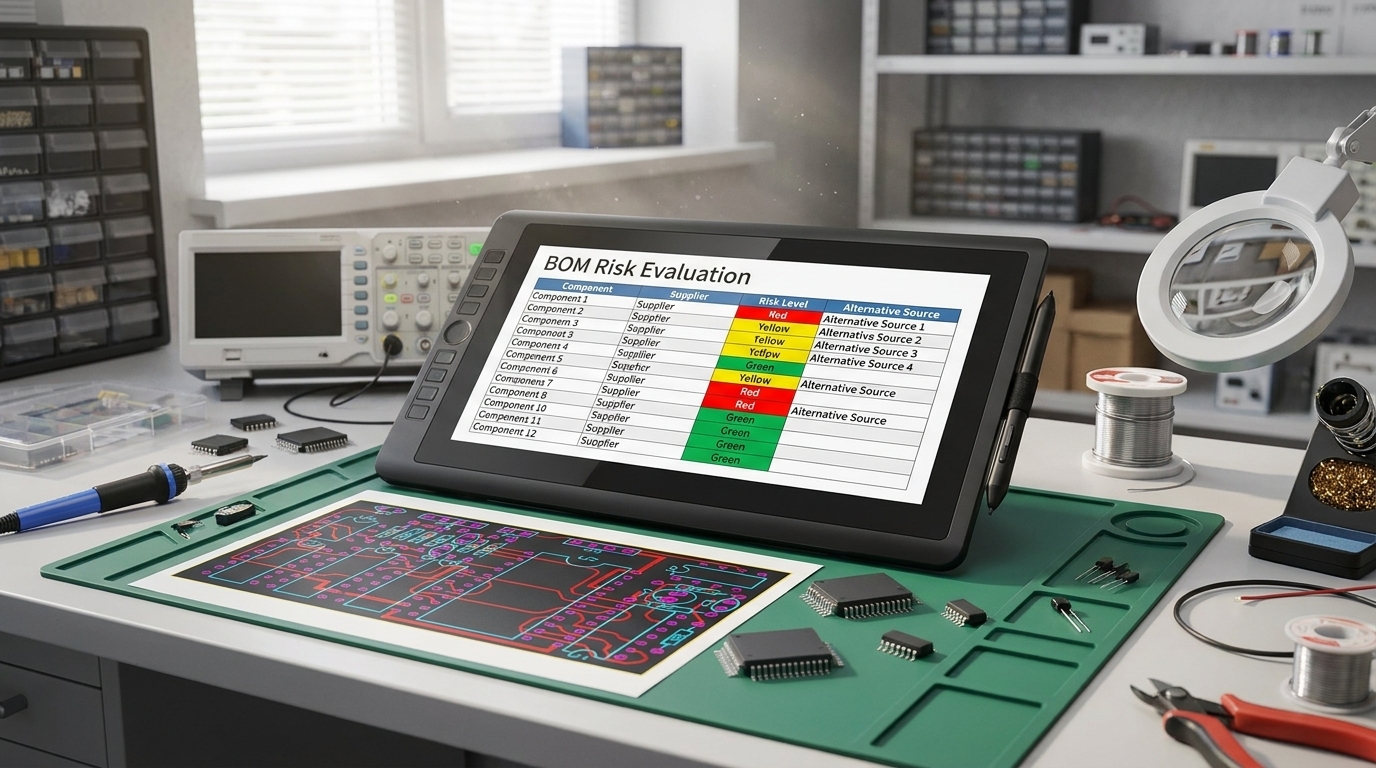 onsemi Synaptics Acquisition Impact: BOM Risk Checklist and Second-Source Strategy for Edge AI DesignsUTMEL27 July 2026384
The onsemi acquisition of Synaptics provides hardware program managers a 12-to-18-month window before potential product cancellations occur in mid-2027. This guide outlines how to audit BOM exposure across overlap and non-core product lines, calculate Last-Time-Buy volumes including hidden storage costs, establish proactive second-sourcing triggers, and implement supply chain monitoring to prevent line-down events.
Read More
Subscribe to Utmel !
![BLM02AX241SN1D]() BLM02AX241SN1D
BLM02AX241SN1DMurata Electronics
![URAM3C21]() URAM3C21
URAM3C21Vicor Corporation
![BLM03BB121SN1D]() BLM03BB121SN1D
BLM03BB121SN1DMurata Electronics
![BLM18PG471SH1D]() BLM18PG471SH1D
BLM18PG471SH1DMurata Electronics
![REC20-25-201-1]() REC20-25-201-1
REC20-25-201-1Nidec Copal Electronics
![WIZ1000]() WIZ1000
WIZ1000WIZnet
![01500274LXN]() 01500274LXN
01500274LXNLittelfuse Inc.
![ACC01E32-17P-003-B30-LC]() ACC01E32-17P-003-B30-LC
ACC01E32-17P-003-B30-LCAmphenol
![SP06E-14-18PX(SR)]() SP06E-14-18PX(SR)
SP06E-14-18PX(SR)Amphenol
![7BB-15-6]() 7BB-15-6
7BB-15-6Murata Electronics


