Product
 Brand
Brand Articles
 Tools
Tools
AMG8833 Infrared Array Sensor: Pinout, Datasheet and Applications

Panasonic Electronic Components
Tape & Reel (TR) Digital, Infrared (IR) 3.3V Surface Mount 0°C~80°C I2C ±2.5°C 3 (168 Hours)


Tape & Reel (TR) Digital, Infrared (IR) 3.3V Surface Mount 0°C~80°C I2C ±2.5°C 3 (168 Hours)
AMG8833 is a high precision infrared array sensor based on Advanced MEMS Technology. This article mainly covers datasheet, features, applications and other details about AMG8833.

Simple AMG8833 thermal imager and how to use it
AMG8833 Pinout
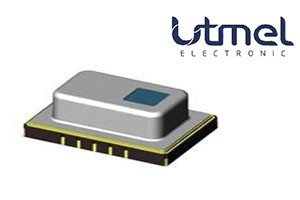

AMG8833 Description
AMG8833 is Panasonic's 8×8 IR Grid-Eye sensor that contains eight rows of eight pixels each housing infrared thermopiles, capable of measuring blackbody radiation, around the thermal range of 8-15 microns.
AMG8833 CAD Model
Symbol
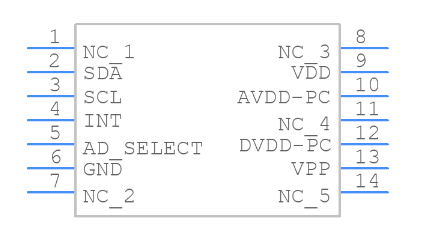
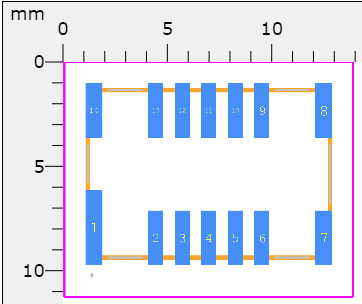
Footprint
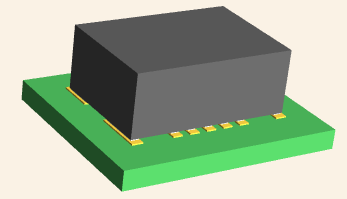
3D Model
Specifications
- TypeParameter
- Factory Lead Time16 Weeks
- Mounting Type
The "Mounting Type" in electronic components refers to the method used to attach or connect a component to a circuit board or other substrate, such as through-hole, surface-mount, or panel mount.
Surface Mount - Package / Case
refers to the protective housing that encases an electronic component, providing mechanical support, electrical connections, and thermal management.
14-SMD Module - Test Conditions0°C ~ 80°C
- Operating Temperature
The operating temperature is the range of ambient temperature within which a power supply, or any other electrical equipment, operate in. This ranges from a minimum operating temperature, to a peak or maximum operating temperature, outside which, the power supply may fail.
0°C~80°C - Packaging
Semiconductor package is a carrier / shell used to contain and cover one or more semiconductor components or integrated circuits. The material of the shell can be metal, plastic, glass or ceramic.
Tape & Reel (TR) - Series
In electronic components, the "Series" refers to a group of products that share similar characteristics, designs, or functionalities, often produced by the same manufacturer. These components within a series typically have common specifications but may vary in terms of voltage, power, or packaging to meet different application needs. The series name helps identify and differentiate between various product lines within a manufacturer's catalog.
Grid-EYE - Published2008
- Part Status
Parts can have many statuses as they progress through the configuration, analysis, review, and approval stages.
Active - Moisture Sensitivity Level (MSL)
Moisture Sensitivity Level (MSL) is a standardized rating that indicates the susceptibility of electronic components, particularly semiconductors, to moisture-induced damage during storage and the soldering process, defining the allowable exposure time to ambient conditions before they require special handling or baking to prevent failures
3 (168 Hours) - HTS Code
HTS (Harmonized Tariff Schedule) codes are product classification codes between 8-1 digits. The first six digits are an HS code, and the countries of import assign the subsequent digits to provide additional classification. U.S. HTS codes are 1 digits and are administered by the U.S. International Trade Commission.
8542.39.00.01 - Voltage - Supply
Voltage - Supply refers to the range of voltage levels that an electronic component or circuit is designed to operate with. It indicates the minimum and maximum supply voltage that can be applied for the device to function properly. Providing supply voltages outside this range can lead to malfunction, damage, or reduced performance. This parameter is critical for ensuring compatibility between different components in a circuit.
3.3V - Peak Reflow Temperature (Cel)
Peak Reflow Temperature (Cel) is a parameter that specifies the maximum temperature at which an electronic component can be exposed during the reflow soldering process. Reflow soldering is a common method used to attach electronic components to a circuit board. The Peak Reflow Temperature is crucial because it ensures that the component is not damaged or degraded during the soldering process. Exceeding the specified Peak Reflow Temperature can lead to issues such as component failure, reduced performance, or even permanent damage to the component. It is important for manufacturers and assemblers to adhere to the recommended Peak Reflow Temperature to ensure the reliability and functionality of the electronic components.
NOT SPECIFIED - Time@Peak Reflow Temperature-Max (s)
Time@Peak Reflow Temperature-Max (s) refers to the maximum duration that an electronic component can be exposed to the peak reflow temperature during the soldering process, which is crucial for ensuring reliable solder joint formation without damaging the component.
NOT SPECIFIED - Output Type
The "Output Type" parameter in electronic components refers to the type of signal or data that is produced by the component as an output. This parameter specifies the nature of the output signal, such as analog or digital, and can also include details about the voltage levels, current levels, frequency, and other characteristics of the output signal. Understanding the output type of a component is crucial for ensuring compatibility with other components in a circuit or system, as well as for determining how the output signal can be utilized or processed further. In summary, the output type parameter provides essential information about the nature of the signal that is generated by the electronic component as its output.
I2C - Analog IC - Other Type
Analog IC - Other Type is a parameter used to categorize electronic components that are integrated circuits (ICs) designed for analog signal processing but do not fall into more specific subcategories such as amplifiers, comparators, or voltage regulators. These ICs may include specialized analog functions such as analog-to-digital converters (ADCs), digital-to-analog converters (DACs), voltage references, or signal conditioning circuits. They are typically used in various applications where precise analog signal processing is required, such as in audio equipment, instrumentation, communication systems, and industrial control systems. Manufacturers provide detailed specifications for these components to help engineers select the most suitable IC for their specific design requirements.
ANALOG CIRCUIT - Sensor Type
In electronic components, the parameter "Sensor Type" refers to the specific type of sensor technology used in a particular component to detect and measure physical phenomena such as light, temperature, pressure, motion, or proximity. Different sensor types utilize various principles and mechanisms to convert the detected input into an electrical signal that can be processed by the electronic component. Common sensor types include photodiodes, thermistors, accelerometers, and proximity sensors, each designed for specific applications and environments. Understanding the sensor type is crucial for selecting the right component for a given task and ensuring accurate and reliable sensing capabilities in electronic systems.
Digital, Infrared (IR) - Sensing Method
The sensing method in electronic components refers to the technique or mechanism used to detect and measure physical phenomena such as temperature, pressure, light, or motion. This includes a variety of technologies such as resistive, capacitive, inductive, and optical sensing methods. The choice of sensing method affects the accuracy, response time, and application suitability of the electronic component. It plays a crucial role in determining how effectively a device can interact with and interpret its environment.
Infrared (IR) - Accuracy - Highest (Lowest)
In electronic components, "Accuracy - Highest (Lowest)" refers to the range within which the actual value of a parameter can deviate from the ideal or specified value. The term "Highest" indicates the upper limit of this range, while "Lowest" indicates the lower limit. For example, if a component has an accuracy of ±5%, the highest accuracy would mean that the actual value could be within 5% above the specified value, while the lowest accuracy would mean it could be within 5% below the specified value. This parameter is crucial for ensuring the reliability and performance of electronic devices by determining how closely the component's output matches the desired value.
±2.5°C - Sensing Temperature - Remote
Sensing Temperature - Remote refers to the capability of electronic components to measure temperature at a location that is distant from the main control unit or sensor. This parameter typically involves the use of external temperature probes or sensors that are connected to a monitoring device, allowing for accurate temperature readings in environments that are difficult to access. Remote sensing is crucial in applications like HVAC systems, industrial processes, and environmental monitoring, where precise temperature data is needed from various locations.
0°C~80°C IR - Features
In the context of electronic components, the term "Features" typically refers to the specific characteristics or functionalities that a particular component offers. These features can vary depending on the type of component and its intended use. For example, a microcontroller may have features such as built-in memory, analog-to-digital converters, and communication interfaces like UART or SPI.When evaluating electronic components, understanding their features is crucial in determining whether they meet the requirements of a particular project or application. Engineers and designers often look at features such as operating voltage, speed, power consumption, and communication protocols to ensure compatibility and optimal performance.In summary, the "Features" parameter in electronic components describes the unique attributes and capabilities that differentiate one component from another, helping users make informed decisions when selecting components for their electronic designs.
Sleep Mode, Standby Mode, Thermal Array - RoHS Status
RoHS means “Restriction of Certain Hazardous Substances” in the “Hazardous Substances Directive” in electrical and electronic equipment.
RoHS Compliant
AMG8833 Features
Temperature detection of two-dimensional area: 8x8 (64 pixels)
Digital output (capability of temperature value output)
Compact SMD package (adaptively to reflow mounting)
Rohs complaint
AMG8833 Applications
High function home appliances (microwaves and air-condictioners)
Energy saving at office (air-conditioning/lighting control)
Digital signage
Automatic doors/elevators
AMG8833 Internal Circuit

AMG8833 vs. MLX90640
The MLX90640 has a resolution of 32x24 for about $70 and the AMG8833 has a resolution of 8x8 for about $40. Both sensors can be used with methods like finding blobs to make thermal vision tracking applications.
Where to use AMG8833
The AMG8833 is useful for applications in thermal imaging, heat transfer analyses, human temperature monitoring, heating and air condition management, industrial control, and other applications in non-contact temperature measurement.
AMG8833 Manufacturer
Panasonic Industrial Devices Sales Company of America is the industrial components and electronic devices division of Panasonic Corporation of North America. Panasonic Industrial Devices Sales Company of America provides key components that power the home appliances, consumer electronics, computers, communications, and commercial and healthcare products used by millions of people each day. Our wide offering of high-quality industrial products, global manufacturing, and advanced research and development facilities as well as our commitment to customer service make us a preferred vendor to the world's most famous original equipment manufacturers of high-tech electronic products. From the smallest resistor to the highest technology wireless communications modules, Panasonic offers it all! Choosing Panasonic means more than selecting a name you know and trust. It means choosing the best quality components the industry can offer.
Trend Analysis
Datasheet PDF
- Datasheets :
- Other Related Documents :
What is AMG8833?
AMG8833 is Panasonic's 8×8 IR Grid-Eye detector that contains eight rows of eight pixels each housing infrared thermopiles, capable of measuring blackbody radiation, around the thermal range of 8-15 microns.
How does the AMG8833 work?
The AMG8833 Infrared thermal sensor is a compact device that detects the heat energy being emitted by an object and converts it into an electronic signal which can be processed further to display a thermal image on a video monitor which is a PC screen or a separate TFT LCD module.
What is Grid-EYE sensor?
Grid-EYE features 64 thermopile elements in an 8x8 grid format that detect absolute temperatures by infrared radiation. It is compared to single element thermopile sensors and pyro-electric detectors, Grid-EYE sensors offers extended possibilities for detecting persons and objects, enabling advanced Applications.
How do I connect my Raspberry Pi to AMG8833?
Raspberry Pi I2C Communication with the AMG8833
1.Preferences → Raspberry Pi Configuration.
2.Select Interfaces → Enable I2C.
3.Open Command Window and type “sudo i2cdetect -y 1” Verify 0x69 as the I2C device address.
4.Access The Raspberry Pi Boot File.
5.Add/Change the I2C Baudrate to 400kHz.
6.Example AMG8833 IR Camera Output.
 2SC5200 NPN Transistor: Pinout, Datasheet, and Circuit
02 September 202144271
 Battery CR2430: 3V Lithium Battery, CR2430 Equivalents and CR2430 VS CR2032
06 December 202159212
 AD8232 ECG Sensor: AD8232 Arduino, AD8232 Pdf and Price
08 July 20216457
 W25Q32JVSSIQ: Overview, Features, and Applications
07 November 20234507
 CD4049 Buffer and Converter IC: Pinout, Equivalent and Datasheet
28 August 20216990
 SMBJ60CA TVs Diodes: System, Pinout, and Datasheet
14 February 20223158
 STM8S103F3P6 vs ATtiny85: Which Microcontroller to Choose
24 July 20251150
 STM8L151K6U3 Microcontroller: Technical Overview and Applications
29 February 2024148
 Silicon Carbide (SiC): The Third-generation Semiconductor Material
30 August 202110128
 ON Semiconductor's Transformation and SiC Rollout Positions it for High-Growth Opportunities
25 September 20232009
 High-Capacity HDDs in the AI Era: Sourcing Massive Storage for Cold Data
04 July 2026388
 Commonly Used Sensitive Resistor Type Foundation and Circuit Application
16 December 20213653
 Introduction to Silicon Controlled Rectifier
25 September 20209523
 Classification and Characteristics of Microwave Filter
14 December 20218961
 SMD Resistors: Codes, Size, Testing, Tolerance and Selection
08 June 202654390
 Introduction to Distribution Transformer
24 February 20219373
Panasonic Electronic Components
In Stock: 3000
United States
China
Canada
Japan
Russia
Germany
United Kingdom
Singapore
Italy
Hong Kong(China)
Taiwan(China)
France
Korea
Mexico
Netherlands
Malaysia
Austria
Spain
Switzerland
Poland
Thailand
Vietnam
India
United Arab Emirates
Afghanistan
Åland Islands
Albania
Algeria
American Samoa
Andorra
Angola
Anguilla
Antigua & Barbuda
Argentina
Armenia
Aruba
Australia
Azerbaijan
Bahamas
Bahrain
Bangladesh
Barbados
Belarus
Belgium
Belize
Benin
Bermuda
Bhutan
Bolivia
Bonaire, Sint Eustatius and Saba
Bosnia & Herzegovina
Botswana
Brazil
British Indian Ocean Territory
British Virgin Islands
Brunei
Bulgaria
Burkina Faso
Burundi
Cabo Verde
Cambodia
Cameroon
Cayman Islands
Central African Republic
Chad
Chile
Christmas Island
Cocos (Keeling) Islands
Colombia
Comoros
Congo
Congo (DRC)
Cook Islands
Costa Rica
Côte d’Ivoire
Croatia
Cuba
Curaçao
Cyprus
Czechia
Denmark
Djibouti
Dominica
Dominican Republic
Ecuador
Egypt
El Salvador
Equatorial Guinea
Eritrea
Estonia
Eswatini
Ethiopia
Falkland Islands
Faroe Islands
Fiji
Finland
French Guiana
French Polynesia
Gabon
Gambia
Georgia
Ghana
Gibraltar
Greece
Greenland
Grenada
Guadeloupe
Guam
Guatemala
Guernsey
Guinea
Guinea-Bissau
Guyana
Haiti
Honduras
Hungary
Iceland
Indonesia
Iran
Iraq
Ireland
Isle of Man
Israel
Jamaica
Jersey
Jordan
Kazakhstan
Kenya
Kiribati
Kosovo
Kuwait
Kyrgyzstan
Laos
Latvia
Lebanon
Lesotho
Liberia
Libya
Liechtenstein
Lithuania
Luxembourg
Macao(China)
Madagascar
Malawi
Maldives
Mali
Malta
Marshall Islands
Martinique
Mauritania
Mauritius
Mayotte
Micronesia
Moldova
Monaco
Mongolia
Montenegro
Montserrat
Morocco
Mozambique
Myanmar
Namibia
Nauru
Nepal
New Caledonia
New Zealand
Nicaragua
Niger
Nigeria
Niue
Norfolk Island
North Korea
North Macedonia
Northern Mariana Islands
Norway
Oman
Pakistan
Palau
Palestinian Authority
Panama
Papua New Guinea
Paraguay
Peru
Philippines
Pitcairn Islands
Portugal
Puerto Rico
Qatar
Réunion
Romania
Rwanda
Samoa
San Marino
São Tomé & Príncipe
Saudi Arabia
Senegal
Serbia
Seychelles
Sierra Leone
Sint Maarten
Slovakia
Slovenia
Solomon Islands
Somalia
South Africa
South Sudan
Sri Lanka
St Helena, Ascension, Tristan da Cunha
St. Barthélemy
St. Kitts & Nevis
St. Lucia
St. Martin
St. Pierre & Miquelon
St. Vincent & Grenadines
Sudan
Suriname
Svalbard & Jan Mayen
Sweden
Syria
Tajikistan
Tanzania
Timor-Leste
Togo
Tokelau
Tonga
Trinidad & Tobago
Tunisia
Turkey
Turkmenistan
Turks & Caicos Islands
Tuvalu
U.S. Outlying Islands
U.S. Virgin Islands
Uganda
Ukraine
Uruguay
Uzbekistan
Vanuatu
Vatican City
Venezuela
Wallis & Futuna
Yemen
Zambia
Zimbabwe
![AMG8831]() AMG8831
AMG8831Panasonic Electronic Components
![AMG8832]() AMG8832
AMG8832Panasonic Electronic Components
![AMG8853]() AMG8853
AMG8853Panasonic Electronic Components
![AMG8851]() AMG8851
AMG8851Panasonic Electronic Components
![AMGU4241]() AMGU4241
AMGU4241Panasonic Electronic Components
![AMG8834]() AMG8834
AMG8834Panasonic Electronic Components
![AMG8854]() AMG8854
AMG8854Panasonic Electronic Components
![AMG8852]() AMG8852
AMG8852Panasonic Electronic Components
![AMG885543]() AMG885543
AMG885543Panasonic Electronic Components