Product
 Brand
Brand Articles
 Tools
Tools
Everything you know about TCS34725 Color Sensors [FAQ]


IC COLOR CONV LIGHT-DGTL 6-DFN
The TCS34725 is a digital Light-To-Digital converter, which means it converts the visible light into a digital signal that an external microcontroller can read.
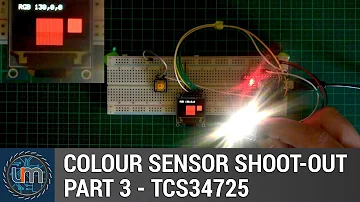
Colour Sensor Shoot-Out - Part 3 - TCS34725
The Introduction to TCS34725
The TCS34725 is a color light-to-digital converter that outputs RGB digitally and provides clear light sensing values. The IR spectral component of the incoming light is minimized by an IR blocking filter, which is incorporated on-chip and confined to the color sensor photodiodes, allowing precise color measurements. The TCS34725 is an ideal color sensor for usage in a variety of lighting circumstances due to its high sensitivity, wide dynamic range, and IR blocking filter,
The TCS34725 color sensor is perfect for controlling RGB LED backlights, solid-state lighting, health/fitness gadgets, industrial process controllers, and medical diagnostic equipment. Furthermore, the IR blocking filter allows the color sensors to detect ambient light (ALS). To monitor the lighting environment and enable automatic display brightness for optimal viewing and power savings, ALS is commonly used in display-based products such as smartphones, notebooks, and TVs.
TCS34725 Pinout
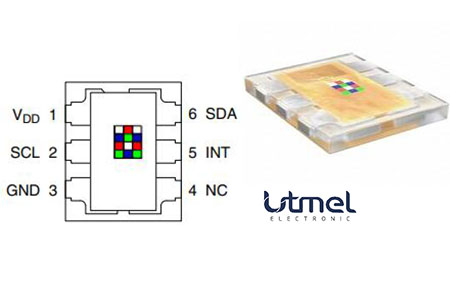
TCS34725 Pinout
| Pin Number | Pin Name | Description |
| 1 | V DD | Supply voltage |
| 2 | SCL | I2C clock input |
| 3 | GND | IC ground reference |
| 4 | NC | Do not connect |
| 5 | INT | Interrupt output, open-drain |
| 6 | I/O | I2C serial data output |
TCS34725 CAD Model
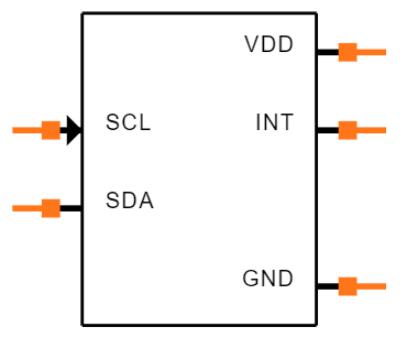
TCS34725 Symbol
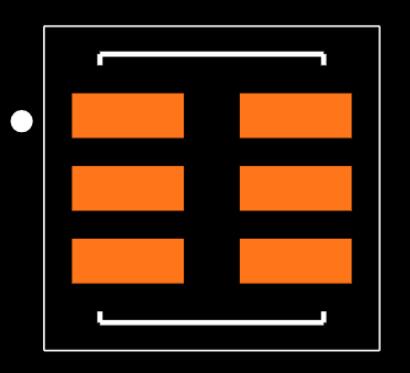
TCS34725 Footprint
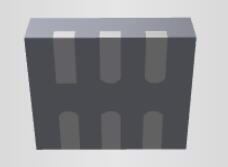
TCS34725 3D Model
Specifications
- TypeParameter
- Factory Lead Time24 Weeks
- Package / Case
refers to the protective housing that encases an electronic component, providing mechanical support, electrical connections, and thermal management.
6-SMD Module - Surface Mount
having leads that are designed to be soldered on the side of a circuit board that the body of the component is mounted on.
YES - Number of Pins6
- Operating Temperature
The operating temperature is the range of ambient temperature within which a power supply, or any other electrical equipment, operate in. This ranges from a minimum operating temperature, to a peak or maximum operating temperature, outside which, the power supply may fail.
-30°C~70°C - Packaging
Semiconductor package is a carrier / shell used to contain and cover one or more semiconductor components or integrated circuits. The material of the shell can be metal, plastic, glass or ceramic.
Tape & Reel (TR) - JESD-609 Code
The "JESD-609 Code" in electronic components refers to a standardized marking code that indicates the lead-free solder composition and finish of electronic components for compliance with environmental regulations.
e4 - Part Status
Parts can have many statuses as they progress through the configuration, analysis, review, and approval stages.
Active - Moisture Sensitivity Level (MSL)
Moisture Sensitivity Level (MSL) is a standardized rating that indicates the susceptibility of electronic components, particularly semiconductors, to moisture-induced damage during storage and the soldering process, defining the allowable exposure time to ambient conditions before they require special handling or baking to prevent failures
3 (168 Hours) - Number of Terminations6
- Terminal Finish
Terminal Finish refers to the surface treatment applied to the terminals or leads of electronic components to enhance their performance and longevity. It can improve solderability, corrosion resistance, and overall reliability of the connection in electronic assemblies. Common finishes include nickel, gold, and tin, each possessing distinct properties suitable for various applications. The choice of terminal finish can significantly impact the durability and effectiveness of electronic devices.
NICKEL PALLADIUM GOLD - HTS Code
HTS (Harmonized Tariff Schedule) codes are product classification codes between 8-1 digits. The first six digits are an HS code, and the countries of import assign the subsequent digits to provide additional classification. U.S. HTS codes are 1 digits and are administered by the U.S. International Trade Commission.
8542.39.00.01 - Voltage - Supply
Voltage - Supply refers to the range of voltage levels that an electronic component or circuit is designed to operate with. It indicates the minimum and maximum supply voltage that can be applied for the device to function properly. Providing supply voltages outside this range can lead to malfunction, damage, or reduced performance. This parameter is critical for ensuring compatibility between different components in a circuit.
2.7V~3.6V - Terminal Position
In electronic components, the term "Terminal Position" refers to the physical location of the connection points on the component where external electrical connections can be made. These connection points, known as terminals, are typically used to attach wires, leads, or other components to the main body of the electronic component. The terminal position is important for ensuring proper connectivity and functionality of the component within a circuit. It is often specified in technical datasheets or component specifications to help designers and engineers understand how to properly integrate the component into their circuit designs.
DUAL - Terminal Form
Occurring at or forming the end of a series, succession, or the like; closing; concluding.
NO LEAD - Peak Reflow Temperature (Cel)
Peak Reflow Temperature (Cel) is a parameter that specifies the maximum temperature at which an electronic component can be exposed during the reflow soldering process. Reflow soldering is a common method used to attach electronic components to a circuit board. The Peak Reflow Temperature is crucial because it ensures that the component is not damaged or degraded during the soldering process. Exceeding the specified Peak Reflow Temperature can lead to issues such as component failure, reduced performance, or even permanent damage to the component. It is important for manufacturers and assemblers to adhere to the recommended Peak Reflow Temperature to ensure the reliability and functionality of the electronic components.
260 - Number of Functions1
- Supply Voltage
Supply voltage refers to the electrical potential difference provided to an electronic component or circuit. It is crucial for the proper operation of devices, as it powers their functions and determines performance characteristics. The supply voltage must be within specified limits to ensure reliability and prevent damage to components. Different electronic devices have specific supply voltage requirements, which can vary widely depending on their design and intended application.
3V - Time@Peak Reflow Temperature-Max (s)
Time@Peak Reflow Temperature-Max (s) refers to the maximum duration that an electronic component can be exposed to the peak reflow temperature during the soldering process, which is crucial for ensuring reliable solder joint formation without damaging the component.
10 - Output
In electronic components, the parameter "Output" typically refers to the signal or data that is produced by the component and sent to another part of the circuit or system. The output can be in the form of voltage, current, frequency, or any other measurable quantity depending on the specific component. The output of a component is often crucial in determining its functionality and how it interacts with other components in the circuit. Understanding the output characteristics of electronic components is essential for designing and troubleshooting electronic circuits effectively.
I2C - Current - Supply (Max)
The parameter "Current - Supply (Max)" in electronic components refers to the maximum amount of current that a component can draw from a power supply for its operation. This parameter is critical for ensuring that the power supply can adequately meet the demands of the component without causing damage or malfunction. Exceeding this specified maximum current can lead to overheating, reduced performance, or failure of the component. It is essential to consider this value when designing or integrating components into electronic circuits to maintain reliability and functionality.
330μA @ 3V - Operating Supply Voltage
The voltage level by which an electrical system is designated and to which certain operating characteristics of the system are related.
3.3V - Supply Voltage-Min (Vsup)
The parameter "Supply Voltage-Min (Vsup)" in electronic components refers to the minimum voltage level required for the component to operate within its specified performance range. This parameter indicates the lowest voltage that can be safely applied to the component without risking damage or malfunction. It is crucial to ensure that the supply voltage provided to the component meets or exceeds this minimum value to ensure proper functionality and reliability. Failure to adhere to the specified minimum supply voltage may result in erratic behavior, reduced performance, or even permanent damage to the component.
2.7V - Analog IC - Other Type
Analog IC - Other Type is a parameter used to categorize electronic components that are integrated circuits (ICs) designed for analog signal processing but do not fall into more specific subcategories such as amplifiers, comparators, or voltage regulators. These ICs may include specialized analog functions such as analog-to-digital converters (ADCs), digital-to-analog converters (DACs), voltage references, or signal conditioning circuits. They are typically used in various applications where precise analog signal processing is required, such as in audio equipment, instrumentation, communication systems, and industrial control systems. Manufacturers provide detailed specifications for these components to help engineers select the most suitable IC for their specific design requirements.
ANALOG CIRCUIT - Max Supply Current
Max Supply Current refers to the maximum amount of electrical current that a component can draw from its power supply under normal operating conditions. It is a critical parameter that ensures the component operates reliably without exceeding its thermal limits or damaging internal circuitry. Exceeding this current can lead to overheating, performance degradation, or failure of the component. Understanding this parameter is essential for designing circuits that provide adequate power while avoiding overload situations.
330μA - Max Frequency
Max Frequency refers to the highest frequency at which an electronic component can operate effectively without degradation of performance. It is a critical parameter for devices such as transistors, capacitors, and oscillators, indicating their limitations in speed and response time. Exceeding the max frequency can lead to issues like signal distortion, heat generation, and potential failure of the component. Understanding this parameter is essential for designing circuits to ensure reliable and efficient operation.
400kHz - Wavelength
In electronic components, "wavelength" refers to the distance between two consecutive points of a wave, typically measured from peak to peak or trough to trough. It is a crucial parameter in understanding the behavior of electromagnetic waves and signals in various electronic devices. The wavelength of a signal is inversely proportional to its frequency, meaning that higher frequencies have shorter wavelengths and vice versa. Understanding the wavelength of signals is important for designing and optimizing electronic circuits, antennas, and communication systems.
525 nm - Sensing Method
The sensing method in electronic components refers to the technique or mechanism used to detect and measure physical phenomena such as temperature, pressure, light, or motion. This includes a variety of technologies such as resistive, capacitive, inductive, and optical sensing methods. The choice of sensing method affects the accuracy, response time, and application suitability of the electronic component. It plays a crucial role in determining how effectively a device can interact with and interpret its environment.
Optical - Resolution (Bits)
Resolution (Bits) in electronic components refers to the number of bits used to represent the analog signal in digital form. It indicates the level of detail or precision with which the analog signal can be converted into digital data. A higher resolution means more bits are used, allowing for finer distinctions to be made between different signal levels. For example, an 8-bit resolution can represent 256 different levels, while a 16-bit resolution can represent 65,536 levels. In general, a higher resolution leads to better accuracy and fidelity in the digital representation of the original analog signal.
16 b - Features
In the context of electronic components, the term "Features" typically refers to the specific characteristics or functionalities that a particular component offers. These features can vary depending on the type of component and its intended use. For example, a microcontroller may have features such as built-in memory, analog-to-digital converters, and communication interfaces like UART or SPI.When evaluating electronic components, understanding their features is crucial in determining whether they meet the requirements of a particular project or application. Engineers and designers often look at features such as operating voltage, speed, power consumption, and communication protocols to ensure compatibility and optimal performance.In summary, the "Features" parameter in electronic components describes the unique attributes and capabilities that differentiate one component from another, helping users make informed decisions when selecting components for their electronic designs.
Gain Control, Interrupt, Sleep Mode - Height650μm
- Length2mm
- Width2.4mm
- RoHS Status
RoHS means “Restriction of Certain Hazardous Substances” in the “Hazardous Substances Directive” in electrical and electronic equipment.
RoHS Compliant - Lead Free
Lead Free is a term used to describe electronic components that do not contain lead as part of their composition. Lead is a toxic material that can have harmful effects on human health and the environment, so the electronics industry has been moving towards lead-free components to reduce these risks. Lead-free components are typically made using alternative materials such as silver, copper, and tin. Manufacturers must comply with regulations such as the Restriction of Hazardous Substances (RoHS) directive to ensure that their products are lead-free and environmentally friendly.
Lead Free
TCS34725 Features
IR light blocking filter
I2C interface
3,800,000:1 dynamic range
3.3 or 5V operation
Output: I2C
Resolution (Bits): 16
Features: gain control, interrupt, and sleep mode
Voltage supply: 2.7 V to 3.6 V
Current supply: 330 µA @ 3 V
Temperature operating range: -30°C to +70°C
Package/case: 6-SMD
Separate Red/Green/Blue light intensity sensor s
Ambient (clear) light intensity sensor
Integrated logic controlled white LED light source
Adjustable gain and integration time
Interrupt output available based on predefined lighting thresholds
TCS34725 Equivalents
TCS3x71 series, TCS3200
TCS34725 Applications
Fluid and gas analysis
Ambient light sensing
RGB LED backlight control
Light color temperature measurement
Consumer and commercial printing
RGB LED Backlight Control
Light Color Temperature Measurement
Ambient Light Sensing for Display
Backlight Control
Fluid and Gas Analysis
Product Color Verification and Sorting
End Products and Market Segments
TVs, Mobile Handsets, Tablets, Computers, and Monitors
Consumer and Commercial Printing
Medical and Health Fitness
Solid-State Lighting (SSL) and Digital
Signage
Industrial Automation
How to use TCS34275?
The TCS34725 is a 16-bit I2C color-to-digital converter that transforms red, green, blue, and clear (ambient light) to a digital value. Internal 16-bit integrating ADCs transform raw input into a digital code in the IC. The ADC's integration time is configurable. Internally, the chip is managed by a state machine, and it has an I2C interface with the address 0x29 for communicating with external microcontrollers. It also features a maskable interrupt feature for informing the microcontroller when color conversion is complete.
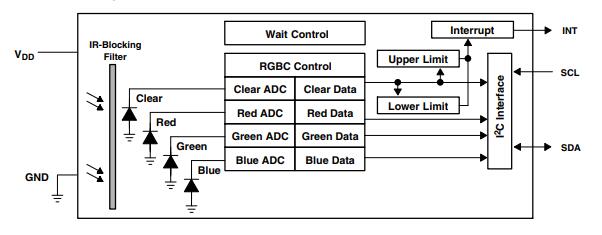
TCS34275 Block Diagram
How the TCS34275 Works With a Raspberry Pi

TCS34275 Circuit Diagram
The Adafruit TCS34725 color sensor is utilized in the circuit in this tutorial. It has a 3 × 4 photodiode array and four ADC converters for converting light to photodiode current and converting that to a 16-bit digital result.
The Raspberry Pi Zero W has been configured to function as a headless Pi. Because the project is largely using the Raspberry Pi Zero W to analyze the data gathered without the need for a graphical interface, it operates on the Raspbian Lite version of the OS without the graphical user interface. Instead of a GUI, the result is displayed on an LCD 16x2 digital display.
TCS34275 Package Outline
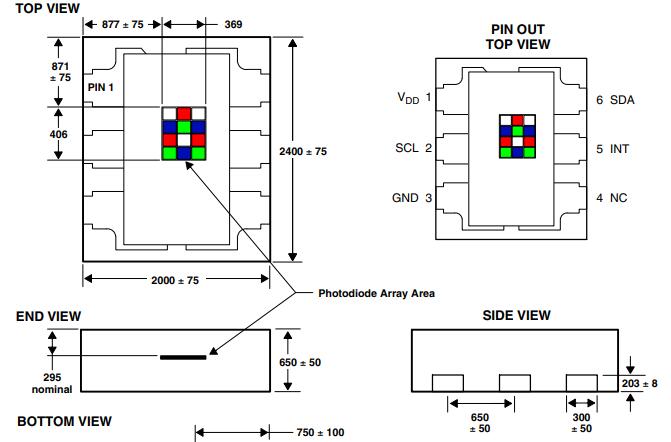
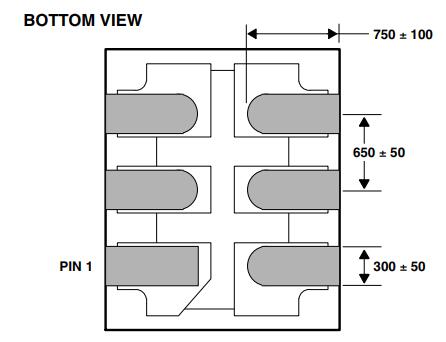
TCS34275 Package Outline
TCS34275 Manufacturer
How does TCS34275 work?
The IR spectral component of the incoming light is minimized by an IR blocking filter, which is incorporated on-chip and confined to the color sensor photodiodes, allowing precise color measurements.
What is the use of TCS34275?
The TCS3472 device generates a digital return of red, green, and blue (RGB) light sensing values as well as clear light sensing data.
What is the operating temperature of TCS34275?
-30°C~70°C
How many pins of TCS34275?
6 pins.
![CR1216 3 V Battery Non-Rechargeable[Video]: Datasheet, CR1216 VS CR2016, and Equivalents](https://res.utmel.com/Images/Article/0b54a9ba-2bd8-4e1e-993a-827e6c746ece.png) CR1216 3 V Battery Non-Rechargeable[Video]: Datasheet, CR1216 VS CR2016, and Equivalents
CR1216 3 V Battery Non-Rechargeable[Video]: Datasheet, CR1216 VS CR2016, and Equivalents01 April 20224404
 Achieving Studio-Grade Audio with the AD797: Ultralow Noise Op Amp Deep Dive
05 February 2026470
 CA3080 OTA: Datasheet, Pinout, CA3080 vs.LM13700
13 April 20227052
 TSL2591 Converter: Datasheet, Pinout and Schematic
18 August 20213165
 How to use ATTINY85 Microcontroller?
08 April 20224066
 LD39200PUR Ultra Low Drop Linear Regulator: 2A, 6DFN, LD39200PUR Datasheet
22 January 20222088
 AD574: A High-Performance Analog to Digital Converter for Military Applications
06 March 2024328
 TL071 OP-AMP: Where & How to Use TL071?
16 November 202121163
 Introduction to USB Type-C
20 February 20232819
 What's the Difference Between Operational Amplifier and Comparator?
01 April 20226381
 What are Comparators?
03 December 20206337
 What is ToF Technology?
22 January 20213696
 What is FPC (Flexible Printed Circuit)?
26 December 202516538
 Advancements and Challenges of High Frequency Converters
19 June 20232308
 Humanoid Robot BOM Breakdown: Every Chip Inside a Physical AI Platform
28 July 20261282
 Basic Understanding of Attenuators
15 September 202017847
ams
In Stock: 20070
United States
China
Canada
Japan
Russia
Germany
United Kingdom
Singapore
Italy
Hong Kong(China)
Taiwan(China)
France
Korea
Mexico
Netherlands
Malaysia
Austria
Spain
Switzerland
Poland
Thailand
Vietnam
India
United Arab Emirates
Afghanistan
Åland Islands
Albania
Algeria
American Samoa
Andorra
Angola
Anguilla
Antigua & Barbuda
Argentina
Armenia
Aruba
Australia
Azerbaijan
Bahamas
Bahrain
Bangladesh
Barbados
Belarus
Belgium
Belize
Benin
Bermuda
Bhutan
Bolivia
Bonaire, Sint Eustatius and Saba
Bosnia & Herzegovina
Botswana
Brazil
British Indian Ocean Territory
British Virgin Islands
Brunei
Bulgaria
Burkina Faso
Burundi
Cabo Verde
Cambodia
Cameroon
Cayman Islands
Central African Republic
Chad
Chile
Christmas Island
Cocos (Keeling) Islands
Colombia
Comoros
Congo
Congo (DRC)
Cook Islands
Costa Rica
Côte d’Ivoire
Croatia
Cuba
Curaçao
Cyprus
Czechia
Denmark
Djibouti
Dominica
Dominican Republic
Ecuador
Egypt
El Salvador
Equatorial Guinea
Eritrea
Estonia
Eswatini
Ethiopia
Falkland Islands
Faroe Islands
Fiji
Finland
French Guiana
French Polynesia
Gabon
Gambia
Georgia
Ghana
Gibraltar
Greece
Greenland
Grenada
Guadeloupe
Guam
Guatemala
Guernsey
Guinea
Guinea-Bissau
Guyana
Haiti
Honduras
Hungary
Iceland
Indonesia
Iran
Iraq
Ireland
Isle of Man
Israel
Jamaica
Jersey
Jordan
Kazakhstan
Kenya
Kiribati
Kosovo
Kuwait
Kyrgyzstan
Laos
Latvia
Lebanon
Lesotho
Liberia
Libya
Liechtenstein
Lithuania
Luxembourg
Macao(China)
Madagascar
Malawi
Maldives
Mali
Malta
Marshall Islands
Martinique
Mauritania
Mauritius
Mayotte
Micronesia
Moldova
Monaco
Mongolia
Montenegro
Montserrat
Morocco
Mozambique
Myanmar
Namibia
Nauru
Nepal
New Caledonia
New Zealand
Nicaragua
Niger
Nigeria
Niue
Norfolk Island
North Korea
North Macedonia
Northern Mariana Islands
Norway
Oman
Pakistan
Palau
Palestinian Authority
Panama
Papua New Guinea
Paraguay
Peru
Philippines
Pitcairn Islands
Portugal
Puerto Rico
Qatar
Réunion
Romania
Rwanda
Samoa
San Marino
São Tomé & Príncipe
Saudi Arabia
Senegal
Serbia
Seychelles
Sierra Leone
Sint Maarten
Slovakia
Slovenia
Solomon Islands
Somalia
South Africa
South Sudan
Sri Lanka
St Helena, Ascension, Tristan da Cunha
St. Barthélemy
St. Kitts & Nevis
St. Lucia
St. Martin
St. Pierre & Miquelon
St. Vincent & Grenadines
Sudan
Suriname
Svalbard & Jan Mayen
Sweden
Syria
Tajikistan
Tanzania
Timor-Leste
Togo
Tokelau
Tonga
Trinidad & Tobago
Tunisia
Turkey
Turkmenistan
Turks & Caicos Islands
Tuvalu
U.S. Outlying Islands
U.S. Virgin Islands
Uganda
Ukraine
Uruguay
Uzbekistan
Vanuatu
Vatican City
Venezuela
Wallis & Futuna
Yemen
Zambia
Zimbabwe
![TCS34717FN]() TCS34717FN
TCS34717FNams
![TCS3200D-TR]() TCS3200D-TR
TCS3200D-TRams
![TCS34715FN]() TCS34715FN
TCS34715FNams
![TCS3414CS]() TCS3414CS
TCS3414CSams
![TMD37003M]() TMD37003M
TMD37003Mams
![TCS3413CS]() TCS3413CS
TCS3413CSams
![TCS3103FN]() TCS3103FN
TCS3103FNams
![TMD37823]() TMD37823
TMD37823ams
![TCS34903FN]() TCS34903FN
TCS34903FNams
![AS73211]() AS73211
AS73211AMS